The Artist Behind the Work
Steve Austin is a psychology faculty member with graduate training in behavioral neuroscience, teaching the perceptual and cognitive science this work is built on. The collection is not the product of aesthetic preference alone. It is the applied expression of that science, and each image was chosen for what it does rather than only for how it looks.
More about the work and the research behind it
The Science Behind this Work
Decades of research show that time in natural environments lowers physiological stress and helps restore the attention that daily demands deplete. Photographs and other representations of nature offer many of the same benefits, though typically to a lesser degree. Roger Ulrich's 1984 study in Science found that surgical patients with a window view of trees recovered faster and needed less pain medication than those facing a brick wall.
Two frameworks help explain why: attention restoration theory, developed by Rachel and Stephen Kaplan, and biophilia, the innate human orientation toward living systems.
This collection was built on those findings. The images were chosen not only because they are beautiful, but for the psychological conditions they tend to support in the people who live with them.
References and the research behind the collection
Acquiring the Work
Every photograph is offered as a limited edition archival print in four presentations: acrylic in a handcrafted ROMA Italian frame, acrylic and metal float mounts that arrive ready to hang, and Hahnemühle FineArt Baryta paper. Editions run from twenty-five to one hundred worldwide, and each one closes permanently when it is filled.
Sizes range from statement works that define a room to intimate pieces made for close attention. At its largest size, the framed Collector's Choice edition runs to more than ten thousand dollars, and the Fine Art Editions on paper begin under one thousand. Every print is made to order, individually numbered, and accompanied by a certificate of authenticity.
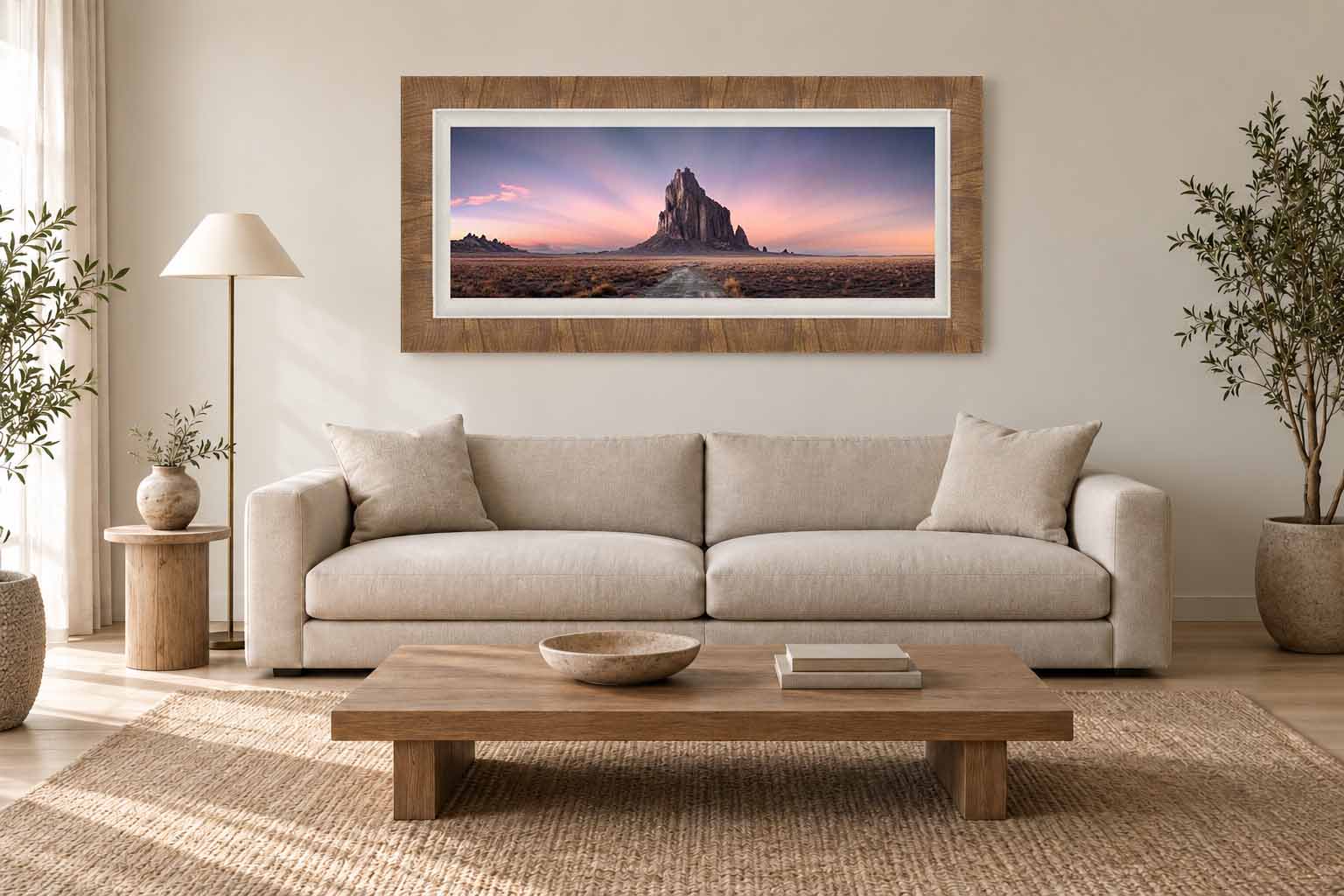
Ascension, Signature Edition in TruLife acrylic, 60 × 20 inches. Room visualization shown at true scale.
Not sure how a piece will look in your space? Send a photograph of your wall, and I will show you the work there at true scale, at no charge. See it in your room.
Designing for Stillness
A complimentary guide to selecting art for restorative environments, written from the research and grounded in the same framework behind this collection. For those who want to understand not just which image to choose, but why the right image matters.
Receive the guide
When you are ready.
View the Collection
Compare the four presentations
Editions, scale and how a print is acquired
Complete sizing guide, with every format shown in a room