The Quiet Ones: What a Calm Photograph Does to the Mind

Photography, before it is anything else, is how I connect with the natural world. The camera is what slows me down and lets a place work on me, and the images come out of that quiet attention. They take more than one form, because nature moves me in more than one way, from deep stillness to real drama, and now and then the pulse of a city moves me too. I make beautiful images because I want to, and because I hope others will feel something in them.

But if you ask what I most hope this work does once it leaves my hands, the answer is simple. I want it to bring a measure of calm and steadiness into a person's day, to give a tired mind somewhere to rest. That is the part I care about most, and it is the reason I am writing this. The quiet images are a particular kind of gift, and they are worth understanding on their own terms.
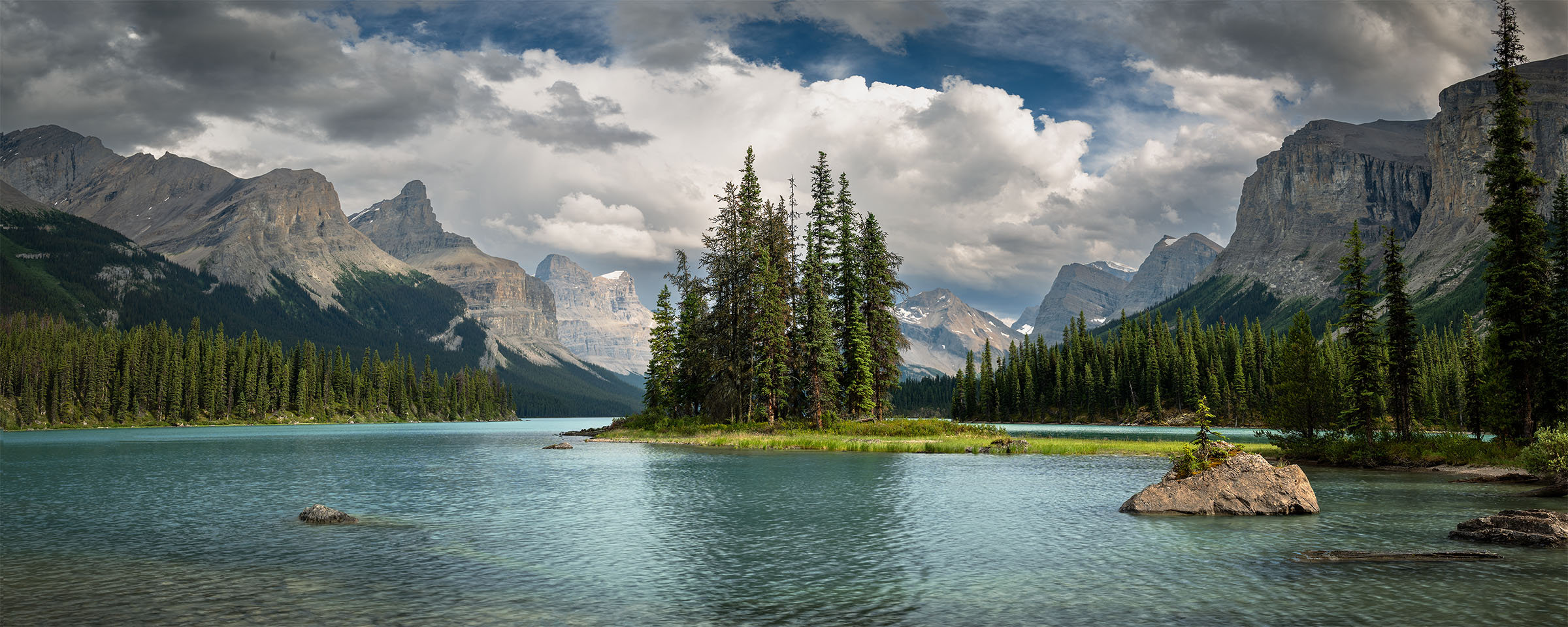
Serine island positioned ion the middle of a lake surrounded by large imposing mountains that create a feeling of isolation and tranquility to be alone with you
Whispers of Solitude

View Available Prints of Whispers of Solitude

I came to photography from psychology. For most of my life my attention has been held by the same questions: how the mind regulates stress, how worn-thin attention recovers, and what the natural world does to both. Twelve years ago I began making photographs built around those questions rather than around spectacle. So when I stand in a landscape before sunrise, I am not only looking for a beautiful frame. I am looking for the kind of scene that settles a person, because I have spent a long time learning what that scene will do once it is hanging on a wall and being lived with, day after day.

There is a pattern worth naming. The images people choose to keep close, the ones they return to morning after morning, are rarely the most spectacular. The lightning, the rare conditions, the once-in-a-decade light are thrilling to make and thrilling to admire. But the photographs that end up above the bed tend to be the calm ones. The pattern is easy to notice. The reason is less obvious, and the reason is the whole point of this piece.
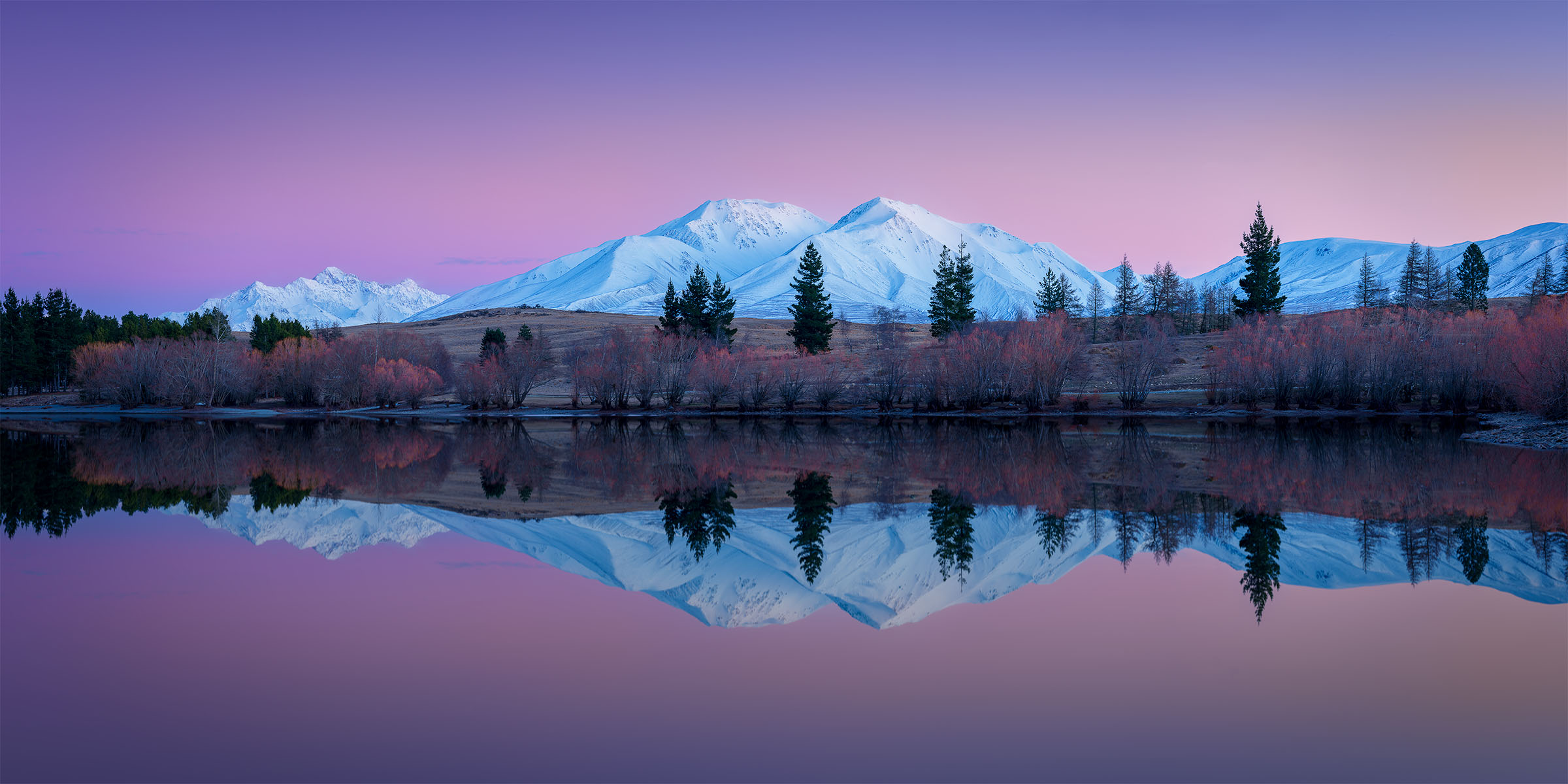
Still alpine lake reflecting snow covered mountains as early morning alpenglow colors the sky and peaks in Ashburton Lakes, New Zealand.
Held in Stillness

View Available Prints of Held in Stillness


An image that excites is not the same as an image that restores

Psychologists have a name for the kind of attention you use to write an email, navigate a crowded street, or hold a difficult conversation. It is called directed attention, and it is a finite resource. It fatigues. When it is depleted, you feel scattered, irritable, and unable to concentrate, and no amount of willpower fully refills it.

What does refill it is a particular quality of looking that attention restoration theory calls soft fascination. Soft fascination is the gentle, effortless interest you feel watching a fire, a slow river, or wind moving through grass. It holds your attention without demanding it, and in that loosened state your directed attention quietly recovers. The opposite is what we might call hard fascination, the grip of something dramatic and urgent. Hard fascination is compelling, but it commands rather than releases. It excites the system instead of letting it down.

This is the whole difference between the two photographs below.
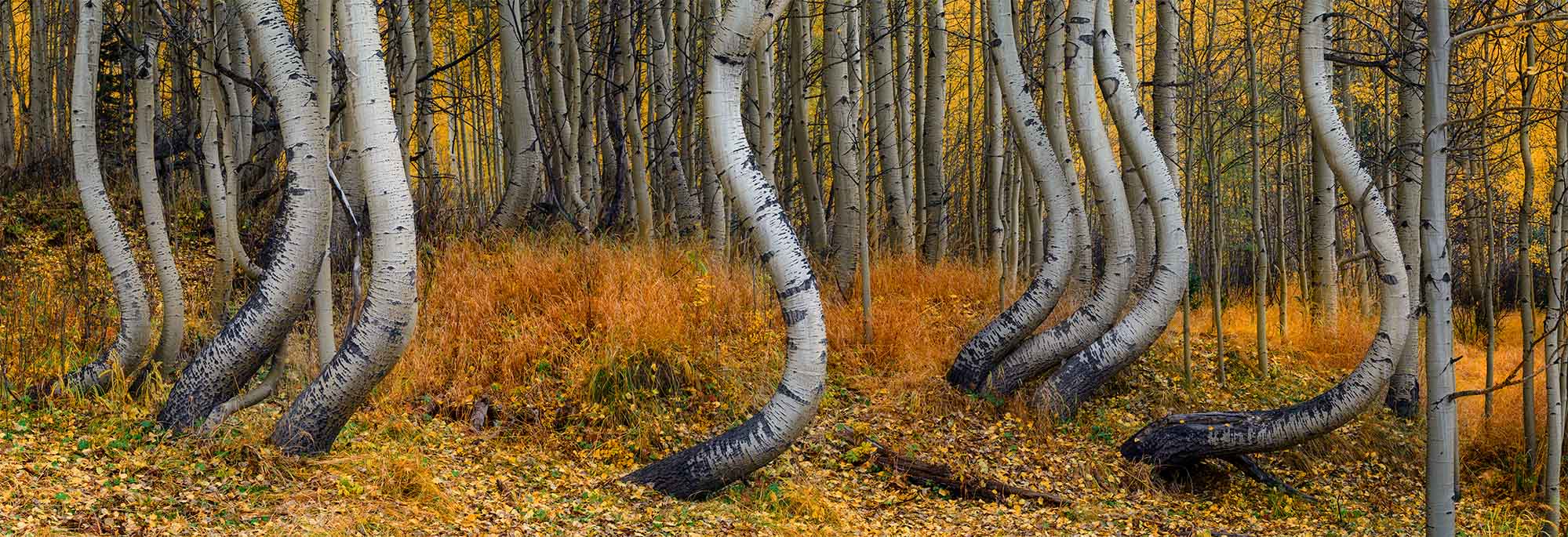
A group of aspen trees with white, textured bark bend in unison along a sloping forest floor covered in fall foliage.
In Rhythm

View Available Prints of In Rhythm

The aspens repeat in a soft, unhurried rhythm. There is no single point shouting for your eye. You can rest inside the image, and your attention drifts and recovers without being asked to do anything. This is soft fascination on a wall..
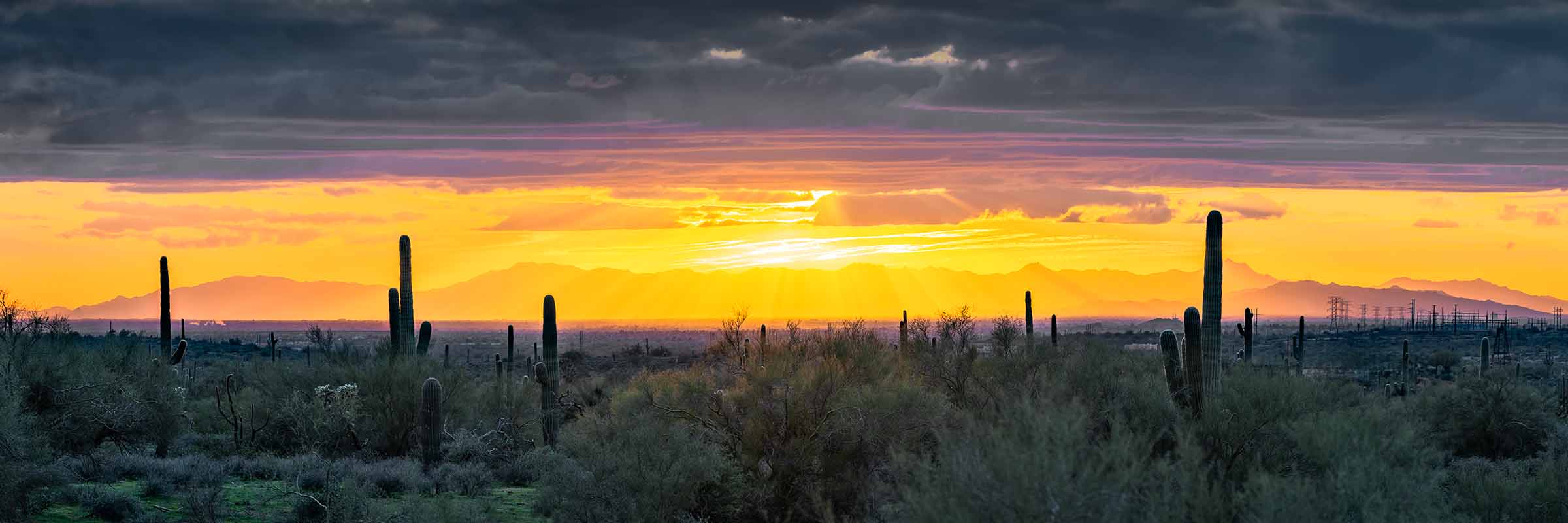
fine art photograph of dramatic descending light rays and golden sunset sky breaking through storm clouds over the Sonoran Desert and saguaro cacti.
Descent from Heaven

View Available Prints of Descent from Heaven

The storm is magnificent, and I am glad I made it. But notice what it does to you. It seizes your attention and holds it. It is exhilarating on a screen, in a gallery, in a moment. What it does not do is let your nervous system stand down. A dramatic sky is a thrill, and thrill is not the same thing as rest. This is why the quiet images so often win the long argument of daily life. People do not want to be gripped every morning. They want to be steadied.


You don't just look at a photograph. You live alongside it

Here is the part that even careful buyers underestimate. A photograph in your home is not something you look at on occasion. It is part of your visual environment, and your brain is reading that environment continuously, beneath conscious awareness, all day long. You are being shaped by it whether or not you are paying attention to it.

We have known this in clinical settings for a long time. Research on hospital recovery found that patients with a view of trees fared measurably better than those facing a blank wall, with less distress and a faster return to themselves. The view was not decoration. It was a low-grade, always-present input that the body responded to. A restorative photograph works the same way. It is not passive. It is a quiet, continuous signal to the part of you that never stops monitoring the room.

This is why depth matters more than spectacle in a piece you intend to keep. An image with atmosphere and receding distance gives the eye somewhere to go each time it returns, and it always has a little more to offer.

ARTIST’S STORY There are mornings in the coastal redwood forests of northern California that feel less like weather and more like ceremony. The fog rolls in from the Pacific in the early hours, filling the spaces between the ancient trunks with a soft blue grey light that quiets everything it touches. The air carries a chill that is not uncomfortable but clarifying, the kind of cold that makes you more awake, more present, more aware of exactly where you are and how fortunate you are to be there. I come to this forest at the beginning of summer specifically for this. Not just for the redwoods, which are reason enough, but for the brief and beautiful window when the wild rhododendrons are in bloom. The timing matters. Too early and the flowers are not yet open. Too late and the moment has passed. But arrive in that narrow window of late spring into early summer and the forest does something extraordinary. It decorates itself. On this particular morning the forest was completely still. The kind of stillness that only very large and very old things can produce, a silence with texture and depth, broken occasionally by the soft movement of fog through the canopy and the periodic breakthrough of sunlight that would illuminate the forest floor for a few luminous minutes before the clouds closed again. I was in no hurry. Neither was the forest. What stopped me here was the relationship between these two living things. The rhododendron blooms, vivid and pink and impossibly delicate, pressing themselves against the base of a redwood trunk that has been growing since before the first European set foot on this continent. One measured in weeks of flowering. The other measured in centuries of standing. And yet here they were, simply together, each made more beautiful by the presence of the other. This is what nature does when we are quiet enough to notice. It arranges itself into moments of such precise and unrepeatable beauty that the mind, which is usually so busy managing and planning and worrying, simply stops. The research on attention restoration tells us that natural environments replenish our depleted cognitive resources. But some mornings in the redwoods go beyond restoration. They remind you what it feels like to be genuinely, completely, unhurriedly alive. Beauty in the Forest is an invitation to remember that feeling. To carry it back into the day with you, the way the fog carries the scent of the forest when it finally lifts. Limited Fine Art Edition Each image is released in limited editions, with edition size set by presentation and scale, so the most substantial works remain the most rare.
Beauty in the Forest

View Available Prints of Beauty in the Forest

You do not exhaust this kind of image in a single glance. You live alongside it, and it keeps giving back. That is the difference between a photograph that fills a wall and one that changes how a room feels to be in.


The quietest images leave room for you

There is one more quality that the most enduring photographs tend to share, and it is the hardest one to manufacture. They leave space for the viewer.

A dramatic, highly specific image tells you exactly what to feel. A quieter, more open image does the opposite. It offers a simple, beautiful subject and then steps back, and into that open space the viewer brings their own memory, their own mood, their own meaning. One person sees solitude. Another sees resilience. Another simply feels calm and could not tell you why. The photograph becomes less about what it depicts and more about what the viewer carries into it. This pull toward nature is something we seem to be built for, an inheritance biologists call biophilia, and an open natural image gives it room to move..
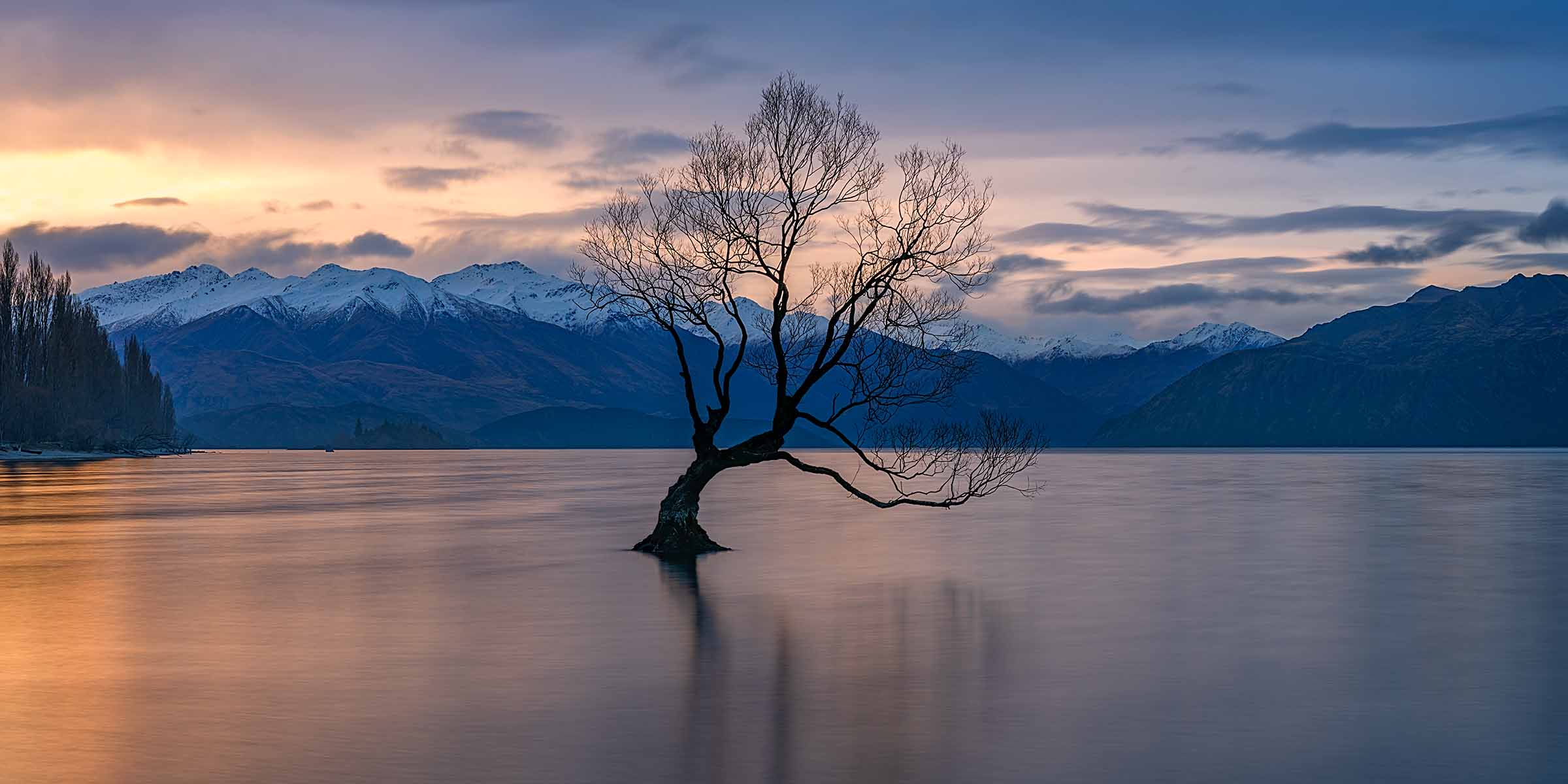
ARTIST’S STORY I was standing in the water before the light arrived. Lake Wanaka in winter has a particular quality of cold that is not aggressive but total, the kind that settles into everything quietly and completely. The pre-dawn darkness was still holding when I waded in, positioning myself at the angle I had already composed in my mind, waiting for the light to catch up with the vision. The lake was perfectly still. The mountains were shadows. And the willow stood where it always stands, rooted in the shallows, bare branches reaching against a sky that had not yet decided what color it wanted to be. This tree is one of the most photographed in the world. Visitors come from every corner of the earth to stand at its edge and record its presence. I understood why the moment I first saw it. But I also knew that the image I wanted required something different, a different position, a different hour, a different quality of light than the one most people arrive to find. So I waded in, and I waited. What came was worth every cold minute. The light arrived from the side, soft and unhurried, casting a pastel warmth across the lake surface that met the cool blue of the mountains and the winter sky in a conversation of color that lasted only minutes before the full morning changed it entirely. The long exposure collapsed the gentle movement of the water into silk, and the willow stood in the center of it all, its reflection stretching toward the camera, rooted as firmly in the water below as in the earth it has claimed for itself over decades. There is something about a solitary tree that the human nervous system recognizes as significant. Research on biophilia suggests we are drawn to single trees in open landscapes at a level that predates conscious thought, an ancient recognition of shelter, of orientation, of the comfort of knowing where you are in relation to something that stays. This willow has been standing in this lake through every season, every storm, every pre-dawn darkness, without moving, without yielding, without apology. The Lone Willow is not just a tree in a lake. It is a reminder that it is possible to stand in the middle of something that should be uncomfortable, rooted so completely in who you are that the water rising around you becomes not a threat but simply the place where you live. Limited Fine Art Edition Each image is released in limited editions, with edition size set by presentation and scale, so the most substantial works remain the most rare.
Lone Willow

View Available Prints of Lone Willow

A single tree at the edge of still water asks nothing of you and gives you somewhere to put yourself. That openness is not emptiness. It is an invitation, and it is the reason these images hold people for years rather than weeks.


What I am actually making

If there is a thread through all of this, it is that the photographs that last are not chosen for how difficult they were to create. They are chosen for what they do to the person living with them. The calm ones win not because calm is fashionable, but because the mind is quietly asking to be steadied, and the right image answers that request every time someone walks into the room.

That is why I do not think of this work as scenery, and I do not think of a print as something to fill a wall. I think of it as an environment, designed with some care for the nervous system that will live inside it.

ARTIST’S STORY There is a version of life that most of us carry somewhere in the back of our minds. Not a fantasy exactly, but a memory of something simpler. A lake. A canoe resting on the shore. A bench near the water where you once sat without agenda, without a screen in your hand, without anywhere else to be. The trees were changing color and the water was perfectly still and everything reflected in it, the gold and the red and the green, was exactly as it should be. I found that memory in New England on a morning when the autumn had reached its fullest expression. The lake house sat quietly among the trees, its lights warm behind the windows, the overturned canoe waiting on the shore with the patient confidence of something that knows it will be needed again. The water held the entire scene in its surface, a perfect mirror of color and structure and the particular stillness that only comes when the wind has decided to take the morning off. What moved me to stop and set up here was the symmetry of it. Not just the visual symmetry of the reflection, though that was extraordinary, but the deeper symmetry between human life and natural life. The house and the canoe and the bench existed not in opposition to the forest but inside it, held by it, colored by it, made meaningful by their relationship to it. This was not nature as backdrop. This was nature as home. We have complicated our relationship with the natural world in ways that have cost us something real. The research on nature and psychological restoration is unambiguous about what we lose when we spend our days in synthetic environments, under artificial light, surrounded by surfaces that neither grow nor breathe nor change with the seasons. And it is equally clear about what we recover when we return. Attention. Steadiness. The particular quality of ease that arrives when you sit on a bench near a lake and watch the autumn color move in the water and remember, at a level deeper than thought, that this is what you are made for. Coming Home is not about a place. It is about a feeling. The one that arrives when you stop performing and stop producing and stop managing and simply sit beside something real, something that has been here longer than your worries and will be here long after they have passed, and let it remind you who you actually are. Limited Fine Art Edition Each image is released in limited editions, with edition size set by presentation and scale, so the most substantial works remain the most rare.
Coming Home

View Available Prints of Coming Home

I am not selling a view. I am offering a place for your attention to rest. The quiet ones are the ones that do that, and that is why, in the end, they are the ones we choose to live with.


Bring a little quiet into your own space

If something here resonated with you, I would gently encourage you to follow it. Think of the room where your days feel loudest, the place you pass through tired or distracted, and imagine what a moment of stillness on that wall might do for the way you move through it. The benefit I have described is not abstract. It is the simple, daily experience of having somewhere for your attention to land.

You are welcome to explore the full collection and find the piece that quiets your space. Each image is offered as a limited edition, archival print, made to be lived with for many years. And if you would like help choosing the right photograph for a particular room, or simply want to talk through what a space needs, I welcome that conversation.

Calm is worth sharing. If this piece brought any of it to your day, consider passing it along to someone whose mind could use a place to rest.


Related Reading

You Are Not Buying Scenery

Why We Are Wired to Need the Natural World

When Your Mind Needs to Rest: The Science of Attention Restoration and Landscape Art


Questions I am often asked

What actually makes a photograph restorative rather than simply beautiful?

A beautiful image can still demand a great deal from you. The restorative ones hold your attention gently instead of seizing it, which lets the part of your mind that does the day's hard work quietly recover. It is less about the subject being pretty and more about whether the image invites you to rest or asks you to react.

How do I choose a calming image for a particular room?

Begin with how you want the room to feel rather than with what will match it. Sit for a moment with the mood you are after, whether that is stillness, warmth, openness, or solitude, and let that guide you before color or decor enters the decision. The pieces that work hardest for your sense of calm are usually the quieter, more open ones, the kind you can return to a thousand times without exhausting.

Where in a home or workspace does a restorative image do the most good?

Place it where your attention lands often and where your day tends to feel loudest. The wall you face from your bed, the view from your desk, the room you pass through when you are tired or distracted. Because you are reading your surroundings continuously, even without noticing, a restorative image earns its place most in the spots you live with rather than the ones you only visit.

Why do simple, open images hold us longer than dramatic ones?

A dramatic image tells you exactly what to feel, and once it has, there is little left to discover. An open, quieter image steps back and leaves room for you to bring your own memory and mood into it. That space is why these pieces keep giving back over years, while the spectacular ones often fade into the background once the initial thrill passes.

How large should a piece be to have this effect?

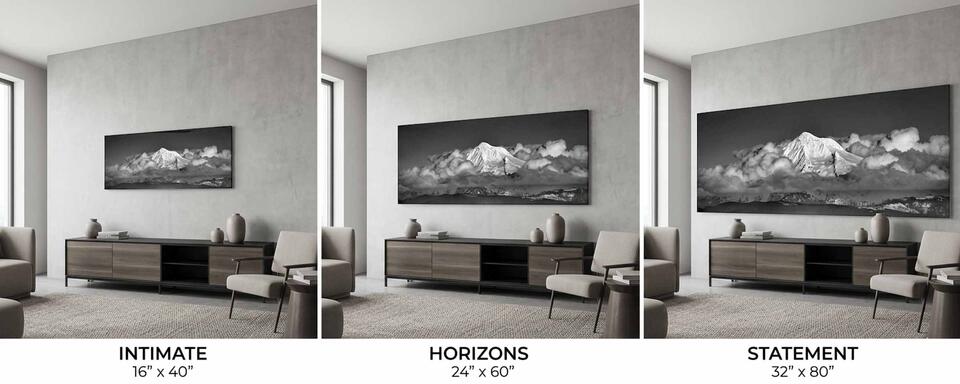
Larger than most people first expect. For an image to become the calm center of a room rather than an accent on the edge of it, it needs enough presence to hold your eye and quiet the space around it. The most common regret I hear is wishing a piece had been chosen larger, almost never the reverse, so when you are deciding between two sizes, the bigger one is usually right.

What do "limited edition" and "archival" mean for a piece I intend to keep?

A limited edition means only a set number of a given image will ever exist, so the piece on your wall remains genuinely rare. Archival refers to materials chosen to hold their color and integrity for generations rather than years. Together they matter because this work is meant to be lived with for a long time, and a piece you return to every day should be made to last as long as the calm it offers.


Featured Fine Art Prints for The Quiet Ones
Serine island positioned ion the middle of a lake surrounded by large imposing mountains that create a feeling of isolation and tranquility to be alone with you
Whispers of Solitude
Still alpine lake reflecting snow covered mountains as early morning alpenglow colors the sky and peaks in Ashburton Lakes, New Zealand.
Held in Stillness
A group of aspen trees with white, textured bark bend in unison along a sloping forest floor covered in fall foliage.
In Rhythm
fine art photograph of dramatic descending light rays and golden sunset sky breaking through storm clouds over the Sonoran Desert and saguaro cacti.
Descent from Heaven
ARTIST’S STORY There are mornings in the coastal redwood forests of northern California that feel less like weather and more like ceremony. The fog rolls in from the Pacific in the early hours, filling the spaces between the ancient trunks with a soft blue grey light that quiets everything it touches. The air carries a chill that is not uncomfortable but clarifying, the kind of cold that makes you more awake, more present, more aware of exactly where you are and how fortunate you are to be there. I come to this forest at the beginning of summer specifically for this. Not just for the redwoods, which are reason enough, but for the brief and beautiful window when the wild rhododendrons are in bloom. The timing matters. Too early and the flowers are not yet open. Too late and the moment has passed. But arrive in that narrow window of late spring into early summer and the forest does something extraordinary. It decorates itself. On this particular morning the forest was completely still. The kind of stillness that only very large and very old things can produce, a silence with texture and depth, broken occasionally by the soft movement of fog through the canopy and the periodic breakthrough of sunlight that would illuminate the forest floor for a few luminous minutes before the clouds closed again. I was in no hurry. Neither was the forest. What stopped me here was the relationship between these two living things. The rhododendron blooms, vivid and pink and impossibly delicate, pressing themselves against the base of a redwood trunk that has been growing since before the first European set foot on this continent. One measured in weeks of flowering. The other measured in centuries of standing. And yet here they were, simply together, each made more beautiful by the presence of the other. This is what nature does when we are quiet enough to notice. It arranges itself into moments of such precise and unrepeatable beauty that the mind, which is usually so busy managing and planning and worrying, simply stops. The research on attention restoration tells us that natural environments replenish our depleted cognitive resources. But some mornings in the redwoods go beyond restoration. They remind you what it feels like to be genuinely, completely, unhurriedly alive. Beauty in the Forest is an invitation to remember that feeling. To carry it back into the day with you, the way the fog carries the scent of the forest when it finally lifts. Limited Fine Art Edition Each image is released in limited editions, with edition size set by presentation and scale, so the most substantial works remain the most rare.
Beauty in the Forest
ARTIST’S STORY I was standing in the water before the light arrived. Lake Wanaka in winter has a particular quality of cold that is not aggressive but total, the kind that settles into everything quietly and completely. The pre-dawn darkness was still holding when I waded in, positioning myself at the angle I had already composed in my mind, waiting for the light to catch up with the vision. The lake was perfectly still. The mountains were shadows. And the willow stood where it always stands, rooted in the shallows, bare branches reaching against a sky that had not yet decided what color it wanted to be. This tree is one of the most photographed in the world. Visitors come from every corner of the earth to stand at its edge and record its presence. I understood why the moment I first saw it. But I also knew that the image I wanted required something different, a different position, a different hour, a different quality of light than the one most people arrive to find. So I waded in, and I waited. What came was worth every cold minute. The light arrived from the side, soft and unhurried, casting a pastel warmth across the lake surface that met the cool blue of the mountains and the winter sky in a conversation of color that lasted only minutes before the full morning changed it entirely. The long exposure collapsed the gentle movement of the water into silk, and the willow stood in the center of it all, its reflection stretching toward the camera, rooted as firmly in the water below as in the earth it has claimed for itself over decades. There is something about a solitary tree that the human nervous system recognizes as significant. Research on biophilia suggests we are drawn to single trees in open landscapes at a level that predates conscious thought, an ancient recognition of shelter, of orientation, of the comfort of knowing where you are in relation to something that stays. This willow has been standing in this lake through every season, every storm, every pre-dawn darkness, without moving, without yielding, without apology. The Lone Willow is not just a tree in a lake. It is a reminder that it is possible to stand in the middle of something that should be uncomfortable, rooted so completely in who you are that the water rising around you becomes not a threat but simply the place where you live. Limited Fine Art Edition Each image is released in limited editions, with edition size set by presentation and scale, so the most substantial works remain the most rare.
Lone Willow
ARTIST’S STORY There is a version of life that most of us carry somewhere in the back of our minds. Not a fantasy exactly, but a memory of something simpler. A lake. A canoe resting on the shore. A bench near the water where you once sat without agenda, without a screen in your hand, without anywhere else to be. The trees were changing color and the water was perfectly still and everything reflected in it, the gold and the red and the green, was exactly as it should be. I found that memory in New England on a morning when the autumn had reached its fullest expression. The lake house sat quietly among the trees, its lights warm behind the windows, the overturned canoe waiting on the shore with the patient confidence of something that knows it will be needed again. The water held the entire scene in its surface, a perfect mirror of color and structure and the particular stillness that only comes when the wind has decided to take the morning off. What moved me to stop and set up here was the symmetry of it. Not just the visual symmetry of the reflection, though that was extraordinary, but the deeper symmetry between human life and natural life. The house and the canoe and the bench existed not in opposition to the forest but inside it, held by it, colored by it, made meaningful by their relationship to it. This was not nature as backdrop. This was nature as home. We have complicated our relationship with the natural world in ways that have cost us something real. The research on nature and psychological restoration is unambiguous about what we lose when we spend our days in synthetic environments, under artificial light, surrounded by surfaces that neither grow nor breathe nor change with the seasons. And it is equally clear about what we recover when we return. Attention. Steadiness. The particular quality of ease that arrives when you sit on a bench near a lake and watch the autumn color move in the water and remember, at a level deeper than thought, that this is what you are made for. Coming Home is not about a place. It is about a feeling. The one that arrives when you stop performing and stop producing and stop managing and simply sit beside something real, something that has been here longer than your worries and will be here long after they have passed, and let it remind you who you actually are. Limited Fine Art Edition Each image is released in limited editions, with edition size set by presentation and scale, so the most substantial works remain the most rare.
Coming Home