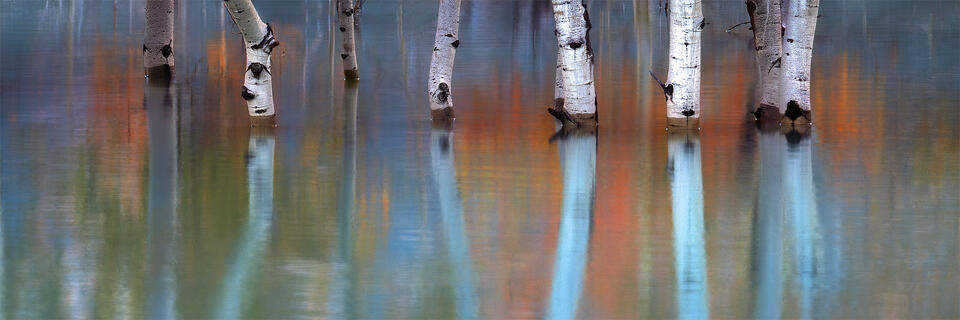
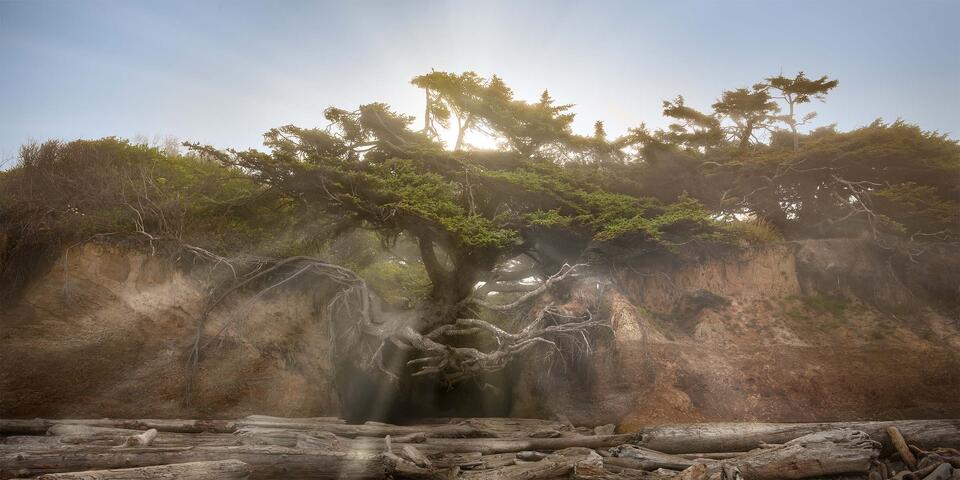
When Your Mind Needs to Rest: The Science of Attention Restoration and Landscape Art
You know the feeling. The afternoon stretches on and the work in front of you, work that once felt manageable, suddenly feels impossible. You reach for your phone. You check the same three apps in sequence. You start a new task rather than finishing the one that is already open. You turn on the television not because you want to watch anything in particular, but because your mind is quietly refusing to engage with what actually needs your attention.
This is not laziness. This is not a character flaw. This is mental fatigue, and it has a specific psychological signature that researchers have been studying for decades.
As a psychologist who has spent years studying how the mind responds to stress and cognitive demand, I have come to understand mental fatigue not as a vague sense of tiredness but as a measurable state with real consequences. When you are mentally depleted, your judgment becomes unreliable. You second-guess decisions you would normally make with confidence. You feel a creeping sense of insecurity about your own ideas. Your mind actively tries to steer you away from the tasks requiring focused cognitive effort, toward anything that demands less. The scroll. The detour. The easier project that lets you feel busy without doing the hard thing.
The modern environment accelerates this depletion faster than at any point in human history. We are surrounded by competing demands on our attention, notifications, deadlines, ambient noise, the constant pressure to be responsive and productive. Our directed attention, the cognitive system we use for focused, deliberate thinking, is not designed for sustained operation at this intensity. It depletes. And when it does, it needs to be restored.

View Available Prints of Alpine Serenity
What Attention Restoration Theory Actually Tells Us
In the 1980s, psychologists Rachel and Stephen Kaplan at the University of Michigan developed what became known as attention restoration theory, a framework for understanding how natural environments support cognitive recovery. Their central insight was simple but profound: directed attention, the effortful, focused attention we use for complex work and decision-making, has a limited capacity that depletes with use. Restoration requires a fundamentally different kind of engagement, one that allows the directed attention system to rest while something else holds awareness gently in place.
The Kaplans identified natural environments as uniquely effective at providing this restoration. The reason, they argued, is that nature engages what they called soft fascination. Unlike the hard fascination of a screen or a demanding task, which competes aggressively for directed attention, natural environments hold the eye and mind with a quality of effortless interest. The movement of water. The texture of stone. The layered depth of a forested landscape. The play of light across a still lake. These things draw attention without demanding it, which is precisely what allows the directed attention system to recover.
Their research identified four conditions that characterize a genuinely restorative environment. The sense of being away from the demands and associations of daily life. A quality of extent, meaning the environment has enough scope and coherence to fully occupy the mind. Fascination that is effortless rather than effortful. And compatibility between the environment and what the person needs in that moment. When all four conditions are present, restoration occurs not through effort or discipline, but naturally, as a consequence of simply being in the right kind of space.
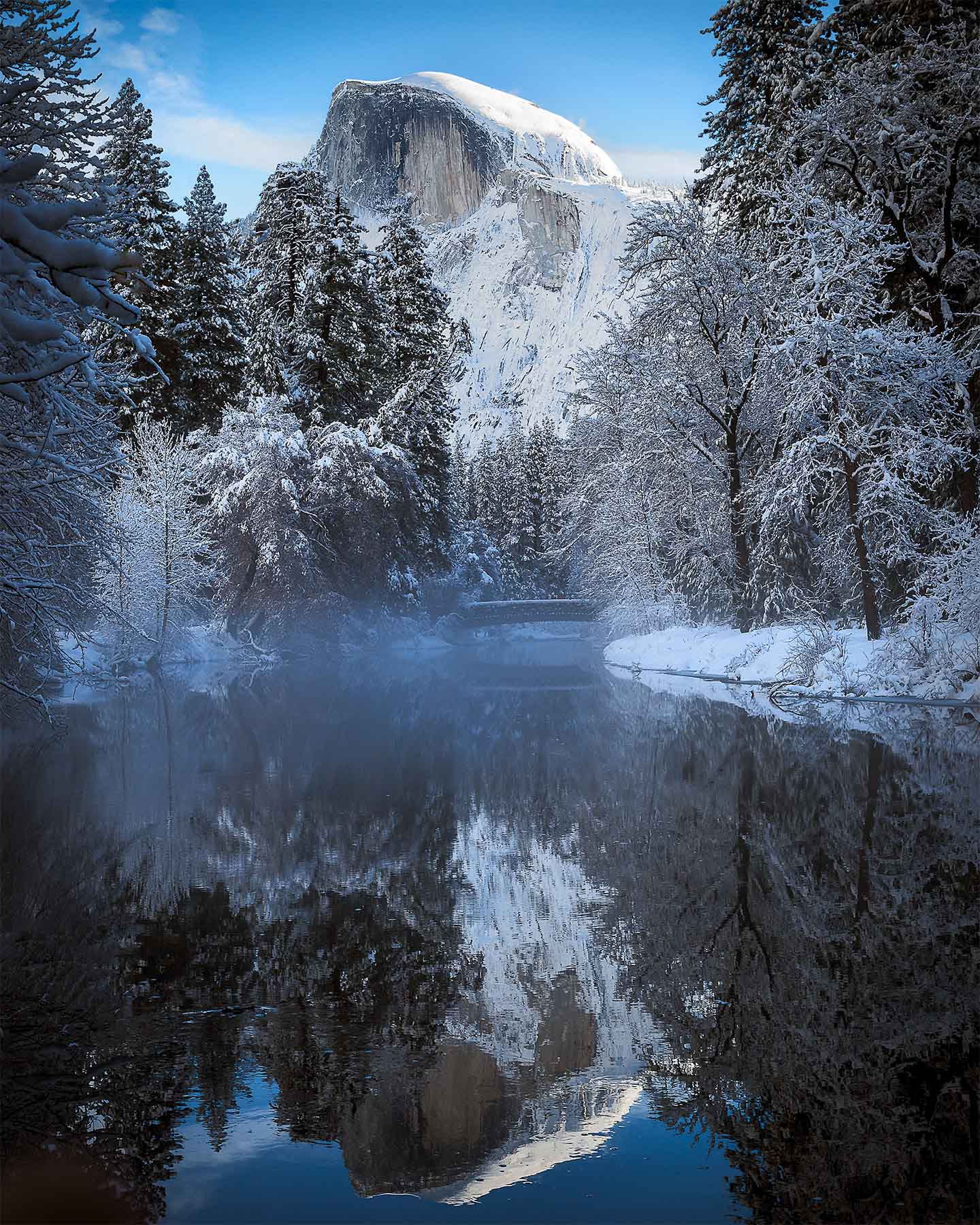
After a weeklong winter storm, the valley settled into a stillness so complete it felt deliberate. Half Dome rose above the river, its reflection held perfectly in the water below, the world softened and preserved in a silence that asked only to be witnessed.
View Available Prints of Silent Reflection
The Moment I Understood This in My Own Body
There was a period in my life when work stress had accumulated to a point where I knew something had to change. I took time to practice forest bathing, moving slowly through a natural landscape and allowing my attention to follow whatever it was drawn to. The sounds of birds in the canopy. Wind moving through the trees. The sound of a river running somewhere in the distance. I was not trying to solve anything. I was not planning or processing. I was simply present in that environment, paying attention to what was already there.
What happened over the course of that time was not dramatic. It was gradual and quiet, which is exactly how restoration works. The mental noise that had been running constantly began to soften. The weight of unresolved problems did not disappear, but it loosened its grip. By the time I returned, I had something I had not had in weeks: mental energy. A clear mind. A fresh perspective and a genuine readiness to face what had felt impossible before.
That experience is not unique to me. It is what attention restoration theory predicts, and what decades of subsequent research has consistently confirmed. Nature does not solve your problems. It restores the cognitive capacity you need to solve them yourself.
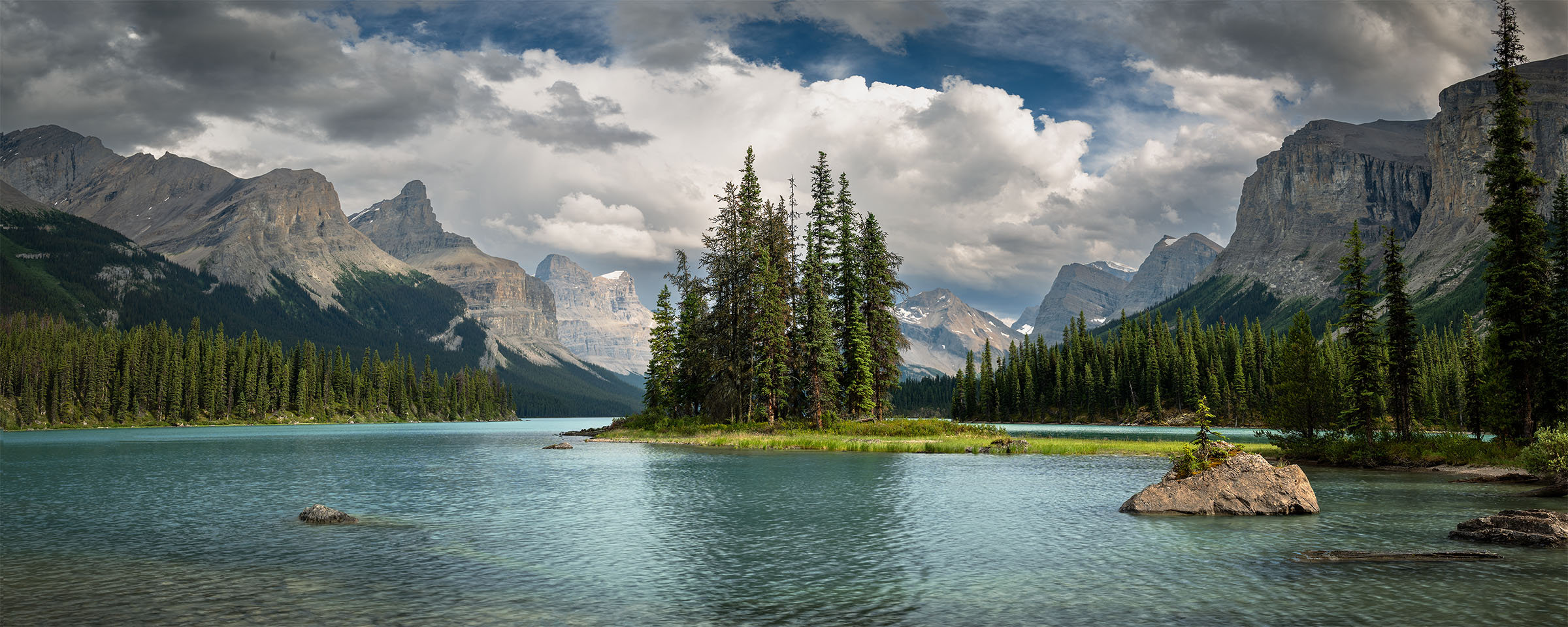
View Available Prints of Whispers of Solitude
When You Cannot Get to the Forest
The research on attention restoration theory has evolved considerably since the Kaplans' original work. One of the most significant and practically relevant findings is that the restorative effects of nature do not require physical immersion in a natural environment. Studies have consistently shown that visual exposure to natural scenes, including photographic representations, can initiate meaningful cognitive restoration. Patients recovering in hospital rooms with window views of nature have shown faster recovery times than those with views of walls. Workers in offices with nature imagery report lower stress and better concentration. The mechanism appears to be the same: soft fascination, effortless engagement, the directed attention system allowed to rest.
This finding carries real implications for how we think about the spaces we inhabit every day. Most of us spend the majority of our waking hours in built environments, offices, homes, and urban spaces with little or no direct access to restorative natural settings. The question of how to bring restoration into those spaces is not merely aesthetic. It is a question with measurable psychological consequences.

View Available Prints of When the Earth Breathes
Five Landscapes Designed for Restoration
When I am in the field, I am not simply looking for beautiful scenes. I am paying attention to how a place feels when the mind quiets and attention settles on its own. This is a different kind of seeing. It requires slowing down enough to notice not just what is in front of me, but what the landscape is doing to my cognitive state. Is the eye being pulled or invited? Is the scene competing for attention or simply holding it? These are not aesthetic questions. They are psychological ones, and they guide every compositional decision I make.
The images that become candidates for my collection share a specific quality: they hold the eye without demanding it. They offer the soft fascination that Kaplan's research describes, the kind of effortless engagement that allows something deeper in the cognitive system to rest. This quality is not accidental, and it is not simply a matter of subject matter. A waterfall can be visually aggressive. A still lake can be cognitively overwhelming if the composition creates tension rather than release. What I am looking for, and what I am deliberately constructing in my digital darkroom when the field does not deliver it completely, is a visual environment that behaves the way a restorative natural space behaves. One that receives attention rather than captures it.
The five images shown in this post were selected not only because they are among my strongest landscape work, but because each one demonstrates a distinct dimension of the restorative experience. Together they trace the arc of cognitive recovery, from active, unhurried engagement through deepening stillness to complete attentional rest. They are sequenced intentionally. If you find yourself lingering on one longer than another, that response is worth paying attention to. It may tell you something about what your own cognitive system is asking for right now.

Before sunrise at Ashburton Lakes, the water lay perfectly calm, holding the surrounding peaks in an unbroken reflection. As alpenglow moved slowly across the stone, attention rested without effort. The landscape had arrived at rest, and the mind followed.
View Available Prints of Held in Stillness
What This Means for the Spaces You Inhabit
Choosing to live with fine art landscape photography is a decision about your environment. Not just its aesthetic character, but its psychological function. The images you place in the spaces where you think, work, rest, and recover shape the quality of attention available to you in those spaces, whether or not you are consciously aware of them doing so.
A carefully chosen landscape print does not compete for your directed attention. It does not demand engagement. It offers something gentler and, over time, something more valuable. It holds the quality of a restorative environment in a form that can be lived with daily, returned to repeatedly, and experienced in the moments when cognitive depletion is precisely what makes getting to the forest impossible.
The mind depletes. That is not a weakness. It is a design feature of a cognitive system that has been asked to sustain extraordinary demands. The question is what you build into your environment to support its recovery.
Fine art that carries the restorative quality of nature is not decoration. It is maintenance.
Living With Restoration
The mind depletes whether or not you have time to get to the forest. What you place on the walls of the rooms where you work and rest is one of the few things within your control that can quietly support its recovery. A landscape that holds the eye without demanding it does its work in the background, every day, in the moments when getting away is least possible.
I invite you to spend time with the full collection and notice which image quiets your attention most. And if you are considering a particular room, an office, a bedroom, a space meant for recovery, I am always glad to think it through with you. A complimentary digital mockup will let you see how a piece lives in your own space before you decide. There is no urgency in any of this. Something you intend to live with for years is worth choosing slowly, and on purpose.
Featured Fine Art Prints for When Your Mind Needs to Rest
Steve Austin is a psychology professor, behavioral neuroscientist, and fine art landscape photographer. His limited edition landscape prints are available through Steve Austin Fine Art Photography at steveaustinphotography.com. Complimentary digital mockups are available for those who would like to visualize a piece within their own space.