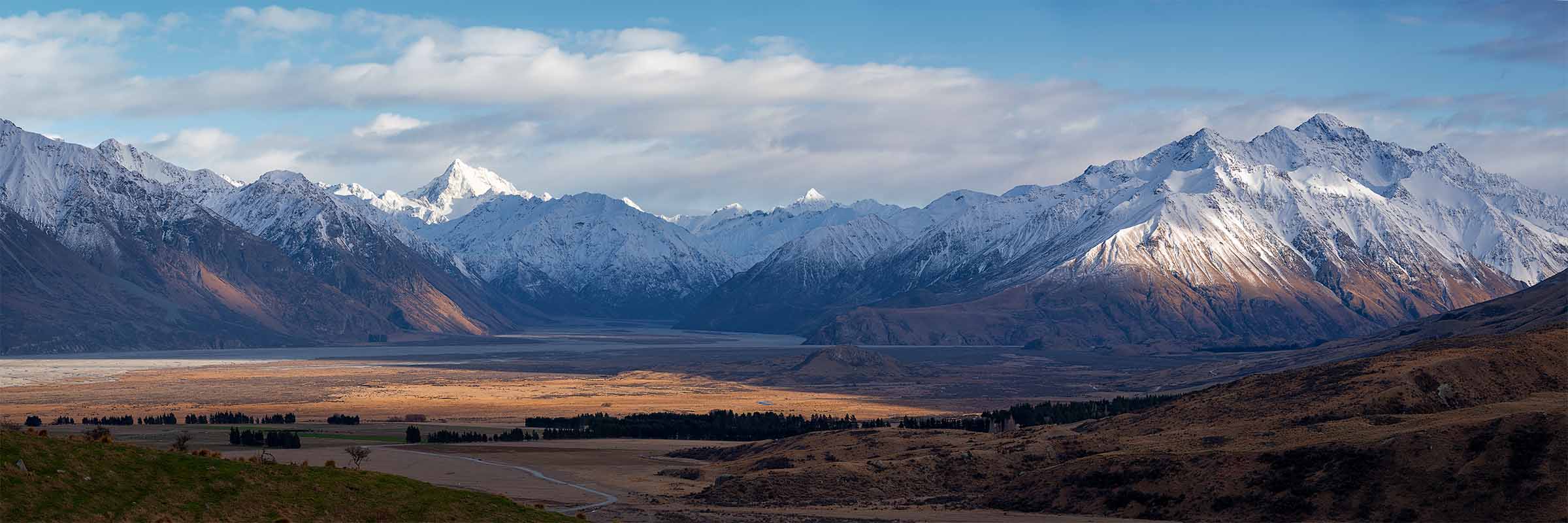
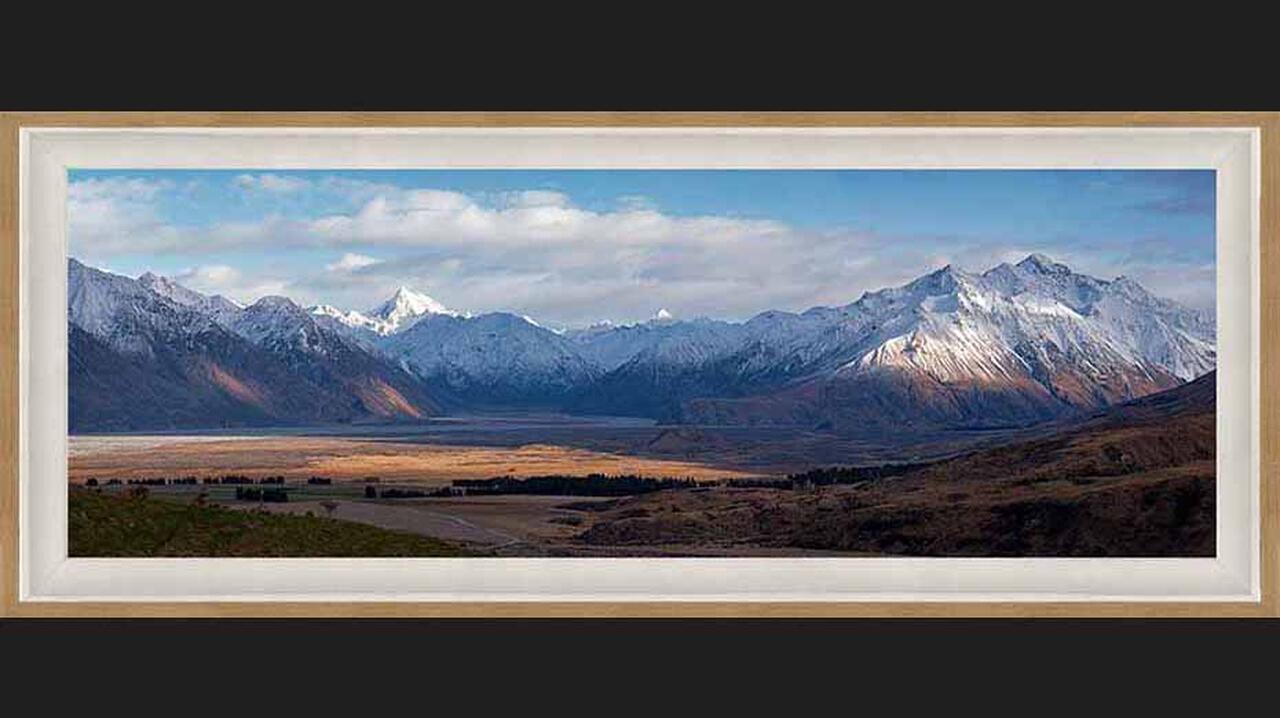
A 3:1 panoramic photograph of the Rangitata Valley beneath the Southern Alps, New Zealand, in winter, available as a limited edition print in three sizes.
Artist's Story
The Rangitata Valley cuts through the middle of New Zealand's South Island, a wide floor of golden tussock and braided river with the Southern Alps standing across the whole far end of it. Somewhere on that floor sits Mount Sunday, a low knoll a glacier left behind, where Peter Jackson built the city of Edoras for two of the Lord of the Rings films before taking the set away again.
I came on a still winter morning, stood on the ridge a while before doing anything, and built this frame from a sweep of overlapping exposures so the whole valley would hold together at size.
What winter does here is make the land legible. Low sun comes in almost sideways, and raking light is how the eye reads three dimensions, since we judge the shape of a surface largely by how light falls across it and where the shadows sit. In summer, with the sun high, this valley flattens. In winter it stands up. The peaks gain their ridges, the tussock plain gains its roll and dip, and a landscape that is always this large becomes, for a few hours, fully readable as well.
The Kingdom is that valley in low winter light, holding the shape a high sun hides. The city on the knoll stood for a few months and left nothing behind. The valley it was built to look out over has been standing up in this light every winter for a very long time.
There is an effect that comes from standing in front of something too large for the mind to file away, and it is worth having somewhere you live rather than somewhere you visit. I wrote about it in Why Awe Belongs on Your Walls.
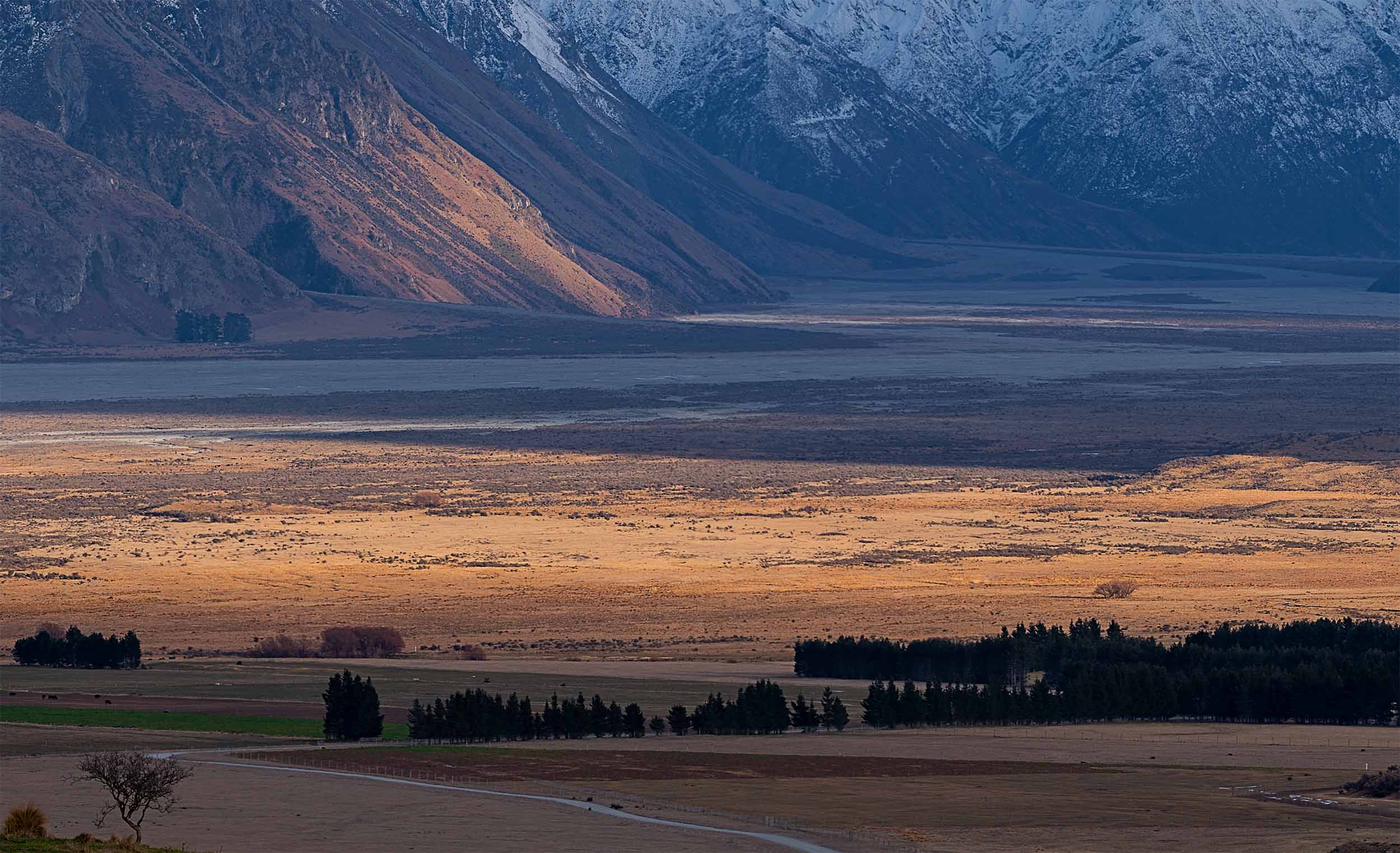
The valley floor, about a quarter of the frame width. The plain looks flat until the light crosses it. Click to view at full size.
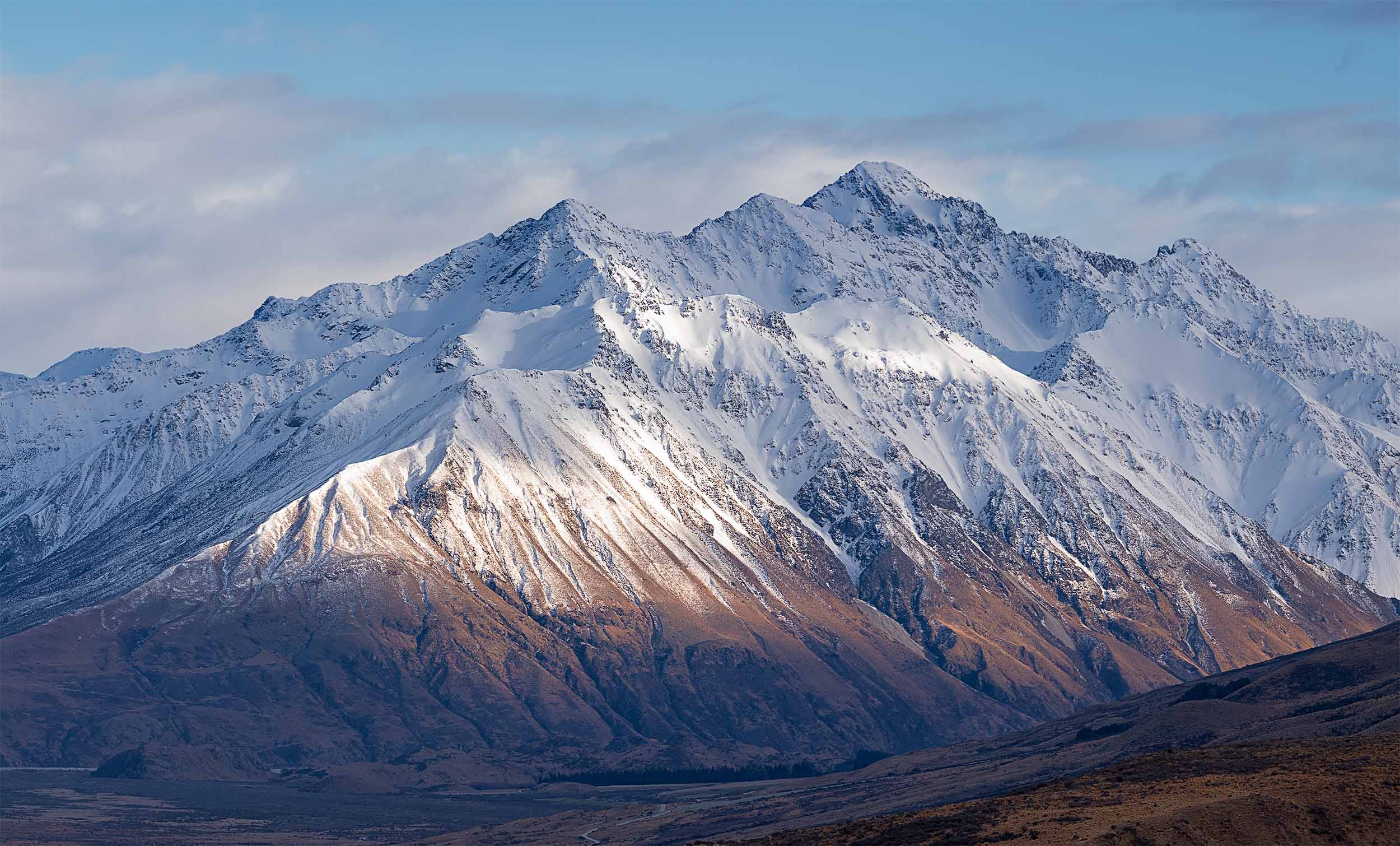
The far range, the same fraction of the frame. Sideways light separating every ridge and gully. Click to view at full size.
About This Photograph
Photographed in the Rangitata Valley on the South Island of New Zealand, on a still winter morning. This is a color image, made as a stitched panorama from several overlapping frames to produce a high-resolution file. The subject is the Rangitata Valley, a wide floor of tussock and braided river beneath the Southern Alps, within Hakatere Conservation Park. On the valley floor sits Mount Sunday, a glacially formed knoll that served as the location of Edoras, the capital of Rohan, in The Lord of the Rings: The Two Towers and The Return of the King; the set was built on its summit and fully removed after filming. The site is reached on foot across the river flats from Hakatere Potts Road.
The Kingdom
Steve Austinhttps://www.steveaustinphotography.com/
Location
Rangitata Valley, Hakatere Conservation Park, New Zealand
Subject
The Rangitata Valley floor beneath the Southern Alps in low winter light
Capture
Stitched panorama from overlapping frames, winter morning
Format
Photograph · horizontal panorama, 3:1
Sizes
36 × 12 in · 60 × 20 in · 90 × 30 in
Print Media
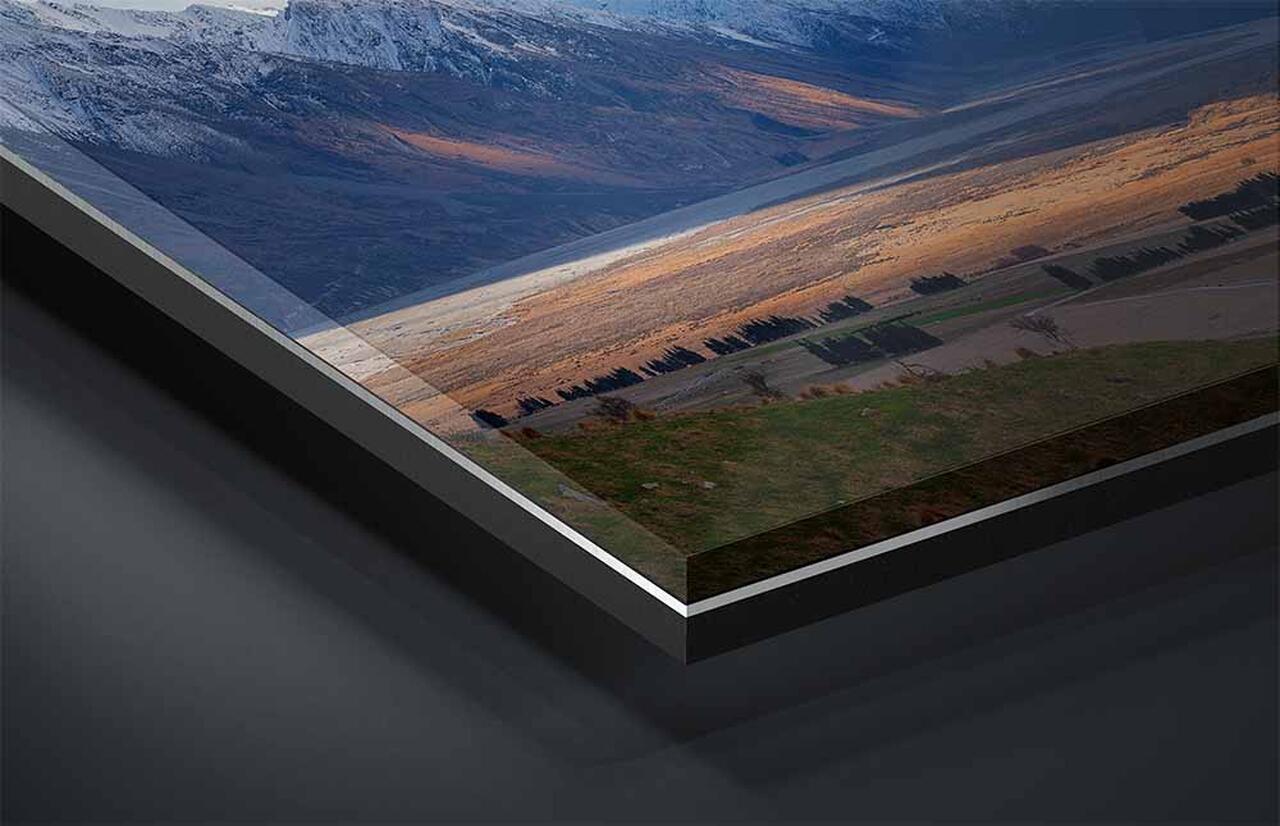
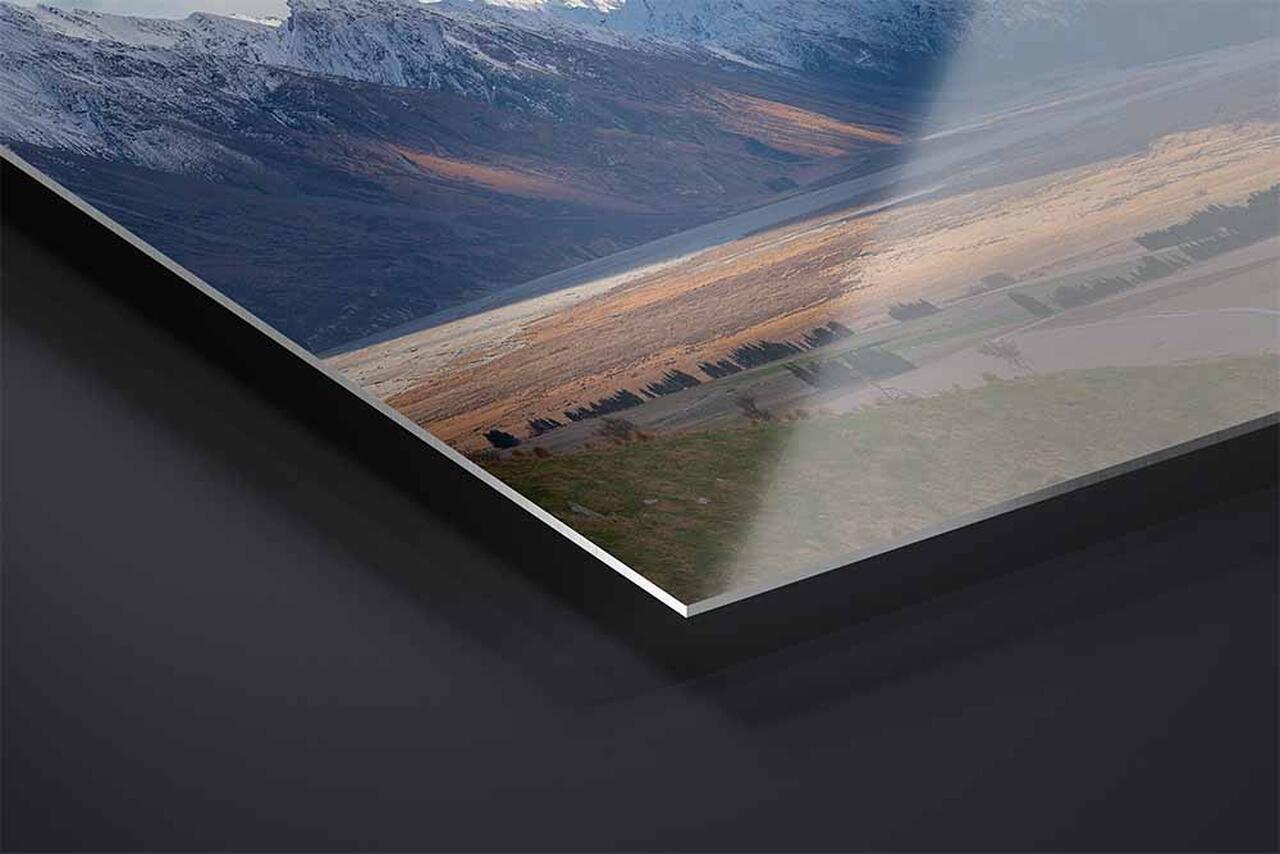
TruLife Acrylic · ChromaLuxe Metal · Baryta paper
Edition
Limited, 25 / 50 / 100 by presentation
What it Does in a Room
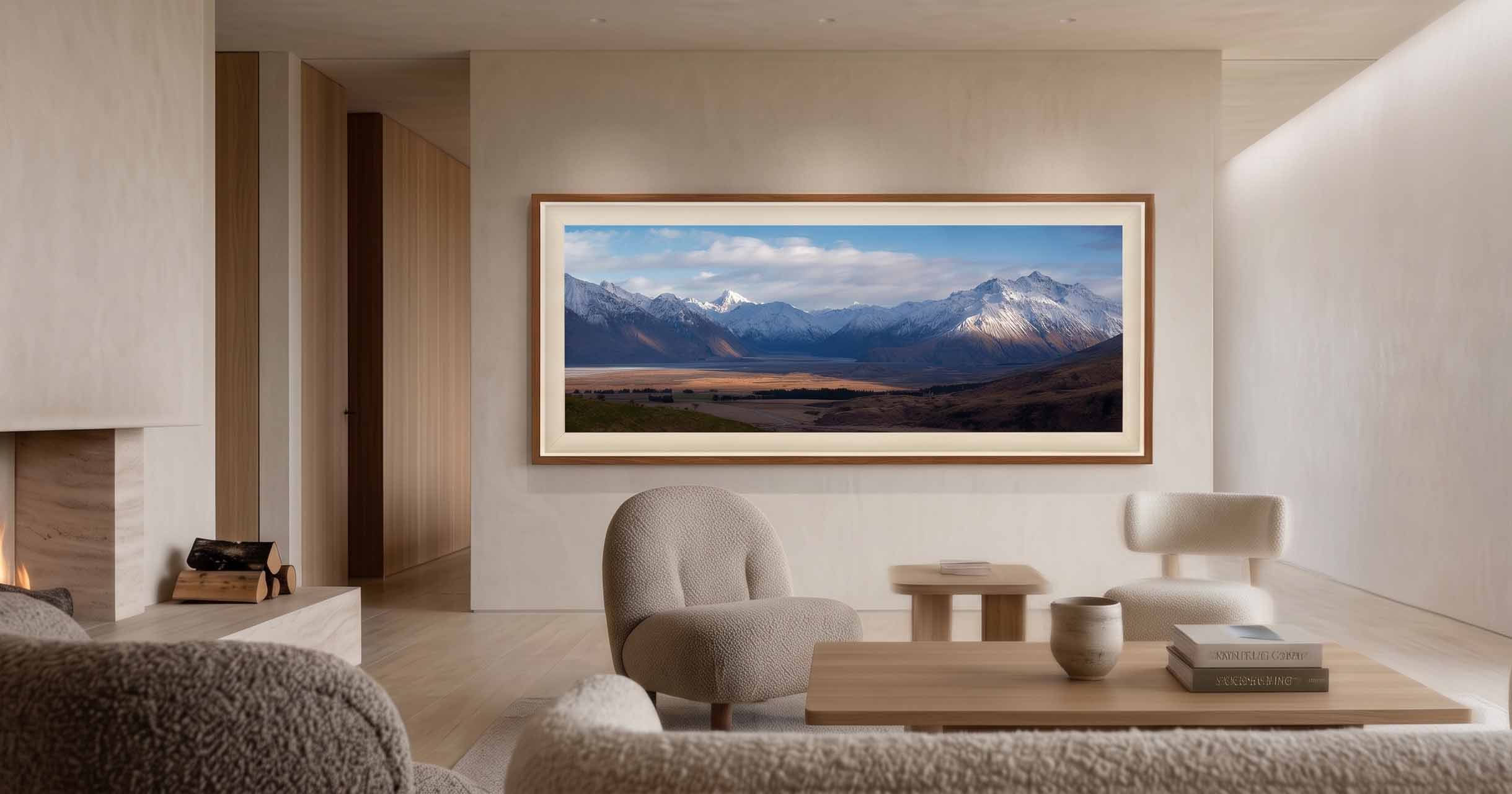
A photograph of somewhere genuinely vast does one thing a smaller view cannot. It borrows the room some distance.
Three to one is the widest proportion in the collection, and it behaves differently from everything else. A two to one panorama still reads as a scene you are looking at. At three to one the frame passes beyond what the eye takes in at once, so you read it the way you read a room, by turning your head. That changes what it does to a space. It draws the horizontal line of the wall out and holds it, which makes a room feel longer and lower and calmer, and it settles above a long sofa, a run of cabinetry, a credenza, or a headboard in a way no other shape manages. It asks for a run of wall rather than height, and very little of that height. A band twelve to thirty inches tall will do, which is why this proportion often works above furniture where nothing else fits.
Here the width is doing what the proportion exists for. This is a valley that runs out of frame on both sides in reality, and the shape lets it run out of frame on the wall as well, which is why it reads as a place continuing rather than a scene contained. There is real depth in it too. The foreground ridge sits close, the tussock flat lies out in the middle, and the peaks stand across the whole far end, so the eye travels back as well as across. A print with that structure makes a wall feel further away than it is, which is the specific thing a large panorama can do for a room and almost nothing else can.
The color is quiet and it splits cleanly. Cool above, warm below: blue sky and blue-grey snow across the top two thirds, then a band of gold tussock and brown river flat across the bottom. Both sides sit at low saturation, so neither one leads. That means it agrees with a warm room and a cool one at the same time, which very few photographs manage. Against oak, walnut, wool, and linen the gold comes forward. Against slate, steel, and pale grey the peaks do. What it rewards most is a long clear wall and daylight, since the whole argument of the picture is a low sun making surfaces readable, and it gives that back most in a room with light of its own.
Not sure which size the room calls for, or want dimensions not listed here? Sizes beyond 90 × 30 are available on request and ship crated by freight. That conversation is welcome before an order is placed. Start that conversation and I will answer within one business day.
The Kingdom, limited edition printSteve Austin70012900USD11https://schema.org/InStock
Questions about this photograph
How small is too small for a photograph this wide?
At three to one, the Intimate size is thirty-six inches across and twelve inches tall. Twelve inches is not much height, and on this photograph it costs more than on most. The structure holds: sky, peaks, valley floor, foreground ridge. But this is a photograph built from a sweep of overlapping frames specifically so the whole valley would carry detail at size, and at twelve inches tall almost none of that detail is available. The peaks become a white band, the tussock flat becomes a gold one, and the river braids and the shelter belts disappear. A thirty-six by twelve print works well in a narrow run of wall, above a doorway, along a stair, or where nothing taller will fit, and it reads beautifully as a shape. The Collected at sixty by twenty is where the valley floor opens up. The Statement at ninety by thirty is what the file was made for. If you are weighing a size against a specific wall, choosing the right print size covers the measurements and the viewing distances in more detail.
What changes at the largest size?
More than on any other photograph in the collection, because this one was stitched from overlapping frames for exactly that reason. At thirty-six by twelve the far range is a wall of snow. At ninety by thirty it separates into individual peaks with their own ridgelines, the gullies between them running dark, the snow line visible where it crosses each face, and the cloud shadow lying across some of them and not others. The valley floor does the same thing at a different scale. The braided river resolves into individual channels of pale gravel, the shelter belts become rows of separate trees, and the tussock plain shows the roll and dip that the low sun is picking out. That is the argument of the photograph made checkable: the light is revealing shape, and at the largest size you can see the shape it reveals. Why scale matters covers what happens perceptually when a landscape reaches the size where the eye has to travel across it.
What kind of room does this photograph suit?
Warm rooms and cool ones equally, which almost nothing else here manages. The frame splits along the middle: blue sky and blue-grey snow above, gold tussock and brown river flat below, both at low saturation so neither one leads. Against oak, walnut, wool, and linen the gold side comes forward and the picture belongs to the room. Against slate, steel, and pale grey the peaks do, and it reads as the cool element instead. What it rewards most is a long clear wall, since the composition runs out of frame on both sides and needs room to keep doing that rather than being closed in by a corner. It also rewards daylight. The whole subject of the photograph is a low sun making surfaces readable, and a room with light of its own returns more of that than a lamp does.
Every work ships insured and arrives with a signed certificate of authenticity.
If a piece is damaged in transit, the choice of replacement is always yours, and your edition number stays with you.
Production time runs 2 to 3 weeks for metal, 3 to 4 weeks for acrylic and paper, and 5 to 6 weeks for framed work.
Each print is made to order and takes its place in a numbered edition, so sales are final. Before you choose, I am glad to help: send a photo of your wall and I will show you this work in your room at true scale, at no charge. Start a conversation
Collector's Choice · TruLife ® Acrylic in Italian Frame
Collector Edition of 25· Lumachrome TruLife Acrylic · Handcrafted Italian Frame
TruLife acrylic in a handcrafted Italian frame with a linen liner chosen for the image. Frame series, finish, and liner are settled with you after the order, and production begins from there. The frame and liner add about fourteen inches to the finished dimensions, worth allowing for when planning placement.
Signature Acrylic Edition of 50· Lumachrome TruLife · Gallery Float Mount
Face-mounted to TruLife acrylic and floated approximately one inch from the wall, with no frame to mediate between the image and the room. UV-resistant, anti-reflective, and scratch-resistant, with a lifetime guarantee against fading.
Signature Metal Edition of 50· ChromaLuxe Print · Gallery Float Mount
Color infused into the aluminum panel itself, floated from the wall on a concealed system. Where acrylic produces luminosity, metal produces clarity. Exceptional fade resistance with no glazing or coating required.
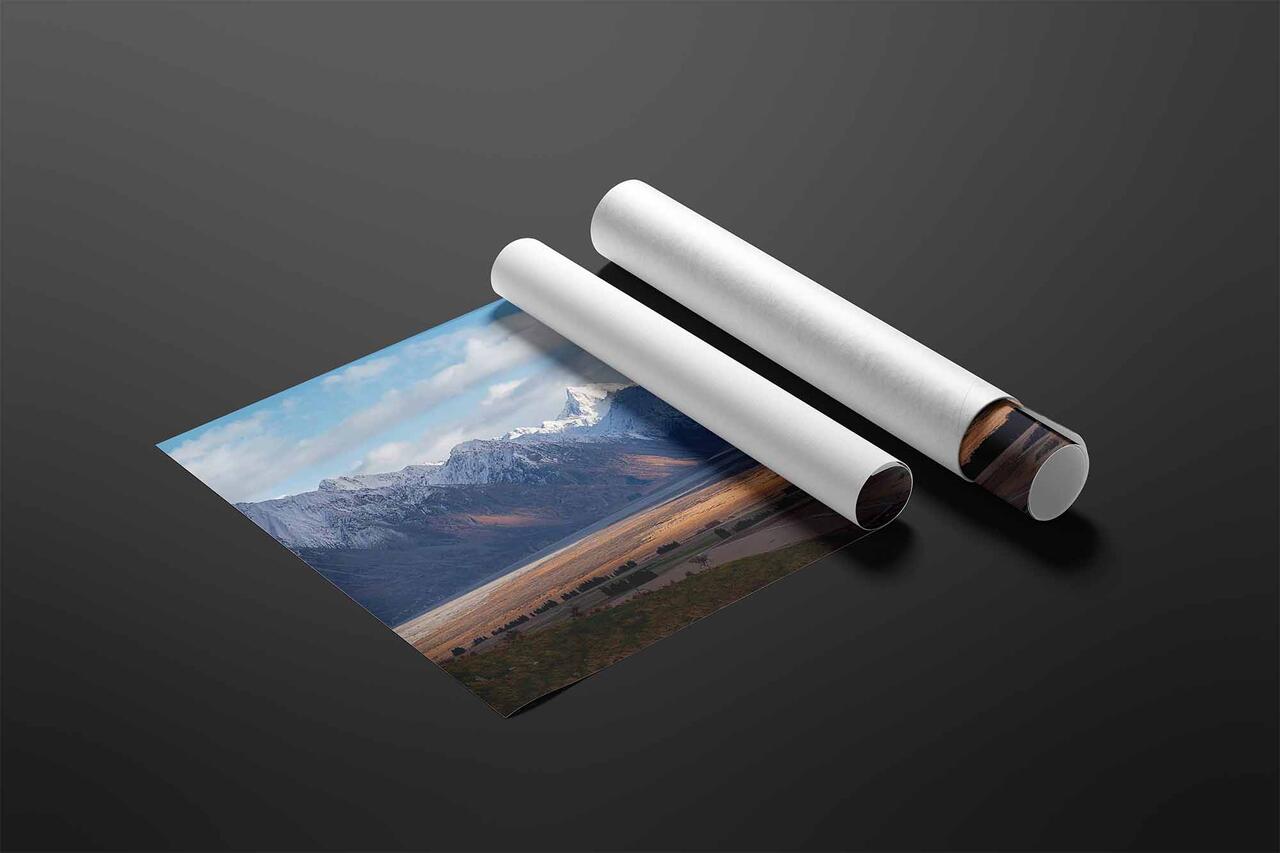
Fine Art Edition of 100· Hahnemühle Baryta Fine Art Paper
Printed without acrylic, so light meets the paper surface directly. Highlights stay luminous, shadows keep their nuance, and the surface has a tactile quality the other presentations approach differently. The understated choice, and the traditional one.
Complimentary shipping within the continental United States. International collector shipping available upon request.
Still deciding
Designing for Stillness
A guide to choosing art for restorative spaces
How to tell whether an image will still hold you in a year, how scale changes what a photograph does in a room, and how to match a piece to the work a room actually performs. It cites the research it draws on, and it is equally clear about where that research stops. About ten minutes to read.