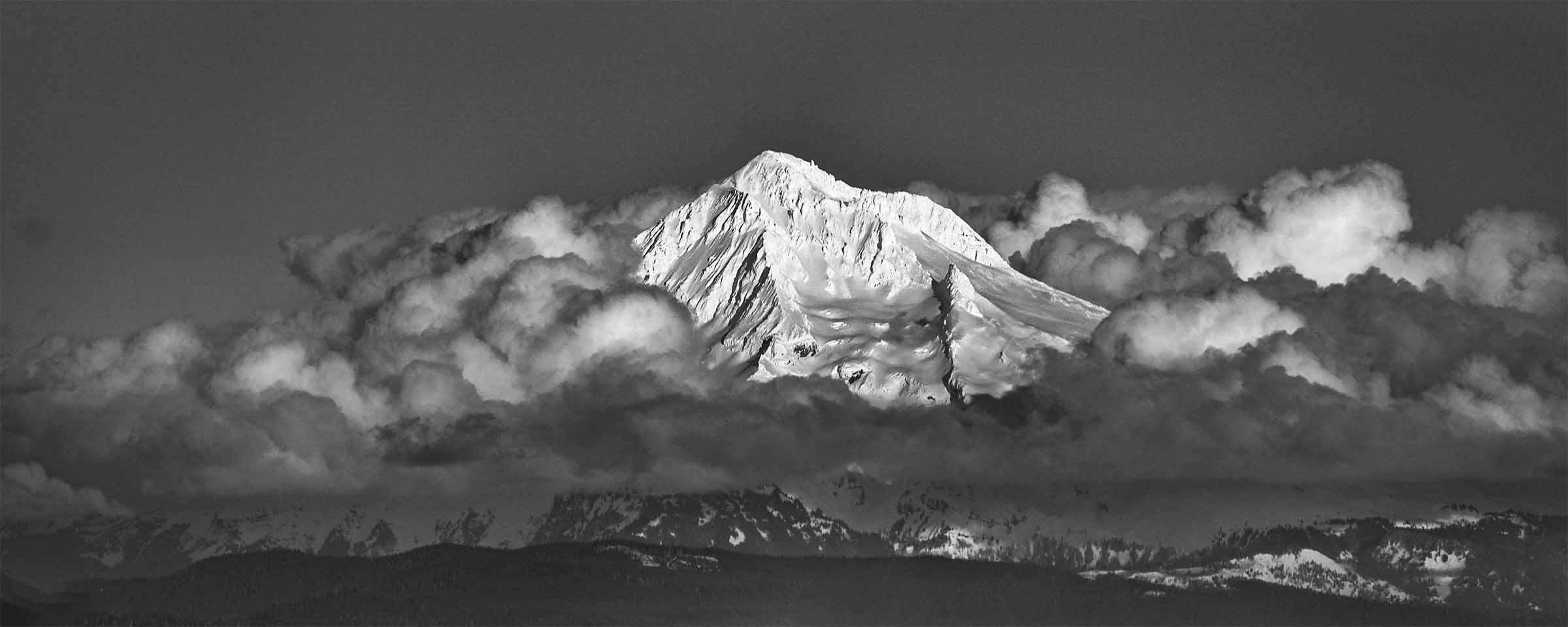
A 5:2 panoramic black and white photograph of the summit of Mount Hood above a band of cloud, Oregon, available as a limited edition print in three sizes.
Artist's Story
Mount Hood spends much of its time behind weather. On this morning the cloud had settled into a band across its middle, so the summit stood clear above it and the low ridges ran clear below it, and the slope that connects the two was simply gone.
I was on the same balcony I had been using all that summer, and made this one in black and white, because the color was doing nothing that the form was not already doing better.
Depth perception leans hard on the ground. You judge how far away something is largely by tracing the surface out to it, and when that surface is interrupted the estimate falls apart. With the middle of the mountain removed there was nothing to trace. The summit stopped reading as the top of a slope and started reading as an object at no particular distance, unmoored and considerably larger than it had any right to be. I knew exactly how far away it was. It made no difference at all.
Unmoored is that morning, when the mountain came loose from the ground it stands on and sat in the light by itself.
Something happens when a thing reads as bigger than the mind can file. I wrote about what that does to a person, and why it is worth putting on a wall, in Why Awe Belongs on Your Walls.
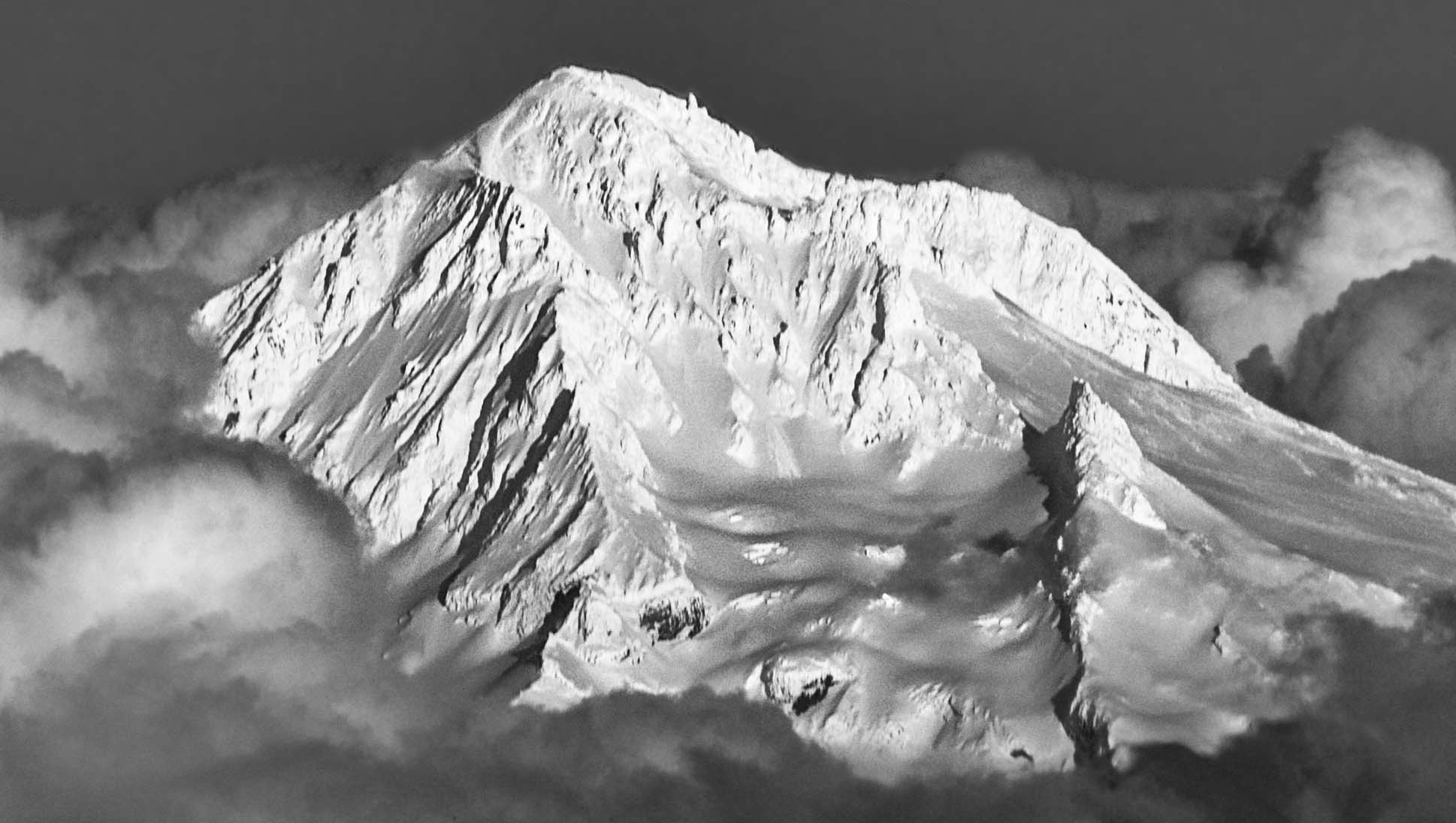
The summit, about three tenths of the frame width. Fluted ridges, the rock breaking through where the face is too steep to hold snow, and the crevassed ice below. Click to view at full size.
About This Photograph
Photographed from a private balcony in northwestern Oregon with a clear view of Mount Hood, on a morning when cloud settled in a band across the mountain's midsection. This is a single frame image, rendered in black and white. The subject is the summit of Mount Hood standing above the cloud layer, with forested ridges below. Mount Hood is an active stratovolcano in the Cascade Volcanic Arc, composed principally of andesite and dacite, whose main cone began forming roughly 500,000 years ago. It has had four eruptive periods in the last 15,000 years. At 11,249 feet it is the highest point in Oregon, though it once stood above 12,000 feet before ice and erosion took the summit down to its present height. Presented as a horizontal panorama, offered as an archival limited edition from 40 by 16 inches to 80 by 32 inches on acrylic, metal, or archival paper.
Unmoored
Steve Austinhttps://www.steveaustinphotography.com/
Location
Mount Hood, Cascade Range, Oregon
Subject
The summit of Mount Hood above a band of cloud, with the lower ridges below
Capture
Single frame, morning, rendered in black and white
Format
Photograph · horizontal panorama, 5:2
Sizes
40 × 16 in · 60 × 24 in · 80 × 32 in
Print Media
TruLife Acrylic · ChromaLuxe Metal · Baryta paper
Edition
Limited, 25 / 50 / 100 by presentation
What it Does in a Room
A photograph with a hole in the middle of it does something a complete one cannot. It refuses to sit flat on the wall.
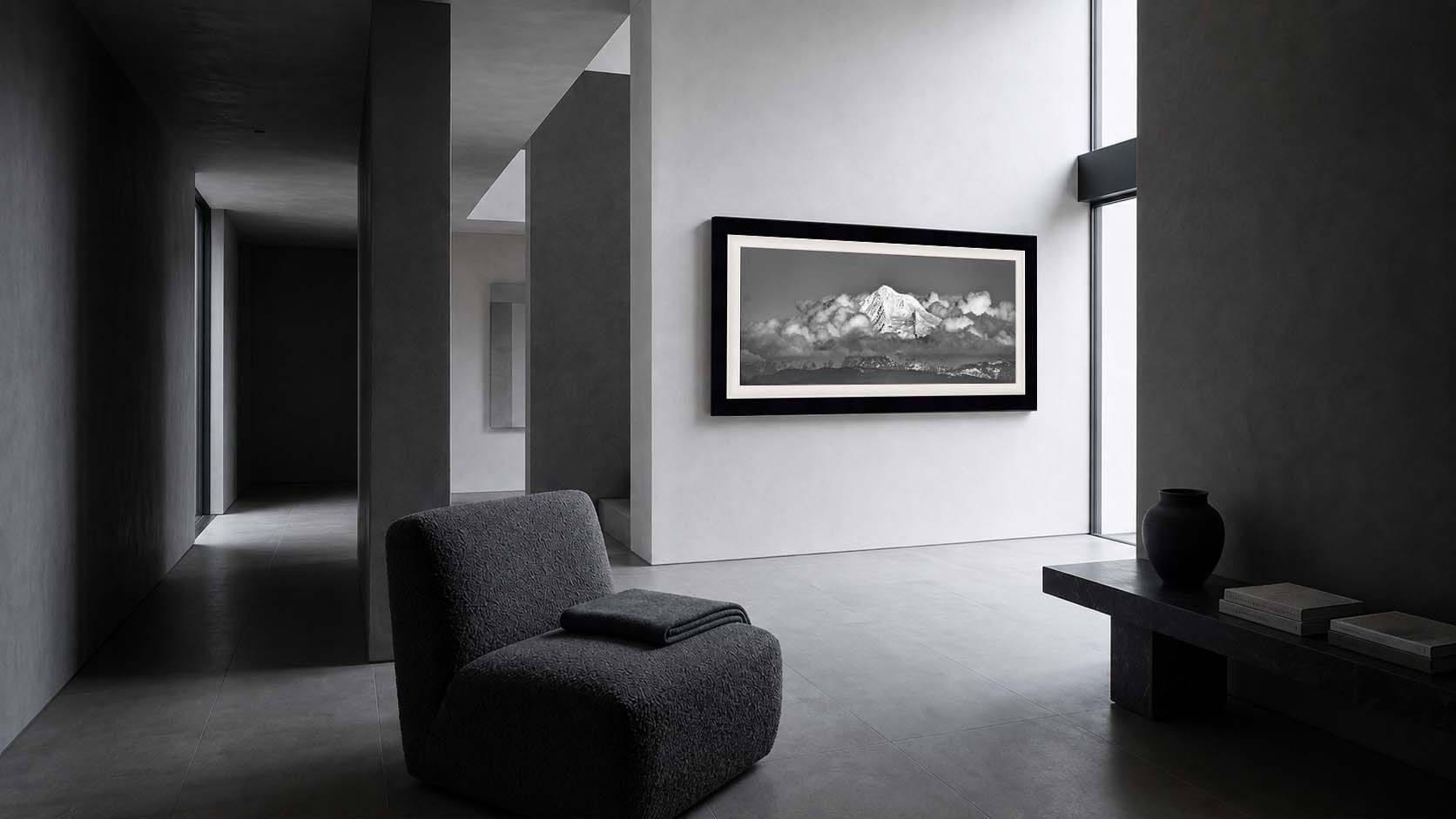
Five to two sits between a scene and a band. It is wider than a two to one panorama, so the eye travels rather than takes it in at once, but it keeps enough height to hold a foreground, a middle distance, and a horizon. In a room that combination matters. A very wide, very shallow frame extends a wall and little else. This proportion extends the wall and opens it, which is why it settles above a long sofa, a credenza, a run of cabinetry, or a headboard and then keeps working after the first glance. It asks for a run of wall rather than height, and about a quarter as much height as width. Sixteen to thirty-two inches will do it.
Here the proportion is holding three things that do not connect. The summit sits high in the frame, the ridges run low across the bottom, and between them is a band of cloud with nothing behind it. That gap is what the picture is about, and the width is what gives it room to read as a gap rather than as a crop. On a wall the effect is peculiar and it does not fade. The mountain never quite settles into a distance, so the print keeps a sense of depth that a photograph with an unbroken ground plane does not, and it holds that from across a room where most detail has stopped registering.
Being black and white, it places almost anywhere. There is no color in it to agree or disagree with a room. What is unusual about this one is the tonal weight. It carries almost no true black, running instead from a mid grey sky through the cloud to bright snow, so it reads lighter and quieter on a wall than most monochrome work and never resolves into a hard graphic shape. That suits pale rooms particularly well, where warm white plaster, limestone, oak, and linen let it sit in the same tonal register as the walls, and it holds against darker green or slate without going heavy. What it rewards most is a clear run of wall and daylight. The snow is the only bright thing in the frame and it comes forward in a lit room in a way it does not under a lamp.
Not sure which size the room calls for, or want dimensions not listed here? Sizes beyond 80 × 32 are available on request and ship crated by freight. That conversation is welcome before an order is placed. Start that conversation and I will answer within one business day.
How small is too small for a photograph this wide?
At five to two, the Intimate size is forty inches across and sixteen inches tall. That is a workable proportion at a modest scale, wide enough to read as a panorama and tall enough to keep the summit, the cloud, and the ridges as three separate things. This photograph holds together at that size better than most, because its structure is large and simple and none of it depends on fine detail. What you give up is the summit itself. At sixteen inches tall it becomes a small bright shape, and the ridged, fluted texture of the snow that makes it read as a mountain rather than as a triangle is mostly gone. A forty by sixteen print works well above a console, along a hallway, or on a narrower wall where a taller piece would not fit. The Collected at sixty by twenty-four is where the summit regains its surface. The Statement at eighty by thirty-two is where it takes on the scale the picture is arguing for. If you are weighing a size against a specific wall, choosing the right print size covers the measurements and the viewing distances in more detail.
What changes at the largest size?
The snow, and with it the sense that this is a solid object rather than a shape. At forty by sixteen the summit reads as a bright form with some modelling in it. At eighty by thirty-two the surface resolves into what it actually is: fluted ridges running down from the crest, the shadowed troughs between them, the darker rock breaking through where the face is too steep to hold snow, and the crevassed ice lower down where the glacier is pulling apart. The cloud does something similar. What looks like a soft band at the smaller size separates into individual towers with their own light and shade, some of them lit from the side and casting shadow onto the ones behind. That matters more here than on most photographs, because the whole picture depends on the mountain reading as massive and the cloud reading as substantial enough to hide half of it. Why scale matters covers what happens perceptually when a landscape reaches the size where the eye has to travel across it.
What kind of room does this photograph suit?
Almost any of them, and pale ones especially. There is no color in it to agree or disagree with anything, and it carries almost no true black, running instead from a mid grey sky through the cloud to bright snow. That makes it lighter and quieter on a wall than most black and white work, and it means the print never resolves into a hard graphic shape from a distance. Warm white plaster, limestone, oak, and linen let it sit in the same tonal register as the room. Deeper green and slate work too, and the snow comes forward against them. What it rewards most is daylight. The snow is the only bright thing in the frame, and in a lit room it carries the picture in a way it does not under a lamp. It also rewards a clear run of wall, since the three bands of the composition need horizontal room to separate, and a crowded wall closes them up.
Every work ships insured and arrives with a signed certificate of authenticity.
If a piece is damaged in transit, the choice of replacement is always yours, and your edition number stays with you.
Production time runs 2 to 3 weeks for metal, 3 to 4 weeks for acrylic and paper, and 5 to 6 weeks for framed work.
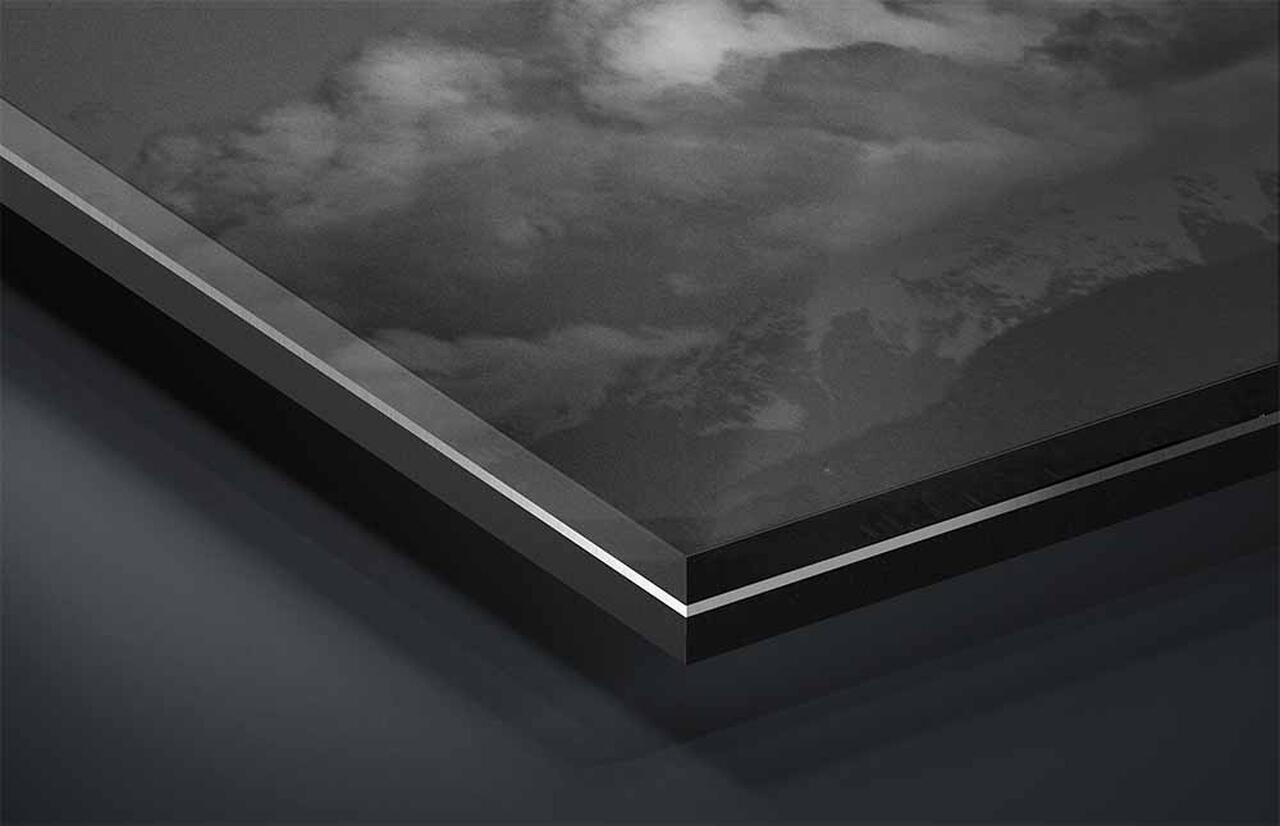
Collector's Choice · TruLife ® Acrylic in Italian Frame
Collector Edition of 25· Lumachrome TruLife Acrylic · Handcrafted Italian Frame
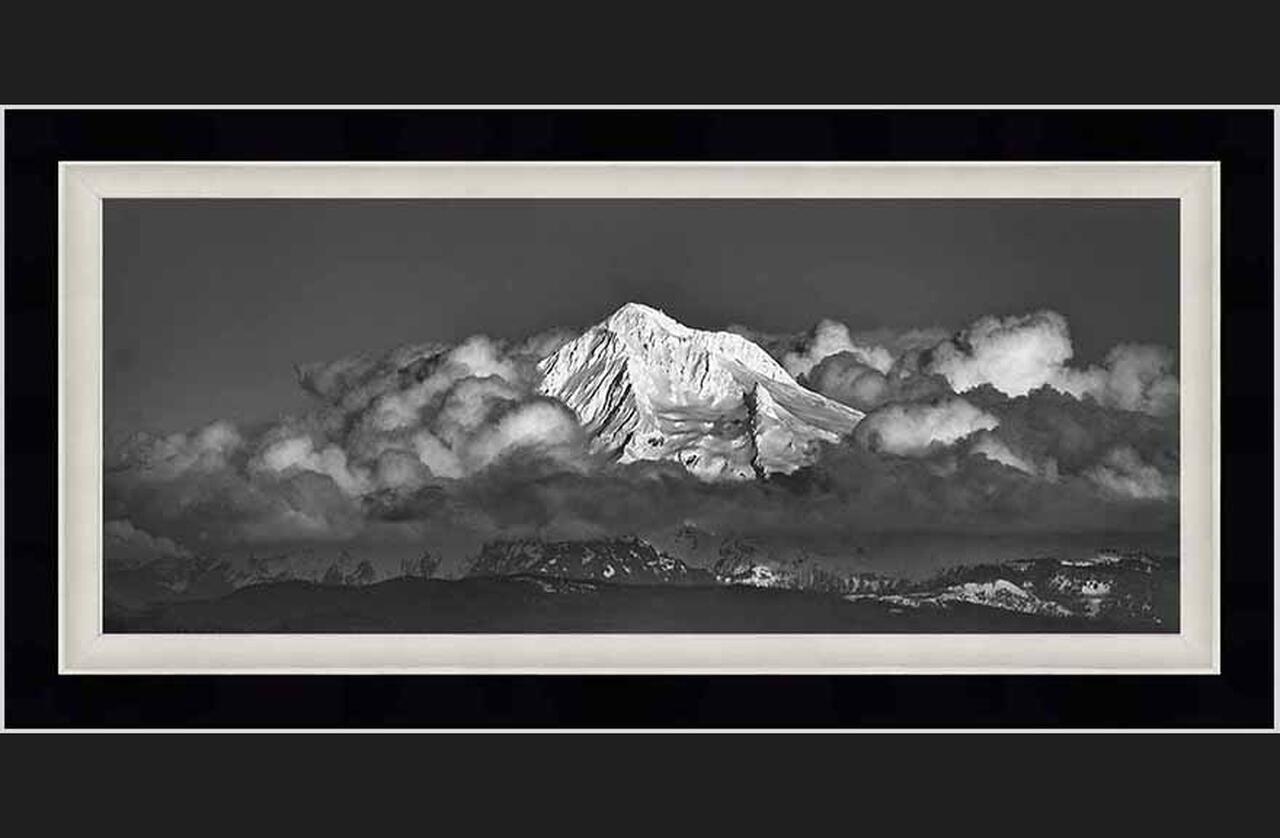
TruLife acrylic in a handcrafted Italian frame with a linen liner chosen for the image. Frame series, finish, and liner are settled with you after the order, and production begins from there. The frame and liner add about fourteen inches to the finished dimensions, worth allowing for when planning placement.
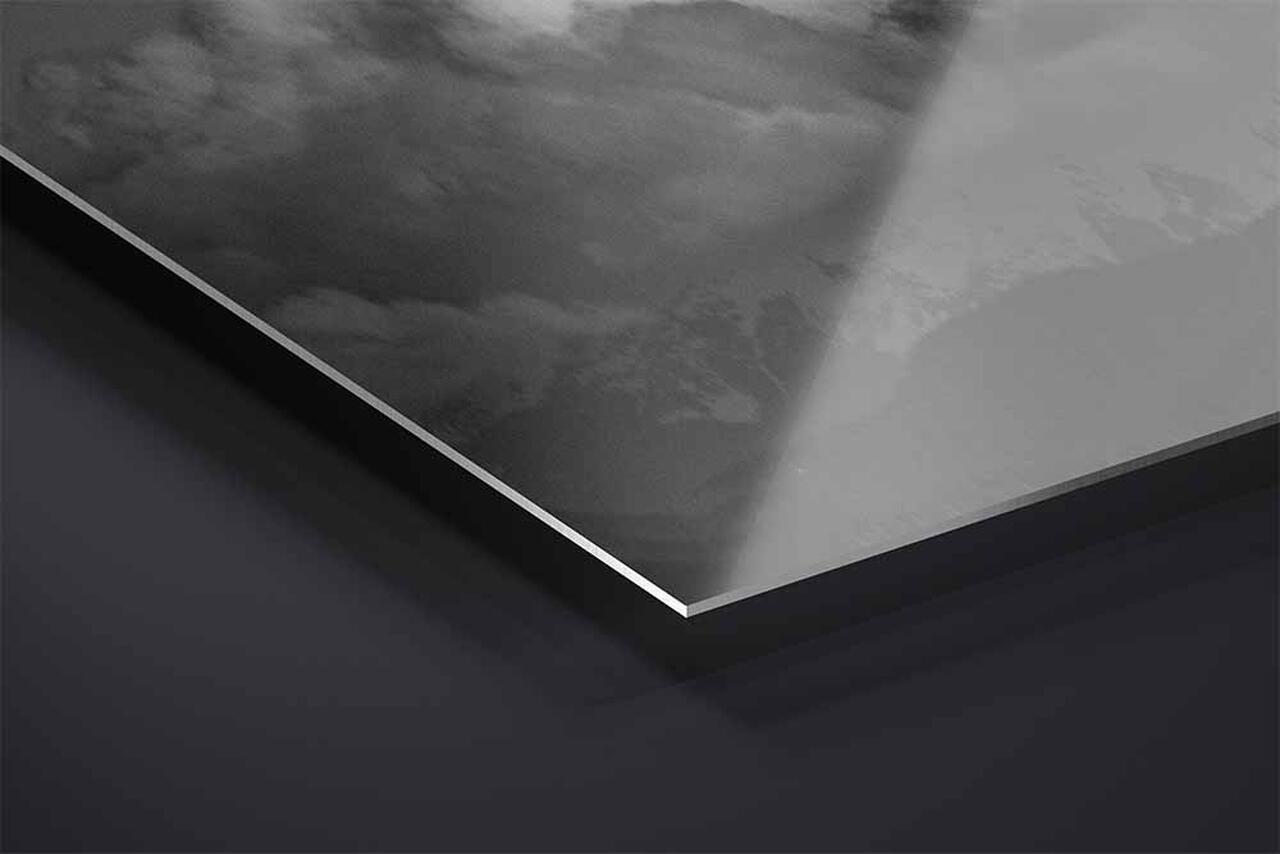
Signature Edition · TruLife ® Acrylic, Float Mount
Signature Edition of 50· Lumachrome TruLife Acrylic · Gallery Float Mount
Face-mounted to TruLife acrylic and floated approximately one inch from the wall, with no frame to mediate between the image and the room. UV-resistant, anti-reflective, and scratch-resistant, with a lifetime guarantee against fading.
Signature Edition of 50· ChromaLuxe Metal Print · Gallery Float Mount
Color infused into the aluminum panel itself, floated from the wall on a concealed system. Where acrylic produces luminosity, metal produces clarity. Exceptional fade resistance with no glazing or coating required.
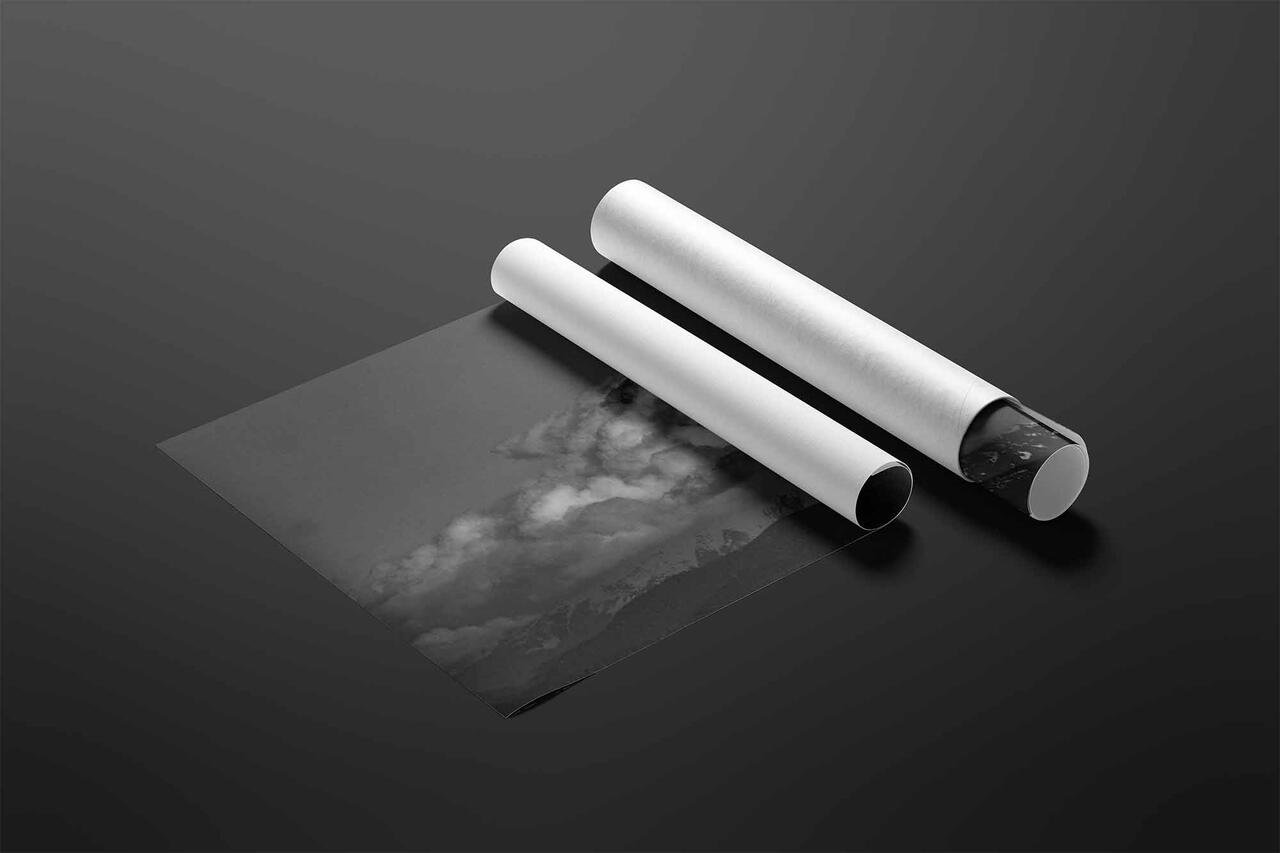
Fine Art Edition of 100· Hahnemühle Baryta Fine Art Paper
Printed without acrylic, so light meets the paper surface directly. Highlights stay luminous, shadows keep their nuance, and the surface has a tactile quality the other presentations approach differently. The understated choice, and the traditional one.
Complimentary shipping within the continental United States. International collector shipping available upon request.
Still deciding
Designing for Stillness
A guide to choosing art for restorative spaces
How to tell whether an image will still hold you in a year, how scale changes what a photograph does in a room, and how to match a piece to the work a room actually performs. It cites the research it draws on, and it is equally clear about where that research stops. About ten minutes to read.