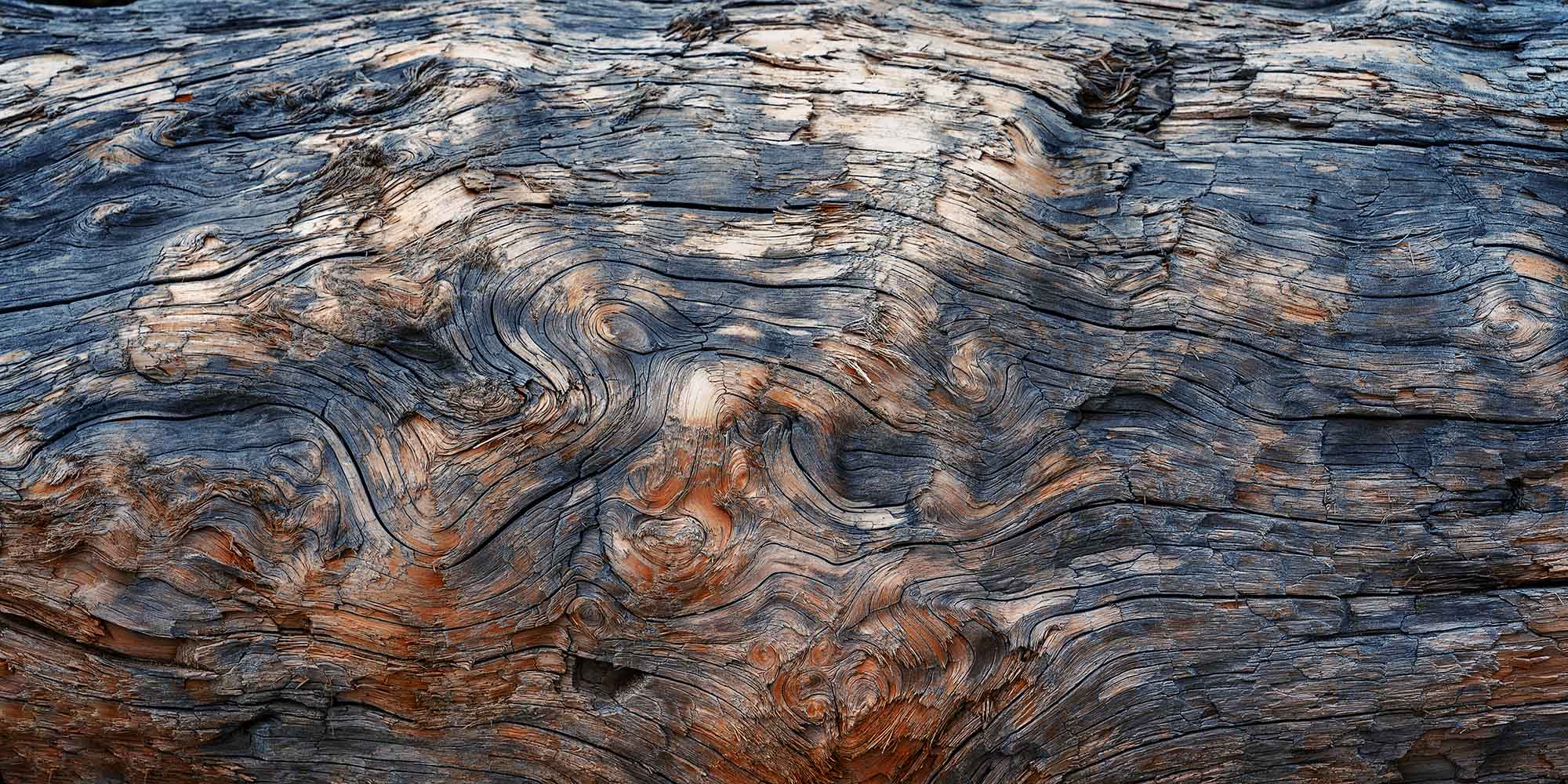
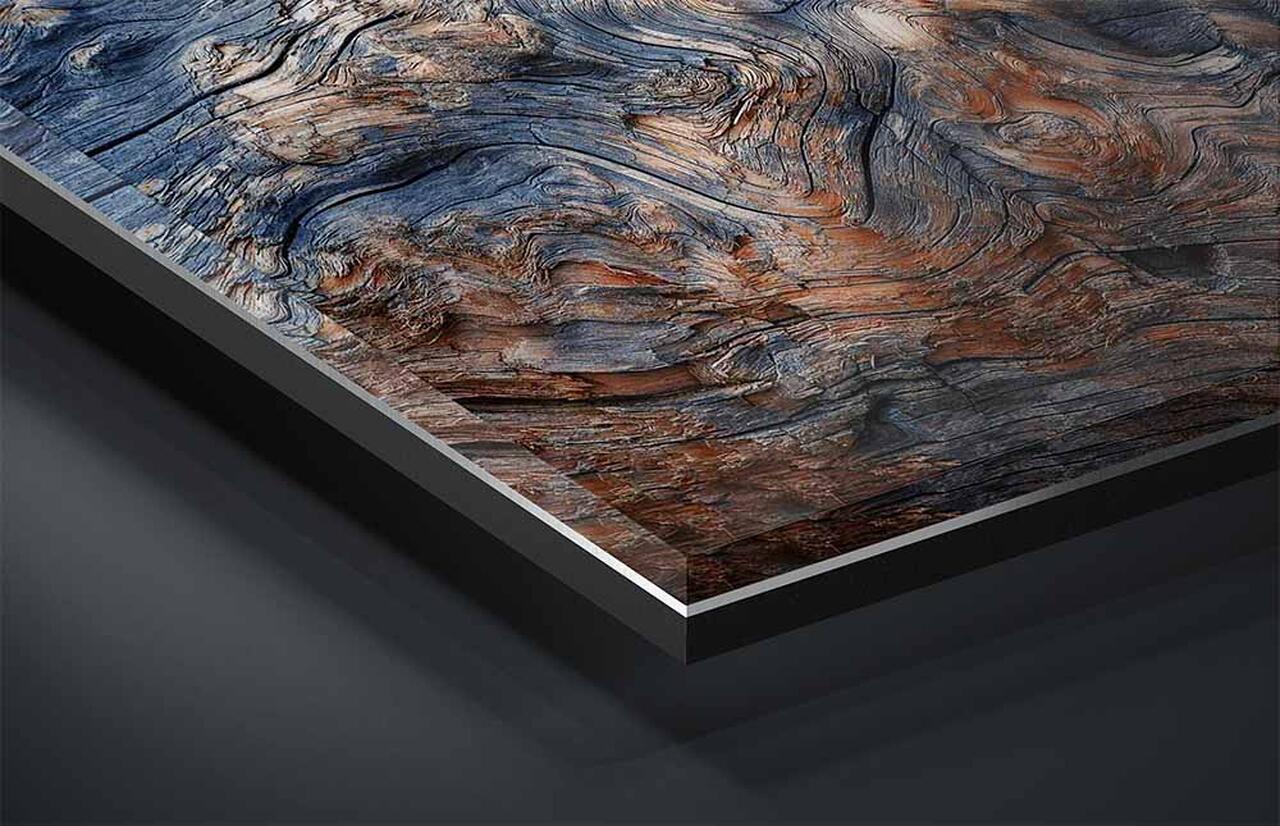
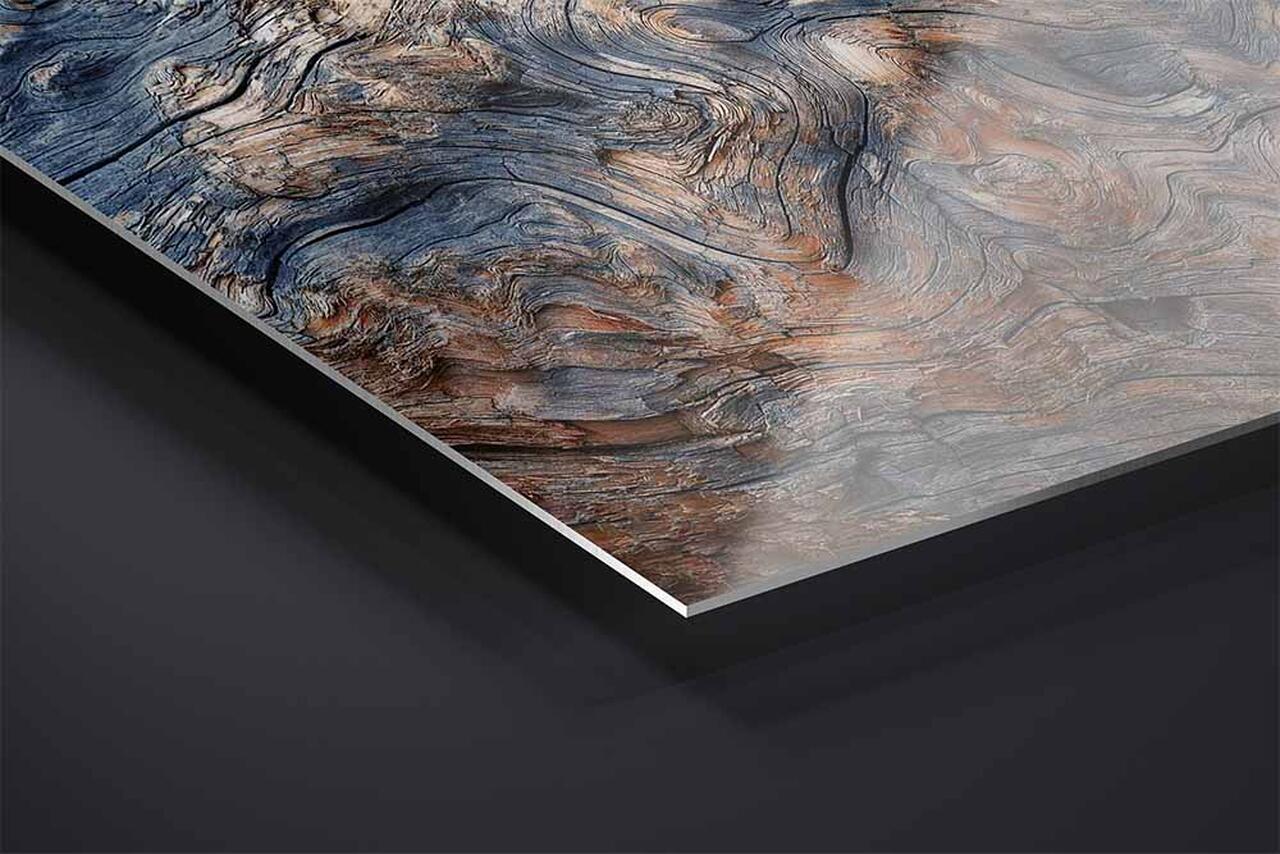
A 2:1 panoramic photograph of weathered driftwood grain on the beach at Bandon, Oregon, available as a limited edition print in three sizes.
Artist's Story
The log on the beach at Bandon was two colors and it took me a while to work out why. Most of it was a silver blue-gray, and wherever the surface had broken or worn through, the wood underneath was a warm orange-brown.
Wood is mostly cellulose and lignin. The lignin is the part that holds the color, the browns and the yellows, and it is also the part that absorbs ultraviolet light. Absorbing it is what breaks it down. Sunlight takes the lignin apart at the surface, rain dissolves what is left of it and carries it off, and the cellulose stays, because cellulose is far less bothered by ultraviolet. What remains is a layer of loose pale fibers lying over wood that was never touched.
So the silver has a thickness. It is about as deep as a coat of paint. Sand a driftwood log for a minute and you are back to the color the tree made, and it will look like lumber.
That is what this frame is: both layers at once, side by side, wherever the top one has failed. Roughly a quarter of this picture is the weathered surface and roughly another quarter is the wood beneath it, and they sit about seventy-five points apart in color. The silver gathers along the top of the log, which is the side that faced the sky. Lower down, where the sun reached at an angle or not at all, the brown is still winning.
I had thought of driftwood color as an amount of time. It is a distance instead, and a short one.
Patina is the name for the silver. Everything under it is the wood the tree made, and it is closer to the surface than it looks.
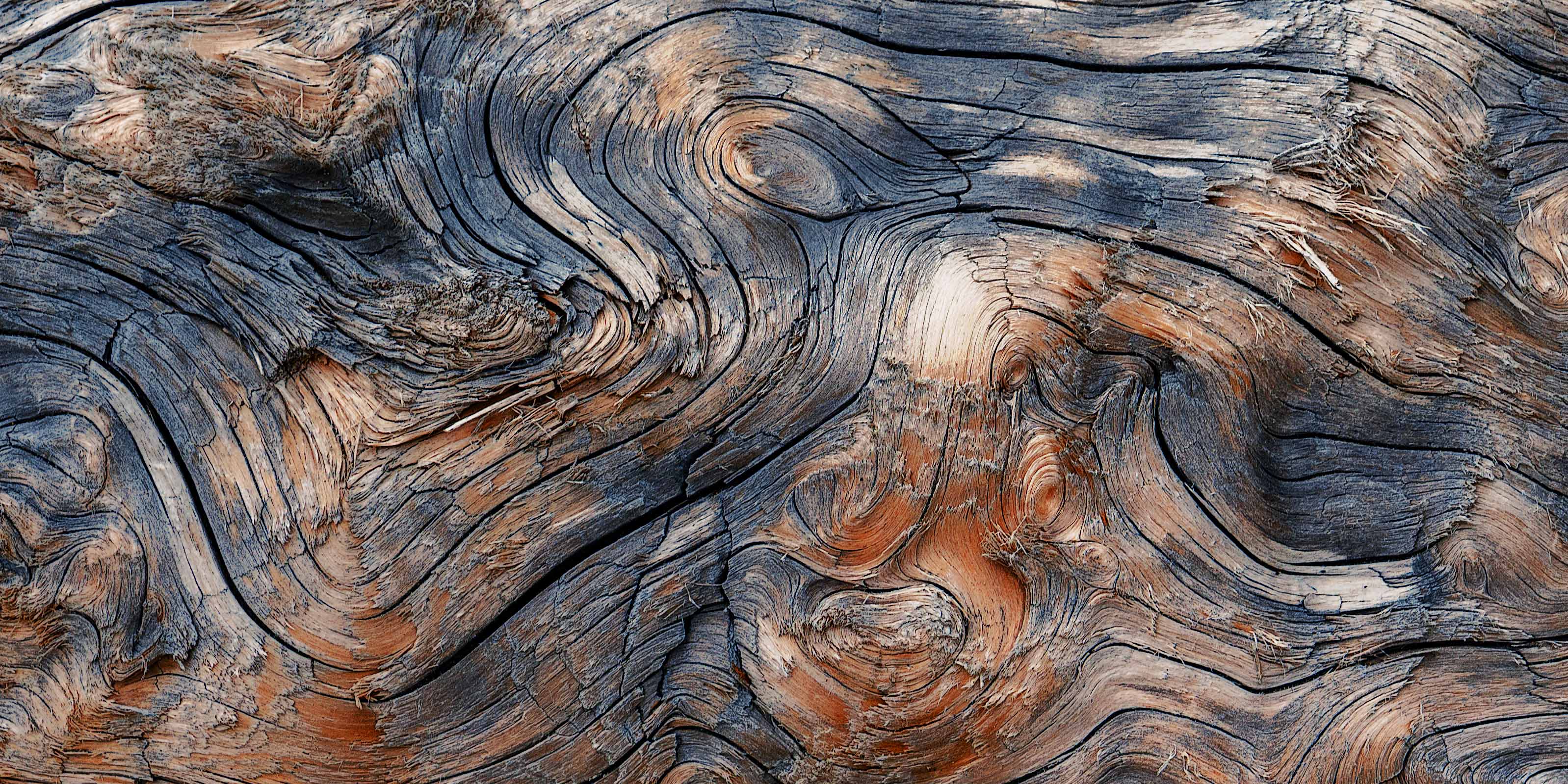
A section of the grain at about a third of the frame width. On an eighty inch print this runs roughly twenty-six inches across. The weathered face separates into individual raised fibers with shadow between them, the splits open into channels with visible depth, and along their edges the pale surface gives way to the brown wood underneath. Around each knot the grain resolves into separate parallel lines turning aside and closing again past it. Click to view at full size.
About This Photograph
A driftwood log on the beach at Bandon, on the southern Oregon coast. This is a single frame image. The whole frame is one section of one log, and no part of the beach, the sea, or the sky appears in it.
The two colors are present in almost equal amounts. About a quarter of the frame runs warm and about a quarter runs cool, and the two are roughly seventy-five points apart on a red-to-blue measure. Because they are so evenly matched they cancel, and the picture as a whole measures within two points of neutral. It is a neutral photograph made entirely out of two opposed colors.
The grain runs in long curved figures rather than in straight lines, which happens where a trunk has grown around a limb or a wound. The narrow dark splits crossing the surface open outward from the center of the log, because wood shrinks about twice as much around a trunk as it does out from the middle of one.
Patina
Steve Austinhttps://www.steveaustinphotography.com/
Location
Bandon, Oregon
Subject
Weathered driftwood · wood grain · coastal detail
Capture
Single frame in overcast light
Format
Photograph · horizontal panorama, 2:1
Sizes
40 × 20 in · 60 × 30 in · 80 × 40 in
Print Media
TruLife Acrylic · ChromaLuxe Metal · Baryta paper
Edition
Limited, 25 / 50 / 100 by presentation
What it Does in a Room
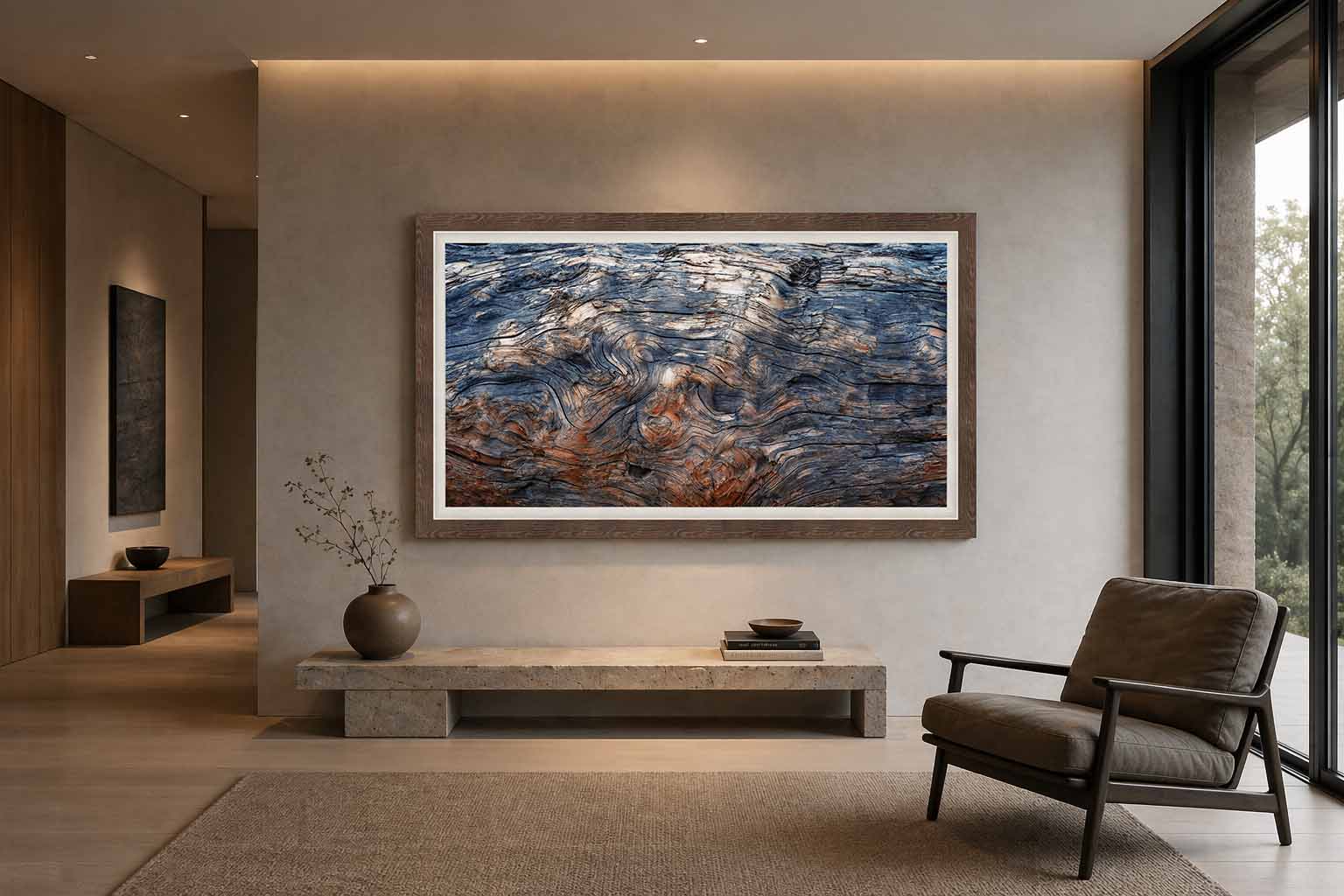
This photograph has no scale in it, and that changes where it can go. There is no horizon, no sky, no object of known size, and nothing to tell a viewer whether they are looking at a foot of wood or ten feet of it. A landscape carries its own distance into a room and asks the room to give it space to be far away. This one asks for nothing of the kind, because it is not depicting a place at a distance. It works on a short wall, in a narrow room, across a corridor, or anywhere a viewer stands closer to it than they would to a view.
It is also, by measurement, a neutral, and that is unusual for a picture with this much color in it. The warm and the cool are present in almost equal quantity and they cancel to within two points of neutral across the frame. What that means on a wall is that the picture will not pull a room in either direction. It contains rust and it contains blue-gray, so it agrees with warm materials and cool ones alike, and it will not warm a cool room or cool a warm one the way a picture weighted to one side does.
The third thing is that it rewards a short viewing distance, which is rarer than it sounds. Most of this collection is built to be seen from across a room, and this piece is built to be stood in front of. The grain figure resolves further the closer you get, and there is no point at which it stops giving. That makes it well suited to a hallway, a stairwell landing, a bedroom wall beside a bed, or anywhere a person passes within a few feet rather than viewing from a seat.
Not sure which size the room calls for, or want dimensions not listed here? Sizes beyond 80 × 40 are available on request and ship crated by freight. That conversation is welcome before an order is placed. Start that conversation and I will answer within one business day.
How small is too small for a photograph this wide?
At two to one the Intimate size is forty inches across and twenty inches tall, and a texture study behaves differently from a landscape at that size. A landscape at forty by twenty loses its far detail and keeps its structure. This one has no far detail and no structure in that sense, so what it loses is the fine grain, the hairline splits, and the individual fibers standing up off the weathered surface. What survives is the large figure, the curved sweep of the grain around the knots, and the division between the silver and the brown. That is a legitimate picture, and a graphic one, but it is a different experience from the same photograph at a size where you can stand close and keep finding things. The Collected at sixty by thirty is where the fine grain comes back. If you are weighing a size against a specific wall, choosing the right print size covers the measurements and the viewing distances in more detail.
What changes at the largest size?
The surface stops being a color and becomes a texture. At eighty by forty the weathered face separates into individual raised fibers with shadow between them, and you can see that the silver is a loose fibrous layer rather than a stain lying flat on the wood. The hairline splits open into channels with visible depth, and along their edges the transition from the pale surface to the brown beneath becomes an edge you can follow rather than a blur. The curved grain around each knot resolves into separate lines, close together and running parallel, so the figure reads as growth rings redirected around an obstruction. At this size the log is roughly life size or larger, which puts a viewer at the distance they would be standing at on the beach. Why scale matters covers what happens perceptually when a photograph reaches the size where the eye has to cross it.
What kind of room does this photograph suit?
Rooms where someone will be near it. This is not a piece for the far end of a long room, because most of what it has to offer arrives inside about six feet. Hang it where a person walks past, sits beside, or stands in front of: a hallway, a landing, a bedroom, a study wall behind a desk. On materials it is undemanding, since it carries both a warm and a cool register and finds something to agree with in almost any palette. The one thing to avoid is putting it next to wood, particularly a wide expanse of oak or walnut, because a large photograph of wood grain hung above a wood surface reads as a sample of the material rather than as a picture of a thing. When your mind needs to rest takes the question further.
Every work ships insured and arrives with a signed certificate of authenticity.
If a piece is damaged in transit, the choice of replacement is always yours, and your edition number stays with you.
Production time runs 2 to 3 weeks for metal, 3 to 4 weeks for acrylic and paper, and 5 to 6 weeks for framed work.
Collector's Choice · TruLife ® Acrylic in Italian Frame
Collector Edition of 25· Lumachrome TruLife Acrylic · Handcrafted Italian Frame
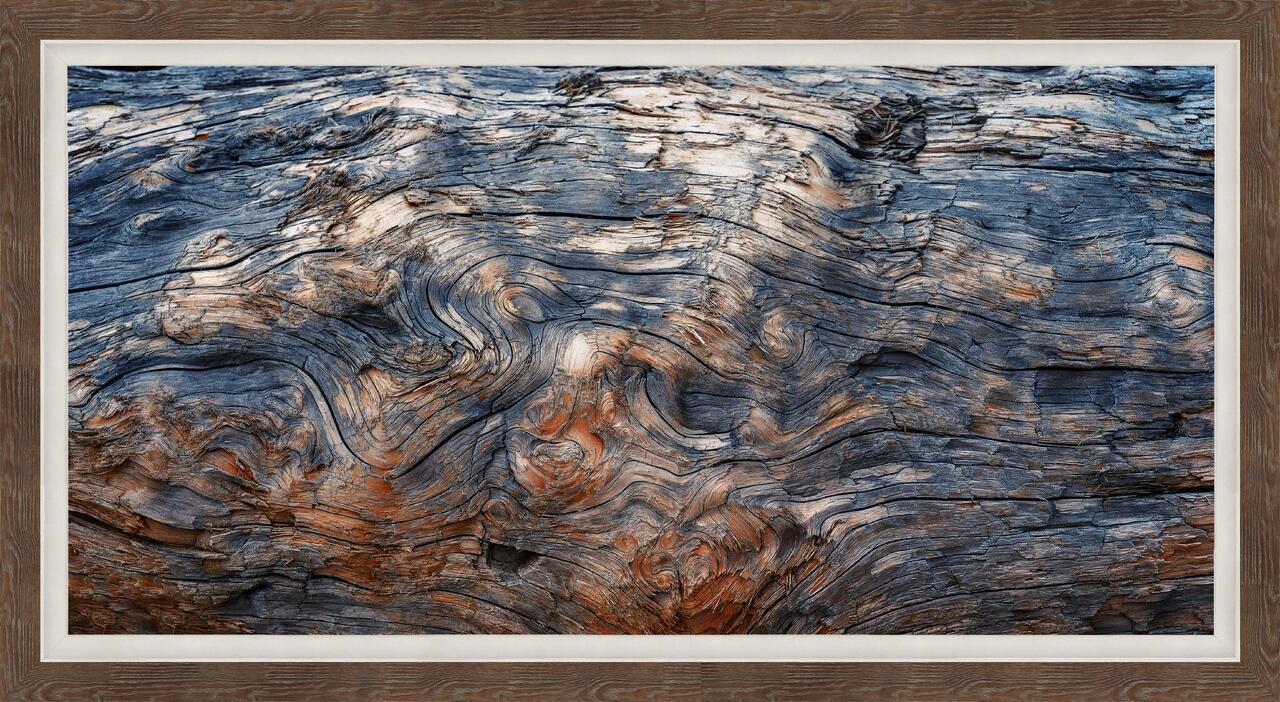
TruLife acrylic in a handcrafted Italian frame with a linen liner chosen for the image. Frame series, finish, and liner are settled with you after the order, and production begins from there. The frame and liner add about fourteen inches to the finished dimensions, worth allowing for when planning placement.
Signature Edition · TruLife ® Acrylic, Float Mount
Signature Edition of 50· Lumachrome TruLife Acrylic · Gallery Float Mount
Face-mounted to TruLife acrylic and floated approximately one inch from the wall, with no frame to mediate between the image and the room. UV-resistant, anti-reflective, and scratch-resistant, with a lifetime guarantee against fading.
Signature Edition of 50· ChromaLuxe Metal Print · Gallery Float Mount
Color infused into the aluminum panel itself, floated from the wall on a concealed system. Where acrylic produces luminosity, metal produces clarity. Exceptional fade resistance with no glazing or coating required.
Fine Art Edition of 100· Hahnemühle Baryta Fine Art Paper
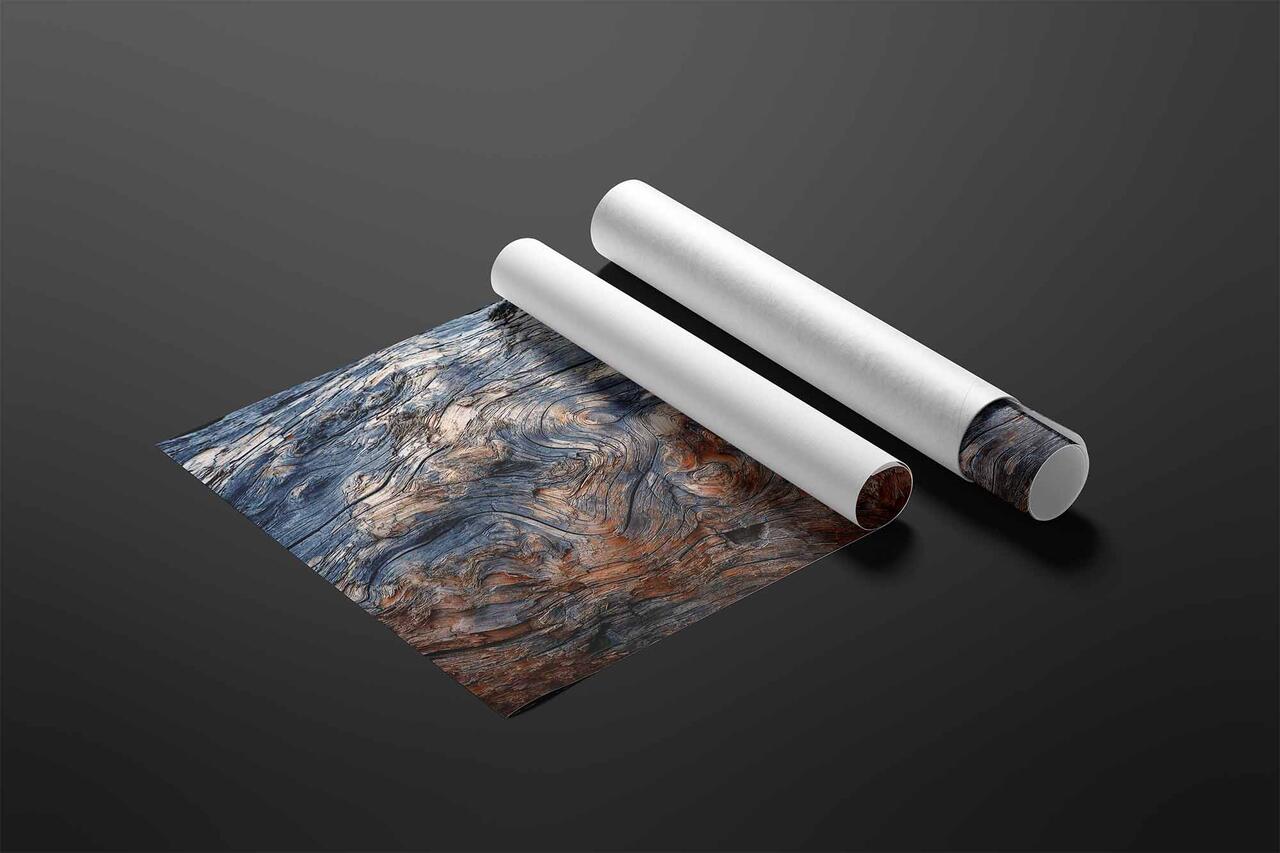
Printed without acrylic, so light meets the paper surface directly. Highlights stay luminous, shadows keep their nuance, and the surface has a tactile quality the other presentations approach differently. The understated choice, and the traditional one.
Complimentary shipping within the continental United States. International collector shipping available upon request.
Still deciding
Designing for Stillness
A guide to choosing art for restorative spaces
How to tell whether an image will still hold you in a year, how scale changes what a photograph does in a room, and how to match a piece to the work a room actually performs. It cites the research it draws on, and it is equally clear about where that research stops. About ten minutes to read.