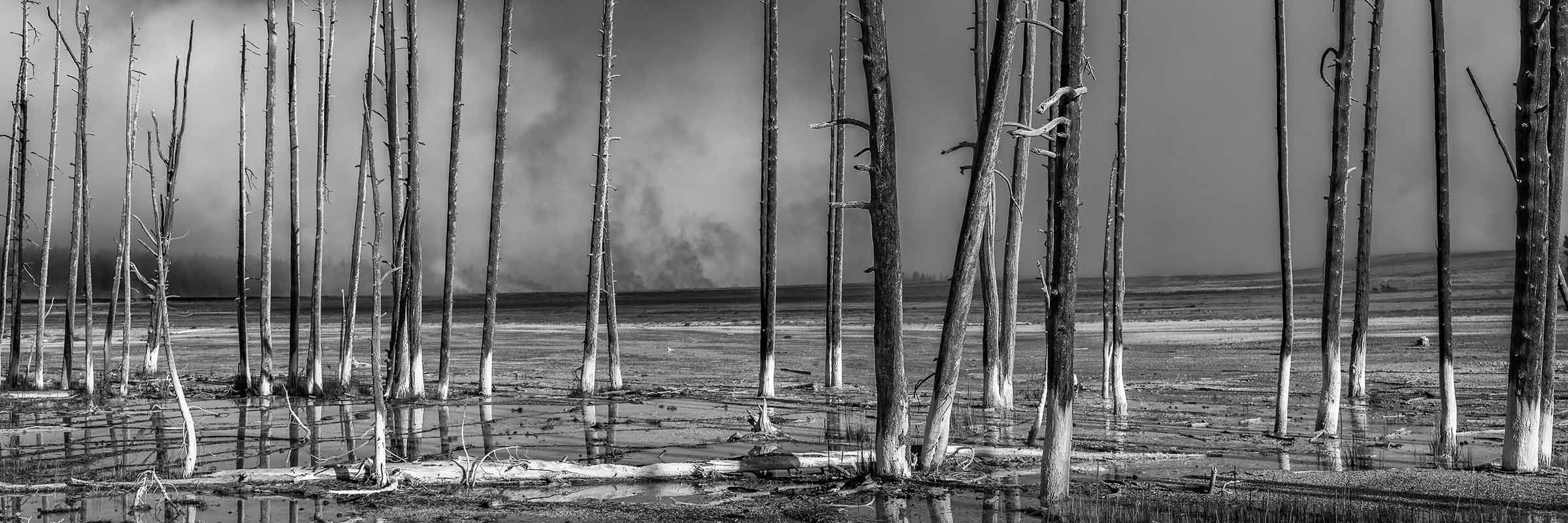
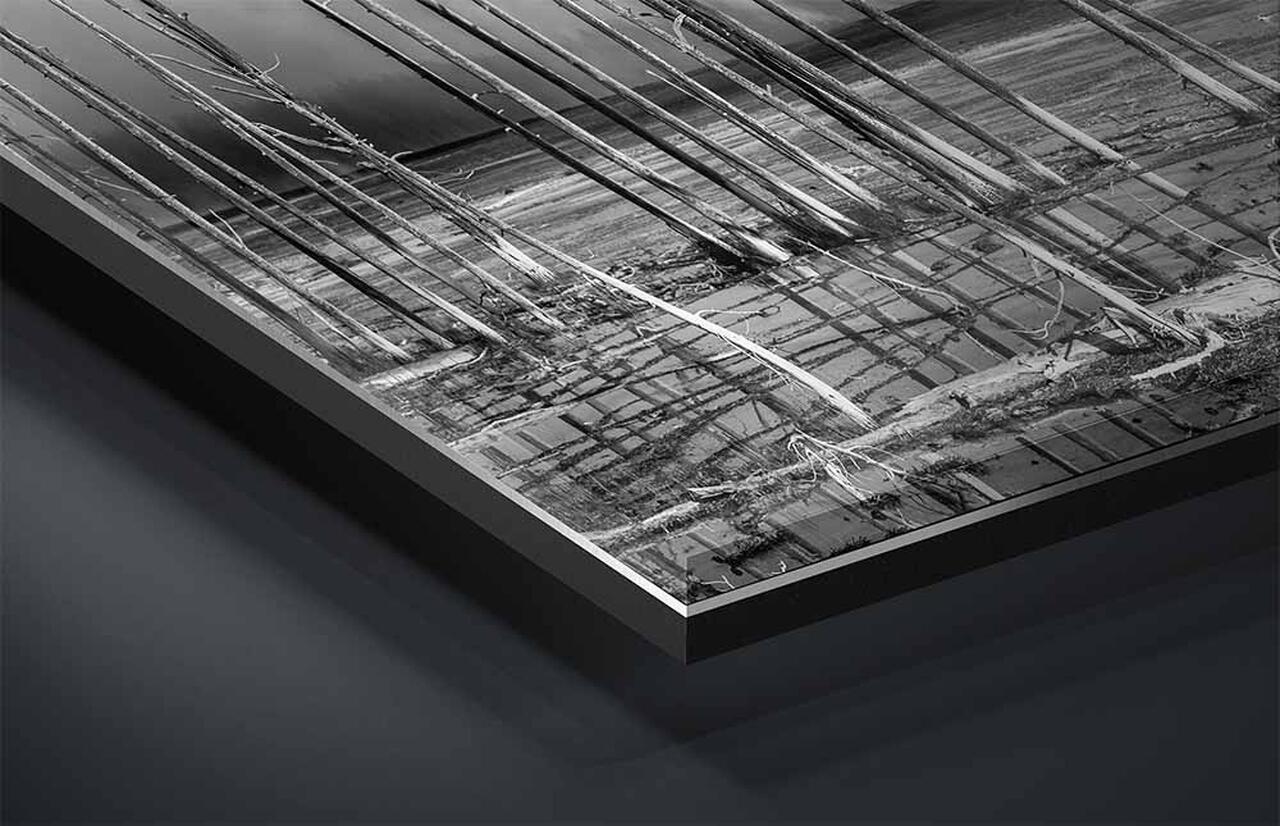
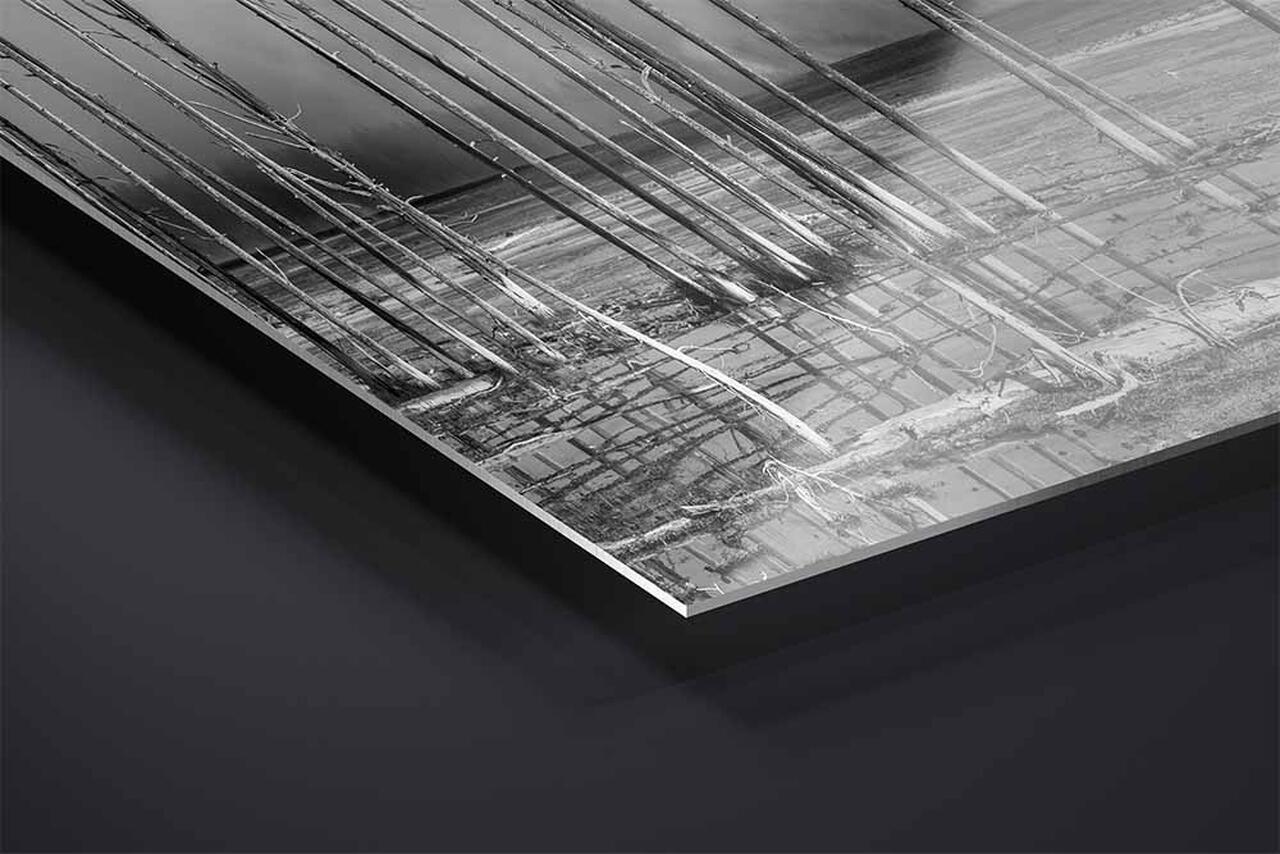
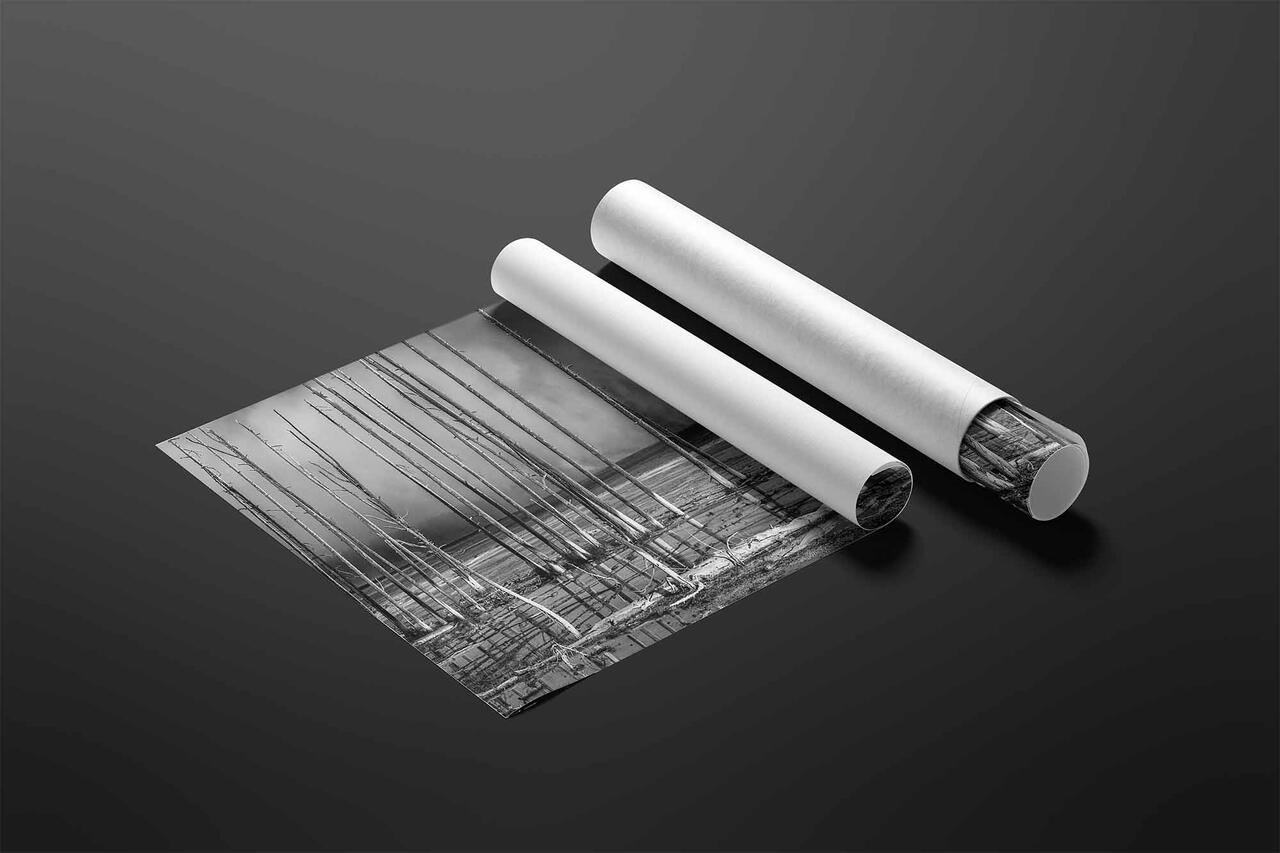
A 3:1 panoramic black and white photograph of a drowned stand of pines in a Yellowstone geothermal basin, Wyoming, available as a limited edition print.
Artist's Story
In the geothermal basins of Yellowstone the ground does not stay put. A thermal feature shifts underground, hot silica-rich water reaches a patch of soil that was dry a decade ago, and the lodgepole pines rooted there die where they stand. This stand drowned that way. The trees are bleached white at the base, where the mineral wicked up into the wood, and behind them the steam of the feature that killed them is still rising.
I was there on a humid summer morning, the air sharp with the sulfur smell the basins carry, when the steam started building along the horizon.
What is strange to stand in is that nothing here is old. We read a field of bare grey trunks as ancient, a ruin, a thing from long ago, because that is what dead forests usually are. This one is recent and ongoing. The ground is still moving, the water is still spreading, and somewhere at the edge of this basin there are living pines standing exactly where these were a few decades back, next in line. It is not a scene of aftermath. It is a scene of something partway through, photographed at the moment the tide had reached this particular stand.
Nothing is being taken from the forest, only moved. The basin kills here and the trees grow somewhere else, and the mineral that ended these will hold them upright for decades yet. All Is Not Lost is that stand, white-footed in the water that took it, with the living forest still waiting its turn at the margins.
I photographed a single one of these trees elsewhere in the park, close enough to see how far up the mineral got. That one is One.
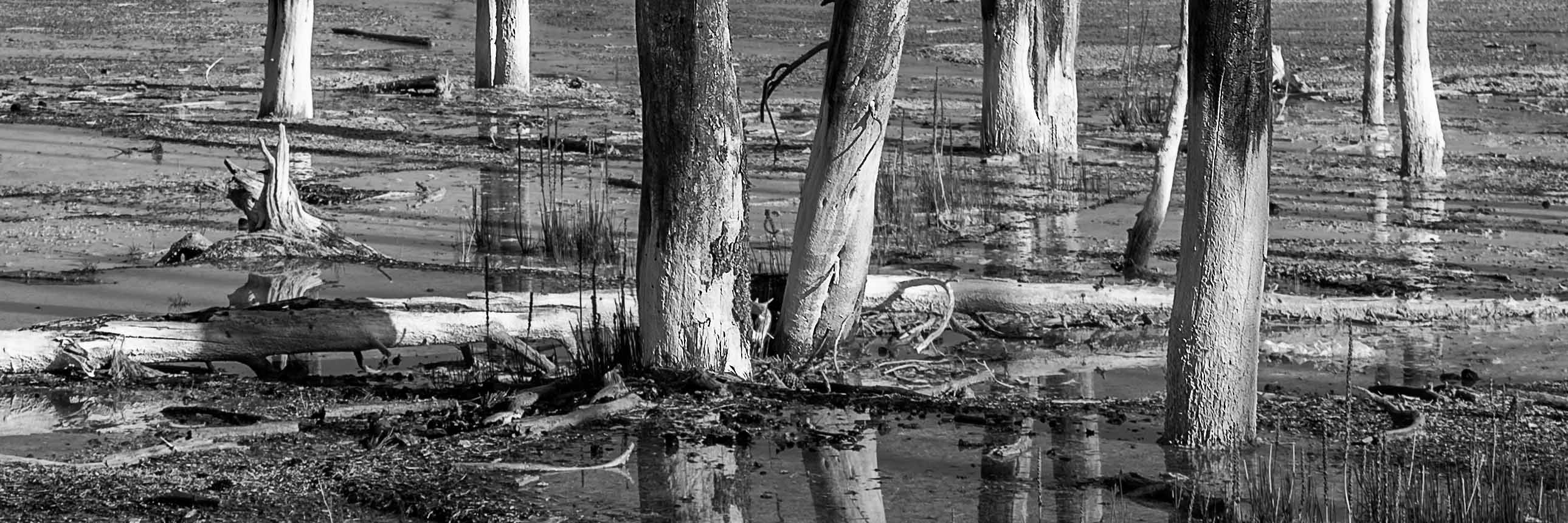
The base of the stand, about a quarter of the frame width. The white foot on each trunk climbs to a different height, which is the record of how far the mineral got. Click to view at full size.
About This Photograph
Photographed in a geothermal basin in Yellowstone National Park, Wyoming, on a summer morning with steam rising behind. This is a single frame image, rendered in black and white. The subject is a stand of dead lodgepole pines, Pinus contorta, killed where shifting hydrothermal activity brought hot, silica-rich water into ground the trees were rooted in. The silica wicks up into the lower trunks, bleaching them white and hardening the wood so the dead trees remain standing for decades. Such die-offs move over time as thermal features migrate, killing new ground while older stands slowly fall. The trunks stand in shallow water over pale mineral flats.
All Is Not Lost
Steve Austinhttps://www.steveaustinphotography.com/
Location
Yellowstone National Park, Wyoming
Subject
A drowned stand of lodgepole pines in a geothermal basin, steam rising behind
Capture
Single frame, summer morning, rendered in black and white
Format
Photograph · horizontal panorama, 3:1
Sizes
36 × 12 in · 60 × 20 in · 90 × 30 in
Print Media
TruLife Acrylic · ChromaLuxe Metal · Baryta paper
Edition
Limited, 25 / 50 / 100 by presentation
What it Does in a Room
A photograph made entirely of vertical lines does something to a horizontal wall that nothing else does. It rules it.
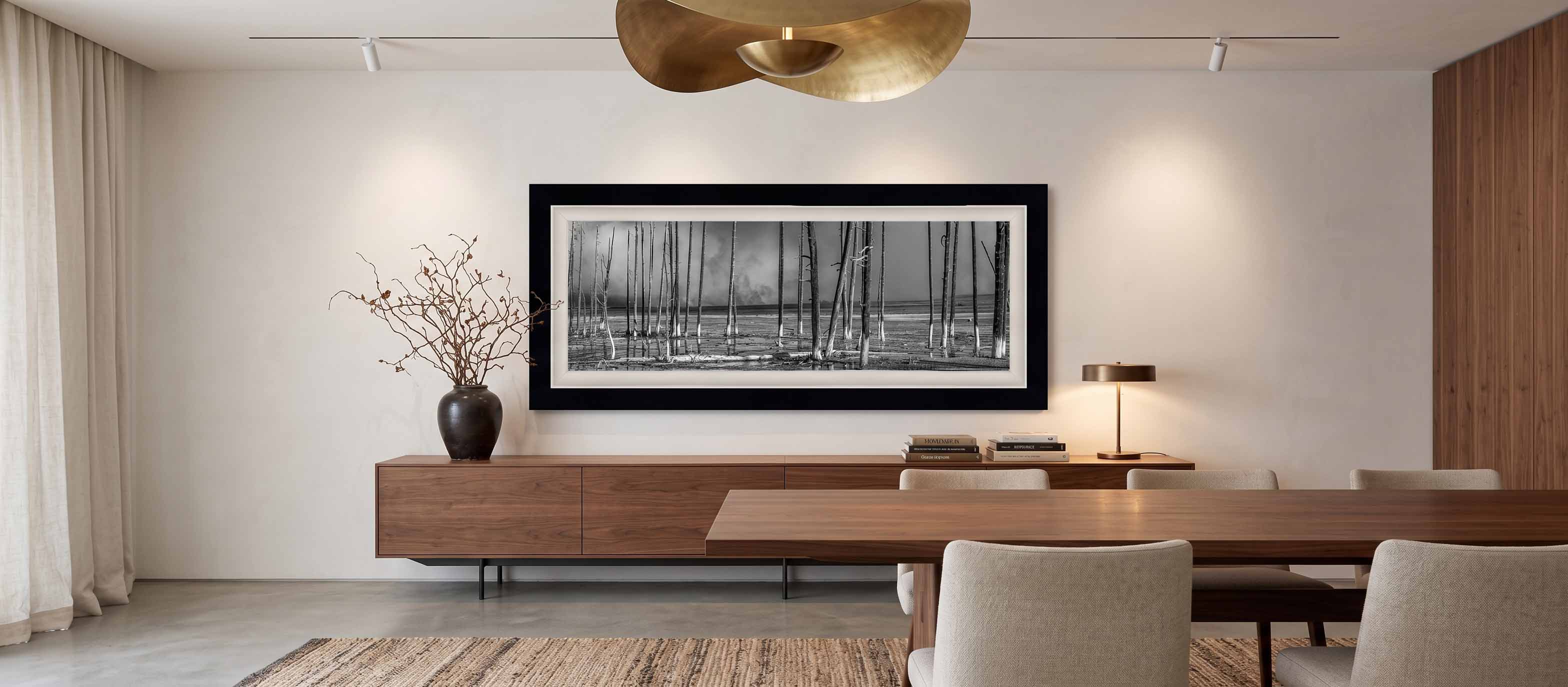
Three to one is the widest proportion in the collection, and it behaves differently from everything else. A two to one panorama still reads as a scene you are looking at. At three to one the frame passes beyond what the eye takes in at once, so you read it the way you read a room, by turning your head. That changes what it does to a space. It draws the horizontal line of the wall out and holds it, which makes a room feel longer and lower and calmer, and it settles above a long sofa, a run of cabinetry, a credenza, or a headboard in a way no other shape manages. It asks for a run of wall rather than height, and very little of that height. A band twelve to thirty inches tall will do, which is why this proportion often works above furniture where nothing else fits.
Here the width is filled with verticals and almost nothing else. Forty or fifty bare trunks stand across the frame at every spacing, with their reflections running down into the water beneath them, so the whole picture is a rhythm rather than a scene. That is what makes it restful on a wall. There is no subject and nowhere to arrive, only a field of repeating lines that the eye moves through and comes back through, and repetition of that kind holds attention without demanding any. It is also why the extreme proportion suits it: a shorter frame would make the trunks look crowded, and this one gives them room to space themselves out.
Being black and white, it places almost anywhere, and this one is easier than most of the monochromes here. It sits mid-weighted rather than dark, running from the pale bleached wood at the base of the trunks through grey mineral flats to the soft steam behind, with real black only in the wet ground. That means it neither brightens nor anchors a room, it simply belongs to one, and it will not compete with anything already in the space. Warm white plaster, gray, deep green, walnut, and stone all work. What it rewards most is a long clear wall and even light. There is no bright passage to catch a lamp and nothing hiding in the shadows, so this is a photograph that gives the same account of itself in any light and asks nothing of the room but space.
Not sure which size the room calls for, or want dimensions not listed here? Sizes beyond 90 × 30 are available on request and ship crated by freight. That conversation is welcome before an order is placed. Start that conversation and I will answer within one business day.
All Is Not Lost, limited edition printSteve Austin70012900USD11https://schema.org/InStock
Questions about this photograph
How small is too small for a photograph this wide?
At three to one, the Intimate size is thirty-six inches across and twelve inches tall. Twelve inches is not much height, and it is worth knowing what that means before choosing it. This photograph holds up better than most at that size, because it is a field of verticals against a pale ground and that reads at any scale. What compresses is the wood. At twelve inches tall the trunks become clean grey lines, and the broken limb stubs, the checking, and the white mineral foot that gives the picture its subject all soften into suggestion. A thirty-six by twelve print works well in a narrow run of wall, above a doorway, along a stair, or as the one piece on a hallway wall where nothing taller would fit. The Collected at sixty by twenty is where the trunks become individual trees. The Statement at ninety by thirty is where you can see what happened to them. If you are weighing a size against a specific wall, choosing the right print size covers the measurements and the viewing distances in more detail.
What changes at the largest size?
The trunks stop being lines and become individual trees, and once they do the argument of the photograph is visible rather than described. At thirty-six by twelve they are grey verticals of roughly equal weight. At ninety by thirty each one is a specific object: the broken stubs where limbs came off, the deep checking running the length of the dried wood, the lean where a tree is beginning to go, and above all the white foot on each of them, which is not a uniform band but a gradient that climbs higher on some trees than on others. That variation is the record of how far the mineral got, and it is different on every trunk. The ground resolves at the same time, into the fallen timber lying in the shallow water and the pale crusted flats behind. This is a photograph where the largest size tells you what happened here, and the smaller sizes only tell you that something did. Why scale matters covers what happens perceptually when a landscape reaches the size where the eye has to travel across it.
What kind of room does this photograph suit?
Almost any of them, and it is the least demanding black and white piece in the collection. There is no color to agree or disagree with anything, and unlike the darker monochromes here it sits mid-weighted, running from pale bleached wood through grey mineral flats to soft steam, with real black only in the wet ground. That means it does not brighten a room and it does not anchor one. It belongs to one. Warm white plaster, gray, deep green, walnut, and stone all work. What it rewards most is a long clear wall and even light, since there is no bright passage waiting for a lamp and nothing concealed in the shadows. It gives the same account of itself at every hour, which is a quality worth having in a room you use all day.
Every work ships insured and arrives with a signed certificate of authenticity.
If a piece is damaged in transit, the choice of replacement is always yours, and your edition number stays with you.
Production time runs 2 to 3 weeks for metal, 3 to 4 weeks for acrylic and paper, and 5 to 6 weeks for framed work.
Collector's Choice · TruLife ® Acrylic in Italian Frame
Collector Edition of 25· Lumachrome TruLife Acrylic · Handcrafted Italian Frame
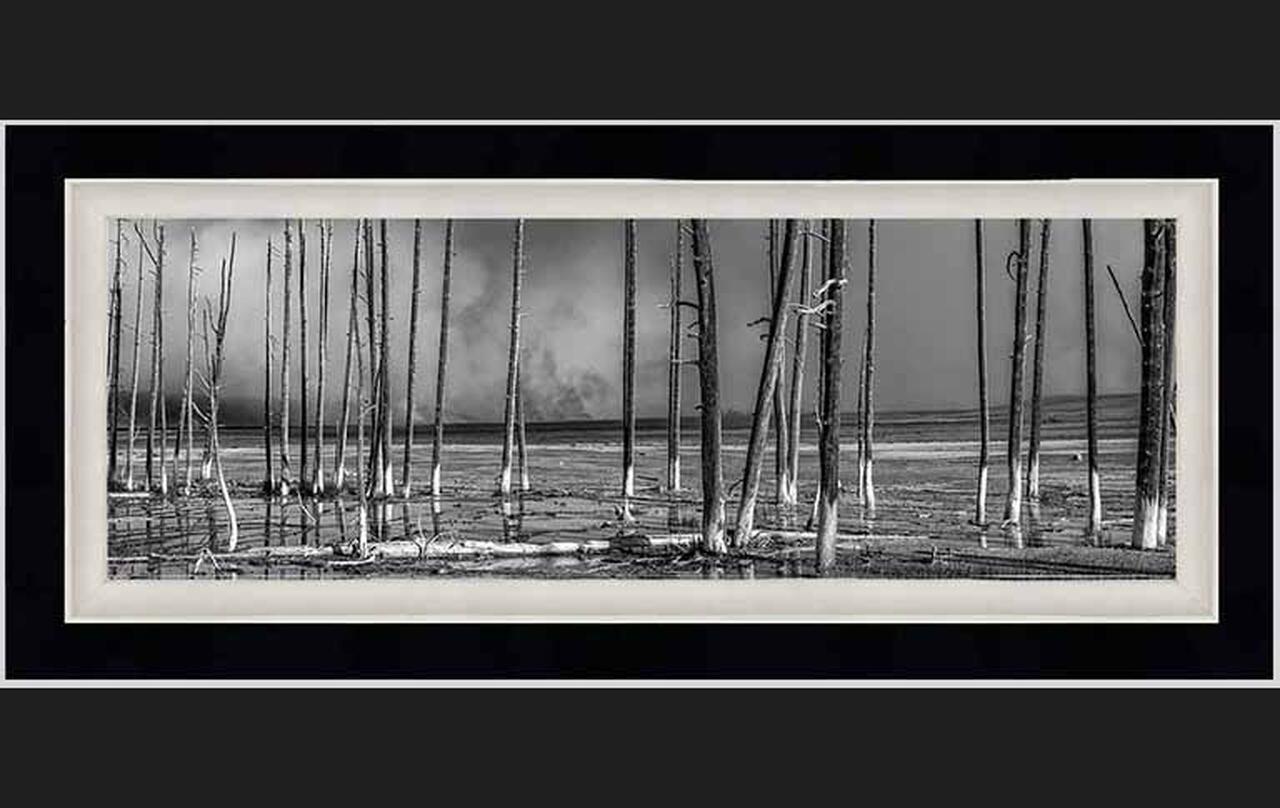
TruLife acrylic in a handcrafted Italian frame with a linen liner chosen for the image. Frame series, finish, and liner are settled with you after the order, and production begins from there. The frame and liner add about fourteen inches to the finished dimensions, worth allowing for when planning placement.
Signature Edition · TruLife ® Acrylic, Float Mount
Signature Edition of 50· Lumachrome TruLife Acrylic · Gallery Float Mount
Face-mounted to TruLife acrylic and floated approximately one inch from the wall, with no frame to mediate between the image and the room. UV-resistant, anti-reflective, and scratch-resistant, with a lifetime guarantee against fading.
Signature Edition of 50· ChromaLuxe Metal Print · Gallery Float Mount
Color infused into the aluminum panel itself, floated from the wall on a concealed system. Where acrylic produces luminosity, metal produces clarity. Exceptional fade resistance with no glazing or coating required.
Fine Art Edition of 100· Hahnemühle Baryta Fine Art Paper
Printed without acrylic, so light meets the paper surface directly. Highlights stay luminous, shadows keep their nuance, and the surface has a tactile quality the other presentations approach differently. The understated choice, and the traditional one.
Complimentary shipping within the continental United States. International collector shipping available upon request.
Still deciding
Designing for Stillness
A guide to choosing art for restorative spaces
How to tell whether an image will still hold you in a year, how scale changes what a photograph does in a room, and how to match a piece to the work a room actually performs. It cites the research it draws on, and it is equally clear about where that research stops. About ten minutes to read.