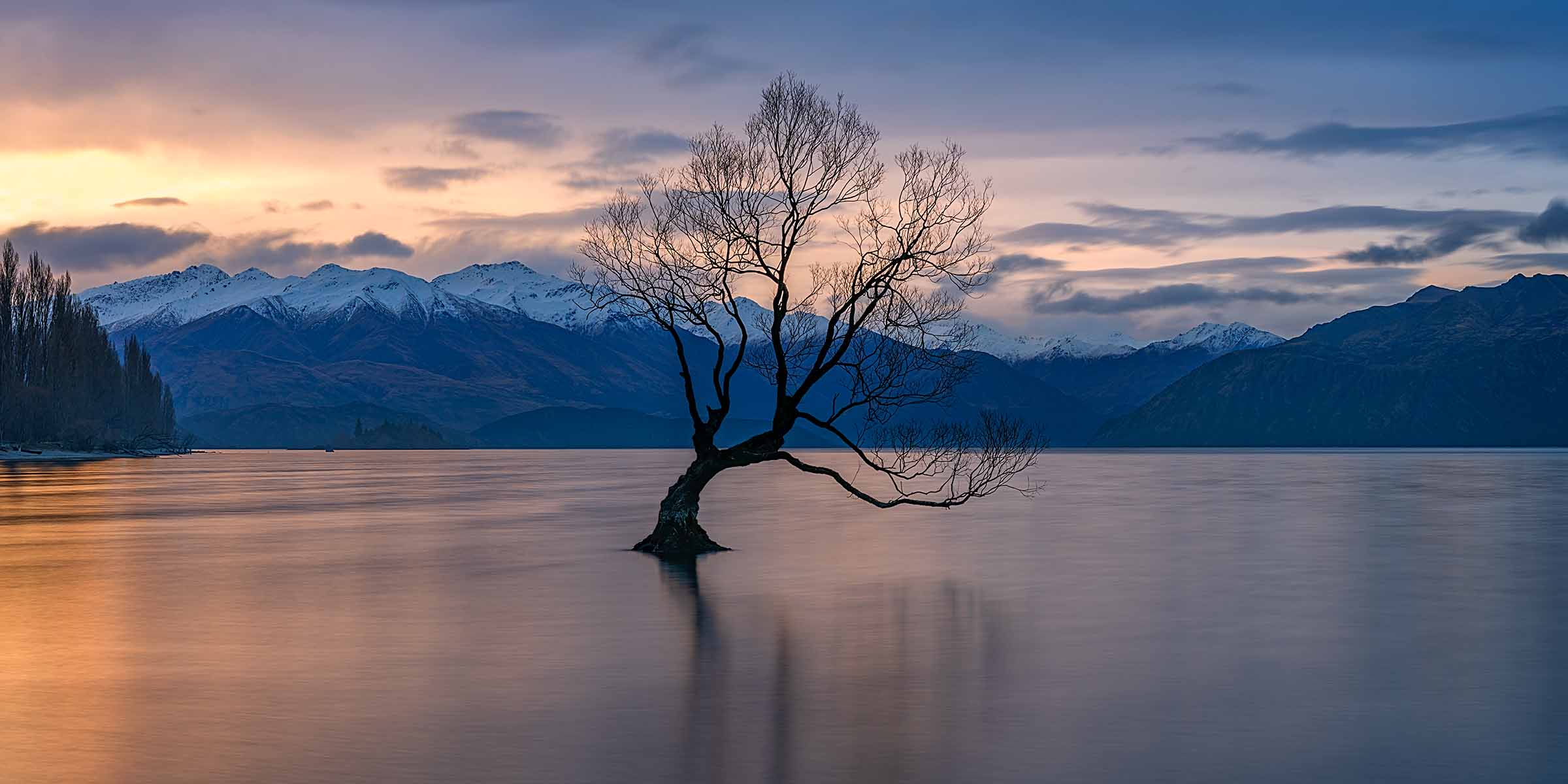
A 1:2 panoramic photograph of a lone willow standing in Lake Wānaka, New Zealand, at dawn, available as a limited edition print in three sizes and four presentations.
Artist's Story
At the southern end of Lake Wānaka, in Otago on New Zealand's South Island, a willow stands in the shallows of Roys Bay. It was never planted. Around 1939 a fence was run out along this shore to keep stock from wandering, and one of its posts was cut from a nearby willow. Crack willow does not always accept being cut. The post took root in the lakebed and grew. The fence is long gone. The post is now one of the most photographed trees on earth.
I waded in before dawn in winter and stood in the water waiting for the light, and let a long exposure take the small movement out of the surface.
What I keep returning to is the distance between what a thing was for and what it became. Nobody meant this. Someone wanted a fence. What he got, eighty years on, is the reason people fly across the world to stand on this beach before sunrise. There is something steadying in that for a mind inclined to treat its own life as a plan to be executed and then graded against itself. The most consequential thing on this shoreline is an accident that declined to die.
In March 2020 someone came with a saw and took the low branch, the one that reaches flat out across the water. It will not grow back. The council arborist put it at ten to fifteen years before anything fills that space. So this is a photograph of a shape that no longer exists. The tree was made by accident and unmade on purpose, which is roughly the reverse of how these things are supposed to go.
Lone Willow is that fence post, still standing where it was driven, holding a shape it will not hold again.
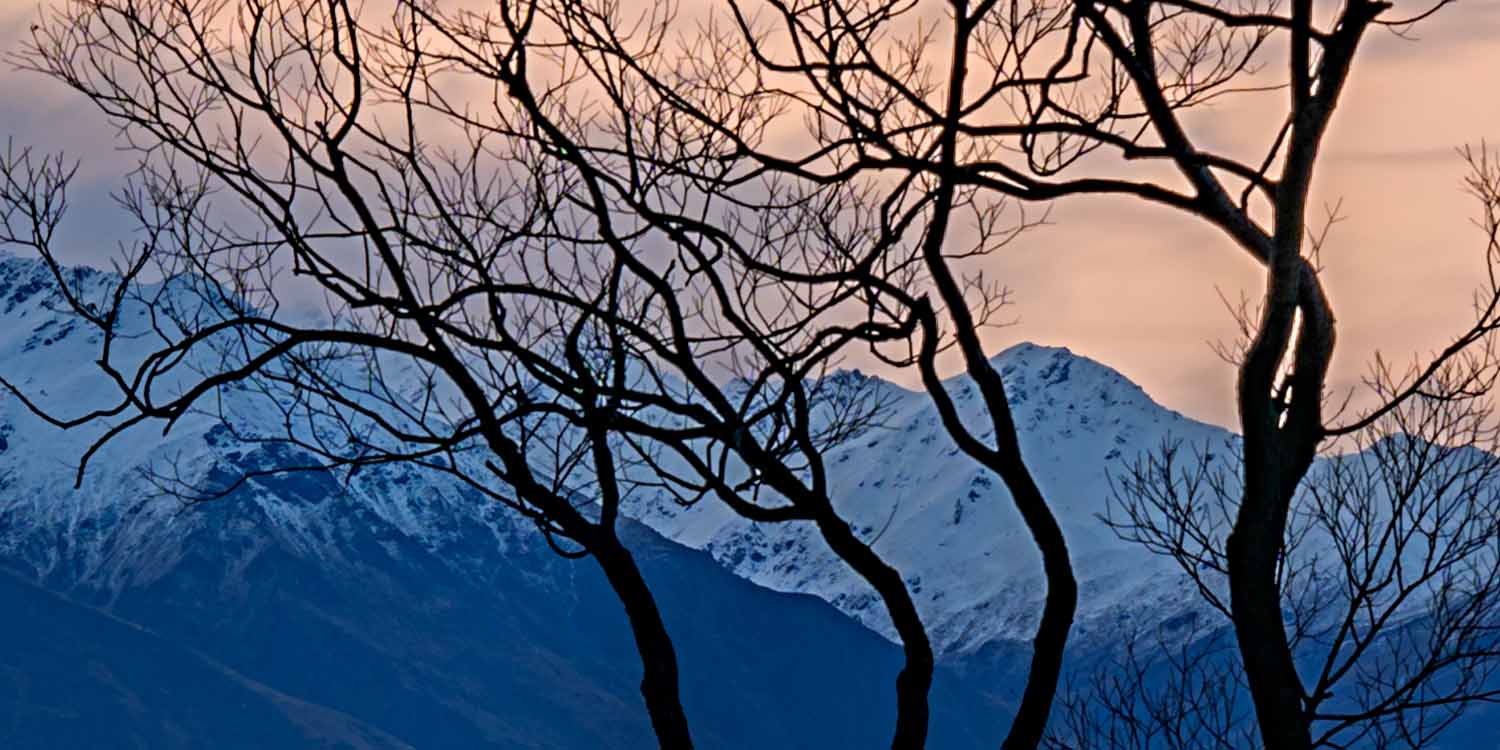
Detail at full resolution, roughly one sixth of the frame width. At the Intimate size these branches read as a single dark mass against the mountains. At Statement size the lattice resolves, and you can follow a limb through every fork to where it ends.
About This Photograph
Roys Bay sits at the southern end of Lake Wānaka, in Otago on New Zealand's South Island, with the town of Wānaka on the shore behind the camera and the snow-covered ranges at the head of the lake rising beyond. The tree is a crack willow, Salix × fragilis, known locally and internationally as That Wānaka Tree. Its roots sit permanently submerged in the lakebed, which is why it has stayed small. A willow of its age on dry ground would be several times the size.
The photograph is a single frame made before dawn in winter, with a long exposure that reduced the lake surface to a sheet and drew the cloud into streaks. The stillness in the water is a function of exposure time rather than of conditions. There was movement on the surface while the shutter was open.
Lone Willow
Steve Austinhttps://www.steveaustinphotography.com/
Location
Roys Bay, Lake Wānaka, New Zealand
Subject
That Wānaka Tree · willow · dawn
Capture
Single long exposure before sunrise
Format
Photograph · horizontal panorama, 1:2
Sizes
20 × 40 in · 30 × 60 in · 40 × 80 in
Media
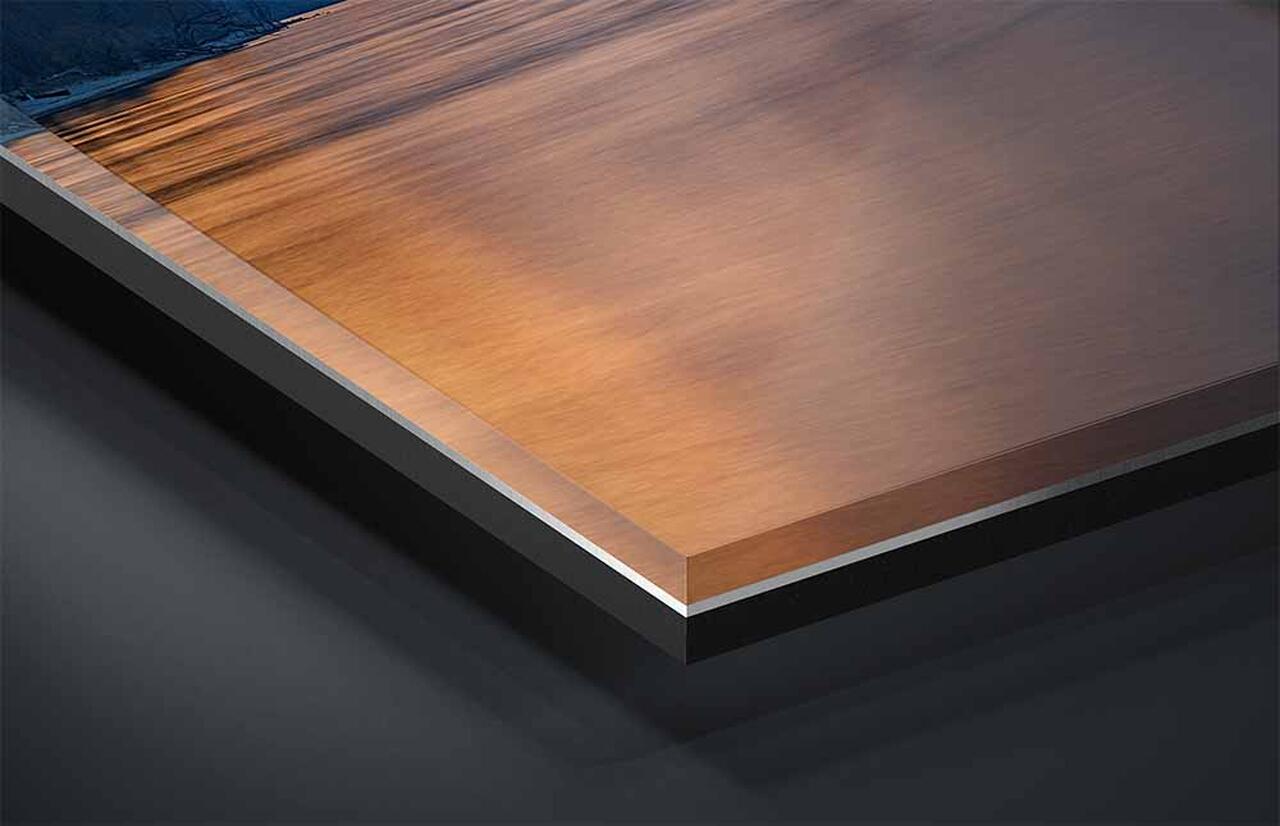
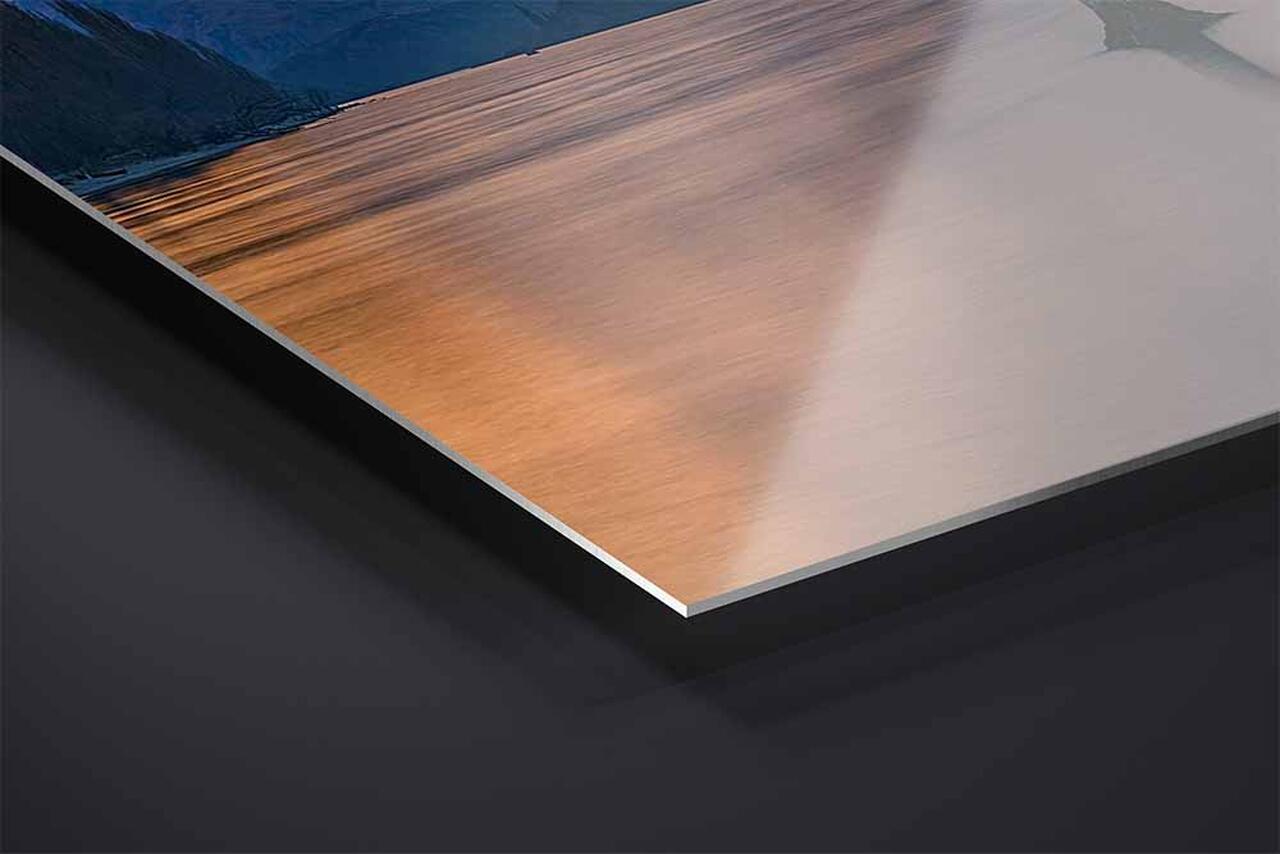
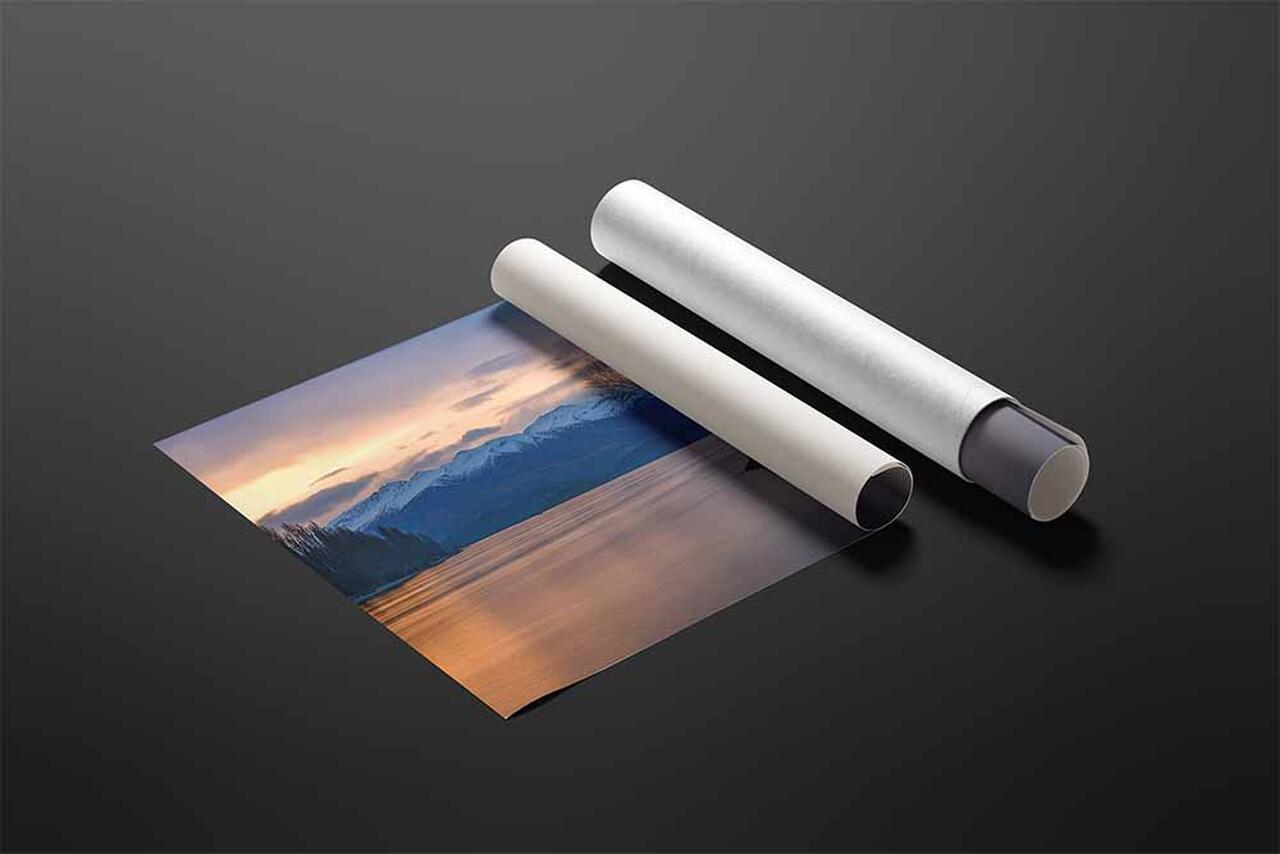
TruLife Acrylic · ChromaLuxe Metal · Baryta paper
Edition
Limited, 25 / 50 / 100 by presentation
What it Does in a Room
A photograph this wide does not behave like a picture on a wall. It behaves like an opening in one.
Human vision is much wider than it is tall. What you actually take in is a horizontal band, and a panoramic print is one of the few objects in a room shaped the way seeing is shaped. At one to two the frame is wide without being extreme, which changes what it asks of a room. There is real height here, enough for sky above and water or ground below, so the image reads as a window rather than as a band running across the wall. It is the most forgiving of the panoramic proportions. It will hang above a sofa or a console without demanding the entire wall, and it holds together in a space where a longer frame would look stretched.
Here almost nothing moves. The lake has gone to a sheet, the cloud has drawn into soft horizontal streaks, and the only vertical element in the frame is the tree itself. The eye goes to it, stays a moment, then travels out along the branches and the ranges behind. There is nowhere urgent to look. A photograph like this is not something you look at now and then. It is part of the room, working on you quietly whether or not you are paying attention.
Not sure which size the room calls for, or want dimensions not listed here? That conversation is welcome before an order is placed. Start that conversation and I will answer within one business day.
How small is too small for a photograph this wide?
At one to two, the Intimate size is forty inches across and twenty inches tall. That is a comfortable proportion, wide enough to read as a panorama but with enough height that it still behaves like a picture rather than a band. Of the panoramic families this is the one that holds up best at its smallest size, and a twenty by forty print will anchor a modest wall on its own. Where it starts to feel small is on a large open wall or above a full-length sofa, where the surrounding space overwhelms it. The Collected and Statement sizes are where the width does the work. If you are weighing a size against a specific wall, choosing the right print size covers the measurements and the viewing distances in more detail.
What changes at the largest size?
The branches are the whole question. This is a bare winter willow, and the outer growth is a dense lattice of fine twigs, thousands of them, crossing and separating against a soft sky. At twenty inches tall the crown reads as a texture. You see the shape of the tree but not its structure, and the finest growth blends into a haze at the edges. At forty inches tall the lattice resolves. You can follow a single branch out from the trunk through every fork to where it ends, and see daylight in the gaps between twigs that had been solid before. The reflection underneath does the same thing, holding a softened version of that structure in the water. This is a photograph with one subject and everything depends on how much of that subject you can actually see. Why scale matters covers what happens perceptually when a landscape reaches the size where the eye has to travel across it.
What kind of room does this photograph suit?
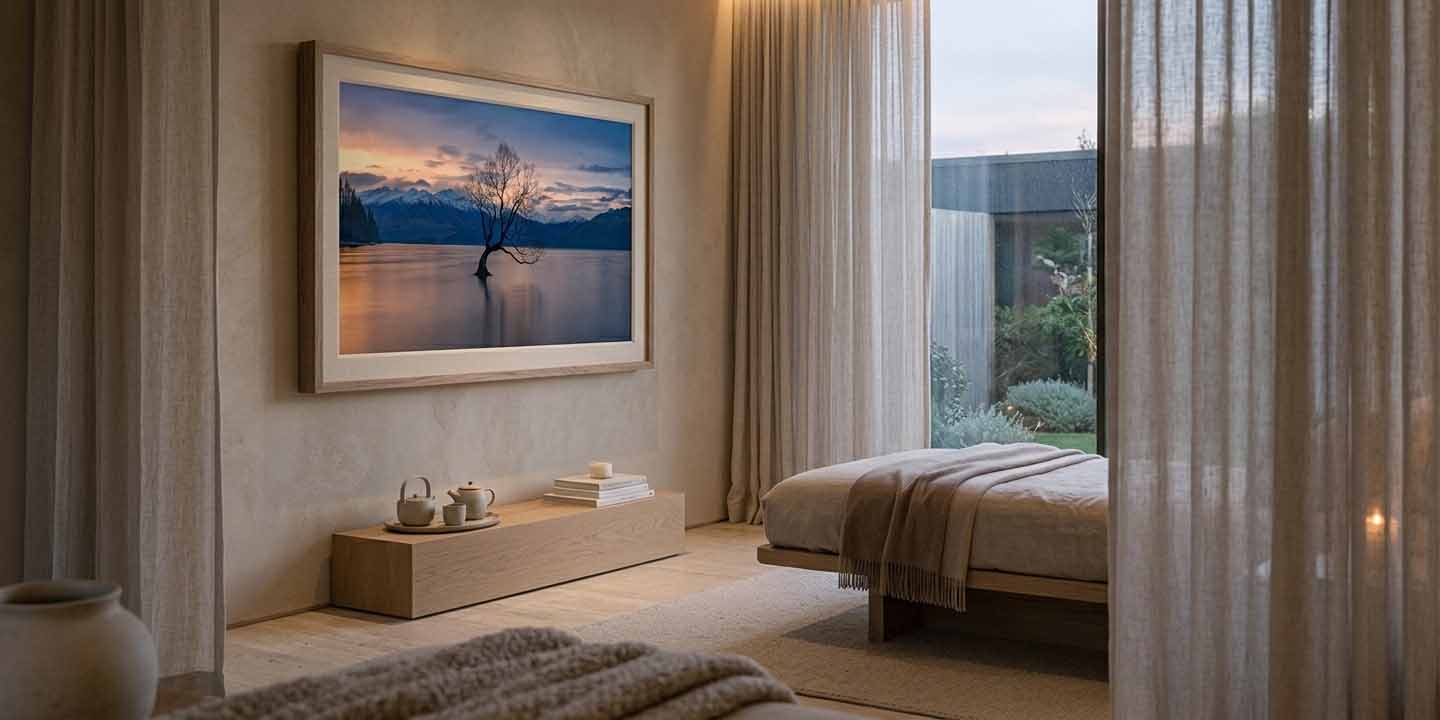
This is a quiet image and it behaves that way on a wall. The palette runs blue and mauve through the sky and mountains, with a band of muted gold low on the left where the sun has not yet come up, and the contrast is soft throughout. There is no hard black anywhere in it. That makes it unusually easy to place. It will not fight a room, it will not set the color scheme, and it does not need a wall of its own. Against warm neutrals, oak, linen, and plaster, the gold in the water picks up the room and the blues sit back. Against cool grays it disappears into the palette in the best sense, reading as depth rather than as a picture. The one condition is light. In a bright room the soft values hold and the image opens up. In a genuinely dark room a low-contrast photograph can go flat, since there is no deep shadow mass to give it structure, so this is a piece for a space with windows.
Every work ships insured and arrives with a signed certificate of authenticity.
If a piece is damaged in transit, the choice of replacement is always yours, and your edition number stays with you.
Production time runs 2 to 3 weeks for metal, 3 to 4 weeks for acrylic and paper, and 5 to 6 weeks for framed work.
Collector's Choice · TruLife ® Acrylic in Italian Frame
Collector Edition of 25· Lumachrome TruLife Acrylic · Handcrafted Italian Frame
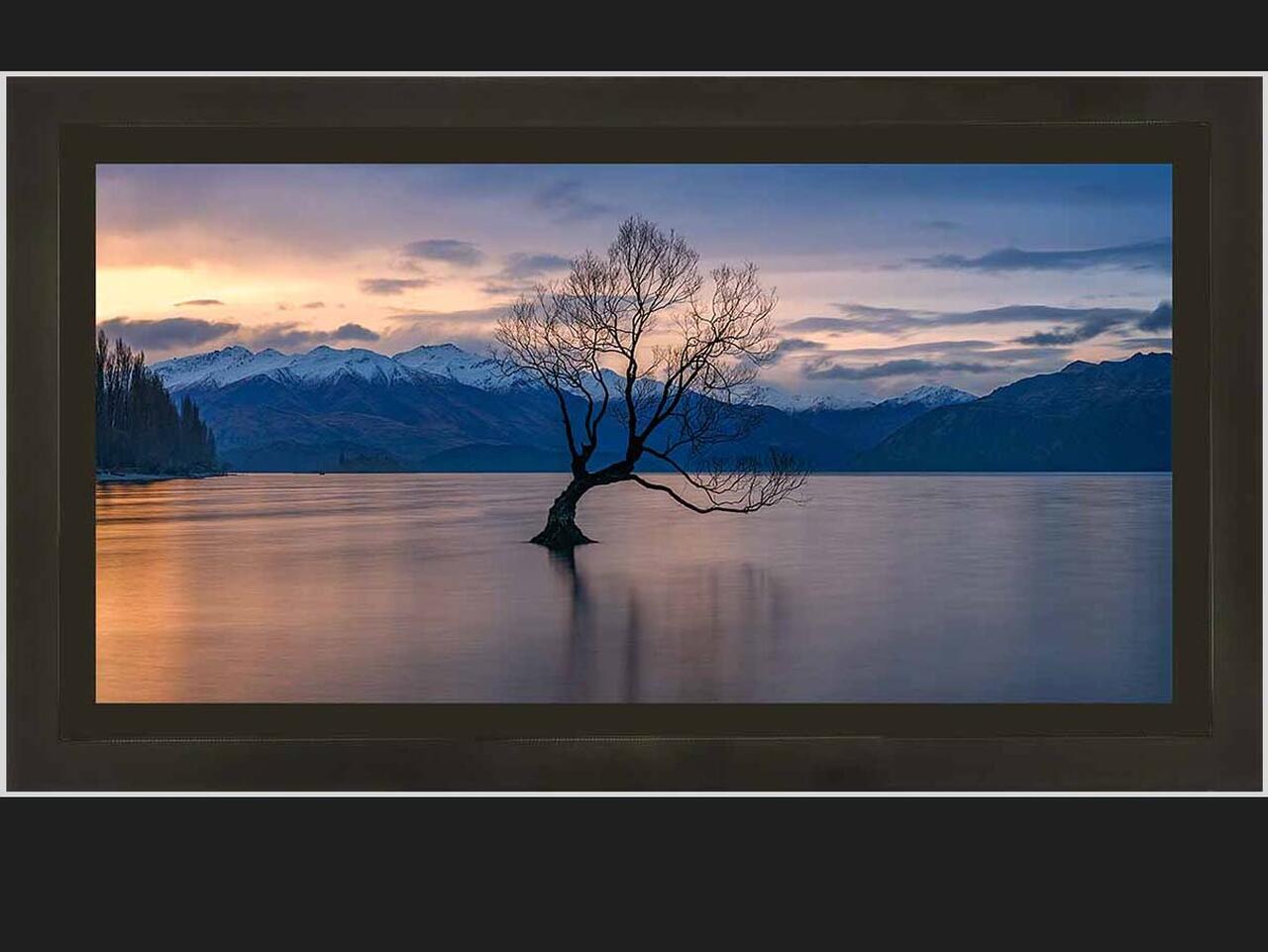
TruLife acrylic in a handcrafted Italian frame with a linen liner chosen for the image. Frame series, finish, and liner are settled with you after the order, and production begins from there. The frame and liner add about fourteen inches to the finished dimensions, worth allowing for when planning placement.
Signature Edition · TruLife ® Acrylic, Float Mount
Signature Edition of 50· Lumachrome TruLife Acrylic · Gallery Float Mount
Face-mounted to TruLife acrylic and floated approximately one inch from the wall, with no frame to mediate between the image and the room. UV-resistant, anti-reflective, and scratch-resistant, with a lifetime guarantee against fading.
Signature Edition of 50· ChromaLuxe Metal Print · Gallery Float Mount
Color infused into the aluminum panel itself, floated from the wall on a concealed system. Where acrylic produces luminosity, metal produces clarity. Exceptional fade resistance with no glazing or coating required.
Fine Art Edition of 100· Hahnemühle Baryta Fine Art Paper
Printed without acrylic, so light meets the paper surface directly. Highlights stay luminous, shadows keep their nuance, and the surface has a tactile quality the other presentations approach differently. The understated choice, and the traditional one.
Complimentary shipping within the continental United States. International collector shipping available upon request.
Still deciding
Designing for Stillness
A guide to choosing art for restorative spaces
How to tell whether an image will still hold you in a year, how scale changes what a photograph does in a room, and how to match a piece to the work a room actually performs. It cites the research it draws on, and it is equally clear about where that research stops. About ten minutes to read.