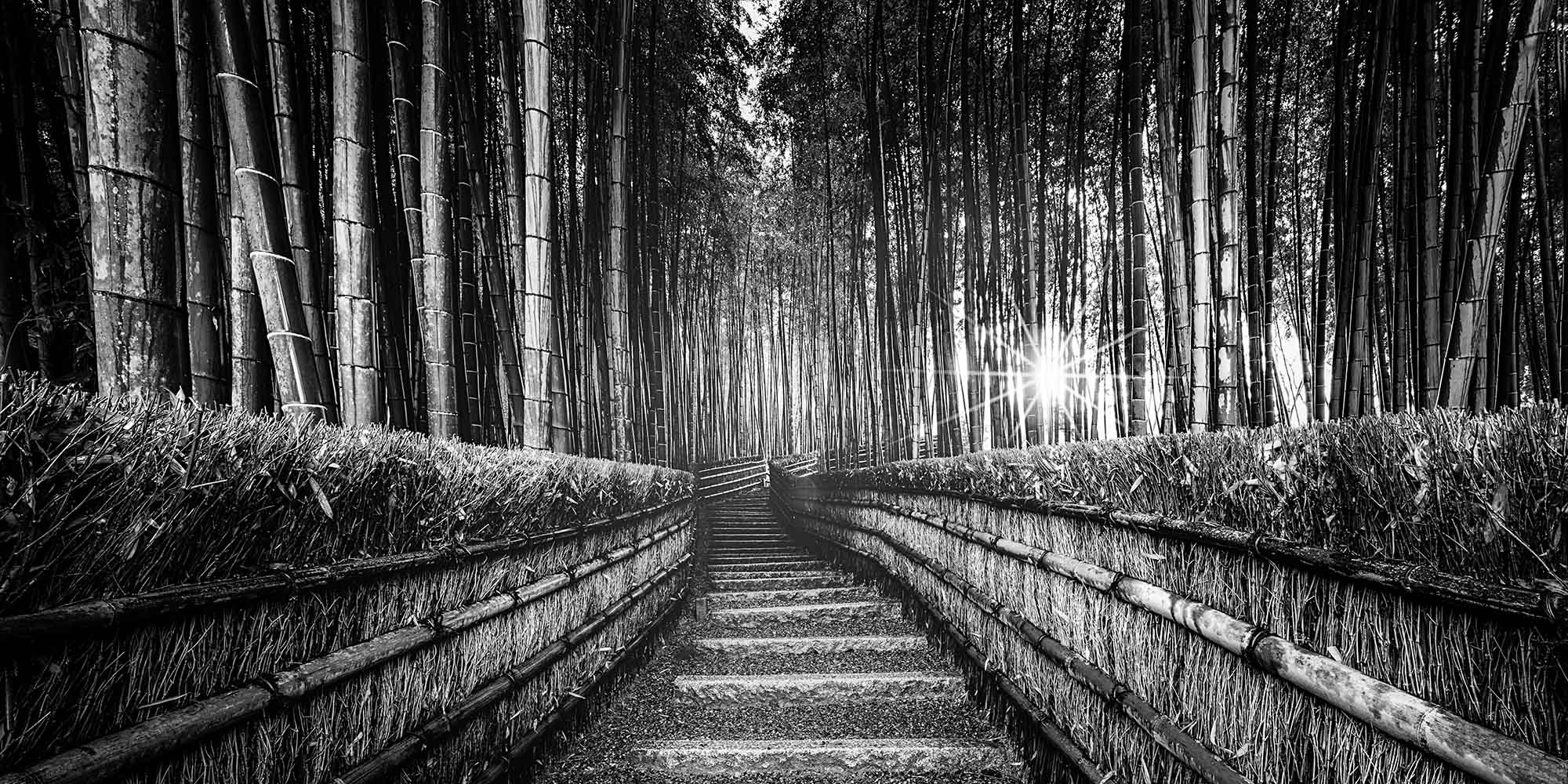
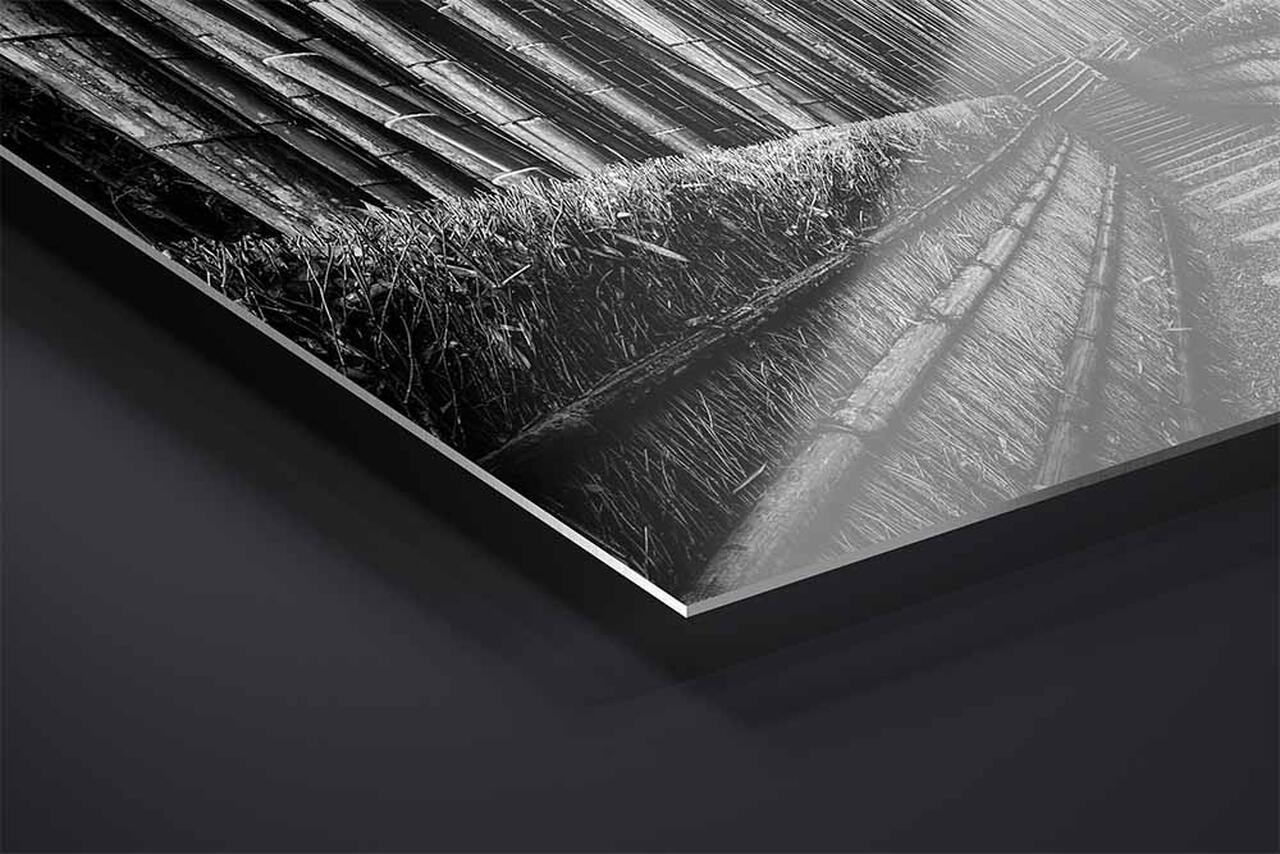
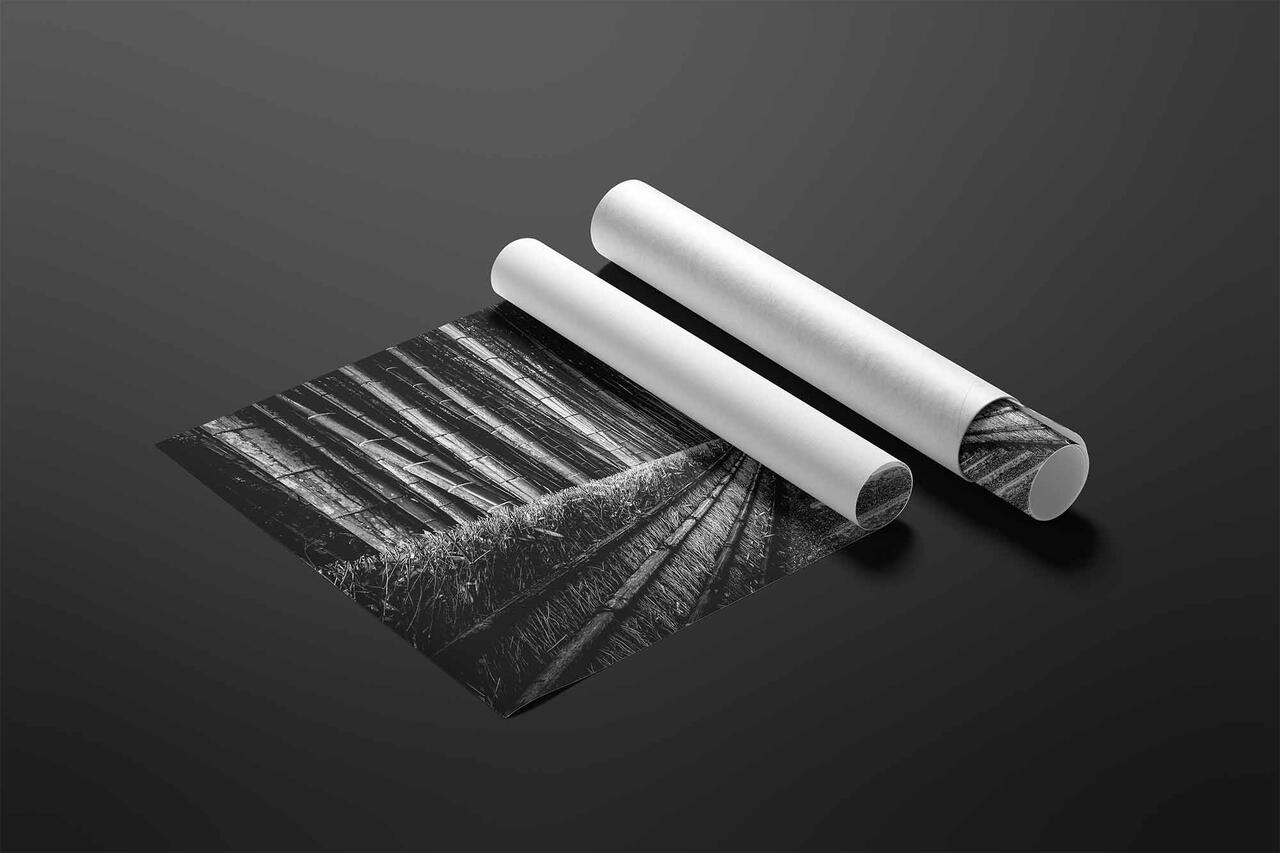
A 2:1 panoramic photograph of a bamboo grove stairway at Adashino Nenbutsuji in Kyoto, Japan, available as a limited edition print in three sizes.
Artist's Story
I had spent the morning walking in the cold and the rain with no agenda and no particular destination. Just water on bamboo and the stillness that comes when a forest is wrapped in weather.
Then the rain lifted, the sun found a gap, and a single beam came straight down the corridor and onto the stairway. I have learned to move quickly in those moments without thinking too much. I stepped forward, raised the camera, and made the picture.
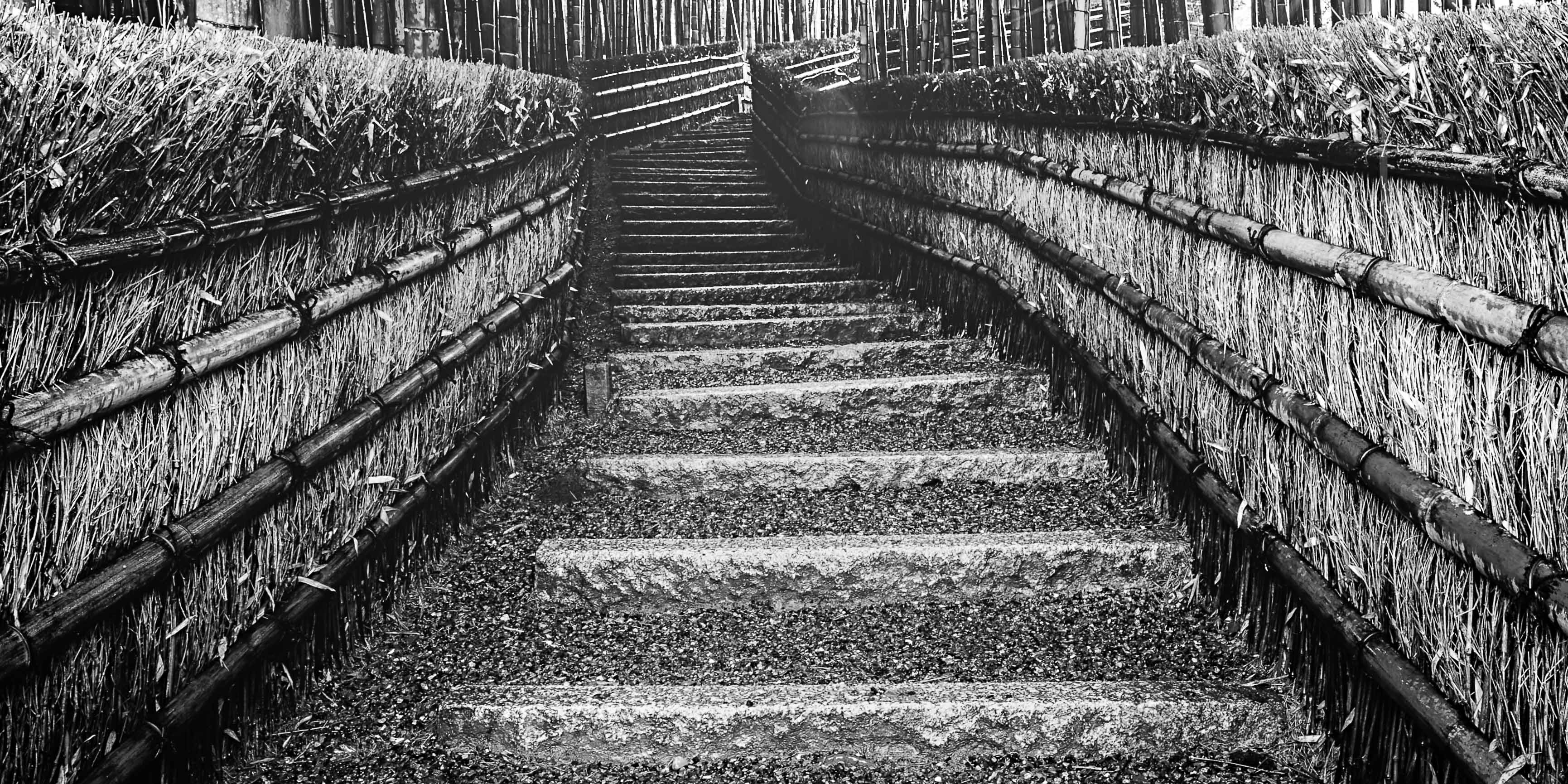
The stairway does not show you where it goes. You can count four steps clearly, maybe five, and after that they stop separating from one another and the top of the flight is not in the frame at all. Whatever is up there is behind the light.
The black and white is the reason it stays that way. A bamboo grove is one color, and taking that color out costs the picture almost nothing, because there was never more than green to lose. What it removes instead is the noise. No hue to sort, no palette to read, nothing to weigh up. Only the lines closing in, the steps going up, and the one bright thing at the end of them.
One Step Into Quiet is that flight of steps, the fences running up either side of it, and the gap in the canopy where the light came through.
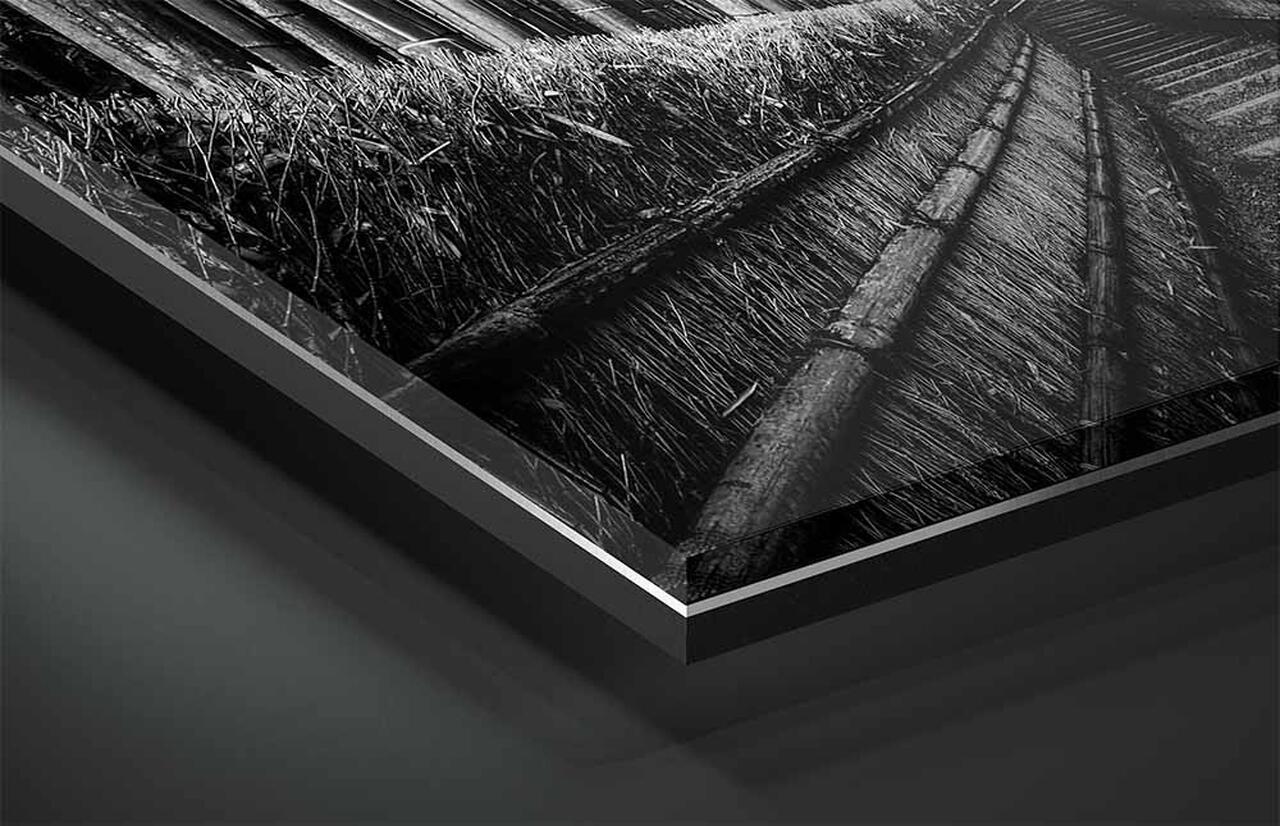
The stairway at about two fifths of the frame width. On an eighty inch print this section runs roughly thirty-five inches across. The treads open into cut stone with grit collected along them, the brush fences break into individual dried stems, and the bamboo rails show their nodes and the wire at each splice. Higher up the steps stop separating from one another. Click to view at full size.
About This Photograph
In the bamboo grove at Adashino Nenbutsuji, in the Sagano district of western Kyoto, Japan, in the morning after rain. This is a single frame image, rendered in black and white. The frame looks up a stone stairway running between two dense walls of bamboo, with brush fences and bamboo rails along both sides and a sunburst breaking through the canopy at the right.
The starburst is diffraction at a small lens aperture, not added in processing. The steps are the only horizontal elements in a composition otherwise built entirely from vertical culms and converging rails.
The picture runs the full tonal range in a single exposure, with just under eleven percent of the frame at pure black and just over one percent at pure white. That is the widest spread of any photograph in the collection.
One Step Into Quiet
Steve Austinhttps://www.steveaustinphotography.com/
Location
Adashino Nenbutsuji Temple, Japan
Subject
Bamboo grove · stone stairway · morning light
Capture
Single frame, rendered in black and white
Format
Photograph · horizontal panorama, 2:1
Sizes
40 × 20 in · 60 × 30 in · 80 × 40 in
Print Media
TruLife Acrylic · ChromaLuxe Metal · Baryta paper
Edition
Limited, 25 / 50 / 100 by presentation
What it Does in a Room
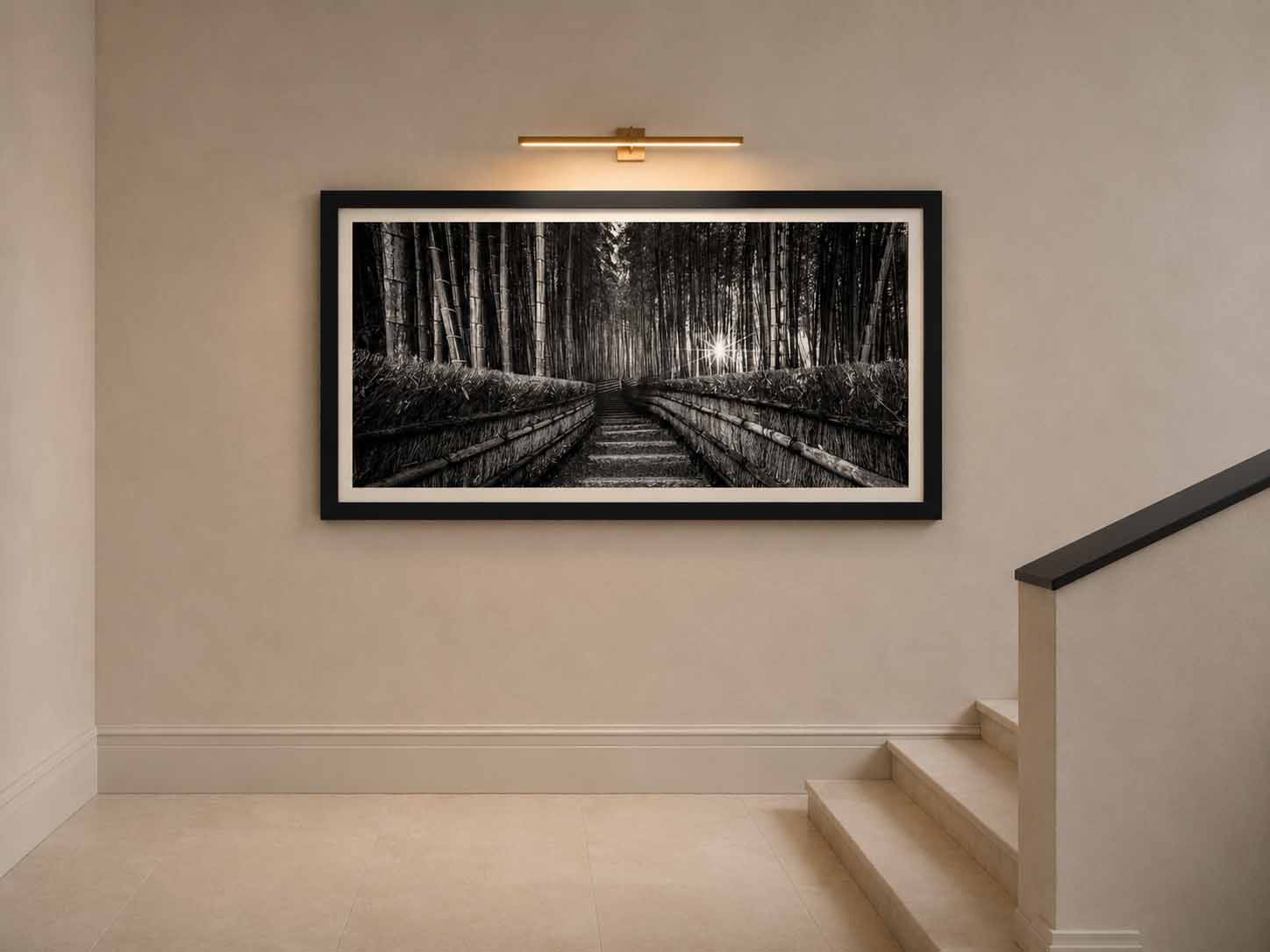
Most monochrome prints read as a translation. You know a color version existed and the black and white is a decision made about it. This one does not, because the subject had only one hue to begin with. Take green out of a bamboo grove and nothing is missing, so on a wall the print does not look like a stylized version of something else. It looks like the place, with the volume turned down.
The steps are the only horizontal thing in the frame. Everything else is a vertical culm or a rail converging toward the center, so the flight reads as a beat in a field of lines, a rhythm laid across a texture. That gives the picture something most landscapes do not have, which is a tempo. The eye does not scan it, it climbs it, and the pace is set by how far apart the steps are.
Almost eleven percent of this frame is at pure black, more than any other photograph in the collection, and on a wall that is not a shadow, it is an absence. Solid black has no surface, so the eye reads it as space rather than as ink, and the print acquires an interior. In a lit room the picture opens up and the black becomes depth. In a dim one it closes, and you get the lines and the one bright point. Both are worth seeing before it is hung for good.
Not sure which size the room calls for, or want dimensions not listed here? Sizes beyond 80 × 40 are available on request and ship crated by freight. That conversation is welcome before an order is placed. Start that conversation and I will answer within one business day.
One Step Into Quiet, limited edition printSteve Austin112513400USD12https://schema.org/InStock
Questions about this photograph
How small is too small for a photograph this wide?
At two to one, the Intimate size is forty inches across and twenty inches tall. This photograph carries that easily, because the composition is graphic before it is detailed: two converging walls, a flight of steps up the middle, a bright point at the end. All of it reads from across a room and none of it depends on resolution. What goes at forty by twenty is the surface. The nodes that divide each bamboo culm into segments disappear, the brush fences compress into solid bands, and the stone steps lose their texture and become tone. That is a strong picture and a stark one, and it suits a narrow wall or a stair. The Collected at sixty by thirty is where the nodes come back and the fences break into stems. If you are weighing a size against a specific wall, choosing the right print size covers the measurements and the viewing distances in more detail.
What changes at the largest size?
The grove becomes plants and the path becomes stone. At the Statement size, eighty by forty, the nodes on the near culms resolve as raised rings with the sheath scars beneath them, and the older stalks separate from the newer ones by surface rather than by tone. The brush fences break into thousands of individual dried stems, and the bamboo rails running along them show their own nodes and the wire at each splice. The steps open into cut stone with worn edges and grit collected in the treads. The starburst separates into distinct rays. What changes beyond detail is the climb. At nearly seven feet across, the near steps are close to the size they would be underfoot, so the frame stops reading as a view up a stairway and starts reading as a position on one. Why scale matters covers what happens perceptually when a landscape reaches the size where the eye has to cross it.
What kind of room does this photograph suit?
Quiet rooms with light in them. This is a dark, high-contrast, perfectly neutral print, so it takes the temperature of whatever is lighting it: warm lamps give it a warm gray and it reads older, daylight or cool bulbs give it silver and it reads modern. Because it has no color of its own it will sit against anything, gray, slate, plaster, stone, oak, walnut, leather, without argument. It does its clearest work where the wall gets some light and where people are seated rather than passing, since the picture is a climb and a climb takes time. A stair wall suits it for obvious reasons and the obviousness is not a strike against it. How a photograph sharpens the mind takes the question further.
Every work ships insured and arrives with a signed certificate of authenticity.
If a piece is damaged in transit, the choice of replacement is always yours, and your edition number stays with you.
Production time runs 2 to 3 weeks for metal, 3 to 4 weeks for acrylic and paper, and 5 to 6 weeks for framed work.
Collector's Choice · TruLife ® Acrylic in Italian Frame
Collector Edition of 25· Lumachrome TruLife Acrylic · Handcrafted Italian Frame
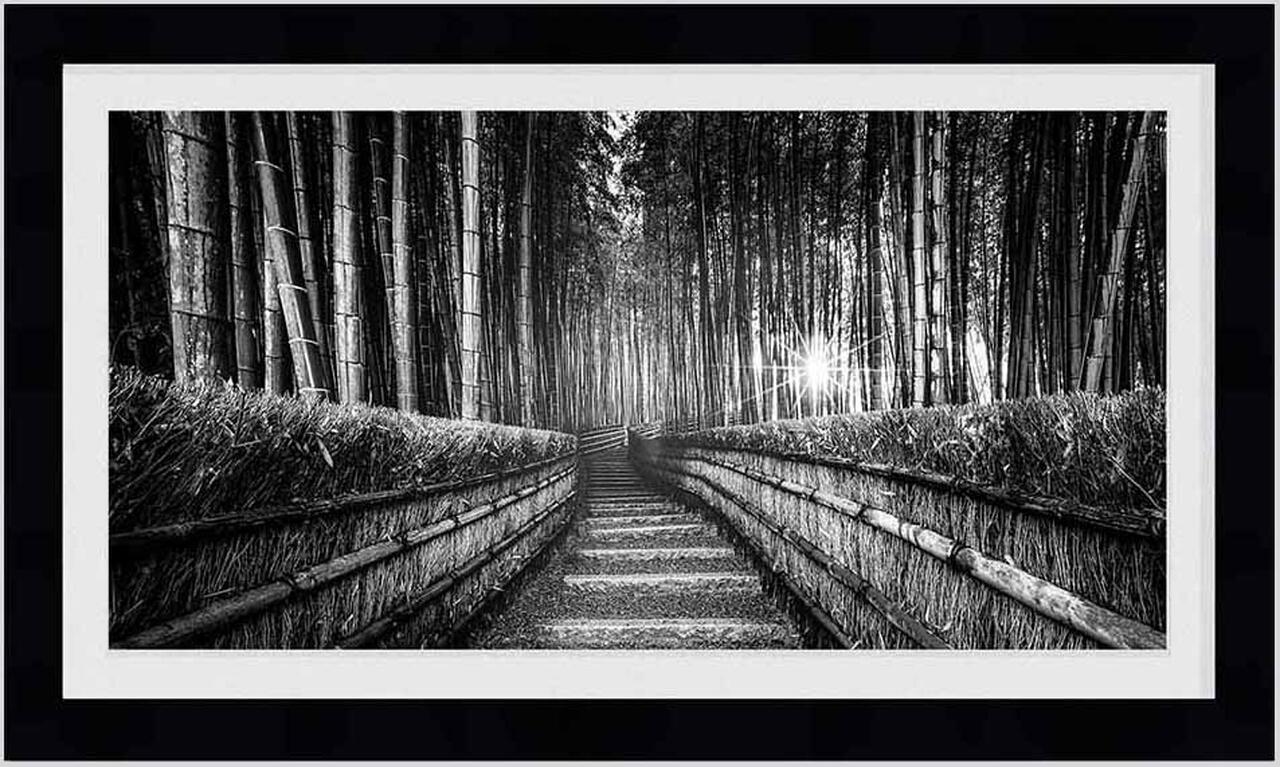
TruLife acrylic in a handcrafted Italian frame with a linen liner chosen for the image. Frame series, finish, and liner are settled with you after the order, and production begins from there. The frame and liner add about fourteen inches to the finished dimensions, worth allowing for when planning placement.
Signature Edition · TruLife ® Acrylic, Float Mount
Signature Edition of 50· Lumachrome TruLife Acrylic · Gallery Float Mount
Face-mounted to TruLife acrylic and floated approximately one inch from the wall, with no frame to mediate between the image and the room. UV-resistant, anti-reflective, and scratch-resistant, with a lifetime guarantee against fading.
Signature Edition of 50· ChromaLuxe Metal Print · Gallery Float Mount
Color infused into the aluminum panel itself, floated from the wall on a concealed system. Where acrylic produces luminosity, metal produces clarity. Exceptional fade resistance with no glazing or coating required.
Fine Art Edition of 100· Hahnemühle Baryta Fine Art Paper
Printed without acrylic, so light meets the paper surface directly. Highlights stay luminous, shadows keep their nuance, and the surface has a tactile quality the other presentations approach differently. The understated choice, and the traditional one.
Complimentary shipping within the continental United States. International collector shipping available upon request.
Still deciding
Designing for Stillness
A guide to choosing art for restorative spaces
How to tell whether an image will still hold you in a year, how scale changes what a photograph does in a room, and how to match a piece to the work a room actually performs. It cites the research it draws on, and it is equally clear about where that research stops. About ten minutes to read.