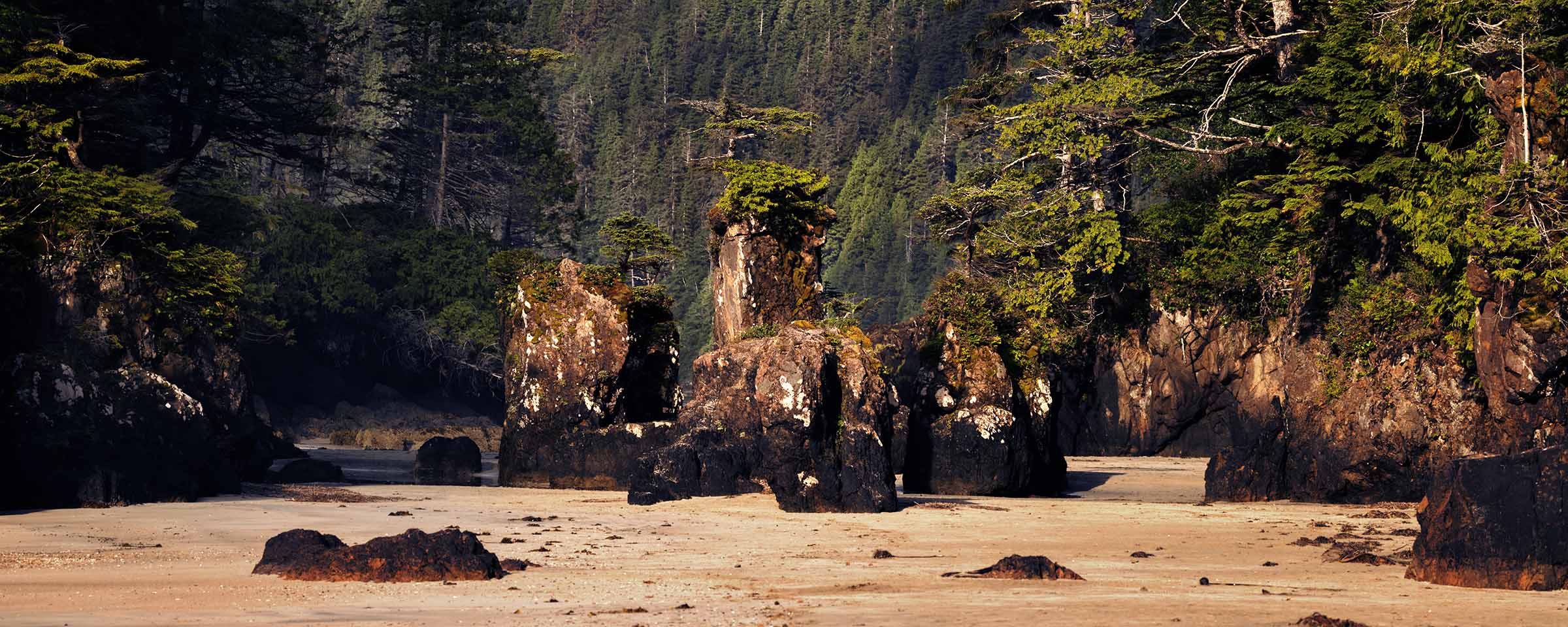
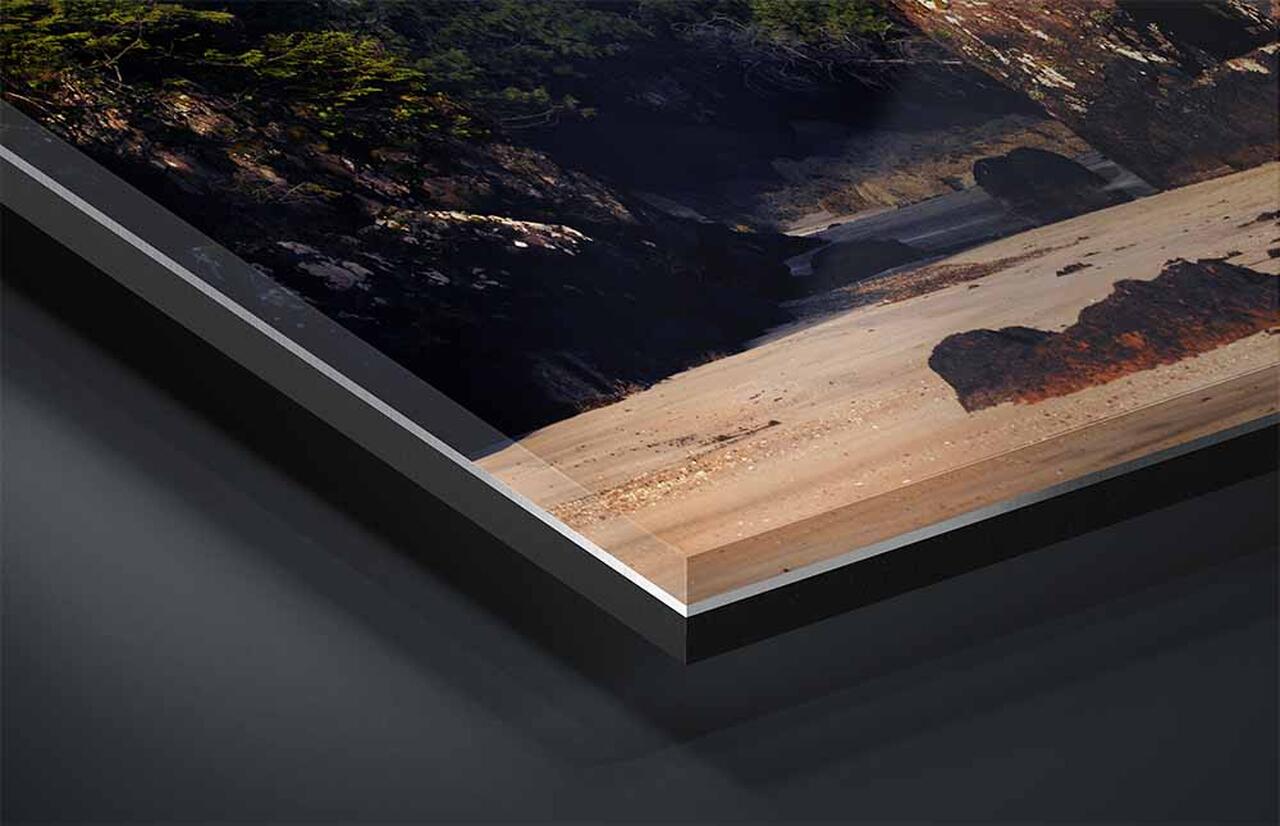
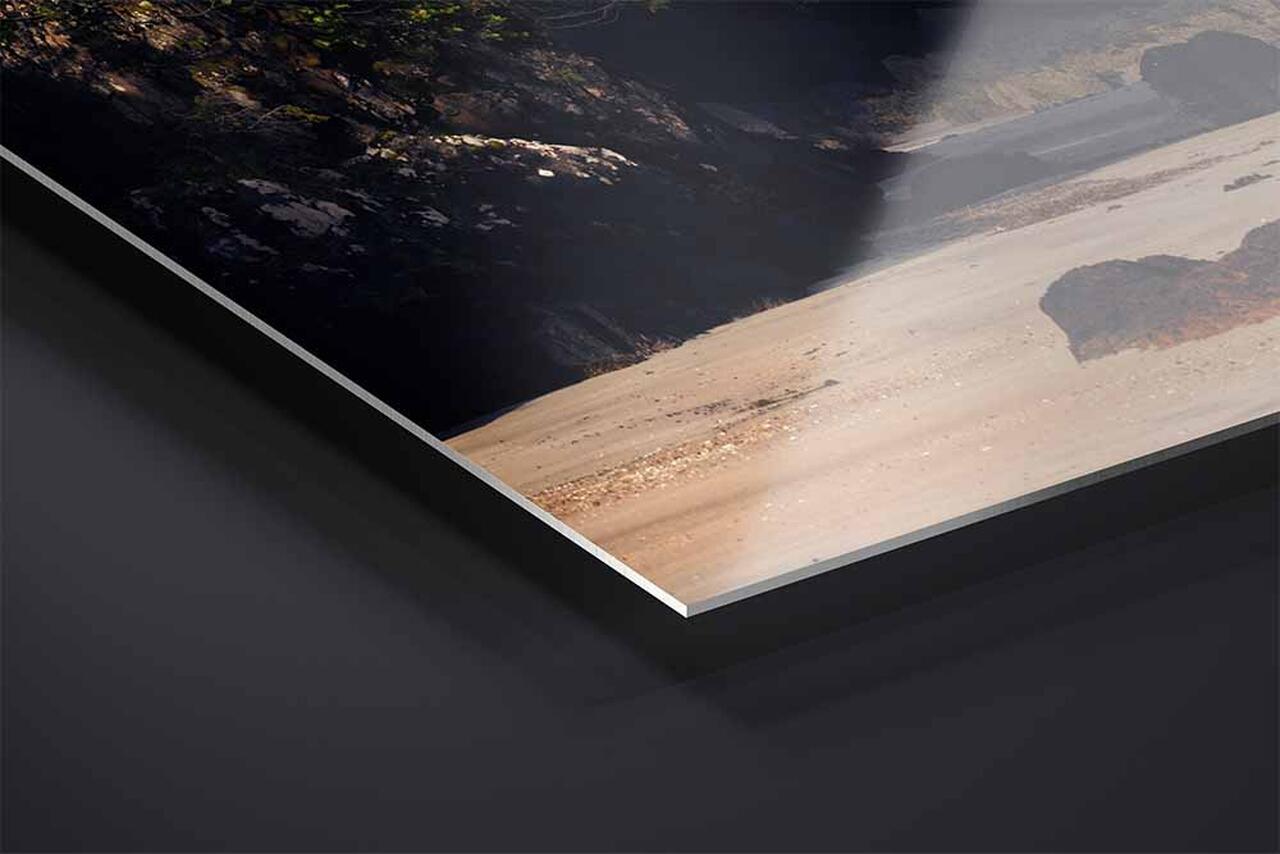
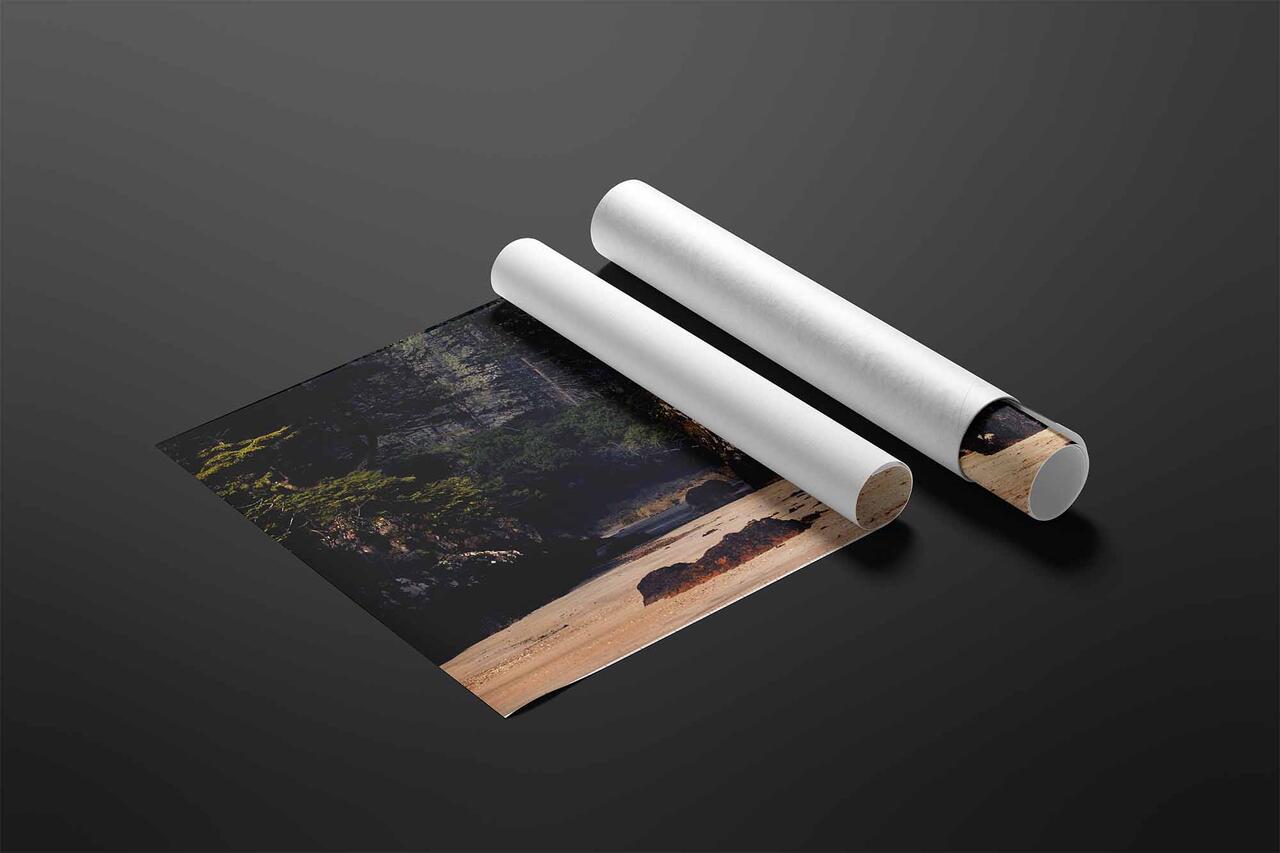
A 5:2 panoramic photograph of the sea stacks at San Josef Bay, Vancouver Island, at low tide, available as a limited edition print in three sizes.
Artist's Story
San Josef Bay sits at the northwestern tip of Vancouver Island, inside Cape Scott Provincial Park, and reaching it takes a ferry, several hours of road that turns to active logging track as the island narrows, and a walk through old growth to the sand. The sea stacks stand on the tidal flat with conifers growing from their tops, above the reach of the highest water.
I camped and stayed several days, walking down each morning and evening to read the tide and the light. The frame I wanted came on the third day, in a twenty-minute gap that a passing storm opened as it went through.
Time stops being something you keep out there. Tides run about twelve hours and twenty-five minutes apart, which means high water advances roughly fifty minutes every day and never stays aligned with the clock for long. After two days of arranging yourself around it, you stop knowing what time it is in the ordinary sense, and stop needing to. What is restful in that is not the solitude exactly. It is being put on a schedule you did not set, cannot negotiate with, and had no hand in designing.
The Ancient Shore is that flat on the third day, at the hour the tide and the weather happened to agree on.
Three days is not patience, it is arithmetic. The tide was going to do what it does whether I was there or not. I wrote about what waiting like that gives back in The Art of Staying.
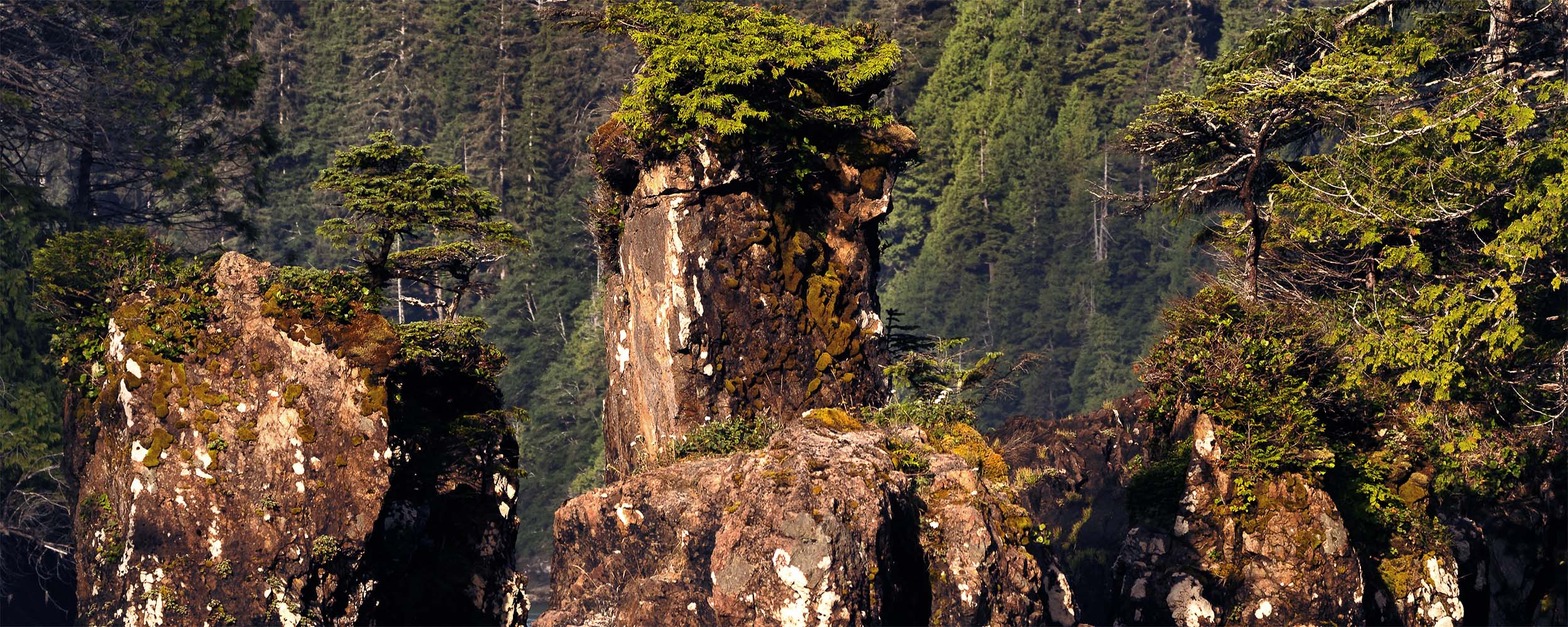
The tallest stack, about one fifth of the frame width. A conifer rooted in the rock, and the old growth behind it separating into individual trees. Click to view at full size.
About This Photograph
Photographed at San Josef Bay in Cape Scott Provincial Park, at the northwestern tip of Vancouver Island, British Columbia, Canada, in the light following a passing storm. This is a single frame image in color. The subject is the sea stacks on the bay's tidal flat, dark rock topped with conifers rooted above the reach of the highest tides, with old growth coastal forest behind. The bay lies 2.5 kilometers from the trailhead, which is itself about 64 kilometers west of Port Hardy by a combination of public highway and active logging road, and there is no other way in. The stacks are reachable along the sand only at low tide. Presented as a horizontal panorama, offered as an archival limited edition from 40 by 16 inches to 80 by 32 inches on acrylic, metal, or archival paper.
The Ancient Shore
Steve Austinhttps://www.steveaustinphotography.com/
Location
San Josef Bay, Cape Scott Provincial Park, British Columbia
Subject
Sea stacks on the tidal flat at low water, with old growth forest behind
Capture
Single frame, low tide, after a passing storm
Format
Photograph · horizontal panorama, 5:2
Sizes
40 × 16 in · 60 × 24 in · 80 × 32 in
Print Media
TruLife Acrylic · ChromaLuxe Metal · Baryta paper
Edition
Limited, 25 / 50 / 100 by presentation
What it Does in a Room
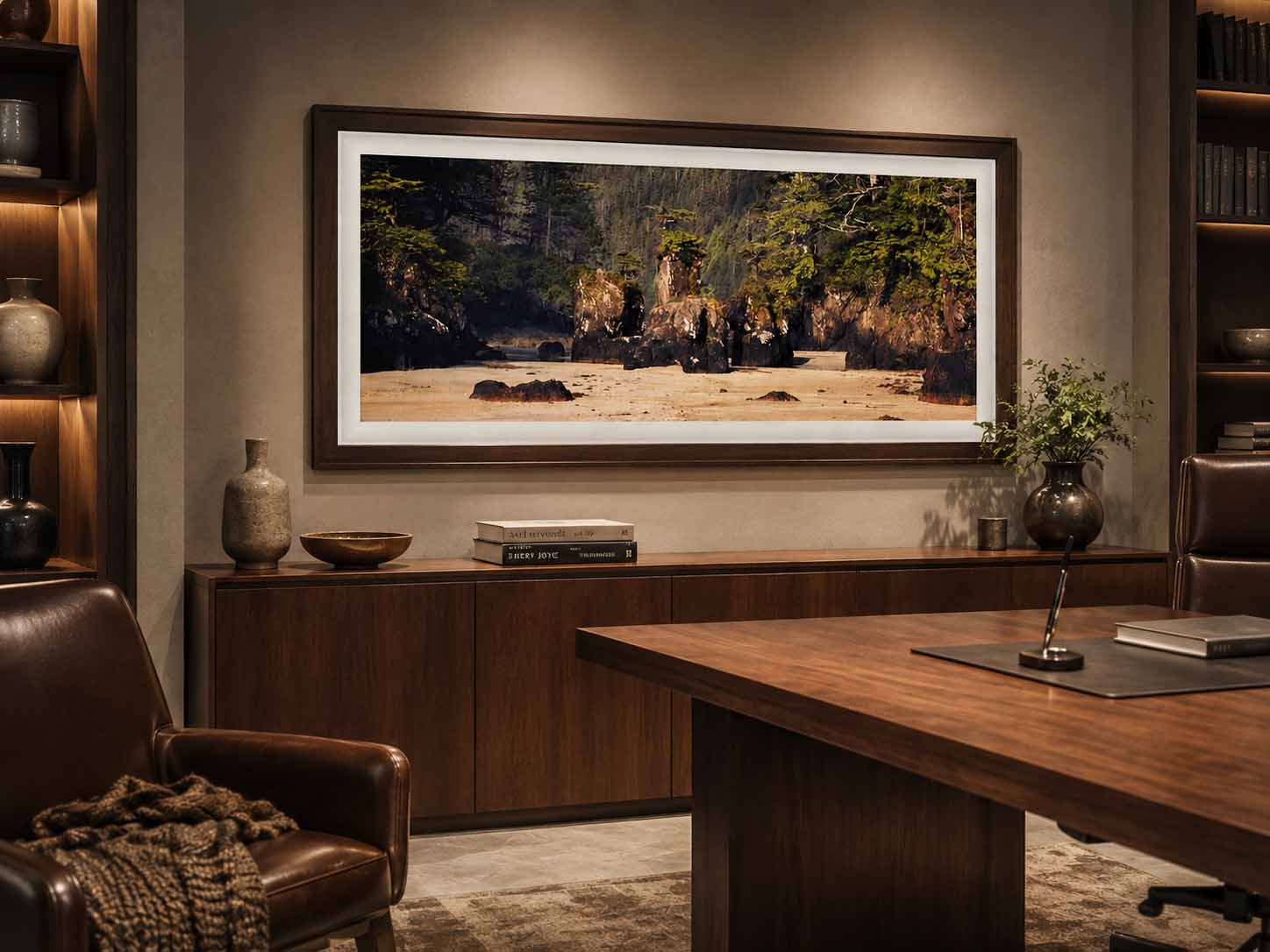
A wide photograph with real depth in it does something a flat one cannot. It gives a wall somewhere to go.
Five to two sits between a scene and a band. It is wider than a two to one panorama, so the eye travels rather than takes it in at once, but it keeps enough height to hold a foreground, a middle distance, and a horizon. In a room that combination matters. A very wide, very shallow frame extends a wall and little else. This proportion extends the wall and opens it, which is why it settles above a long sofa, a credenza, a run of cabinetry, or a headboard and then keeps working after the first glance. It asks for a run of wall rather than height, and about a quarter as much height as width. Sixteen to thirty-two inches will do it.
Here the depth is the point. The sand runs out toward the viewer in the lower third, the stacks stand at middle distance, and the forest rises behind them and fills the top of the frame. Three planes, clearly separated, which is why the picture reads as a place you could walk into rather than as a surface. That effect strengthens with size, and it strengthens in a room with some distance in it, since a piece like this rewards being seen from across a space as well as up close. It is also a dark photograph, weighted low, with the light concentrated on the sand and on the tops of the stacks. A print like that reads as depth rather than as an image on a surface, and at these widths it looks less like a picture hung on the wall than like an opening cut through it.
The color is quiet and it places easily. The frame runs deep green through the forest, brown and slate through the rock, and a warm pale sand across the bottom, all of it low in saturation, with no bright note anywhere. Against oak, walnut, wool, linen, plaster, or stone it belongs to the room. Against cool grays and slate the green comes forward and behaves like the one living thing in the space. It is the sand that does the most work in placement, since that warm pale band along the bottom will find whatever warmth a room already has and agree with it. What it rewards most is a lamp nearby. Dark prints give back more in the evening than most people expect, and the sand holds light in a way the rest of the frame does not.
Not sure which size the room calls for, or want dimensions not listed here? Sizes beyond 80 × 32 are available on request and ship crated by freight. That conversation is welcome before an order is placed. Start that conversation and I will answer within one business day.
The Ancient Shore, limited edition printSteve Austin95012100USD11https://schema.org/InStock
Questions about this photograph
How small is too small for a photograph this wide?
At five to two, the Intimate size is forty inches across and sixteen inches tall. That is a workable proportion at a modest scale, wide enough to read as a panorama and tall enough to keep the three planes of the picture separate. What compresses first is the forest. At sixteen inches tall the trees behind the stacks become a dark green mass rather than a stand of individual trunks, and some of the depth goes with them. A forty by sixteen print works well in a narrow run of wall, above a console, along a hallway, or where a taller piece would not fit. The Collected at sixty by twenty-four is where the forest opens back up and the stacks take on real weight. The Statement at eighty by thirty-two is where the distance between the sand and the treeline becomes something you feel rather than read. If you are weighing a size against a specific wall, choosing the right print size covers the measurements and the viewing distances in more detail.
What changes at the largest size?
The forest behind the stacks, which is where most of the frame's information sits. At forty by sixteen it reads as a dark wall of green. At eighty by thirty-two it becomes a hillside of individual trees, hundreds of them, with the bare grey trunks of the dead ones standing out against the living, the layered ranks receding up the slope, and the haze between them that tells you how far back it goes. That last part is what changes the picture. The depth stops being something you infer from the arrangement and becomes something you can see directly, which means the sand, the stacks, and the treeline separate into three genuine distances rather than three bands. The conifers rooted on top of the stacks resolve at the same time, and the fact that a tree is growing out of a rock in the middle of a tidal flat becomes considerably harder to overlook. Why scale matters covers what happens perceptually when a landscape reaches the size where the eye has to travel across it.
What kind of room does this photograph suit?
Most of them, because the palette is quiet and nothing in it is loud. The frame runs deep green through the forest, brown and slate through the rock, and a warm pale sand across the bottom, all of it low in saturation with no bright note anywhere. Against oak, walnut, wool, linen, plaster, or stone it belongs to the room rather than sitting on top of it. Against cool grays and slate the green comes forward and reads as the one living thing in the space. The sand is what does the most work in placement, since that pale band along the bottom finds whatever warmth a room already has and agrees with it. What it rewards most is distance. This is a photograph with a foreground, a middle, and a horizon, and a room that lets someone stand well back from it gives all three room to separate, which is why a long room or an open plan suits it better than a corridor. A lamp nearby helps too. The sand holds light in the evening in a way the rest of the frame does not.
Every work ships insured and arrives with a signed certificate of authenticity.
If a piece is damaged in transit, the choice of replacement is always yours, and your edition number stays with you.
Production time runs 2 to 3 weeks for metal, 3 to 4 weeks for acrylic and paper, and 5 to 6 weeks for framed work.
Each print is made to order and takes its place in a numbered edition, so sales are final. Before you choose, I am glad to help: send a photo of your wall and I will show you this work in your room at true scale, at no charge. Start a conversation
Collector's Choice · TruLife ® Acrylic in Italian Frame
Collector Edition of 25· Lumachrome TruLife Acrylic · Handcrafted Italian Frame
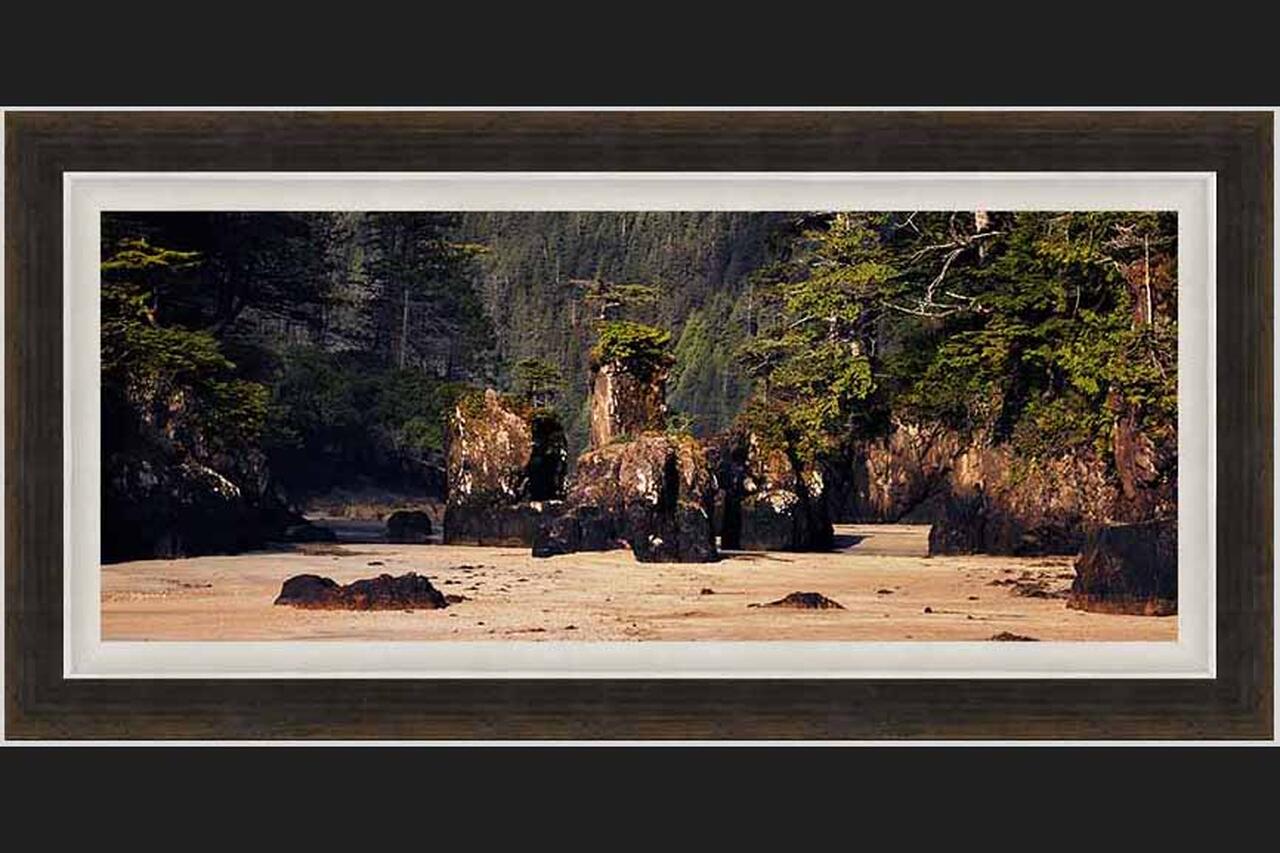
TruLife acrylic in a handcrafted Italian frame with a linen liner chosen for the image. Frame series, finish, and liner are settled with you after the order, and production begins from there. The frame and liner add about fourteen inches to the finished dimensions, worth allowing for when planning placement.
Signature Acrylic Edition of 50· Lumachrome TruLife · Gallery Float Mount
Face-mounted to TruLife acrylic and floated approximately one inch from the wall, with no frame to mediate between the image and the room. UV-resistant, anti-reflective, and scratch-resistant, with a lifetime guarantee against fading.
Signature Metal Edition of 50· ChromaLuxe Print · Gallery Float Mount
Color infused into the aluminum panel itself, floated from the wall on a concealed system. Where acrylic produces luminosity, metal produces clarity. Exceptional fade resistance with no glazing or coating required.
Fine Art Edition of 100· Hahnemühle Baryta Fine Art Paper
Printed without acrylic, so light meets the paper surface directly. Highlights stay luminous, shadows keep their nuance, and the surface has a tactile quality the other presentations approach differently. The understated choice, and the traditional one.
Complimentary shipping within the continental United States. International collector shipping available upon request.
Still deciding
Designing for Stillness
A guide to choosing art for restorative spaces
How to tell whether an image will still hold you in a year, how scale changes what a photograph does in a room, and how to match a piece to the work a room actually performs. It cites the research it draws on, and it is equally clear about where that research stops. About ten minutes to read.