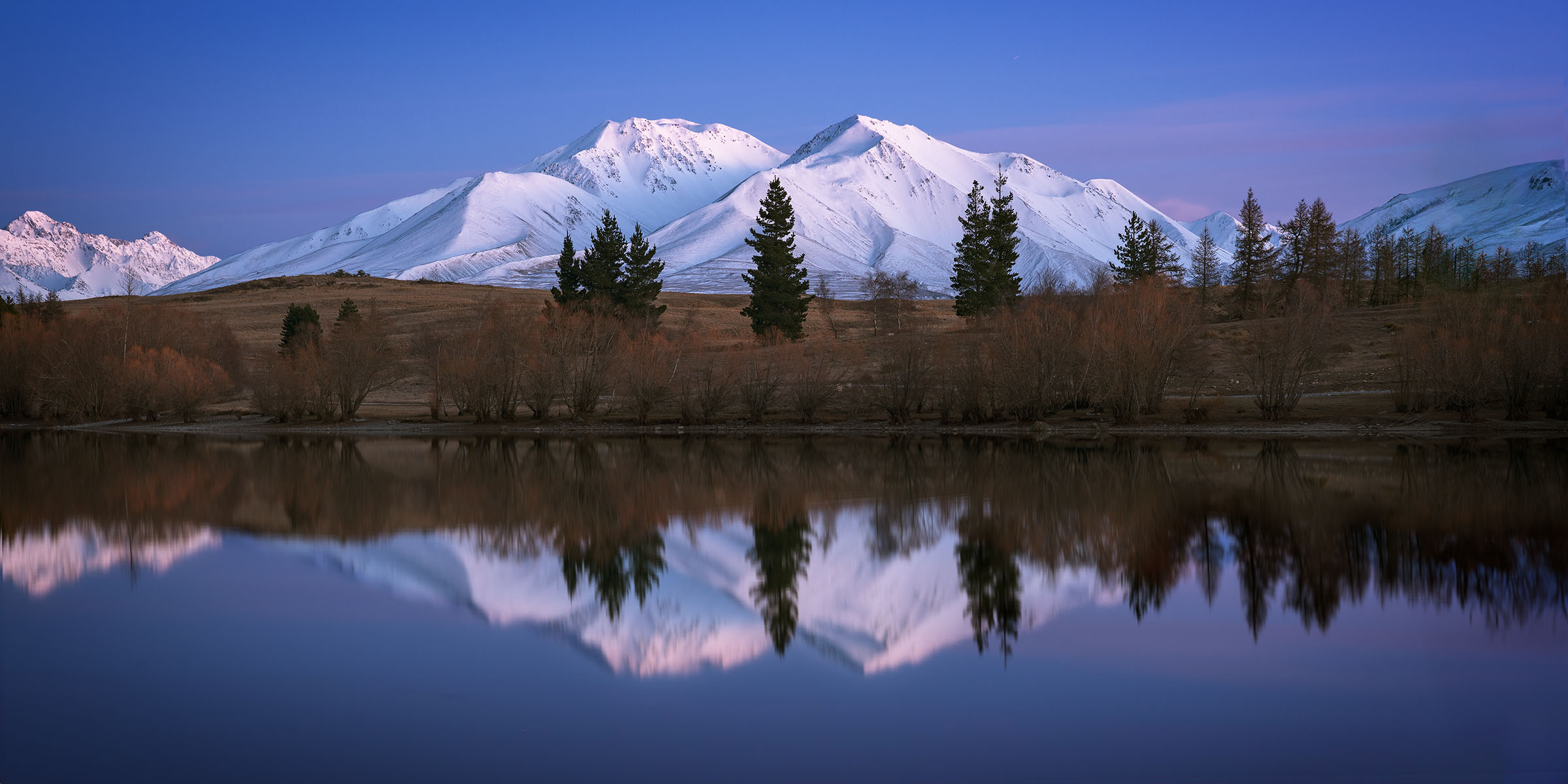
A 2:1 panoramic photograph of snow-covered mountains reflected at dawn in Lake Camp, Canterbury, New Zealand, available as a limited edition print in three sizes.
Artist's Story
I waited about two hours at the edge of Lake Camp, walking back to the car when I lost the feeling in my hands and then walking down again. The air did not move. The lake held the far shore and the mountain above it with no break anywhere in the surface.
The sun had come up by then, somewhere over the basin rim to the east, but it had not reached Mahaanui.
Snow has almost no color of its own. It is close to a neutral reflector, so a snowfield returns whatever falls on it and its color is a readout of the light source rather than a property of the mountain. That is why the two ranges in this frame do not match. The far peaks at the left edge had caught the sun, and their snow carries red, running toward magenta, which is what direct light becomes after a long low path through the atmosphere. Mahaanui had not been reached. Its snow reads blue, with less red in it than green, because the sky was the only thing lighting it.
So the picture holds two times at once. At the left edge it is morning. On the mountain it is not yet.
I made the frame and stayed a while longer. The light did come across, and then the wind came down the basin and the surface broke.
The quiet before everything is two hours in the cold, a lake with nothing moving on it, and a mountain the light had not reached while the range behind it already had.
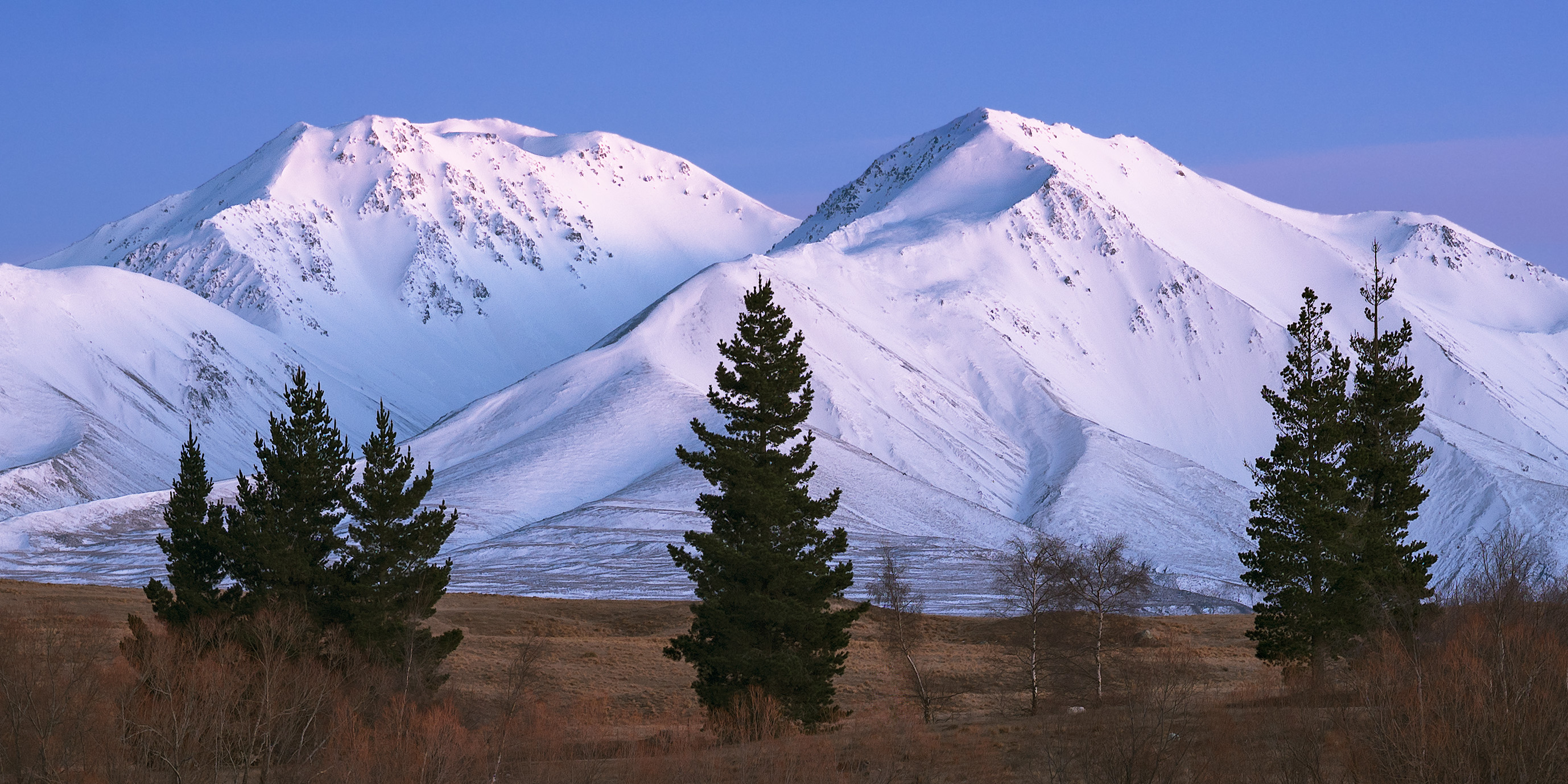
The face of Mahaanui at about a third of the frame width. On an eighty inch print this section runs roughly twenty-nine inches across. The snowfields separate into their lit faces and the deeper blue of every gully cut into them, exposed rock breaks out as individual dark faces rather than as speckling, the ridges resolve into distinct spurs with shadowed sides, and along the base the conifers stand as separate trees with bare willow and birch behind them. Click to view at full size.
About This Photograph
Lake Camp, Ōtuatari, in the Ashburton Lakes of inland Canterbury, New Zealand, before sunrise. This is a single frame image. The lake sits at 680 meters in a glacial basin between the Rangitata and Rakaia rivers, inside Hakatere Conservation Park. The peak is Mahaanui, also called Mount Harper, at 1,829 meters, standing about 1,149 meters above the water.
The waterline crosses at fifty-five percent of the frame height, so the reflection takes slightly less than half the picture. The reflection is not a copy. Measured against the mountain it returns, it runs about seventeen points less blue, because a water surface at this angle sends back a mix of what is above it and what is behind it, and the mix is never the original.
The lakes freeze in winter and the basin is exposed enough that still water is uncommon here. The band of scrub and tussock along the far shore is the only warm color in the frame.
The Quiet Before Everything
Steve Austinhttps://www.steveaustinphotography.com/
Location
Lake Camp, Canterbury, New Zealand
Subject
Snow-covered mountains · still water reflection · winter dawn
Capture
Single frame before sunrise
Format
Photograph · horizontal panorama, 2:1
Sizes
40 × 20 in · 60 × 30 in · 80 × 40 in
Print Media
TruLife Acrylic · ChromaLuxe Metal · Baryta paper
Edition
Limited, 25 / 50 / 100 by presentation
What it Does in a Room
This photograph is built almost entirely out of blue, and that is unusual enough in a landscape to change how it behaves on a wall. Measured across the whole frame, blue runs forty points ahead of red, which is the strongest cool reading in the collection by a wide margin. A picture that far to one side of neutral does not sit passively in a room. It pulls the wall it hangs on toward its own temperature, and a warm white wall beside it will read warmer than it does elsewhere in the house.
The second thing it does is hold its structure at any brightness. Nothing in the frame is pure white and almost nothing is pure black, so there is no clipping at either end to lose when the light in the room drops. Most photographs simplify as a room dims, because the brightest and darkest parts run together first. This one has no such parts. Under a single lamp at night it keeps the same separation between snow, water, and shore that it has at noon, and it is one of the few pieces in the collection that genuinely does not care what time it is.
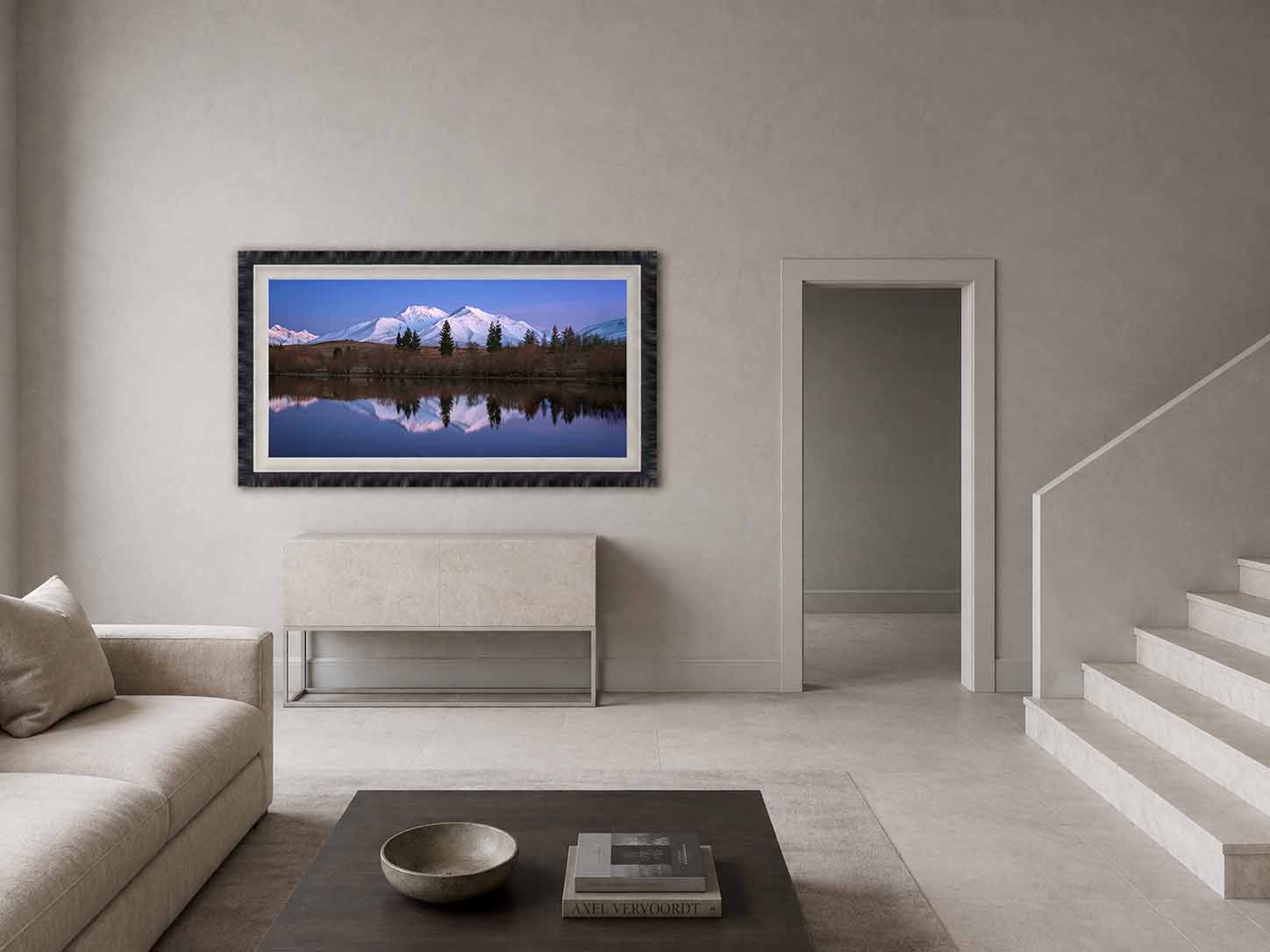
It also has a horizontal seam that decides how it hangs. The waterline sits at fifty-five percent of the height, a hard line across the full width, and the eye finds it before anything else. Hung at standard center height the seam lands near eye level, which is where it wants to be, because everything above it reads as distance and everything below it reads as surface. A piece with a strong internal horizontal is easier to place than one without, since it gives a room a line to agree with, and it settles above a long low console or a sofa back more readily than it does on a wall with nothing else horizontal in it.
Not sure which size the room calls for, or want dimensions not listed here? Sizes beyond 80 × 40 are available on request and ship crated by freight. That conversation is welcome before an order is placed. Start that conversation and I will answer within one business day.
The Quiet Before Everything, limited edition printSteve Austin112513400USD12https://schema.org/InStock
Questions about this photograph
How small is too small for a photograph this wide?
At two to one, the Intimate size is forty inches across and twenty inches tall, and this photograph holds it comfortably because its structure is large and simple. A ridgeline, a shoreline, a waterline, and a mirrored ridgeline below: four horizontal bands stacked in a fixed order, all of which read from across a room. What forty by twenty gives up is the difference between the two ranges. At that size the far peaks at the left edge and the massif at the center both read as snow, and the fact that one is pink and the other is blue registers as a general coolness rather than as two distinct light sources. The picture still works, as a quiet blue landscape with a mirror in it. The Collected at sixty by thirty is where the split becomes visible as a split. If you are weighing a size against a specific wall, choosing the right print size covers the measurements and the viewing distances in more detail.
What changes at the largest size?
The snow stops being white. At the Statement size, eighty by forty, the face of Mahaanui separates into the blue of the sky it is lit by and the deeper blue of every gully and ridge shadow cut into it, and the exposed rock breaks out of the snowfields as individual dark faces rather than as speckling. The ridge running down toward the water resolves into distinct spurs with shadowed sides. Along the shore the scrub separates into individual bare willows with the branch structure visible against the tussock behind them, and the dark conifers standing above the shoreline read as separate trees rather than as a broken line. Below the waterline the reflection stays soft, which is the point of it, but at this size you can see that it is soft rather than assuming so. At nearly seven feet across the two ranges are far enough apart that the eye has to travel between them, which is what makes the difference in their light a thing you notice rather than a thing you are told. Why scale matters covers what happens perceptually when a landscape reaches the size where the eye has to cross it.
What kind of room does this photograph suit?
Rooms that are already cool, and rooms that get used after dark. A picture this far toward blue belongs where the room agrees with it rather than where it has to argue, so gray plaster, cool stone, pale concrete, and white with a blue cast all give it a ground it extends rather than interrupts. Because nothing in it clips at either end it is one of the better choices for a room with low evening light, where it keeps its structure under a single lamp. Give it a wall with room on either side. The composition runs the full width with no margin built into it, and it reads as depth rather than as an object, so a wall where it can be the far end of the room suits it better than a wall where it is one item among several. When your mind needs to rest takes the question further.
Every work ships insured and arrives with a signed certificate of authenticity.
If a piece is damaged in transit, the choice of replacement is always yours, and your edition number stays with you.
Production time runs 2 to 3 weeks for metal, 3 to 4 weeks for acrylic and paper, and 5 to 6 weeks for framed work.
Collector's Choice · TruLife ® Acrylic in Italian Frame
Collector Edition of 25· Lumachrome TruLife Acrylic · Handcrafted Italian Frame
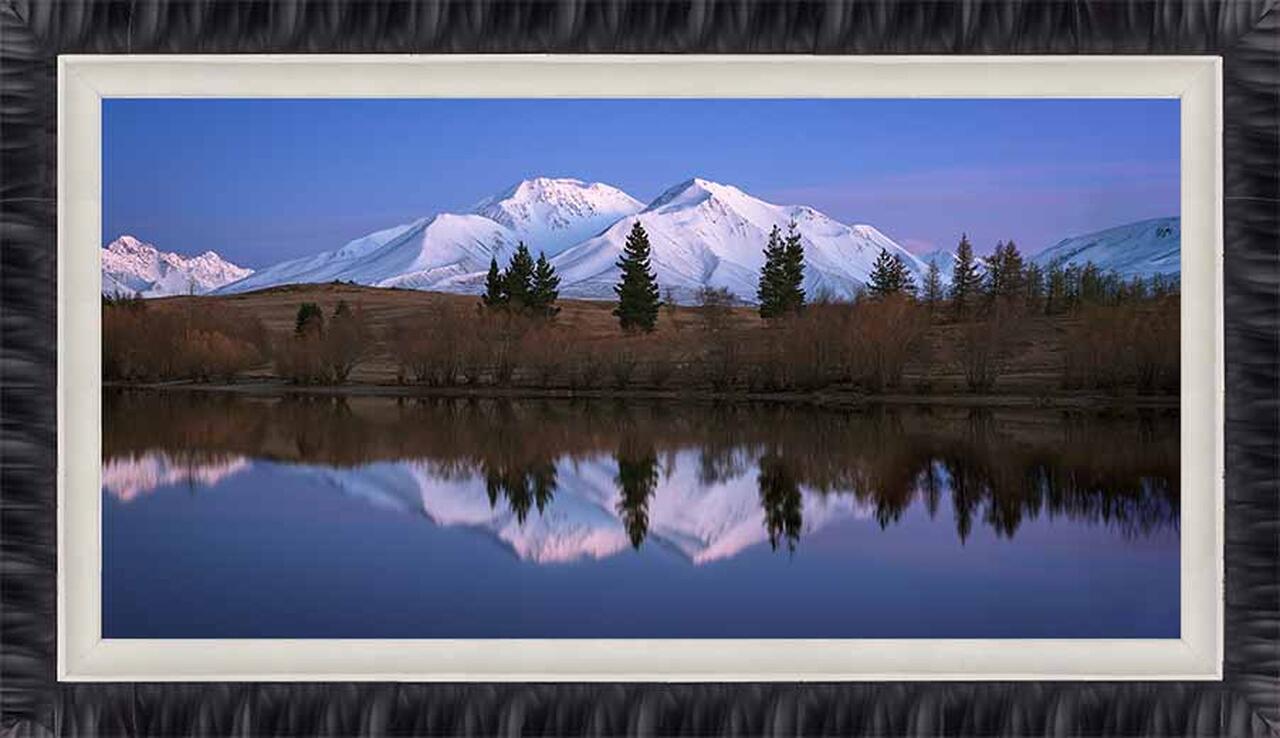
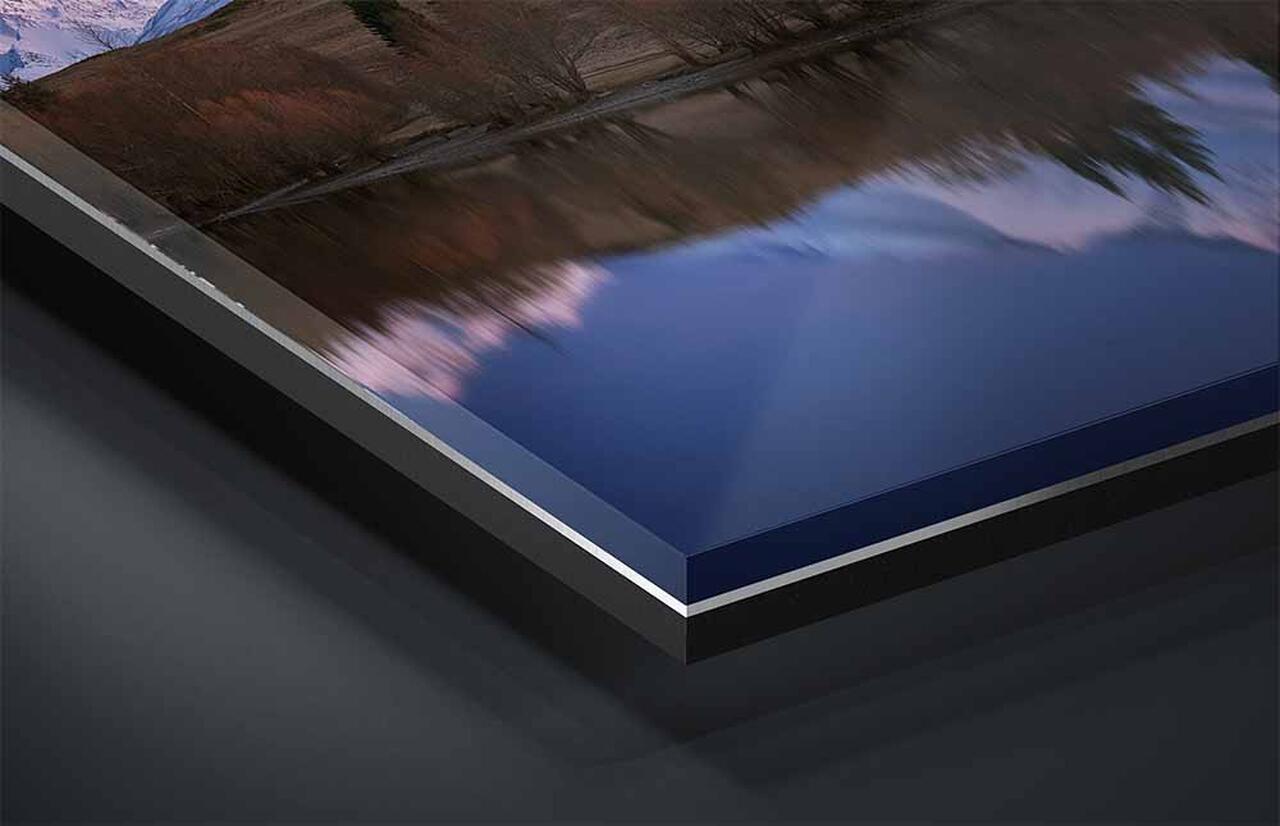
TruLife acrylic in a handcrafted Italian frame with a linen liner chosen for the image. Frame series, finish, and liner are settled with you after the order, and production begins from there. The frame and liner add about fourteen inches to the finished dimensions, worth allowing for when planning placement.
Signature Edition · TruLife ® Acrylic, Float Mount
Signature Edition of 50· Lumachrome TruLife Acrylic · Gallery Float Mount
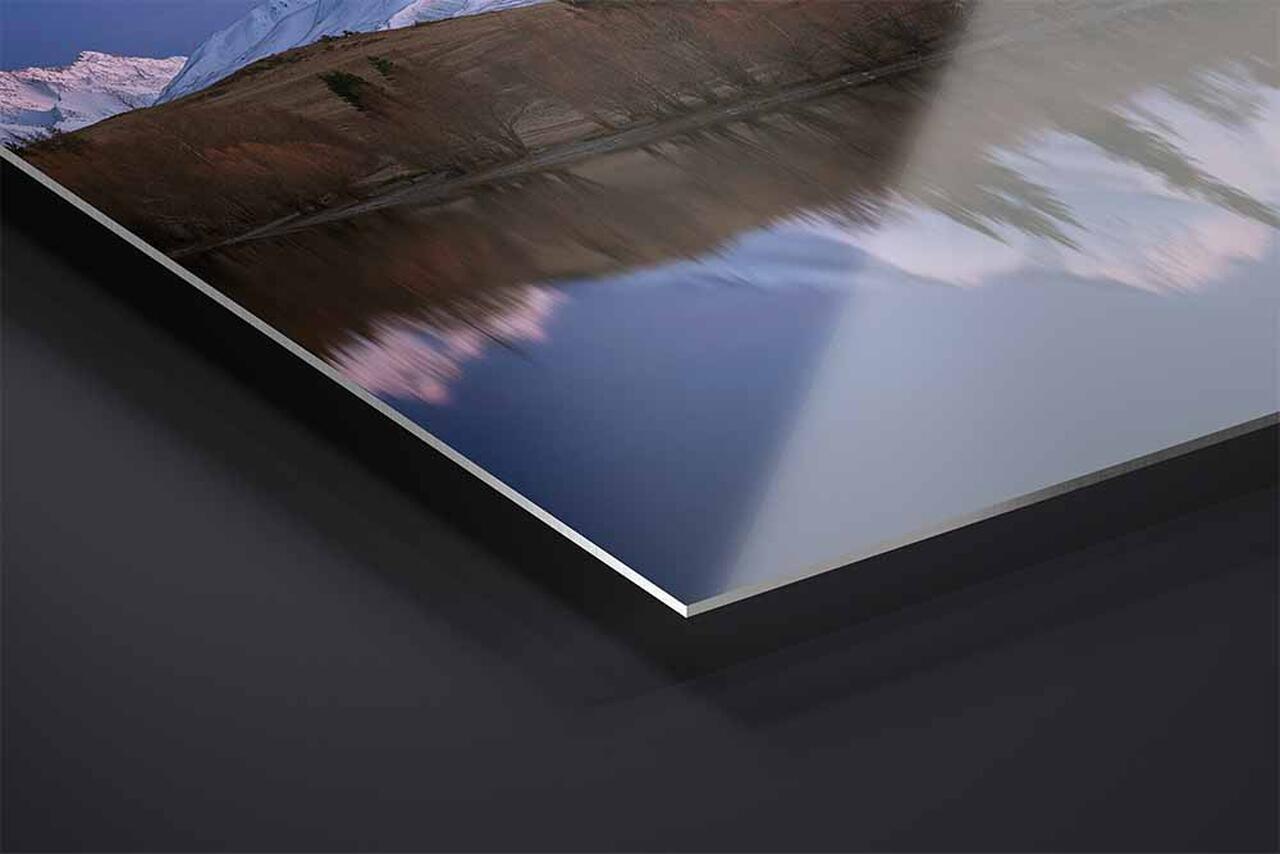
Face-mounted to TruLife acrylic and floated approximately one inch from the wall, with no frame to mediate between the image and the room. UV-resistant, anti-reflective, and scratch-resistant, with a lifetime guarantee against fading.
Signature Edition of 50· ChromaLuxe Metal Print · Gallery Float Mount
Color infused into the aluminum panel itself, floated from the wall on a concealed system. Where acrylic produces luminosity, metal produces clarity. Exceptional fade resistance with no glazing or coating required.
Fine Art Edition of 100· Hahnemühle Baryta Fine Art Paper
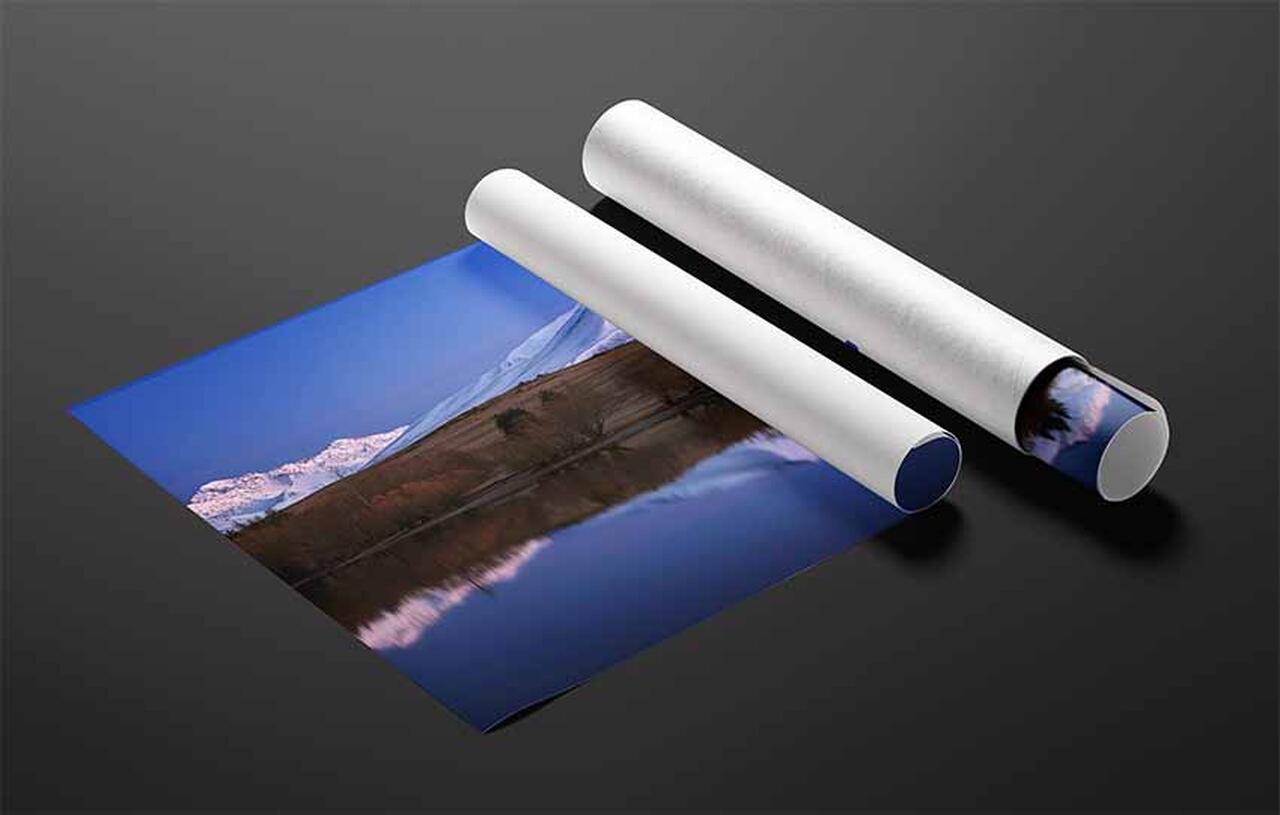
Printed without acrylic, so light meets the paper surface directly. Highlights stay luminous, shadows keep their nuance, and the surface has a tactile quality the other presentations approach differently. The understated choice, and the traditional one.
Complimentary shipping within the continental United States. International collector shipping available upon request.
Still deciding
Designing for Stillness
A guide to choosing art for restorative spaces
How to tell whether an image will still hold you in a year, how scale changes what a photograph does in a room, and how to match a piece to the work a room actually performs. It cites the research it draws on, and it is equally clear about where that research stops. About ten minutes to read.