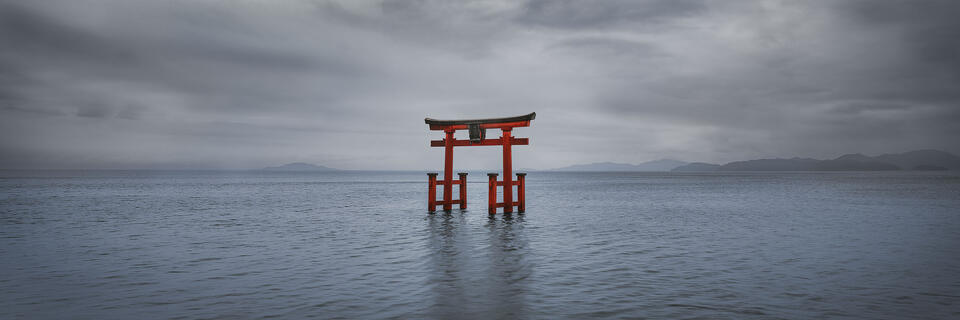
Why Large Art Changes How a Room Feels
How scale, presence, and visual focus transform interior spaces
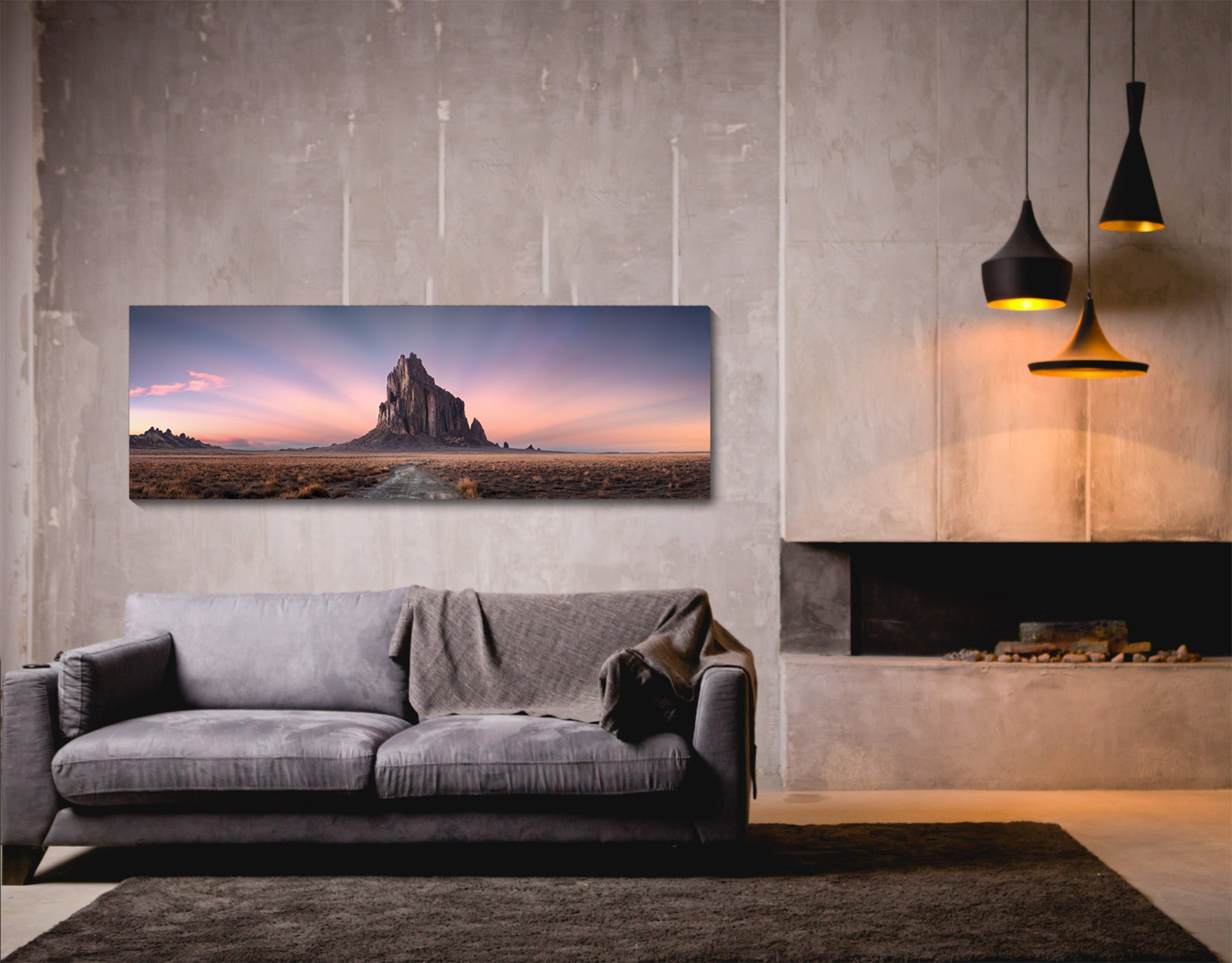
View Available Prints of Ascension
Entering the room before explaining it
There are rooms you step into and immediately feel yourself slow down. Nothing obvious announces why. The furniture may be simple. The colors restrained. The space uncluttered. And yet, something about the room feels settled, as if it has found its balance.
Your eyes stop wandering. Your body relaxes. You are not searching for where to look next. You simply arrive.
This feeling is not accidental. It is the result of how space, light, and visual focus work together to shape our experience of a room. Long before we think about style or design, our nervous system responds to what it encounters. Some spaces ask too much of us. Others quietly hold us.
Large art plays a subtle but powerful role in this distinction. Not because it demands attention, but because it gives attention somewhere to rest.
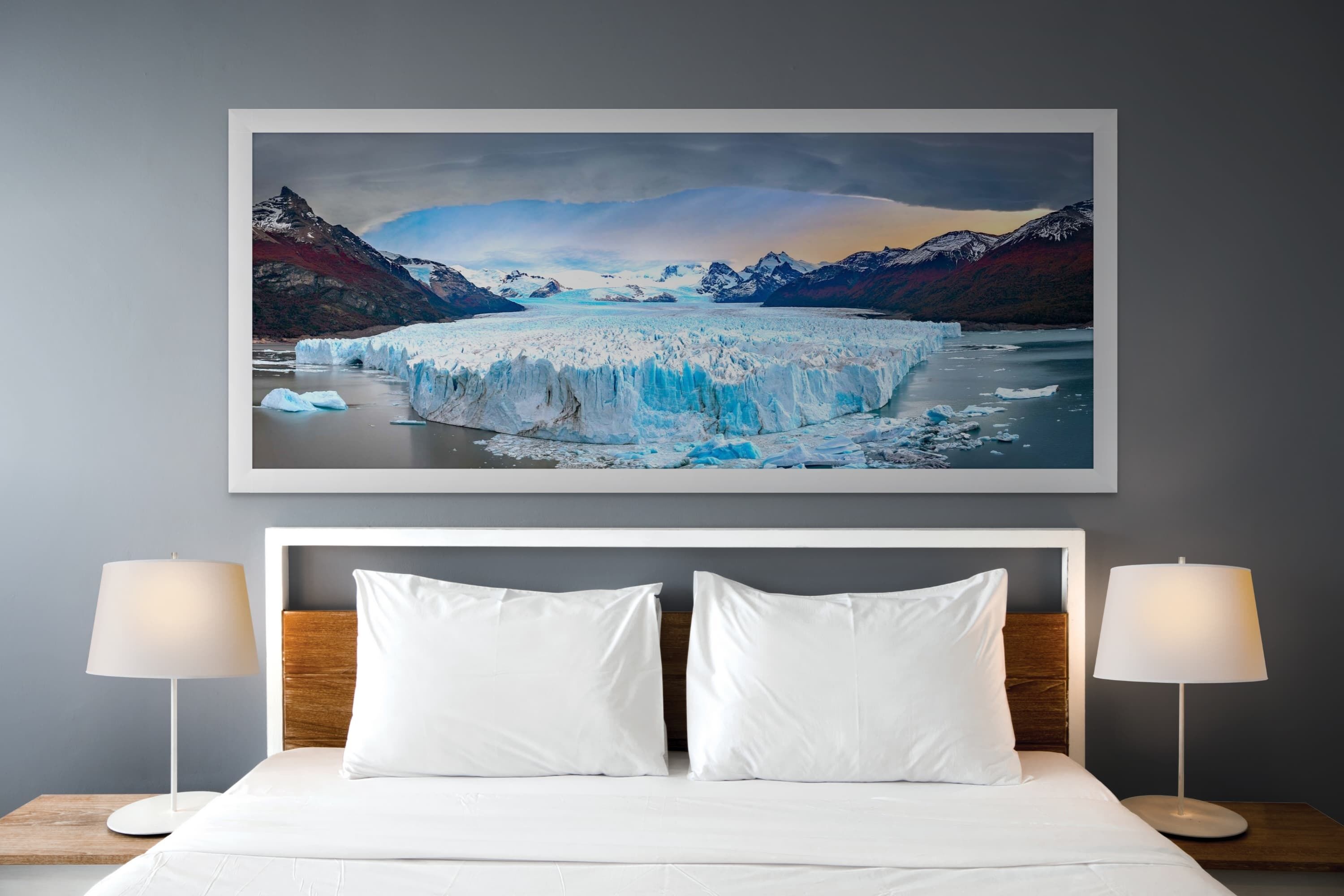
View Available Prints of Unveiled Heaven
The quiet problem many rooms struggle with
Many beautifully designed rooms still feel unfinished. Not in a decorative sense, but in a deeper, harder-to-name way. The furniture may be thoughtfully chosen. The materials high quality. The layout intentional. And yet the room feels slightly unsettled, as if something is missing.
Often, the issue is not what is in the room, but how the eye moves through it.
When walls are filled with multiple small pieces, decorative accents, or visual details spread evenly across a space, the eye is constantly asked to make decisions. Where should I look next? What matters most here? Nothing holds the gaze for long, so attention keeps shifting. The room feels active, even when everything in it is tasteful.
Over time, this visual activity registers as mental noise. It is subtle, but it is felt. Instead of grounding us, the space keeps us lightly engaged, scanning rather than settling.
This is not a failure of design or taste. It is a natural response to environments that lack a clear visual anchor. Without a place for attention to land, even calm spaces can feel restless.
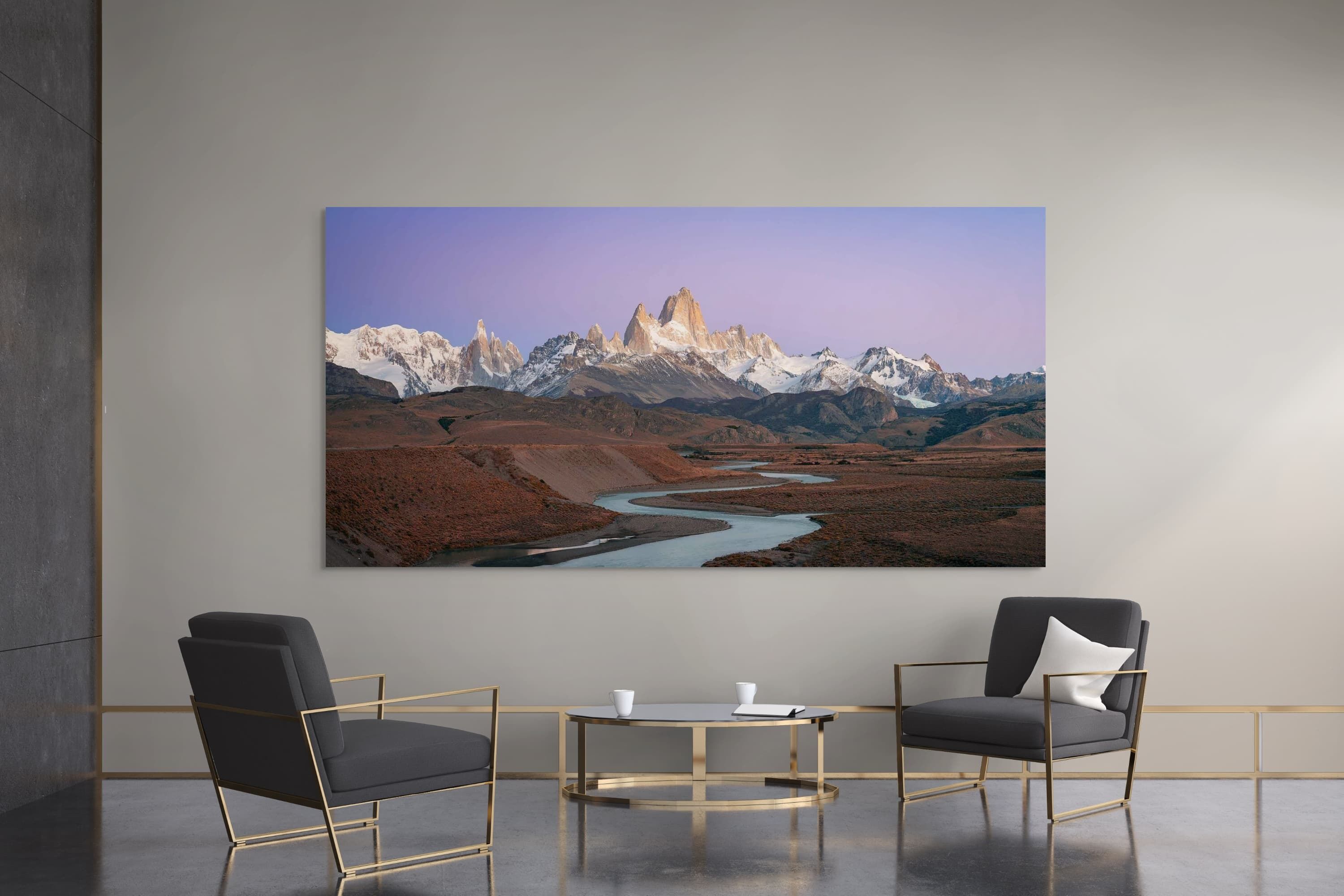
View Available Prints of The River Knows the Way
Scale as a psychological and spatial experience
Scale is often misunderstood as a purely visual concern. We tend to think of it in terms of measurements, wall size, or whether something will physically fit. But scale is experienced long before it is calculated. It is felt in how the body responds to a space and how the mind organizes what it sees.
When the eye encounters a single, expansive visual field, something different happens. Attention slows. Instead of jumping from point to point, the gaze settles into a broader, more continuous experience. The image does not need to be read in parts. It can be taken in as a whole.
This matters because the human brain is constantly managing limited attentional resources. Every visual decision, even small ones, carries a cognitive cost. Multiple small artworks, decorative clusters, or evenly distributed focal points require ongoing evaluation. Where should I look now? What should I prioritize? Over time, this quiet demand adds to mental fatigue.
A large artwork reduces that burden. It offers clarity. One dominant visual presence gives the mind permission to stop searching. Attention lands and stays longer. The rest of the room becomes supporting context rather than competition.
This is why larger pieces often feel calmer than people expect. They are not asking for more attention. They are asking for less effort. By simplifying the visual hierarchy of a space, scale creates a sense of ease that smaller elements rarely achieve on their own.
There is also a physical quality to scale that affects how a room feels. Large art holds space. It establishes a visual weight that balances architecture, furniture, and light. Instead of the room feeling open but empty, or furnished but fragmented, it begins to feel cohesive. Anchored.
The effect is subtle but immediate. You feel it when your shoulders drop slightly as you enter. When the room no longer asks you to take it in piece by piece. When your attention is allowed to rest rather than roam.
Large art addresses this problem not by adding more, but by simplifying what the eye is asked to do. It creates a single, intentional focal point that allows the rest of the room to exhale around it.
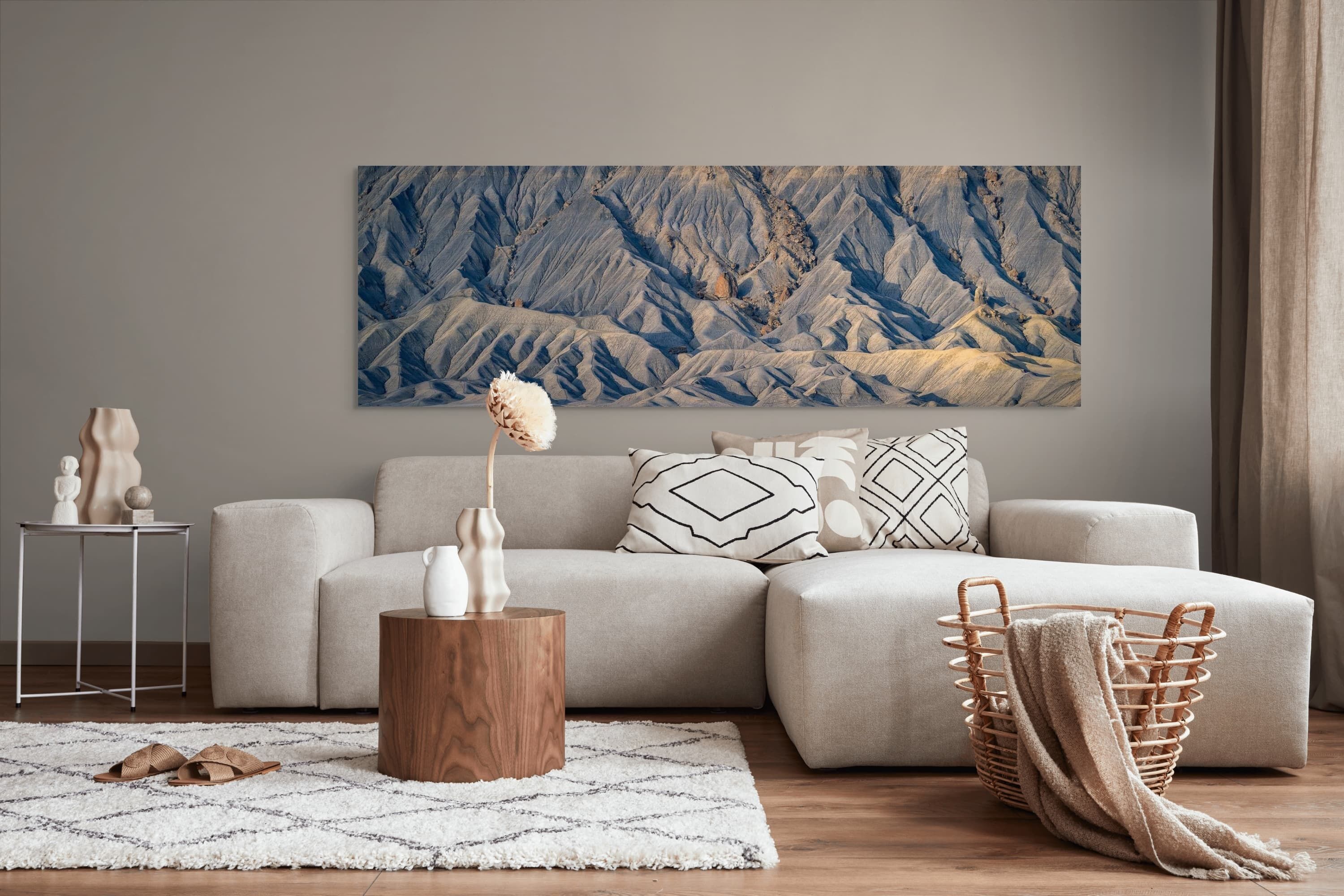
View Available Prints of Subtle Currents
Presence versus decoration
Decoration is often about filling space. It adds interest, texture, and personality. There is nothing wrong with it, and in many rooms it plays an important role. But decoration alone rarely changes how a room feels at a deeper level.
Presence is different. Presence does not fill space, it holds it.
Large art operates in this quieter register. Rather than acting as an accessory layered onto a room, it becomes part of the room’s structure. It carries visual weight in the same way a fireplace, a large window, or an architectural feature does. The room organizes itself around it.
This is why large art does not need to be busy or dramatic to be effective. In fact, the calmer the image, the more clearly its presence can be felt. A restrained composition, especially one rooted in natural forms, creates stability rather than stimulation. It gives the room a center of gravity.
When art has presence, it does not compete with furniture, lighting, or materials. It allows those elements to settle into clearer roles. The room feels composed rather than arranged. Intentional rather than decorated.
People often assume that a large piece will dominate a space. What usually happens instead is the opposite. The room becomes quieter. Visual tension decreases. The art absorbs attention so that everything else does not have to.
This shift from decoration to presence is what transforms a room from something that looks finished into something that feels complete.
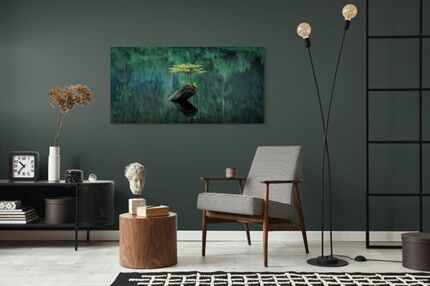
View Available Prints of Quiet Persistence
How large art subtly reshapes the way a room is used
The influence of large art extends beyond how a room looks. It changes how a room is experienced over time.
In spaces anchored by a strong visual presence, people tend to slow down without realizing it. Movement becomes more deliberate. Sitting feels more intentional. The room no longer reads as a passageway or a temporary stop, but as a place to remain.
This happens because attention has somewhere to settle. When the eye is not constantly scanning, the body follows. Conversations linger. Silence feels comfortable rather than empty. The room supports presence instead of pulling focus in multiple directions.
Large art often becomes a quiet reference point in daily life. It is noticed in passing, then returned to again and again. Not in a way that demands engagement, but in a way that gently orients the mind. Over time, the image becomes part of the room’s rhythm, something that subtly shapes mood without calling attention to itself.
This is especially true in spaces where life moves quickly. Homes that balance work, family, and constant stimulation benefit from places that ask less of us. Large, calm imagery provides that relief by offering visual consistency in an otherwise changing environment.
Rather than adding activity to a room, large art reduces it. It creates a sense of containment, a feeling that the space knows what it is for. And in doing so, it invites people to use the room not just efficiently, but meaningfully.
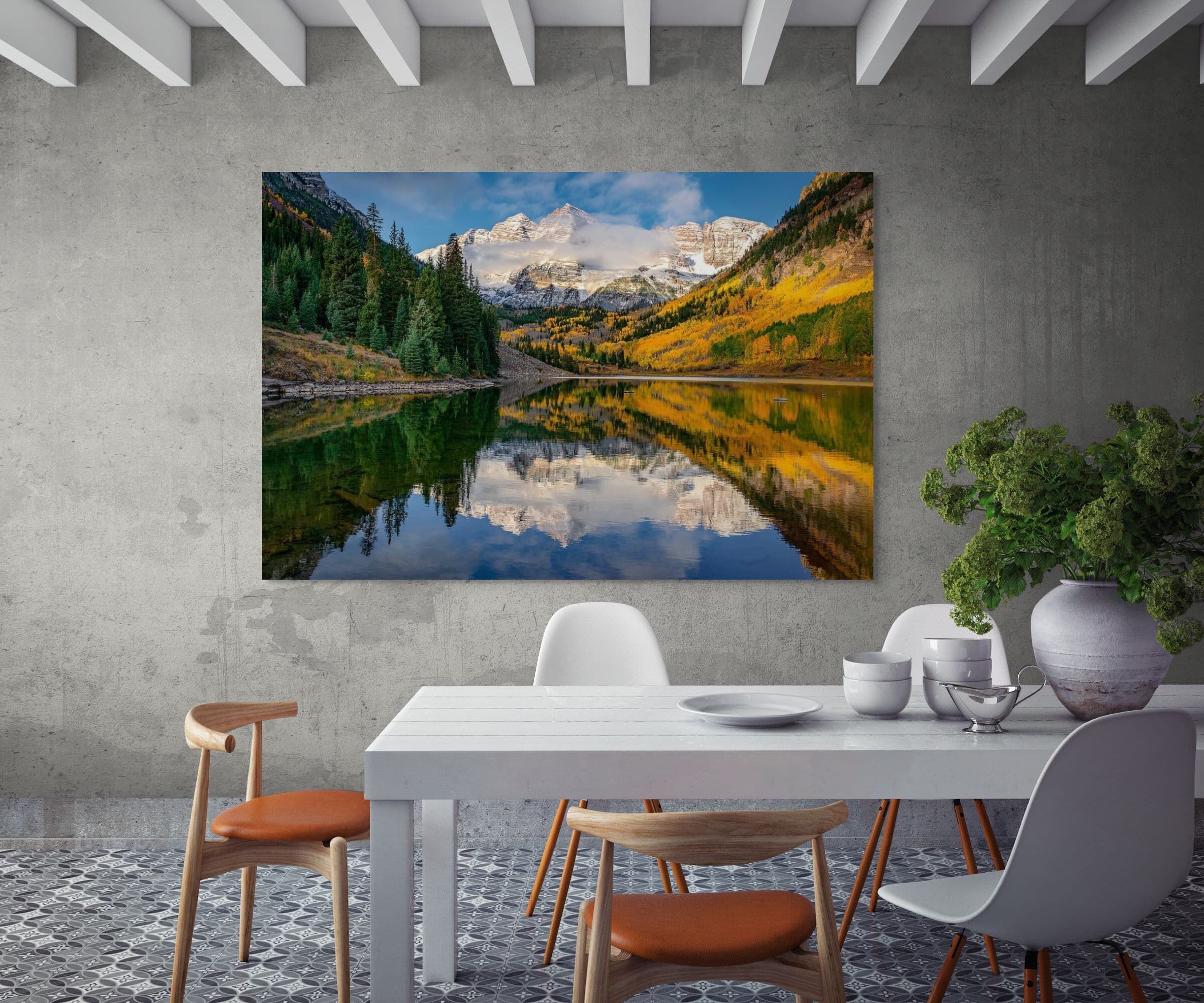
View Available Prints of Resting in Reflection
Why this matters more in modern homes
Many contemporary homes are designed around openness. High ceilings, wide sightlines, minimal walls, and clean architectural lines create a sense of space and light. These qualities are often what draw people to modern design in the first place.
But openness comes with a quiet challenge. Without natural points of visual grounding, large spaces can feel emotionally unanchored. Rooms may look expansive yet feel unfinished, or calm in theory but slightly hollow in practice.
In these environments, scale becomes essential.
Smaller decorative elements tend to disperse rather than organize attention. They add interest without offering stability. In contrast, a large, singular artwork provides a visual counterweight to open architecture. It gives the space something to gather around.
Nature imagery plays a particularly important role here. Modern materials such as glass, concrete, steel, and clean-lined wood surfaces benefit from the softness and depth that natural forms provide. A large landscape or nature-based image introduces organic variation without disrupting the simplicity of the architecture.
Instead of cluttering the space, it humanizes it.
In open-plan homes, a single large piece can quietly define a zone without walls. In rooms with high ceilings, it restores a sense of proportion. In minimalist interiors, it adds warmth without excess. The art does not compete with the architecture. It completes it.
As homes increasingly function as places of work, rest, and reflection all at once, the emotional quality of space matters more than ever. Large art helps modern interiors feel less like containers and more like environments that support how we actually live.
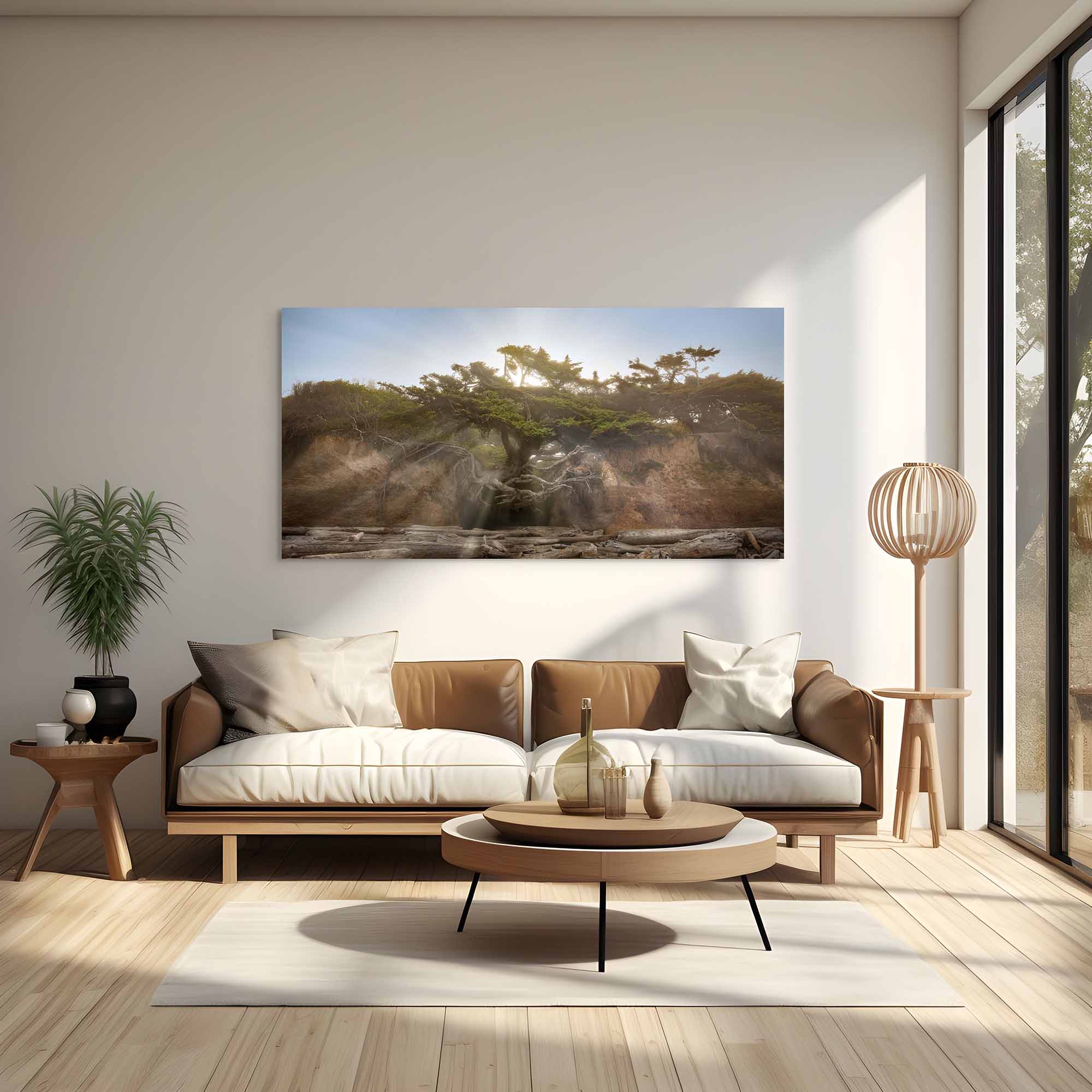
View Available Prints of Holding On
Choosing large art is less about boldness and more about trust
When people hesitate around large art, the concern is rarely about size alone. It is about uncertainty. Will it feel like too much? Will it dominate the room? Will it say more than I intend?
These questions are natural. They reflect a desire for harmony rather than a lack of confidence.
What is often misunderstood is the source of visual overwhelm. Overwhelm does not come from scale itself. It comes from excess information. Busy compositions, competing focal points, and constant variation demand attention. A single, expansive image with a clear, restrained composition does the opposite. It simplifies the visual experience.
Large art asks for trust, not boldness. Trust in how a space feels rather than how it performs. Trust in the body’s response rather than second-guessing taste or trends. When people choose large work that genuinely resonates with them, the room almost always settles around it.
There is also a freedom in letting one piece do the work of many. Instead of layering meaning across multiple objects, a single artwork can carry the emotional weight of the space. The room becomes clearer. Decisions become easier. The art does not shout. It steadies.
In this sense, choosing large art is not a dramatic gesture. It is a quiet one. It reflects an understanding that presence comes from clarity, not accumulation.
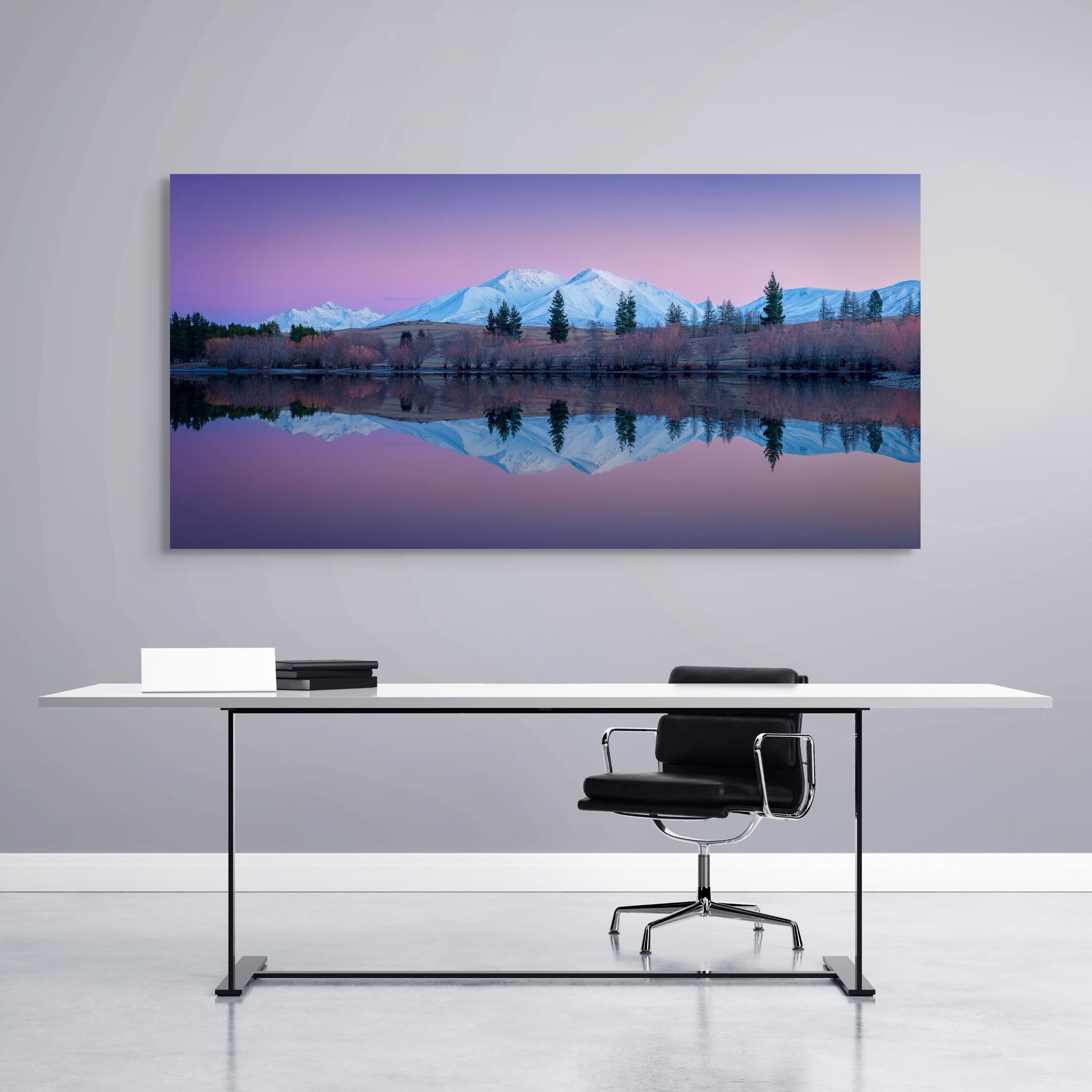
View Available Prints of Held in Stillness
Letting a room settle
When a room finally feels right, it rarely announces itself. There is no moment of certainty or completion. Instead, there is a quiet sense of ease. The space no longer asks for adjustment. It holds you as you move through it.
Large art often plays a role in this settling, not because it draws attention to itself, but because it gives attention somewhere to rest. It simplifies what the room asks of you. It allows the space to feel intentional without feeling arranged.
The next time you enter a room, notice where your eyes go. Notice whether they keep moving, or whether they pause. Notice how your body responds when the visual environment feels clear versus when it feels active. These small signals often reveal more than design rules ever could.
Choosing art is ultimately about how you want to feel in the spaces you inhabit. When a piece resonates at the level of presence rather than decoration, it becomes part of the room’s rhythm. Something you live with, not something you manage.
If you are drawn to spaces that feel quieter, more grounded, and less demanding, large art may already be doing its work in your imagination.
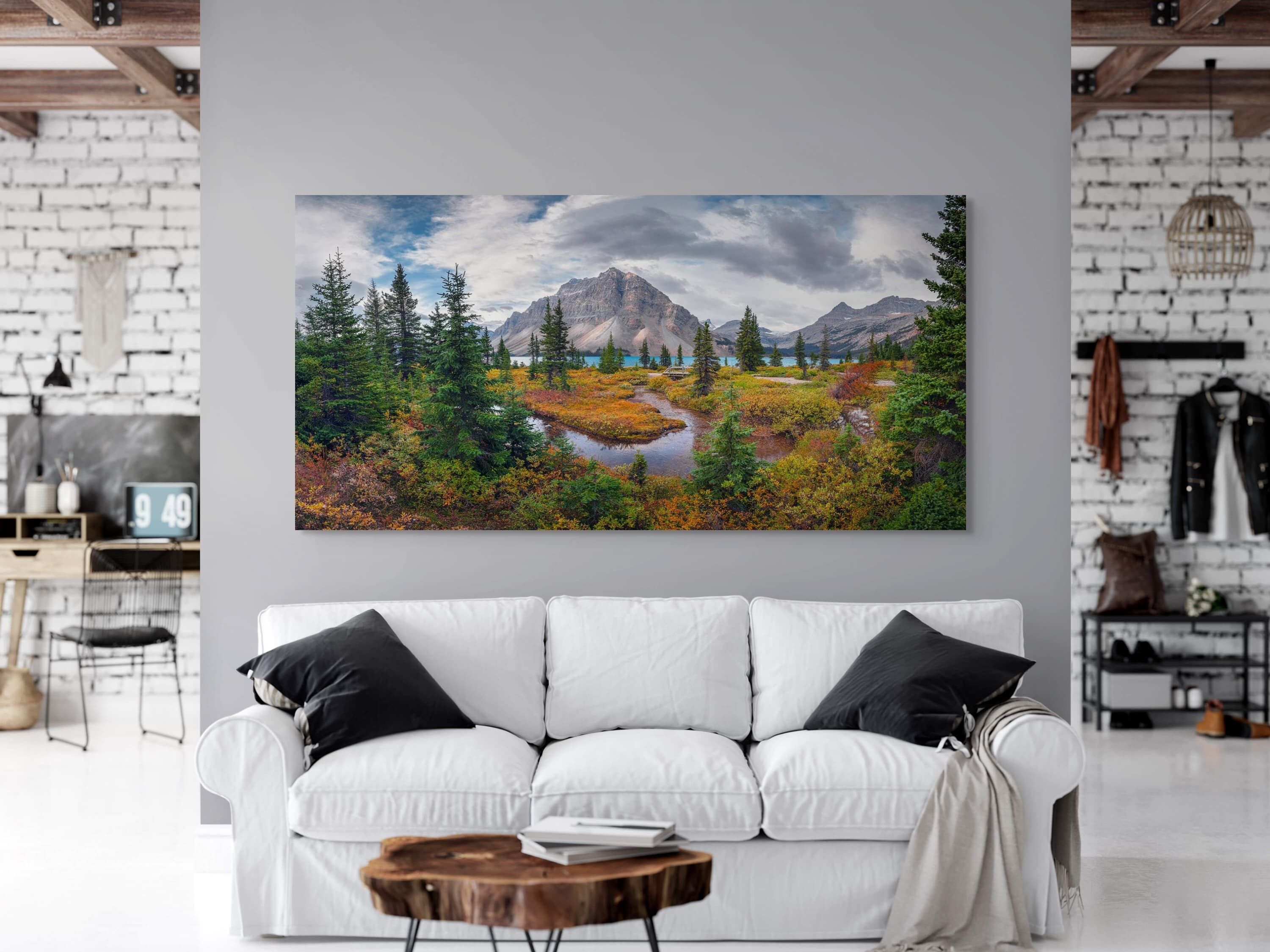
View Available Prints of Alpine Serenity
Living With Presence
Some images are meant to be noticed, and others are meant to be lived with. The difference is felt before it is understood. If this way of thinking about space and presence resonates, the work in this collection is made with exactly that intention: to hold a room rather than fill it.
I invite you to spend time with the full collection and notice which piece quiets the space around it. And if you are weighing a particular wall, especially a large or open one, I am always glad to think it through with you. A complimentary digital mockup will let you see how a piece holds your own room at scale before you decide. There is no urgency in any of this. A piece you intend to live with for years is worth choosing slowly, and on purpose.
Featured Fine Art Prints for Why Large Art Changes How a Room Feels








Steve Austin is a psychology professor, and fine art landscape photographer. His limited edition landscape prints are available through Steve Austin Fine Art Photography at steveaustinphotography.com. Complimentary digital mockups are available for those who would like to visualize a piece within their own space.