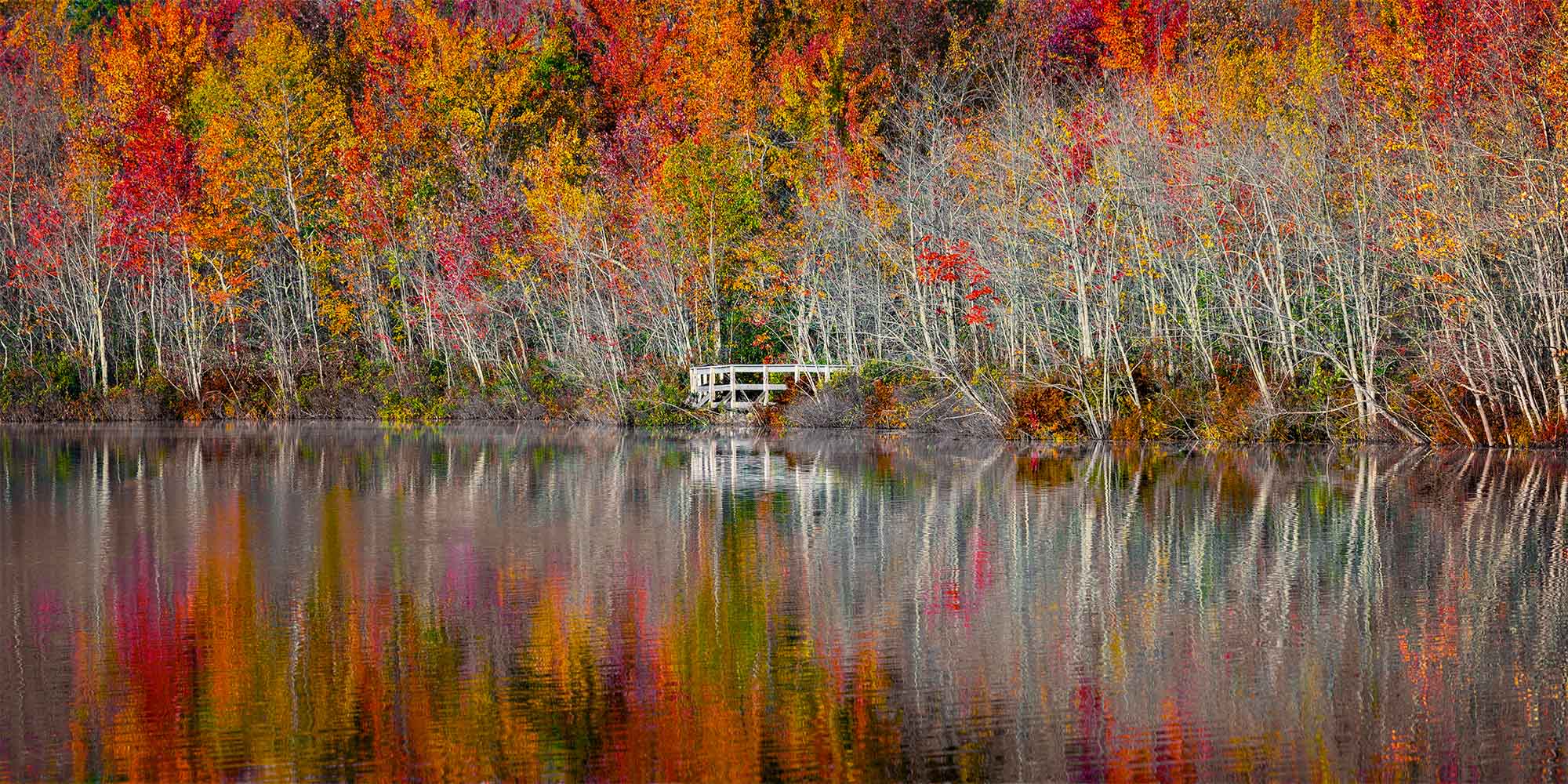
A 2:1 panoramic photograph of autumn color mirrored in the still water of Beaver Lake, New York, available as a limited edition print in three sizes.
Artist's Story
Beaver Lake, in the nature center of the same name just west of Baldwinsville in central New York, holds still enough on the right morning to carry the whole far shore a second time. The hardwoods were at full color, birch trunks standing pale among the reds, and a small white footbridge set into the treeline where you would miss it if you were not looking for it.
I walked the edge for a while, watching the light move across the far bank. Then the wind dropped, the last ripple went out of the water, and I made the frame.
The lower half of this photograph contains nothing the upper half does not already have. Every tree, every color, every plank of that bridge is stated twice. By any ordinary accounting that is redundancy, and redundancy is usually what makes an image tire you. Here it does the opposite. The visual system treats symmetry as a special case. It finds it fast and prefers it strongly, which is why a scene repeated across a horizontal line does not read as repetition at all. It reads as order. And order rests a person in a way novelty does not.
Nothing on that shoreline is arranged, of course. The trees grew where they grew. What produced the order was a flat surface at the right angle for twenty minutes, and a flat surface is not a composition, it is an absence of wind. The rest it gives back is real regardless.
Autumn Stillness is that morning, when the wind stopped long enough for the lake to say everything twice.
There is a difference between a picture that occupies attention and one that lets it settle. I wrote about which kind a room needs in When Your Mind Needs to Rest.
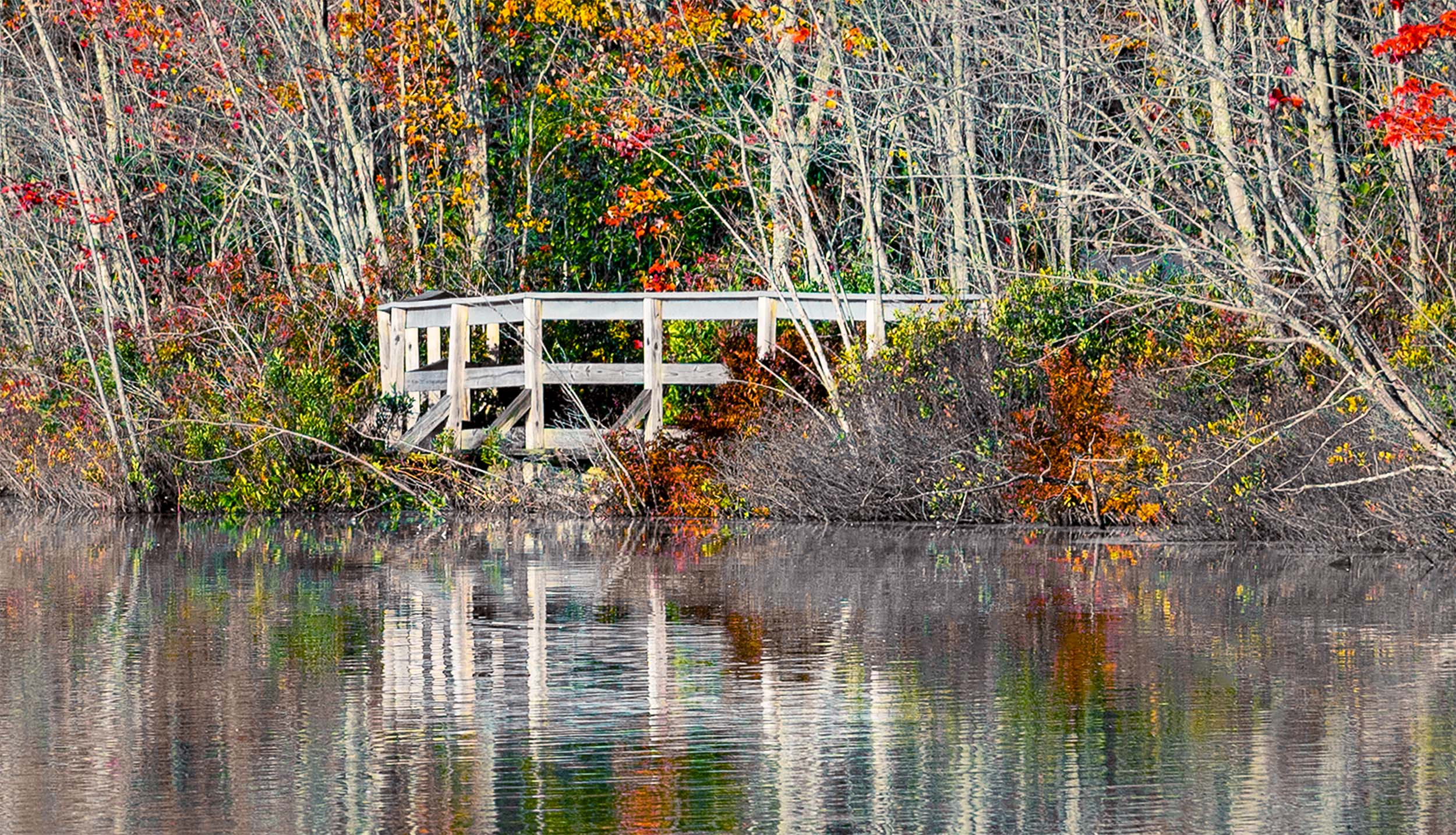
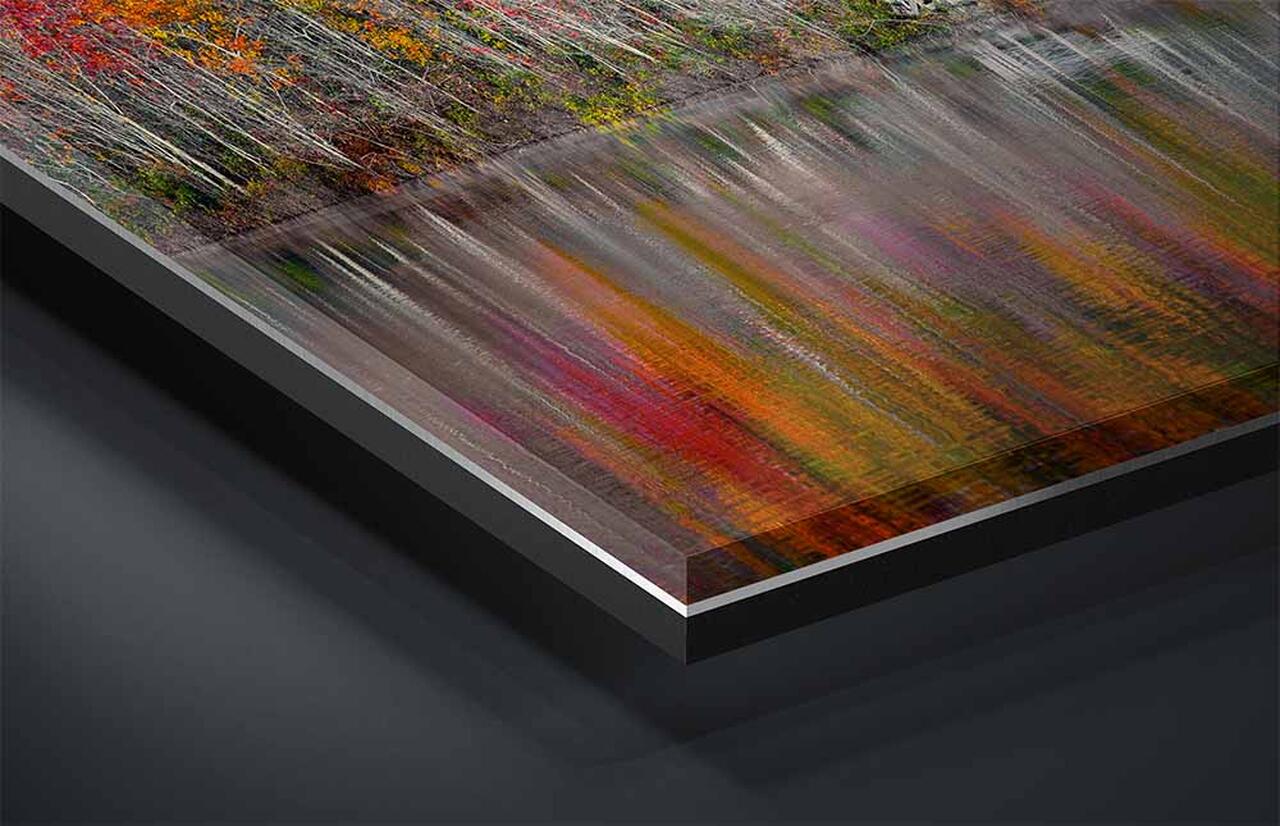
The footbridge and the water below it, about a quarter of the frame width. The same trees stated twice, once sharp and once drawn out into ripples. Click to view at full size.
About This Photograph
Photographed at Beaver Lake Nature Center in Lysander, near Baldwinsville in Onondaga County, New York, on an autumn morning. This is a single frame image in color. The subject is the far shore of Beaver Lake at peak fall color, with birch and mixed hardwoods and a small white footbridge set into the treeline, mirrored in still water. Beaver Lake is a 200-acre glacial water body at the center of a 690-acre county preserve managed by Onondaga County Parks, about four miles west of Baldwinsville. A reflection this complete depends on the surface going flat, which on this lake happens for short stretches on calm mornings and rarely lasts. Presented as a horizontal panorama, offered as an archival limited edition from 40 by 20 inches to 80 by 40 inches on acrylic, metal, or archival paper.
Autumn Stillness
Steve Austinhttps://www.steveaustinphotography.com/
Location
Beaver Lake, Baldwinsville, New York
Subject
The far shore at peak color, mirrored in still water, with a white footbridge in the treeline
Capture
Single frame, autumn morning, wind off the water
Format
Photograph · horizontal panorama, 2:1
Sizes
40 × 20 in · 60 × 30 in · 80 × 40 in
Print Media
TruLife Acrylic · ChromaLuxe Metal · Baryta paper
Edition
Limited, 25 / 50 / 100 by presentation
What it Does in a Room
A photograph that repeats itself does something an ordinary one cannot. It gives the eye a place to stop looking for the point.
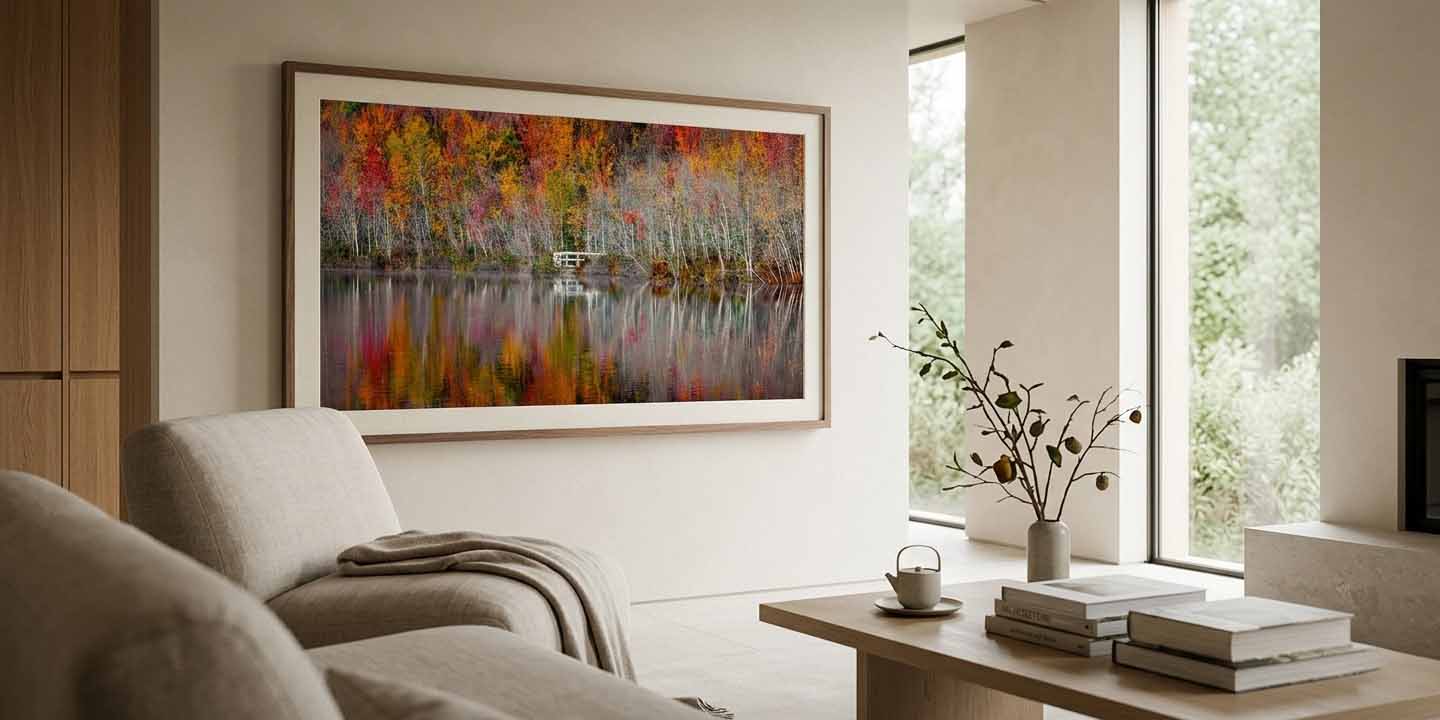
Two to one is the panoramic proportion that still holds a scene. Wider than that and a photograph becomes a band, read left to right like a sentence. Narrower and it reverts to being a picture on a wall. At two to one the frame is decisively horizontal without giving up height, so a composition can fill it rather than merely stretch across it. In a room it works with the architecture instead of against it. Most walls are built on horizontal lines, and a wide frame extends them, which is why this shape settles above a sofa, a credenza, a long console, or a headboard more comfortably than any other. It asks for a run of wall rather than height. Give it one and it makes the wall feel longer than it is.
Here the proportion is doing something specific, because the composition is split across the middle and the two halves match. The shoreline runs dead level through the center of the frame, the trees stand above it and hang below it, and the width gives that division room to read as a mirror rather than as a fold. On a wall the effect is stabilizing. There is no focal point pulling the eye to one side, no place it has to arrive at, and nothing asking to be resolved. It also means the photograph hangs level or it does not work, so a piece like this rewards a careful installation more than most.
The color is the loudest thing in the collection and it should be planned for. The frame runs red, orange, and gold end to end, with pale birch trunks running through it, and it is saturated throughout rather than in one place. It does not blend into a color scheme, it sets one. Neutral rooms are the natural home. Warm white plaster, oak, walnut, linen, wool, stone, unpainted brick. Against those it becomes the color in the room and holds the space without effort. Against a scheme that already has strong color, particularly blues and greens, the two will compete, since the color here is not an accent but the whole subject. What it rewards most is a wall with space around it and light. This is a mid weighted photograph with real color in it, and both the reds and the reflection come forward in a lit room in a way they do not in a dim one.
Not sure which size the room calls for, or want dimensions not listed here? Sizes beyond 80 × 40 are available on request and ship crated by freight. That conversation is welcome before an order is placed. Start that conversation and I will answer within one business day.
How small is too small for a photograph this wide?
At two to one, the Intimate size is forty inches across and twenty inches tall. That is a comfortable proportion, wide enough to read as a panorama but with enough height that it still behaves like a picture rather than a band. Of the panoramic families this is the one that holds up best at its smallest size, and a forty by twenty print will anchor a modest wall on its own. This photograph in particular loses less than most at that scale, because its structure is a single horizontal division and the color carries from across a room. What compresses is the shoreline itself. At twenty inches tall the birch trunks, the bare branches, and the white footbridge all crowd together into a busy band, and the small discoveries in that band are the reward for looking closely. The Collected at sixty by thirty is where the shoreline opens up and the bridge becomes findable. The Statement at eighty by forty is where the reflection stops being a reflection and starts being a second photograph. If you are weighing a size against a specific wall, choosing the right print size covers the measurements and the viewing distances in more detail.
What changes at the largest size?
The difference between the two halves, which is the whole interest of the picture. At forty by twenty the reflection looks like a copy. At eighty by forty it stops looking like one. The upper half resolves into individual leaves, bare branches crossing each other, the peeling bark on the birch trunks, and the joinery of the footbridge rail. The lower half resolves into something else entirely, because the surface was not perfectly flat: the same trees are there, but drawn out into fine vertical ripples that break the color into horizontal bands and soften every edge. Side by side at that scale you can see the mirror failing, gently and everywhere, and that failure is what keeps a symmetrical photograph from reading as a trick. Why scale matters covers what happens perceptually when a landscape reaches the size where the eye has to travel across it.
What kind of room does this photograph suit?
Neutral rooms, and it will change them. This is the most saturated photograph in the collection. The frame runs red, orange, and gold end to end with pale birch trunks running through it, and the color is everywhere rather than in one place, so it does not join a scheme, it sets one. Warm white plaster, oak, walnut, linen, wool, stone, and unpainted brick all let it do that, and against any of them it becomes the color in the room and holds the space on its own. Against a scheme with strong blues or greens already in it the two will compete, since the color here is the subject rather than an accent. What it rewards most is light and a wall with room around it. The reds come forward in a lit room, and a photograph built on a single horizontal division needs space on either side for that division to read as a mirror rather than as a line.
Every work ships insured and arrives with a signed certificate of authenticity.
If a piece is damaged in transit, the choice of replacement is always yours, and your edition number stays with you.
Production time runs 2 to 3 weeks for metal, 3 to 4 weeks for acrylic and paper, and 5 to 6 weeks for framed work.
Each print is made to order and takes its place in a numbered edition, so sales are final. Before you choose, I am glad to help: send a photo of your wall and I will show you this work in your room at true scale, at no charge. Start a conversation
Collector's Choice · TruLife ® Acrylic in Italian Frame
Collector Edition of 25· Lumachrome TruLife Acrylic · Handcrafted Italian Frame
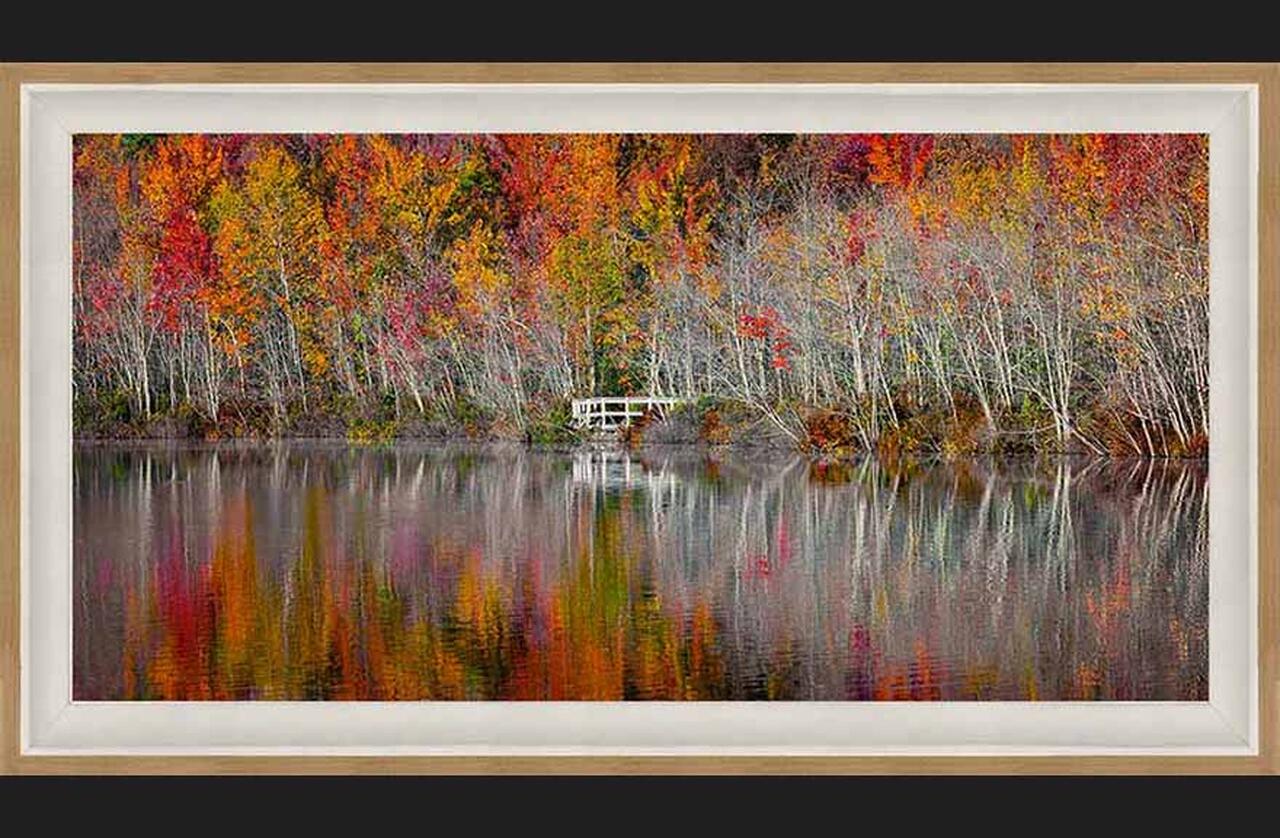
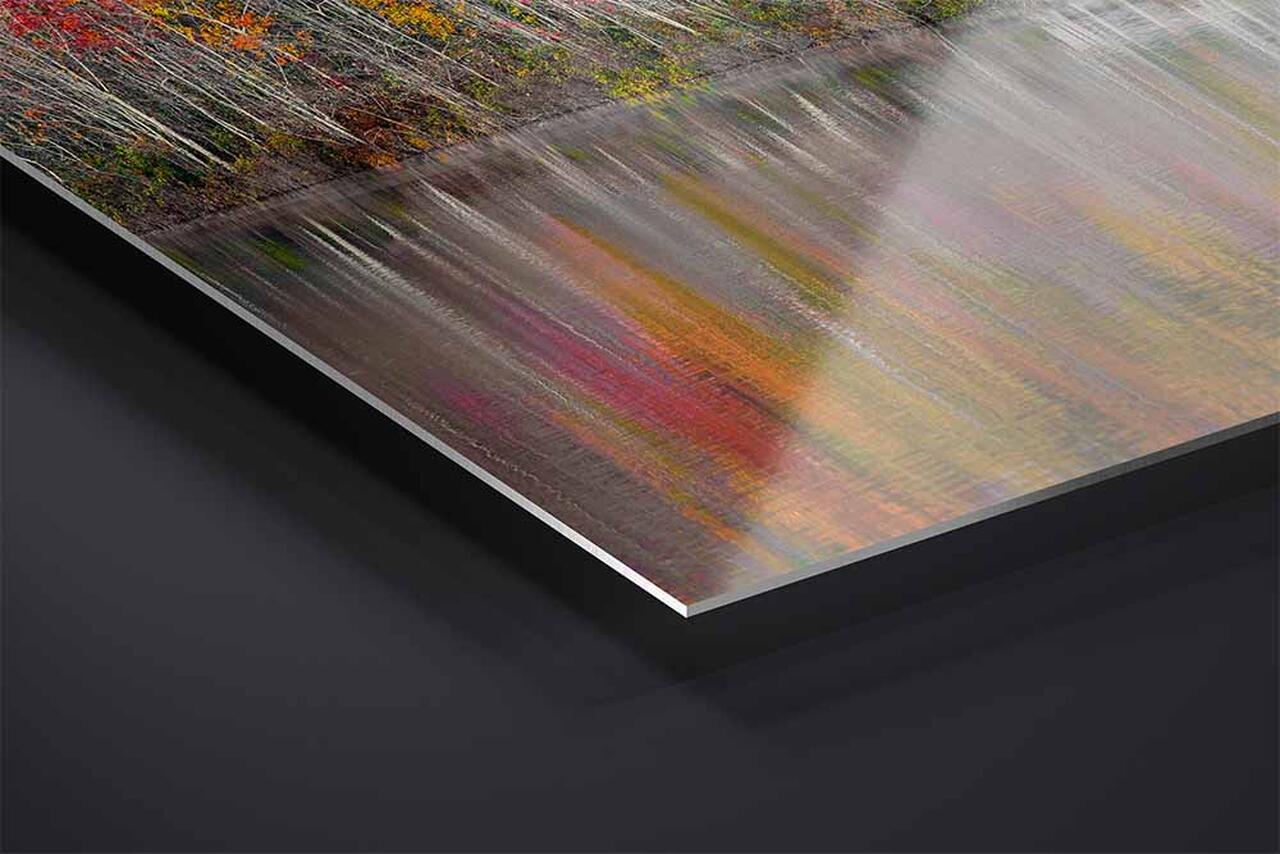
TruLife acrylic in a handcrafted Italian frame with a linen liner chosen for the image. Frame series, finish, and liner are settled with you after the order, and production begins from there. The frame and liner add about fourteen inches to the finished dimensions, worth allowing for when planning placement.
Signature Acrylic Edition of 50· Lumachrome TruLife · Gallery Float Mount
Face-mounted to TruLife acrylic and floated approximately one inch from the wall, with no frame to mediate between the image and the room. UV-resistant, anti-reflective, and scratch-resistant, with a lifetime guarantee against fading.
Signature Metal Edition of 50· ChromaLuxe Print · Gallery Float Mount
Color infused into the aluminum panel itself, floated from the wall on a concealed system. Where acrylic produces luminosity, metal produces clarity. Exceptional fade resistance with no glazing or coating required.
Fine Art Edition of 100· Hahnemühle Baryta Fine Art Paper
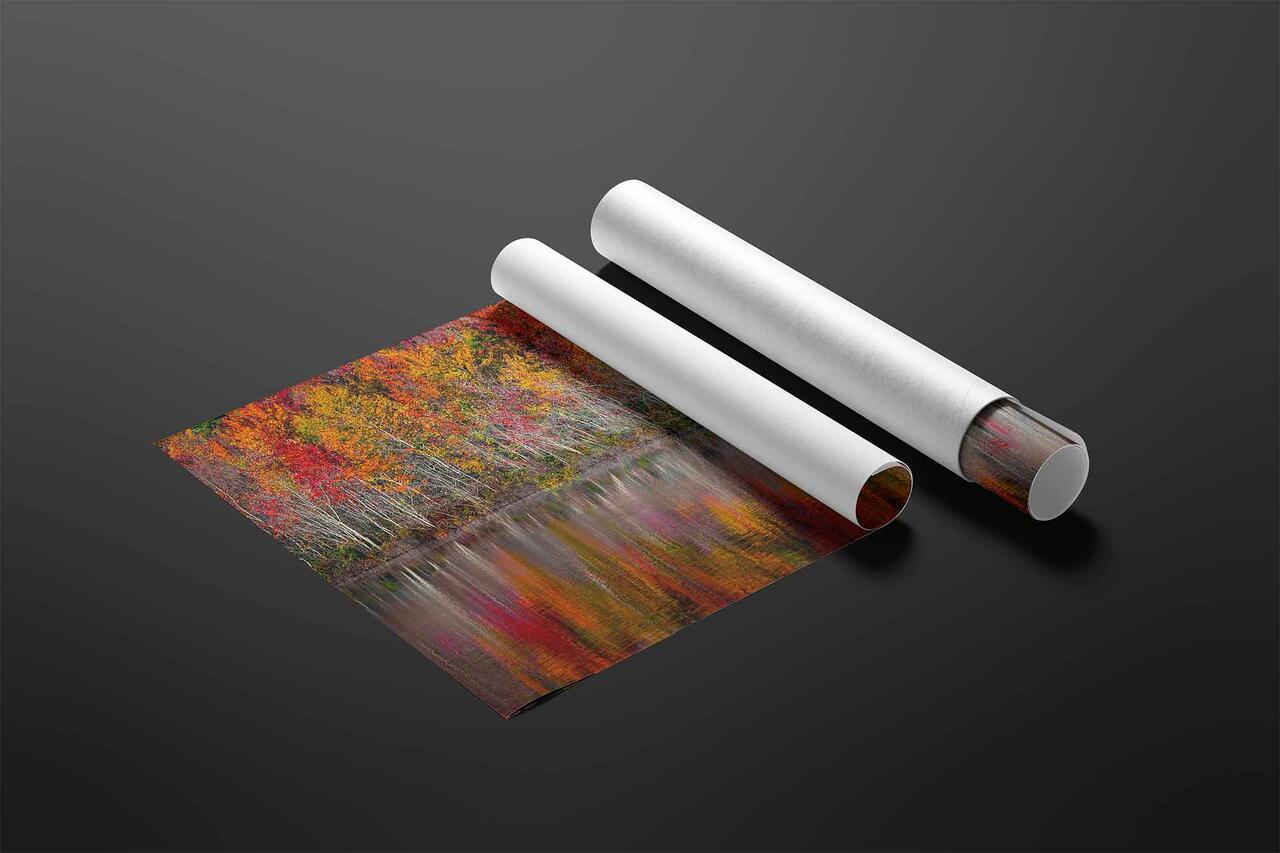
Printed without acrylic, so light meets the paper surface directly. Highlights stay luminous, shadows keep their nuance, and the surface has a tactile quality the other presentations approach differently. The understated choice, and the traditional one.
Complimentary shipping within the continental United States. International collector shipping available upon request.
Still deciding
Designing for Stillness
A guide to choosing art for restorative spaces
How to tell whether an image will still hold you in a year, how scale changes what a photograph does in a room, and how to match a piece to the work a room actually performs. It cites the research it draws on, and it is equally clear about where that research stops. About ten minutes to read.