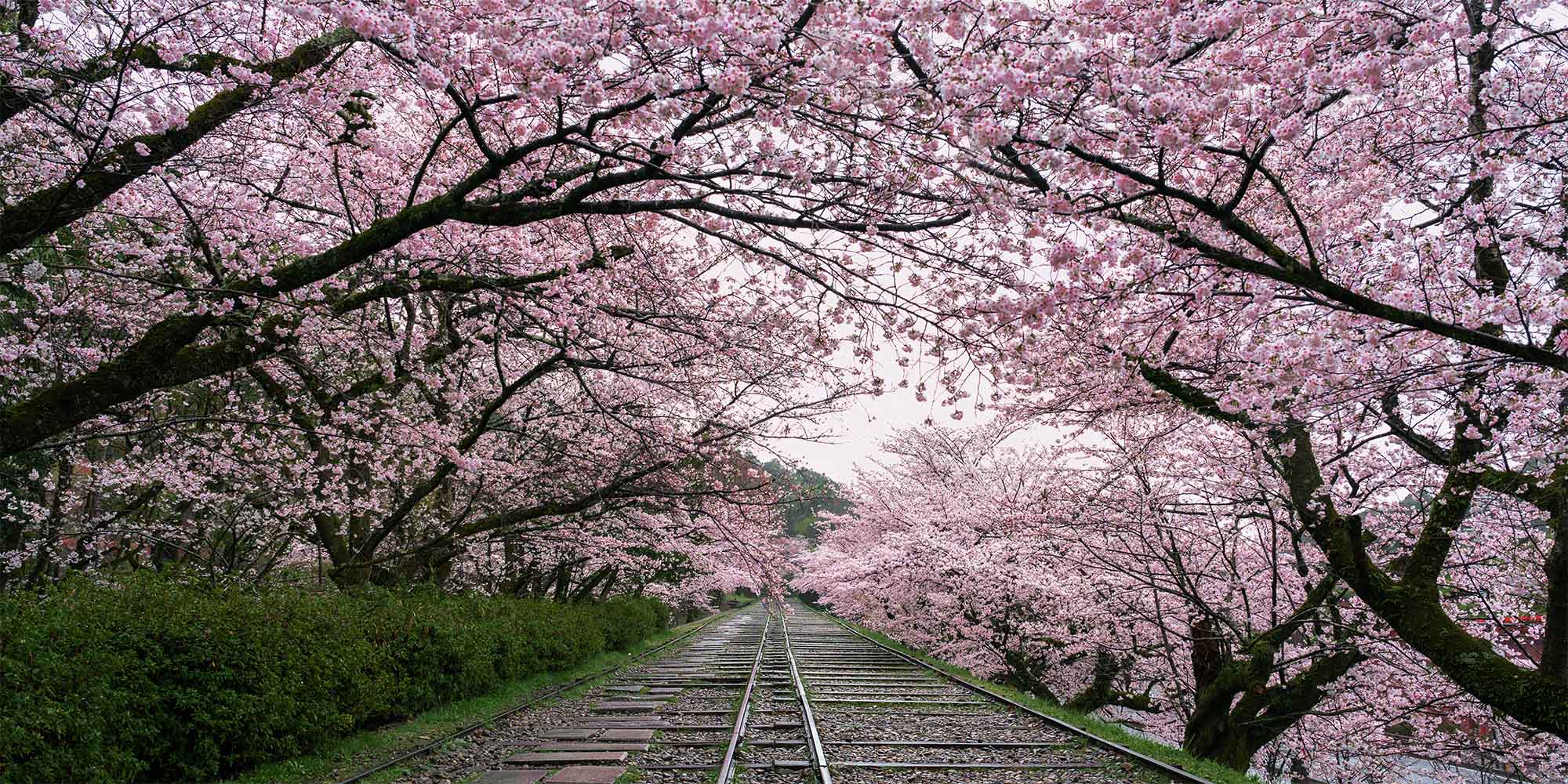
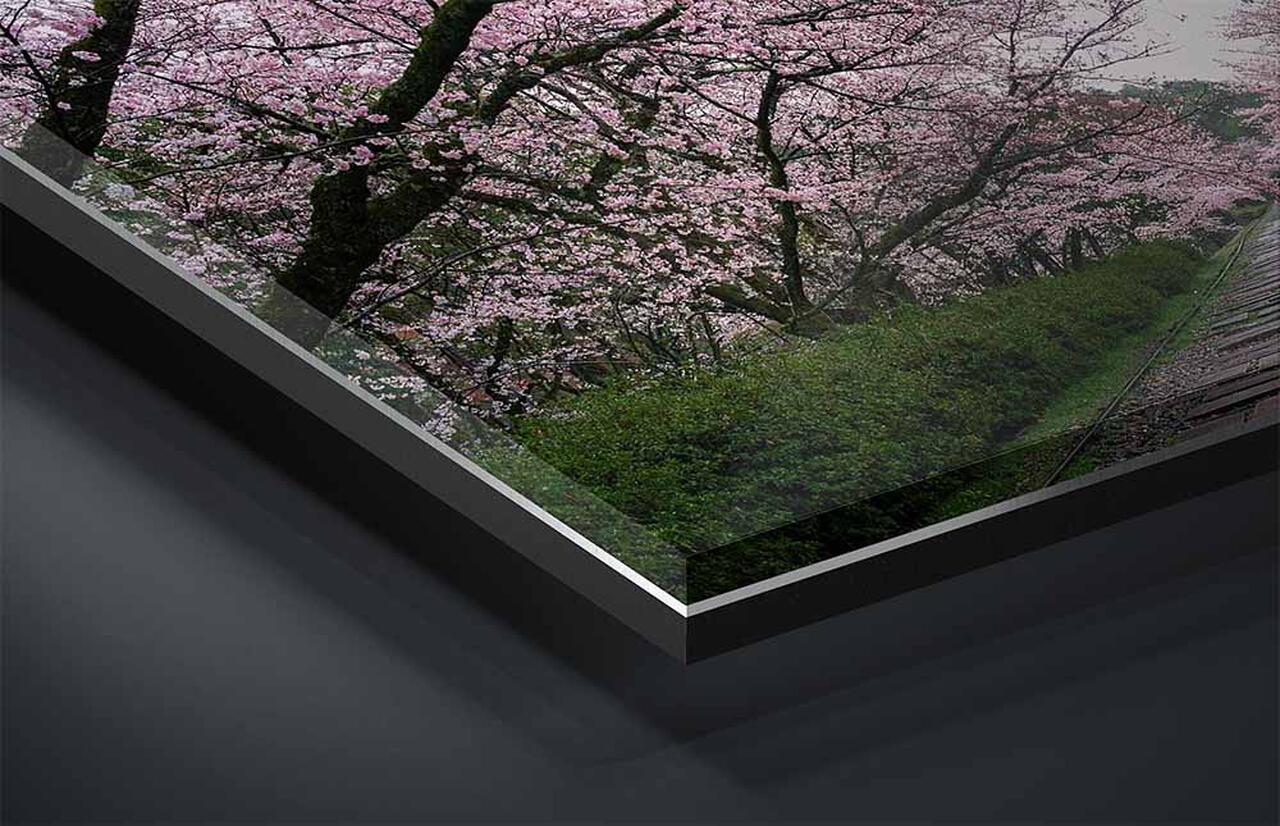
A 2:1 panoramic photograph of cherry blossoms over the Keage Incline in Kyoto, Japan, available as a limited edition print in three sizes.
Artist's Story
I stood on these tracks on a calm overcast morning, in the particular quiet that comes when the world is muffled by cloud. The light came down through the blossom rather than onto it, so everything under the canopy was the same soft pink and nothing cast a shadow.
The cultivar overhead is Somei Yoshino, and it is not really a population. It is one tree. Every Somei Yoshino in Japan is a graft taken from a graft taken from a single original raised outside Edo, so they are genetically identical, and identical trees read temperature identically.
That is why a city blooms in the same week and drops in the same week. The brevity people talk about is not a general property of blossom. Along this slope it is about ninety copies of one plant, all doing the same thing on the same day, and then all stopping on the same day.
I was not thinking about the picture while I was making it. I was standing in it.
Fleeting is the tunnel of blossom over the rails, the wet ballast between them, and ninety trees that will look like this for about a week.
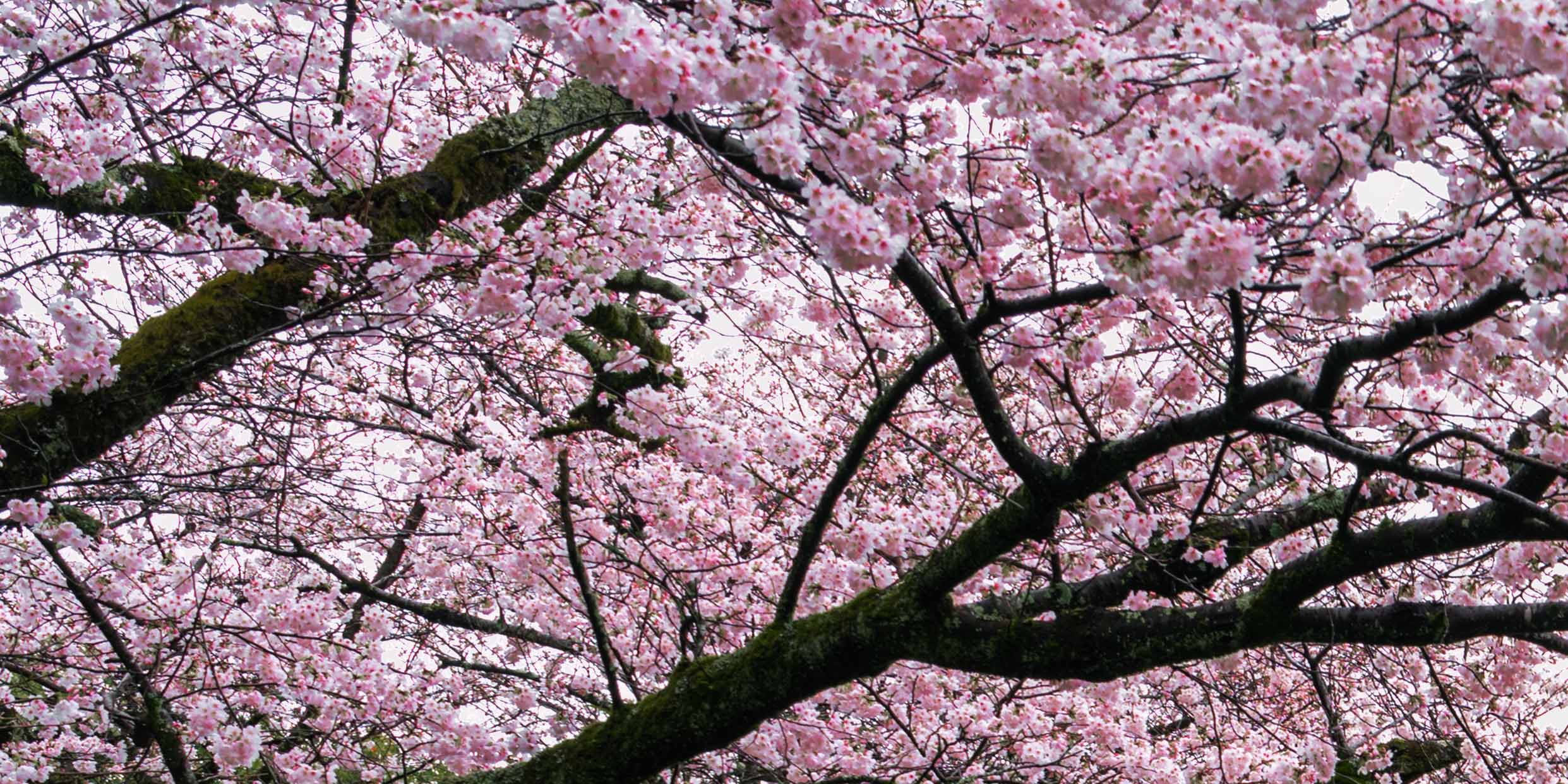
The canopy at about a third of the frame width. On an eighty inch print this section runs roughly twenty-seven inches across. Individual blossoms resolve into five separate petals with the darker center visible, a single spray can be followed from the branch out to its last bud, and the older limbs show their moss and the horizontal banding in the bark. Click to view at full size.
About This Photograph
On the Keage Incline in the Higashiyama district of Kyoto, Japan, at peak bloom in early April, in overcast light. This is a single frame image. The frame looks up the disused track between about ninety Somei Yoshino cherry trees, with stepping stones laid alongside the rails and a pale gap of sky where the slope crests.
The track never carried a train. It was built in 1890 as part of the Lake Biwa Canal, and from 1891 until 1948 it carried boats. A vessel was floated onto a trolley with its cargo still aboard and hauled 582 meters up a rise of 36 meters, the same principle as a cable car. It was the longest incline railway in the world when it was built.
The rails are preserved where they were laid and the site is a National Historic Site. It runs downhill from the Keage boat basin toward Nanzen-ji.
Fleeting
Steve Austinhttps://www.steveaustinphotography.com/
Location
Keage Incline, Kyoto, Japan
Subject
Somei Yoshino cherry · disused rails · peak bloom
Capture
Single frame in overcast light
Format
Photograph · horizontal panorama, 2:1
Sizes
40 × 20 in · 60 × 30 in · 80 × 40 in
Print Media
TruLife Acrylic · ChromaLuxe Metal · Baryta paper
Edition
Limited, 25 / 50 / 100 by presentation
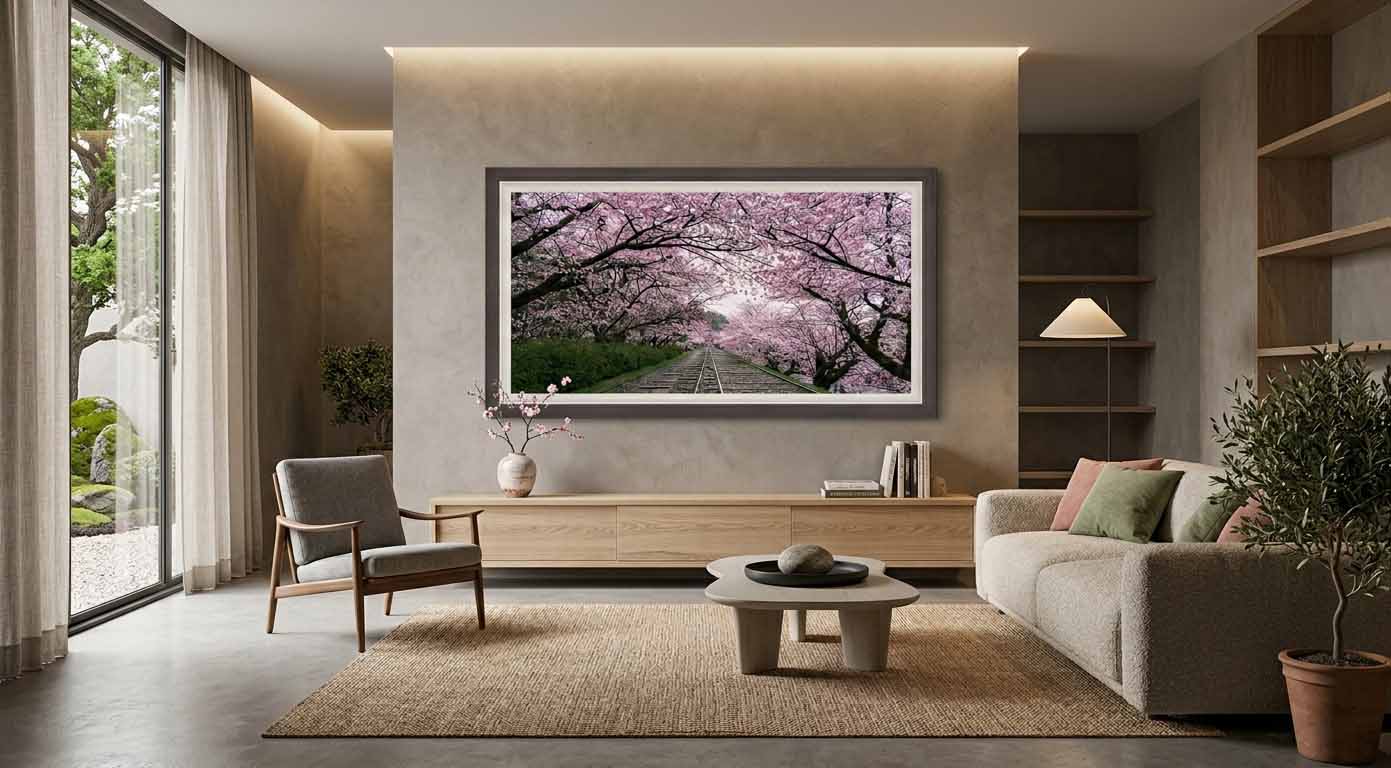
What it Does in a Room
This photograph has no light direction in it. The cloud was thick enough that nothing casts a shadow anywhere in the frame, and that is rarer in a landscape than it sounds. Most pictures carry an opinion about where the light comes from, and if the room disagrees the eye notices without being able to say why. This one has no opinion. It can hang facing a window, beside a lamp, or on the darkest wall in the house and none of those arrangements will contradict it.
It also occupies a color band that almost nothing else in a room does. Measured across the frame, red and blue run nearly level with green suppressed between them, which is what pink is. Very few rooms contain that, and very little other work does either, so the picture has no neighbors to clash with. Against bone, cream, warm plaster, oak, or gray it is simply the only thing there of its color, and it reads as a note rather than as competition.
It fixes a date on a wall, which is worth thinking about before you hang it. Most landscapes could be almost any month; this one is one week in early April and could not be anything else. A room with this in it is permanently in that week. That is a real thing to want, and it is also the reason it does well in a room used year round rather than a seasonal one, because the contrast with whatever is happening outside is the point rather than a mismatch.
Not sure which size the room calls for, or want dimensions not listed here? Sizes beyond 80 × 40 are available on request and ship crated by freight. That conversation is welcome before an order is placed. Start that conversation and I will answer within one business day.
How small is too small for a photograph this wide?
At two to one, the Intimate size is forty inches across and twenty inches tall. That is a comfortable panoramic proportion and this picture holds it, because the structure is simple: a canopy arching across the top, two lines of rail running to a pale gap, and a green verge on either side. All of it reads from across a room. What goes at that size is the blossom itself. At forty by twenty the flowers merge into a continuous pink field and the dark branches that hold them flatten into a web, so the canopy becomes a color rather than thousands of separate things. That is a soft, graphic photograph and it suits a wall seen from six or eight feet. The Collected at sixty by thirty is where individual clusters start to separate from the mass. If you are weighing a size against a specific wall, choosing the right print size covers the measurements and the viewing distances in more detail.
What changes at the largest size?
The pink becomes flowers. At the Statement size, eighty by forty, individual blossoms on the nearest branches resolve into five separate petals with the darker center visible, and you can follow a single spray from where it leaves the branch out to its last bud. The branches themselves come clear, black and moss-covered, and the older trunks show the horizontal lenticel banding that cherry bark has. Underfoot the ballast separates into stones, the ties become weathered timber, and the stepping stones laid along the left edge read as cut slabs rather than as a pale line. What changes beyond detail is the canopy overhead. At nearly seven feet across, the branches reaching in from both sides pass the edge of what you take in at once, which is what makes it read as being under the trees rather than looking at them. Why scale matters covers what happens perceptually when a landscape reaches the size where the eye has to cross it.
What kind of room does this photograph suit?
Quiet rooms, and rooms people sit in. This is one of the softest photographs in the collection, low in contrast with nothing near black or white, so it settles rather than announces, and it belongs where someone spends time rather than passes through: a bedroom, a sitting room, a study, a long wall in a room with chairs facing it. Because it carries no light direction and no color a room is likely to already have, it will hang almost anywhere without argument, and it works particularly well against bone, cream, warm plaster, and pale wood, where the pink is the only saturated thing present. Give it a wall where it is the one piece rather than one of several, since its whole effect is a single soft field and a second picture beside it would break that. Why we are wired to need the natural world takes the question further.
Every work ships insured and arrives with a signed certificate of authenticity.
If a piece is damaged in transit, the choice of replacement is always yours, and your edition number stays with you.
Production time runs 2 to 3 weeks for metal, 3 to 4 weeks for acrylic and paper, and 5 to 6 weeks for framed work.
Collector's Choice · TruLife ® Acrylic in Italian Frame
Collector Edition of 25· Lumachrome TruLife Acrylic · Handcrafted Italian Frame
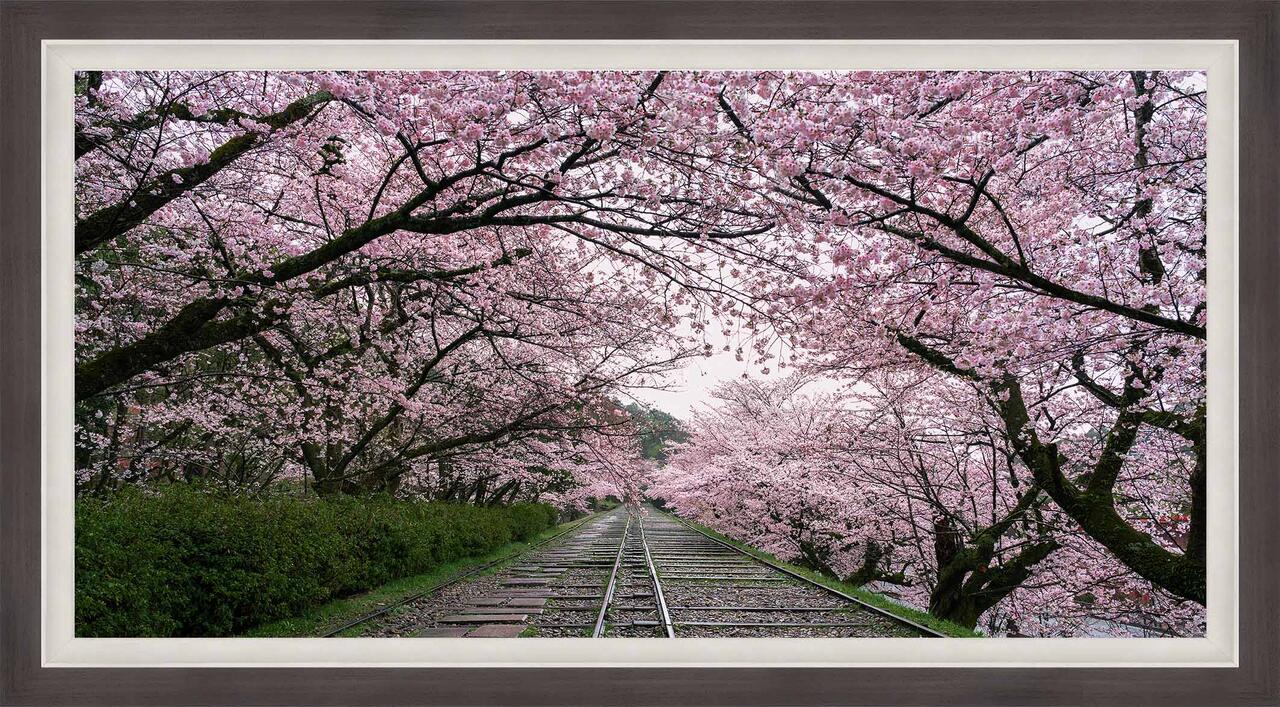
TruLife acrylic in a handcrafted Italian frame with a linen liner chosen for the image. Frame series, finish, and liner are settled with you after the order, and production begins from there. The frame and liner add about fourteen inches to the finished dimensions, worth allowing for when planning placement.
Signature Edition · TruLife ® Acrylic, Float Mount
Signature Edition of 50· Lumachrome TruLife Acrylic · Gallery Float Mount
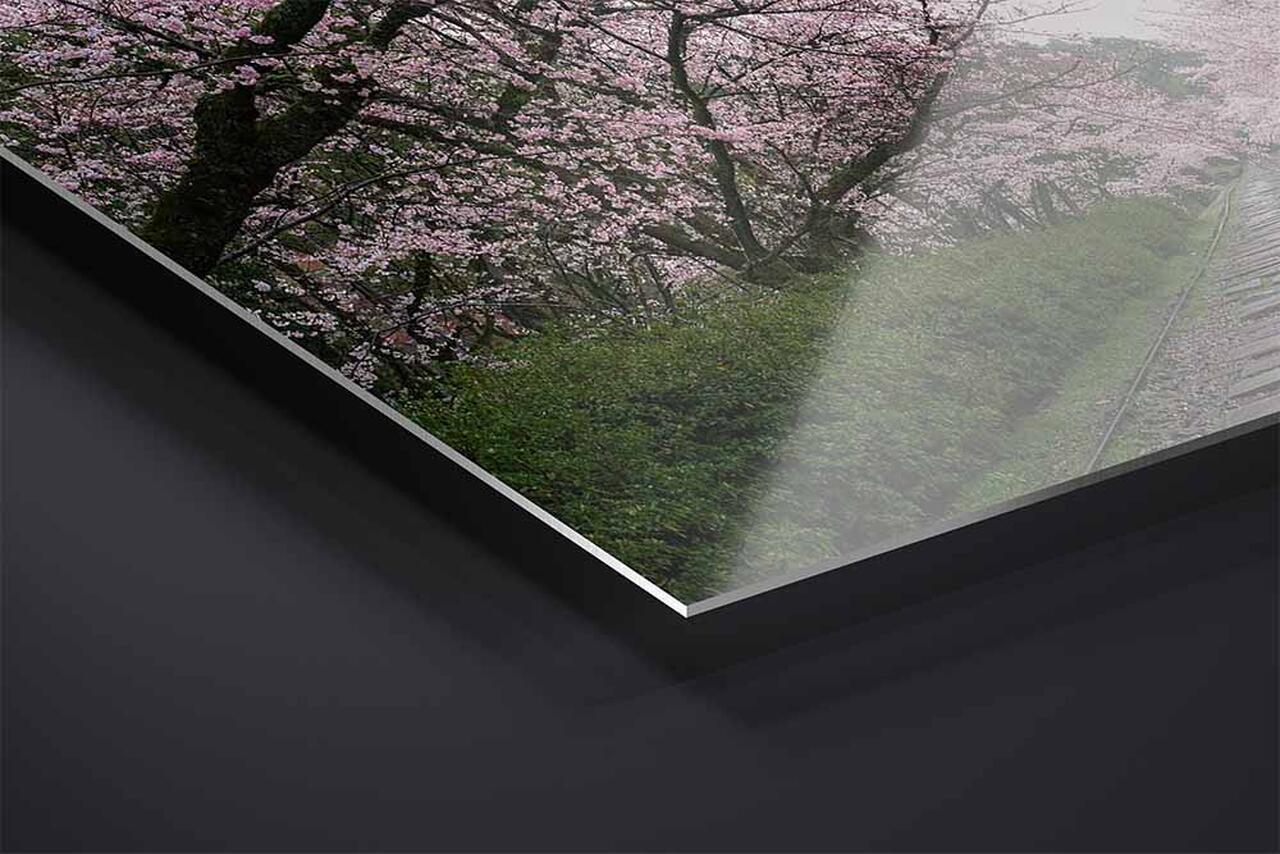
Face-mounted to TruLife acrylic and floated approximately one inch from the wall, with no frame to mediate between the image and the room. UV-resistant, anti-reflective, and scratch-resistant, with a lifetime guarantee against fading.
Signature Edition of 50· ChromaLuxe Metal Print · Gallery Float Mount
Color infused into the aluminum panel itself, floated from the wall on a concealed system. Where acrylic produces luminosity, metal produces clarity. Exceptional fade resistance with no glazing or coating required.
Fine Art Edition of 100· Hahnemühle Baryta Fine Art Paper
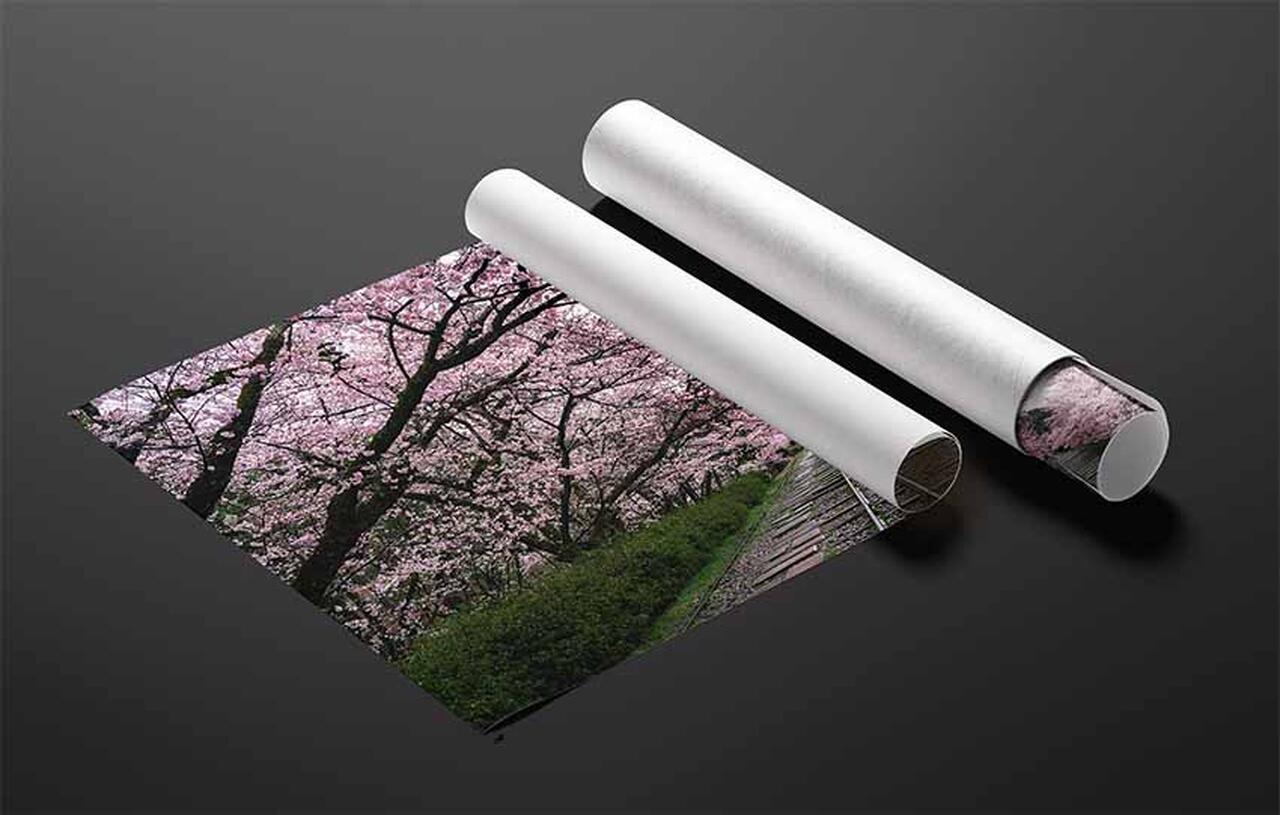
Printed without acrylic, so light meets the paper surface directly. Highlights stay luminous, shadows keep their nuance, and the surface has a tactile quality the other presentations approach differently. The understated choice, and the traditional one.
Complimentary shipping within the continental United States. International collector shipping available upon request.
Still deciding
Designing for Stillness
A guide to choosing art for restorative spaces
How to tell whether an image will still hold you in a year, how scale changes what a photograph does in a room, and how to match a piece to the work a room actually performs. It cites the research it draws on, and it is equally clear about where that research stops. About ten minutes to read.