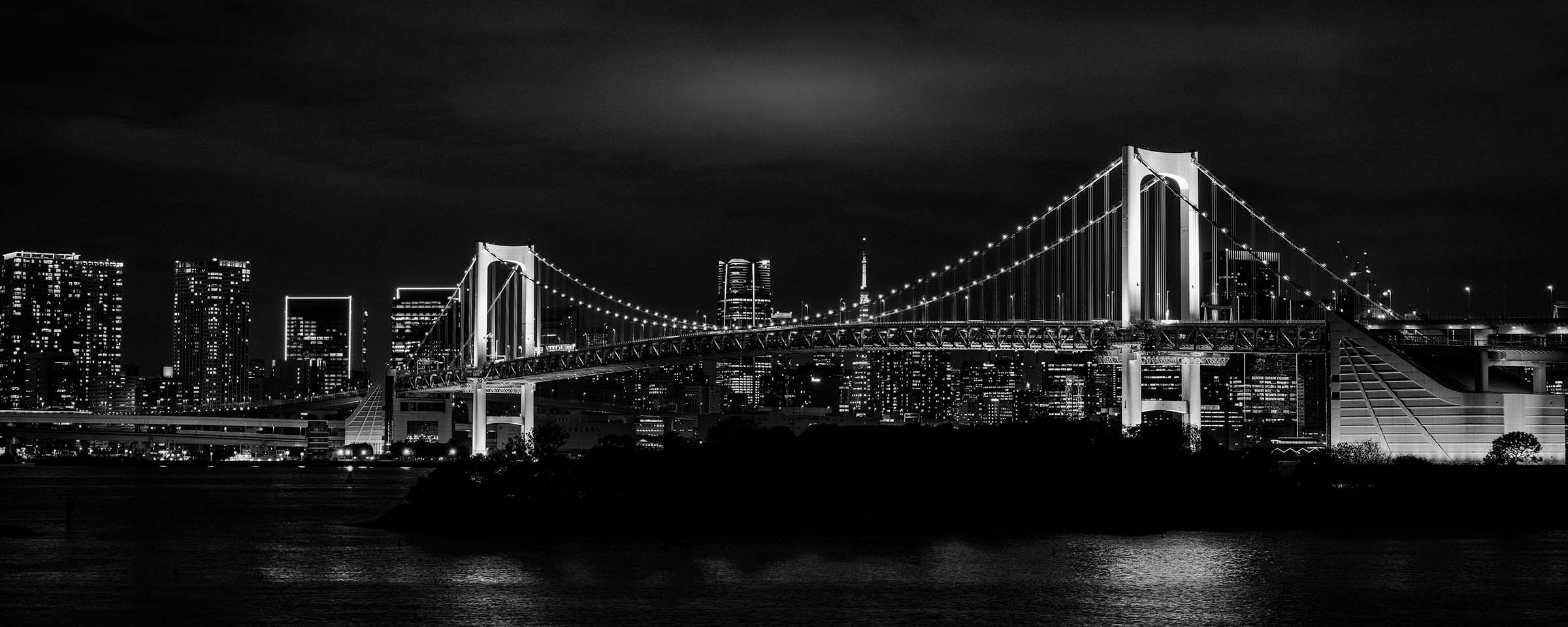
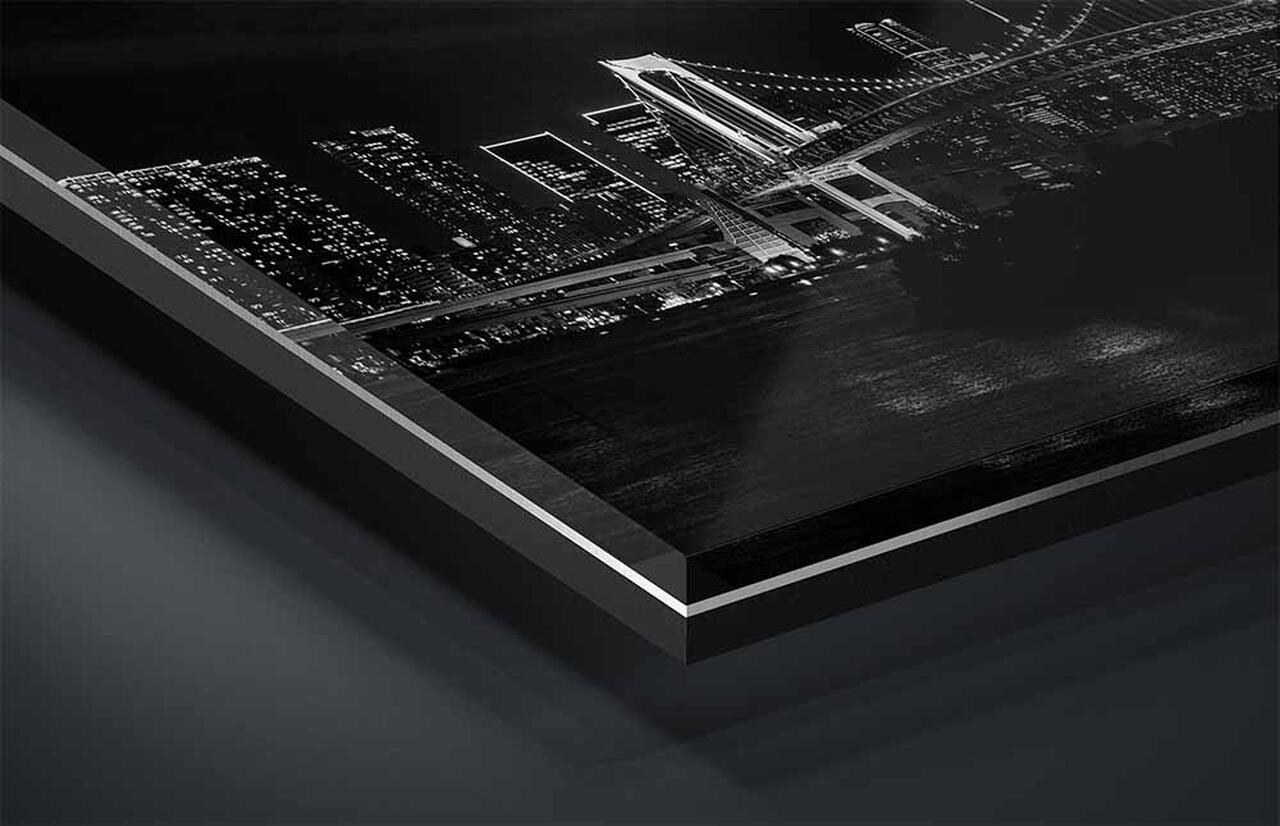
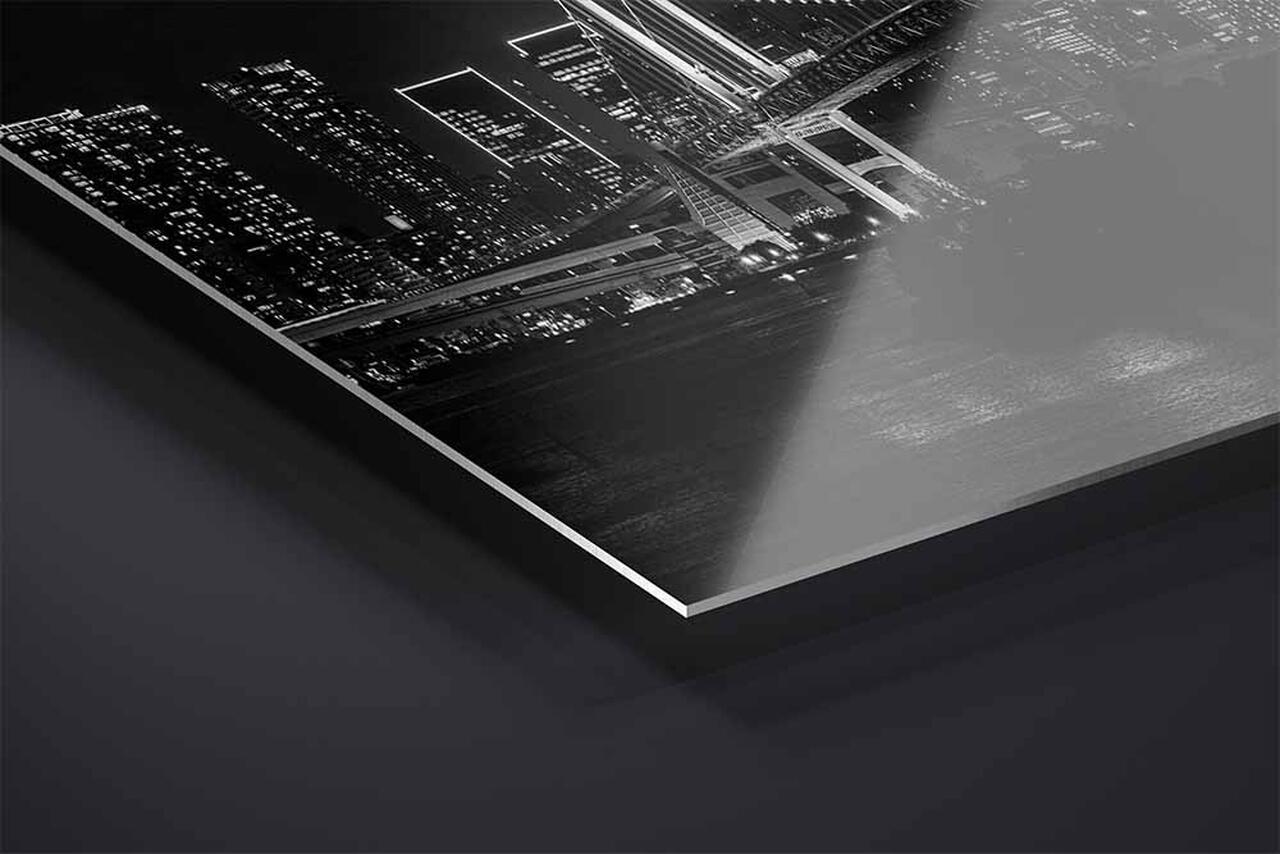
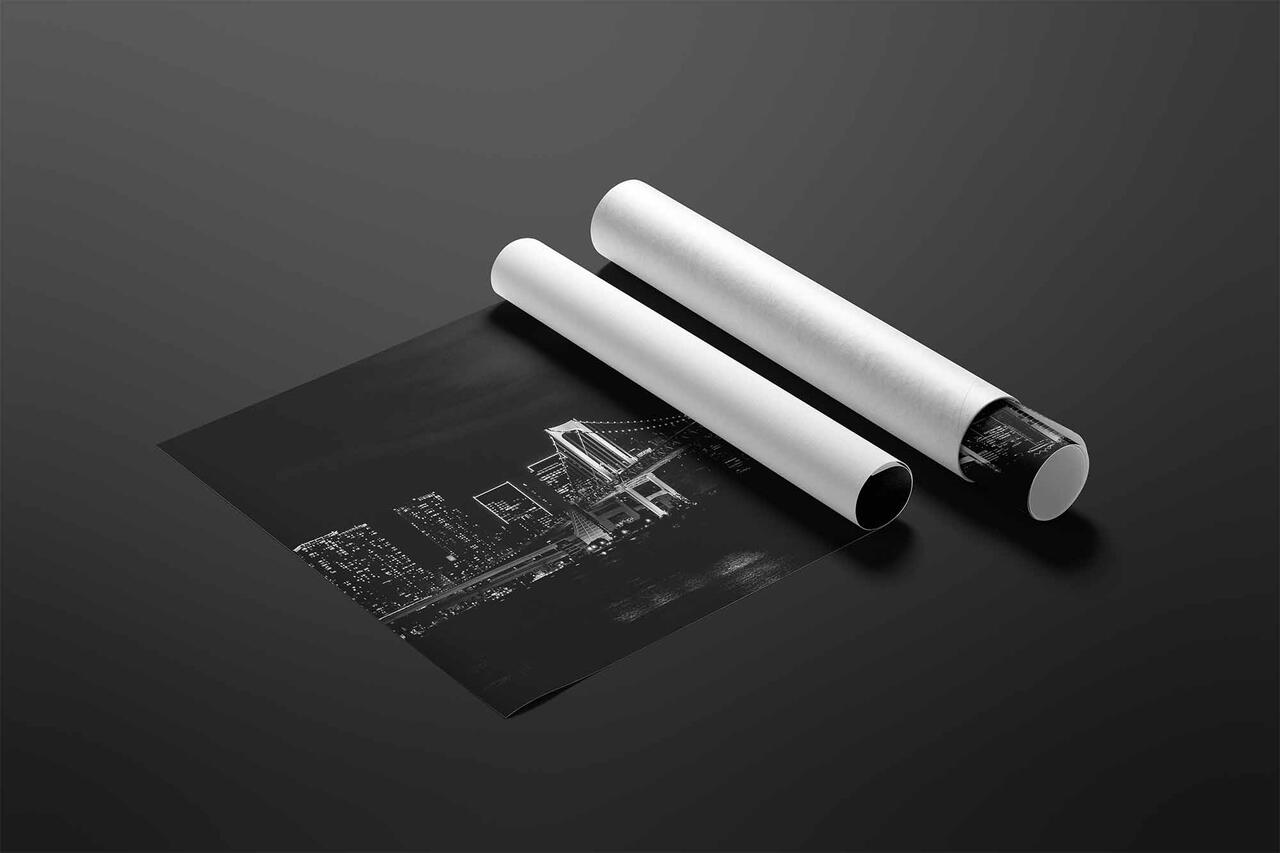
A 5:2 panoramic photograph of the Rainbow Bridge and Tokyo skyline at night in black and white, Odaiba, Tokyo, Japan, available as a limited edition print in three sizes.
Artist's Story
I set up on the Odaiba shore looking back across the bay, working at half a second a frame, which turned out to be enough. The water was already flat.
While I was there a single low cloud came over, and the city lit it from underneath.
A cloud base is a diffuse reflector. Light leaving a city at night travels up as well as sideways, and when it reaches the underside of a cloud it scatters back down, so the cloud glows while the clear sky around it stays dark. That is the reverse of a daylit cloud, which is lit from above and lays a shadow on the ground below it. The file carries it: the band the cloud sits in measures twenty-nine out of two hundred and fifty-five, against twenty-two in the sky above it and twenty-two below.
The other thing I noticed was that the two towers sit easily against the skyline behind them, and that is not an accident. The Rainbow Bridge opened in 1993, and its towers were painted white so they would read well against central Tokyo seen from Odaiba. From this shore. Somebody chose that color for the exact view I was standing in, thirty years before I got there.
Nocturne is half a second from a shore the bridge was painted for.
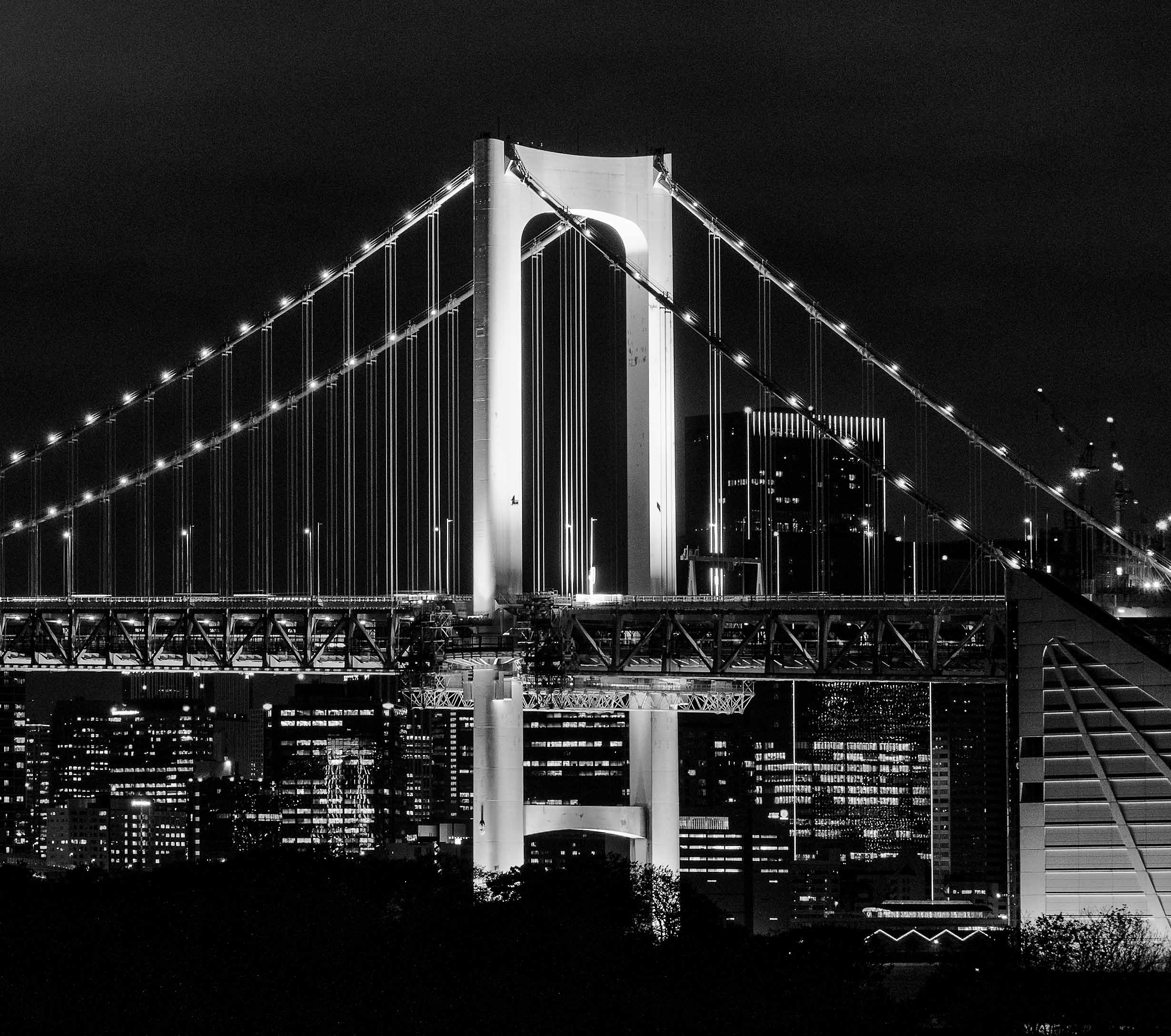
This crop is 24 percent of the frame width, about 19 inches across on the 80 inch print. The suspender wires hang as separate lines from the cable down to the deck, which is the detail the whole structure depends on and the first thing lost at smaller sizes. The lamps separate one from the next along the cable, the arch between the tower legs reads as an opening, and beneath the deck the truss shows its diagonals. Click to view at full size.
About This Photograph
The Rainbow Bridge across northern Tokyo Bay, photographed from the Odaiba shore looking back toward central Tokyo. Single frame at half a second, rendered in black and white. The bridge opened in 1993, runs 798 meters, stands on towers 126 meters high, and carries two decks: expressway above, local road, rail and footway below.
The lamps strung along the main cables run on solar power collected during the day, and on most nights they are not white. They are lit in red, white and green, cycling through the three. A black and white conversion removes that completely, which means this photograph takes the color out of a bridge whose English name was chosen by public vote and is Rainbow.
Nocturne
Steve Austinhttps://www.steveaustinphotography.com/
Location
Rainbow Bridge, Odaiba, Tokyo, Japan
Subject
Rainbow Bridge · Tokyo Bay · skyline at night
Capture
Single frame, half a second
Format
Photograph · horizontal panorama, 5:2
Sizes
40 × 16 in · 60 × 24 in · 80 × 32 in
Print Media
TruLife Acrylic · ChromaLuxe Metal · Baryta paper
Edition
Limited, 25 / 50 / 100 by presentation
What it Does in a Room
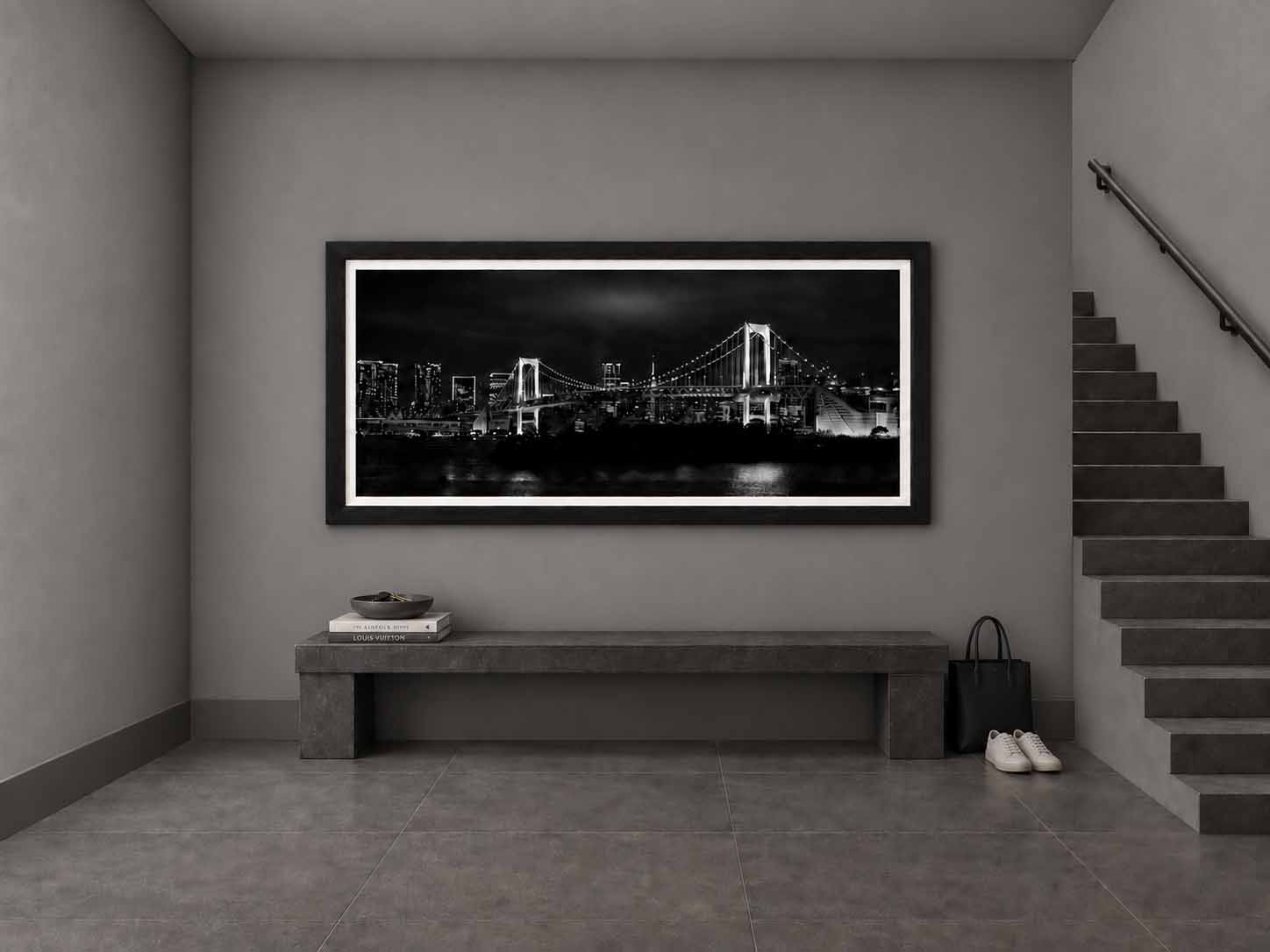
This behaves more like a drawing than like a photograph. Nearly three quarters of the frame sits at or below twenty-five out of two hundred and fifty-five, and the middle value of the whole picture is sixteen, so the subject is not modelled in tone the way a photograph usually is. It is described by lines: the curve of the cables, the outlines of the towers, the edge of the deck, the string of lamps. There is almost no gradation between the lines and the dark. That changes what it hangs beside. Next to a tonal photograph it reads as graphic and the neighbour reads as soft, and both suffer. Next to line work, architectural drawing, etching, anything built from marks rather than from shading, it belongs.
It has nothing at the top of its range, and that makes room light behave unusually kindly. The brightest sustained passage in the whole picture measures a hundred and seventy-five, so there is no luminous area holding the top of the scale. When ambient light falls on a print, it lifts the darker values more than the lighter ones, which on most photographs closes the gap between a bright subject and its surroundings and flattens the contrast from one side. Here there is no bright subject to close the gap against. The whole picture lifts more or less together, losing density rather than losing structure. It will not look right in a bright room, but it will fail gracefully rather than falling apart.
The one element crossing the whole frame is a curve. Landscapes give you a horizon, and a horizon is a straight line that will pair with any straight line in a room, a shelf, a rail, a counter edge, and either agree with it or fight it. This picture has no horizon. What runs the width of it is the sag of the main cables, and a curve does not pair with a straight line at all. It sits against one instead. That means the usual caution about keeping horizontals away from the frame does not apply, and the piece can go above a console or below a shelf without the two arguing. The contrast between the curve and the straight is the point.
Not sure which size the room calls for, or want dimensions not listed here? Sizes beyond 80 × 32 are available on request and ship crated by freight. That conversation is welcome before an order is placed. Start that conversation and I will answer within one business day.
How small is too small for a photograph this wide?
This one reduces badly, and it is worth being plain about why. The picture is built from thin bright lines on black, and a line does not soften when it shrinks, it disappears. At the Intimate size the towers hold and the deck holds, but the cable lamps stop being separate lamps and become a continuous thread, and the suspender wires dropping from the cables to the deck go entirely. Those wires are what make the bridge read as a suspension bridge rather than as a lit beam. The Collected at sixty by twenty-four brings the lamps apart again. The Expansive at eighty by thirty-two returns the suspenders. If you are weighing a size against a specific wall, choosing the right print size covers the measurements and the viewing distances in more detail.
What changes at the largest size?
At eighty by thirty-two, working across the frame: the low cloud separates from the sky around it as a shape with an edge rather than a lightening. On the towers the individual lamps down each leg become distinct, and the arch between the legs reads as an opening. Along the main cables the lamps separate one from the next, and the suspender wires become visible dropping to the deck, which is the detail the whole structure depends on. Under the deck the truss work shows its diagonals. In the skyline behind, the lit windows become individually countable across the towers. And along the bottom the reflections resolve into separate columns of light on the water rather than a general sheen. Why scale matters covers what happens perceptually when a photograph reaches the size where the eye has to cross it.
What kind of room does this photograph suit?
A dark room, and a wall people pass close to. A study, a bar, a den, a hall, a lower level. Hang it at standard height with the center at about fifty-seven inches. On materials it is unfussy, carrying no color at all, and it sits with charcoal, deep neutral gray, and matte dark timber. Three things to avoid. Do not hang it in a bright room, since the picture has no luminous area to hold the top of its range and strong ambient light will take its density away. Keep it away from tonal photographs in the same sightline, for the reason above. And avoid a glossy presentation if the wall faces a window or a lamp, because three quarters of this print is near-black and a reflected room lands squarely in it. When your mind needs to rest takes the question further.
Every work ships insured and arrives with a signed certificate of authenticity.
If a piece is damaged in transit, the choice of replacement is always yours, and your edition number stays with you.
Production time runs 2 to 3 weeks for metal, 3 to 4 weeks for acrylic and paper, and 5 to 6 weeks for framed work.
Each print is made to order and takes its place in a numbered edition, so sales are final. Before you choose, I am glad to help: send a photo of your wall and I will show you this work in your room at true scale, at no charge. Start a conversation
Collector's Choice · TruLife ® Acrylic in Italian Frame
Collector Edition of 25· Lumachrome TruLife Acrylic · Handcrafted Italian Frame
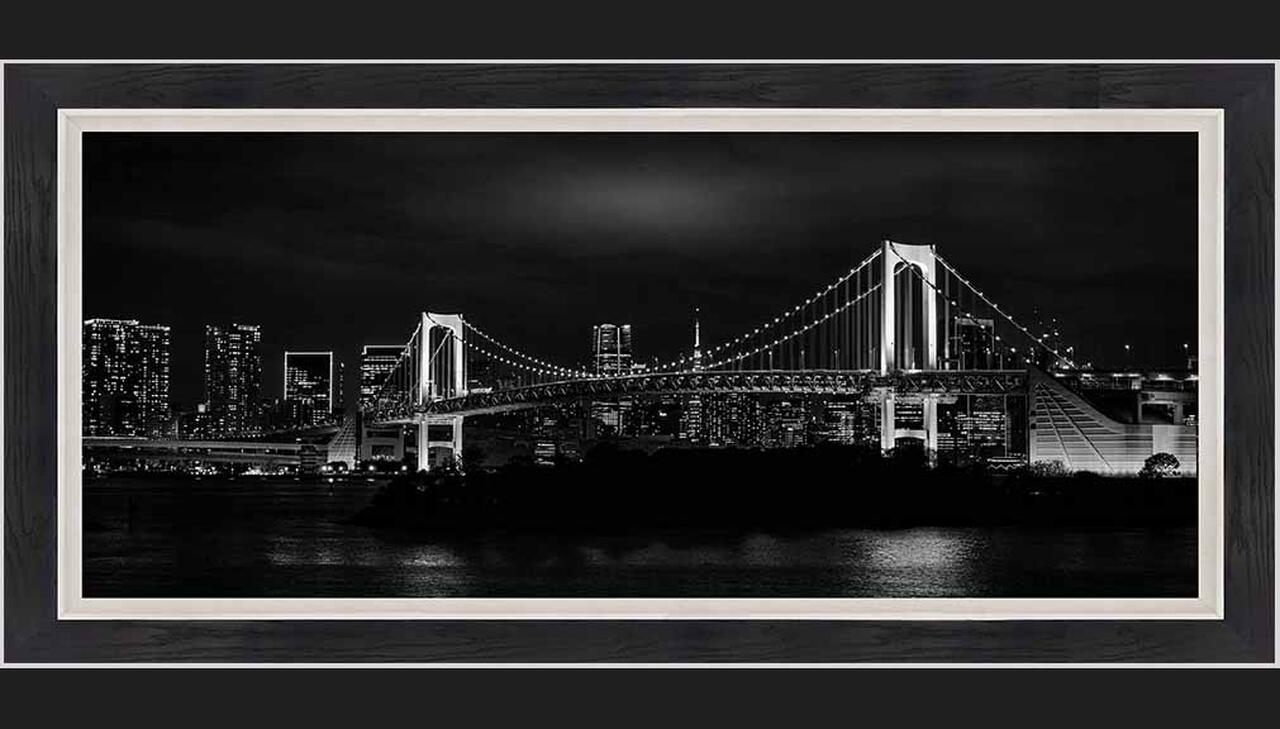
TruLife acrylic in a handcrafted Italian frame with a linen liner chosen for the image. Frame series, finish, and liner are settled with you after the order, and production begins from there. The frame and liner add about fourteen inches to the finished dimensions, worth allowing for when planning placement.
Signature Acrylic Edition of 50· Lumachrome TruLife · Gallery Float Mount
Face-mounted to TruLife acrylic and floated approximately one inch from the wall, with no frame to mediate between the image and the room. UV-resistant, anti-reflective, and scratch-resistant, with a lifetime guarantee against fading.
Signature Metal Edition of 50· ChromaLuxe Print · Gallery Float Mount
Color infused into the aluminum panel itself, floated from the wall on a concealed system. Where acrylic produces luminosity, metal produces clarity. Exceptional fade resistance with no glazing or coating required.
Fine Art Edition of 100· Hahnemühle Baryta Fine Art Paper
Printed without acrylic, so light meets the paper surface directly. Highlights stay luminous, shadows keep their nuance, and the surface has a tactile quality the other presentations approach differently. The understated choice, and the traditional one.
Complimentary shipping within the continental United States. International collector shipping available upon request.
Still deciding
Designing for Stillness
A guide to choosing art for restorative spaces
How to tell whether an image will still hold you in a year, how scale changes what a photograph does in a room, and how to match a piece to the work a room actually performs. It cites the research it draws on, and it is equally clear about where that research stops. About ten minutes to read.