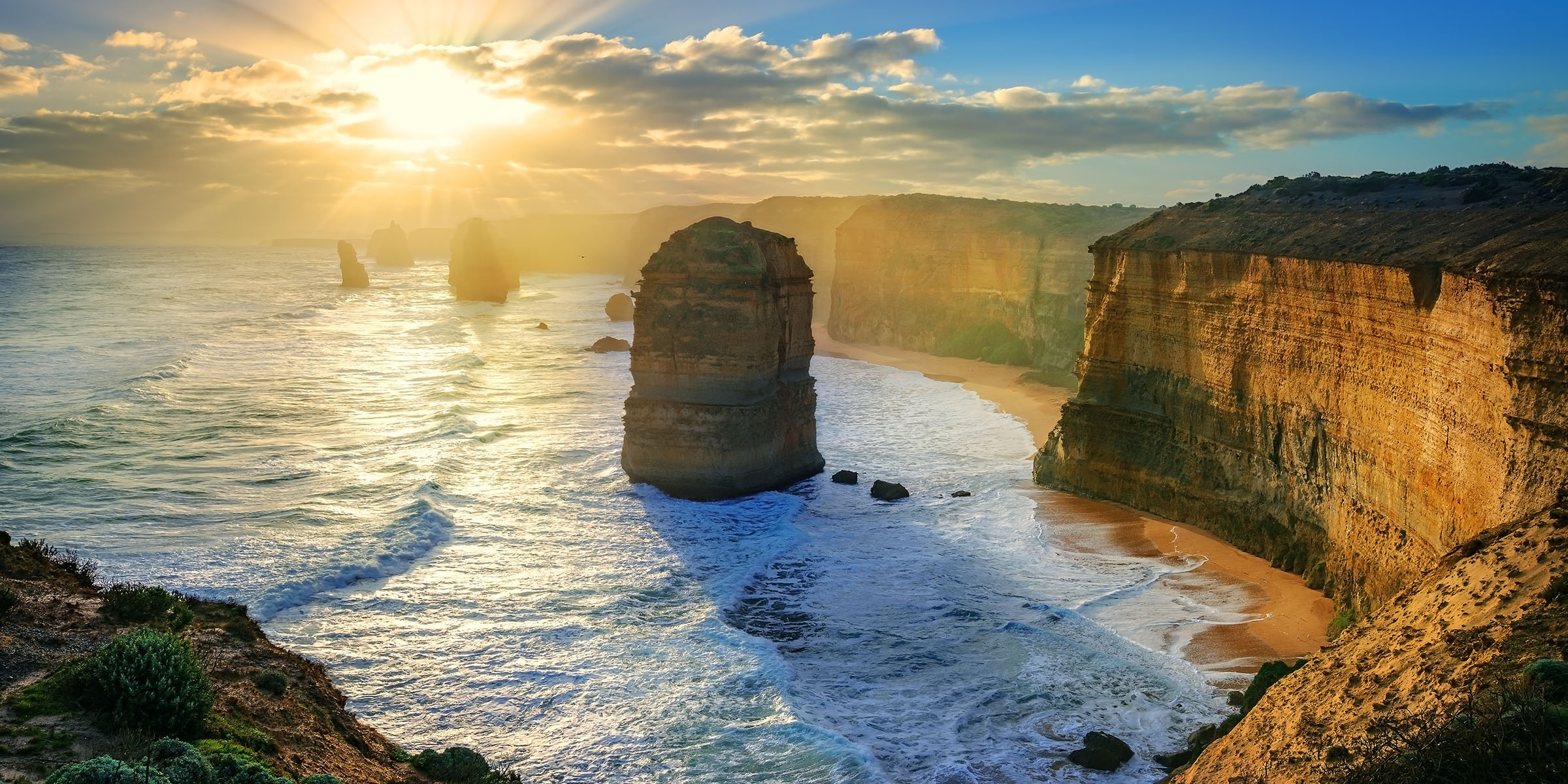
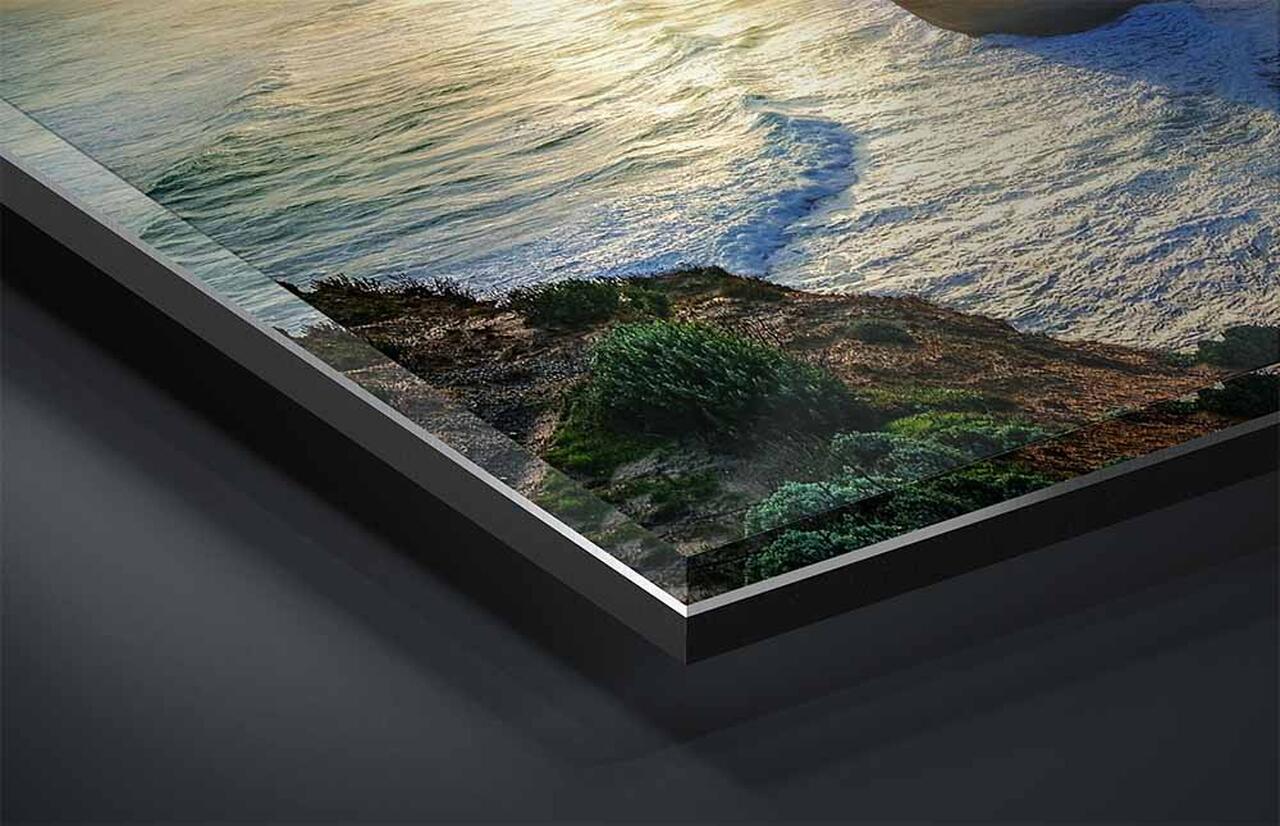
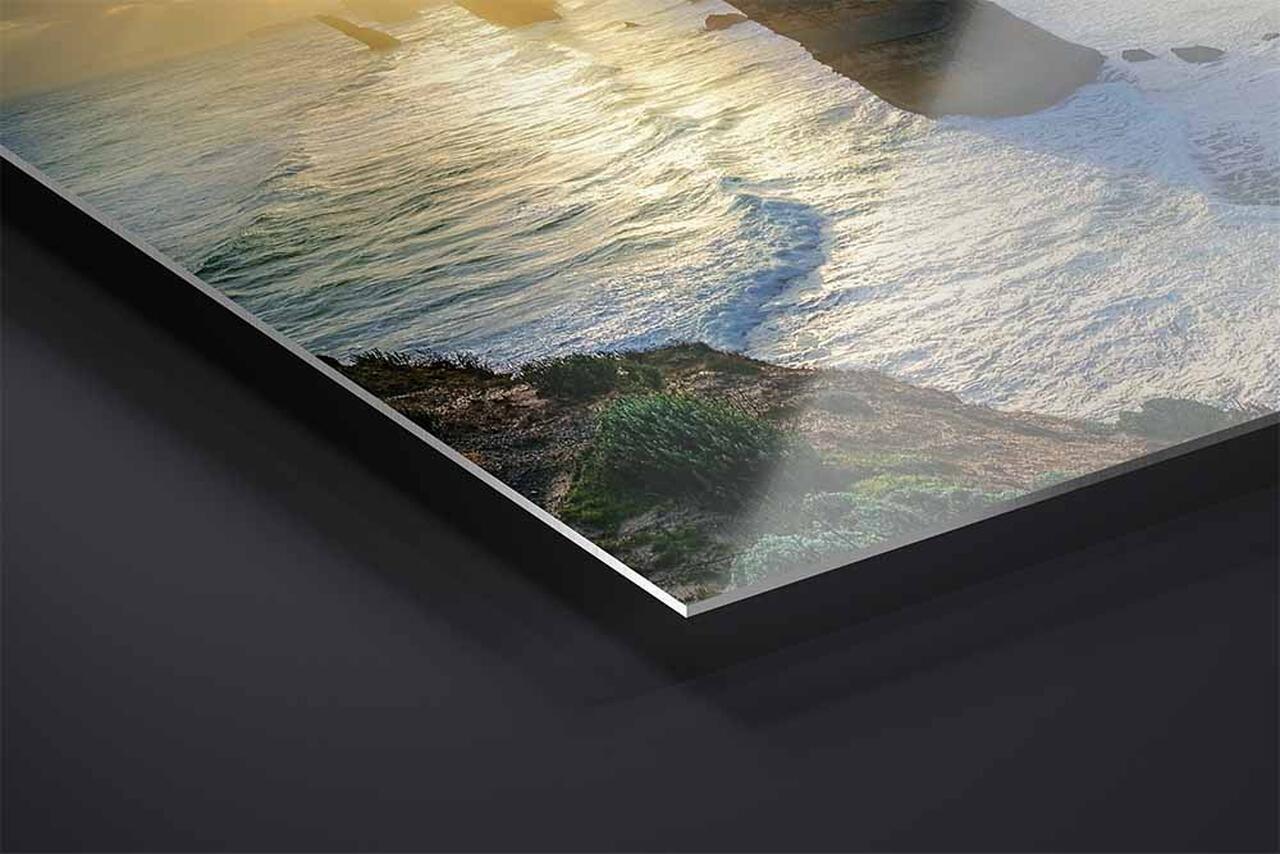
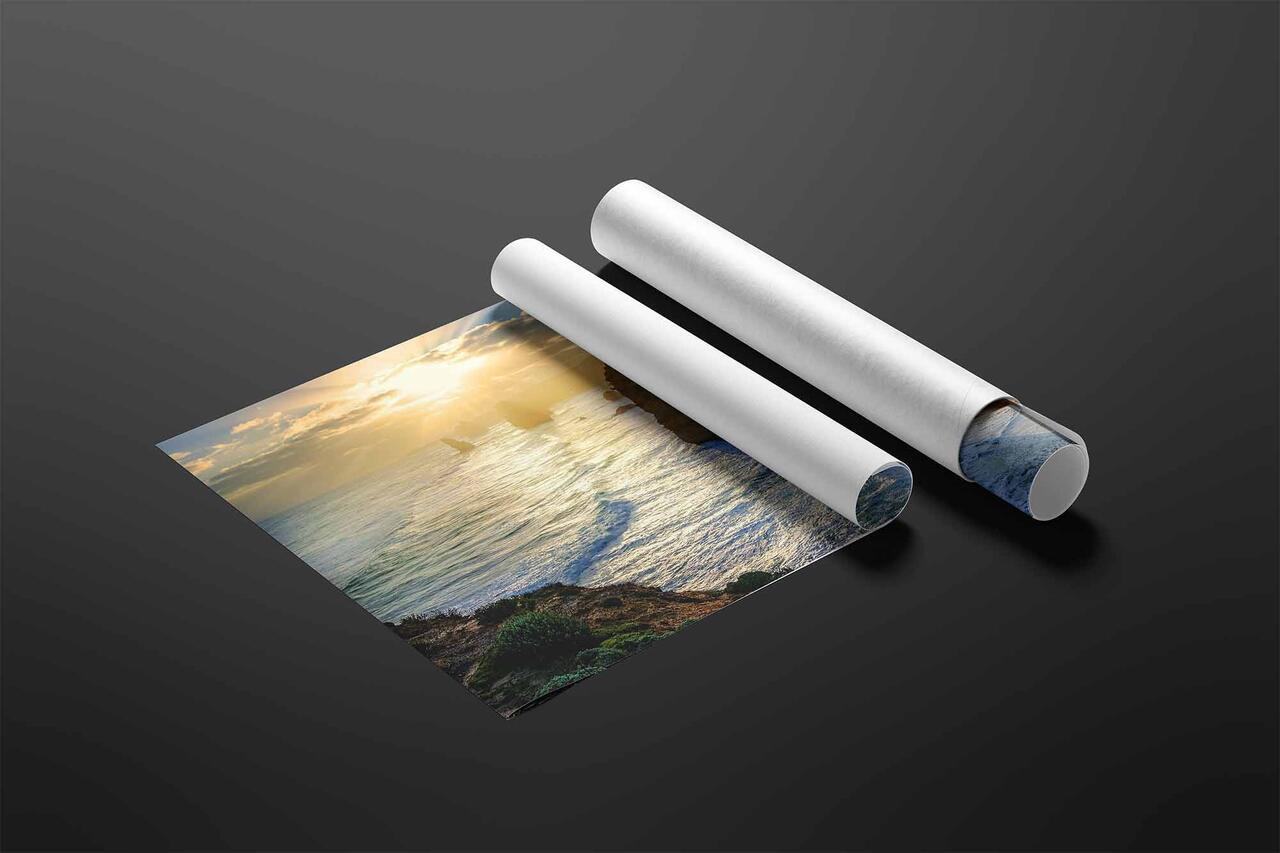
A 2:1 panoramic photograph of the Twelve Apostles limestone sea stacks at sunset, Port Campbell National Park, Victoria, Australia, available as a limited edition print in three sizes.
Artist's Story
There were never twelve of them.
The formation went by other names first, the Pinnacles and then the Sow and Piglets, with Muttonbird Island as the sow and the scattered stacks as the litter. Somebody decided that would not sell, and the name was made official as the Twelve Apostles to bring visitors in. At no point in the recorded history of this coast were there twelve. The most there has ever been is nine.
The reason the number moves is the rock. These are cut from Port Campbell Limestone, which is soft, and the Southern Ocean takes roughly two centimeters a year off the base of each pillar. In July of 2005 one of them, fifty meters of it, went into the water and left eight. Another has gone since. Seven of the original nine are standing, and six of those are visible from the place most people stop.
Sentinels is a coastline that was renamed to be sold and has been counted wrong ever since. The ocean is still working on the number.
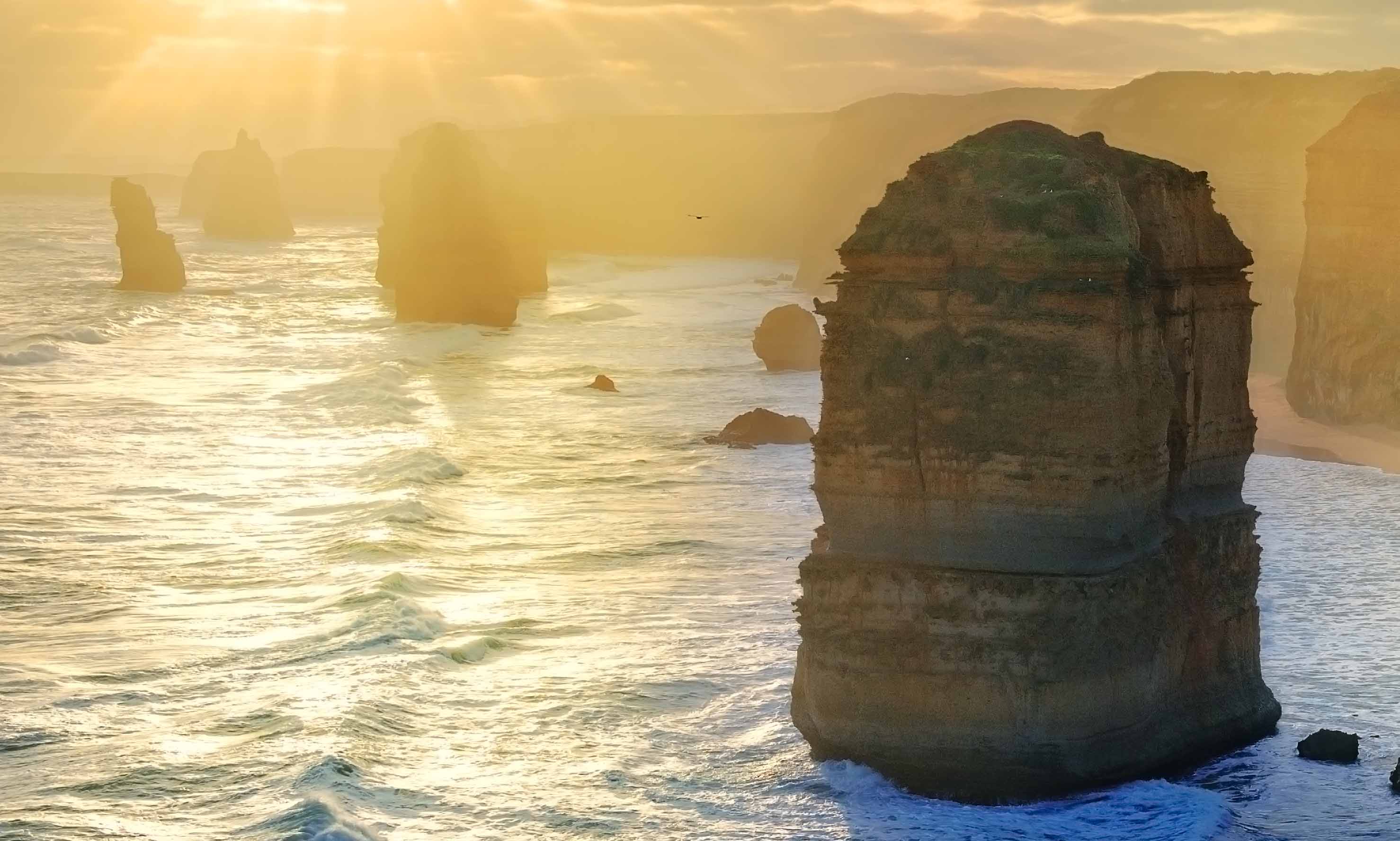
This crop is 35 percent of the frame width, about 28 inches across on the 80 inch print. The distant stacks have separated from one another and from the haze, so they can be counted. On the nearest stack the horizontal strata read as distinct bands with shadow between them, and the vegetation across its top resolves into individual clumps. A bird crosses the upper center of the frame, which is the only thing in this photograph that gives the stacks a scale. Click to view at full size.
About This Photograph
The Twelve Apostles, off Port Campbell National Park on the Great Ocean Road in Victoria, Australia, at sunset. Single frame. The stacks reach as high as fifty meters and are cut from Port Campbell Limestone, laid down in the Miocene between roughly fifteen and five million years ago.
The rays coming off the sun were made by the lens rather than by the sky. Light passing the edge of an aperture blade bends around it and interferes with itself, throwing a spike outward perpendicular to that edge. The count of spikes follows from the count of blades. A narrow aperture sharpens them and a wide one dissolves them, and nothing in the scene produced any of it.
Measured across the frame, near-white covers two and a half percent, which is twenty-five times the next brightest photograph in this collection, and the picture runs twenty-seven points warm on the red-blue axis.
Sentinels
Steve Austinhttps://www.steveaustinphotography.com/
Location
Twelve Apostles, Port Campbell National Park, Victoria, Australia
Subject
Twelve Apostles · limestone sea stacks · Great Ocean Road
Capture
Single frame, sunset
Format
Photograph · horizontal panorama, 2:1
Sizes
40 × 20 in · 60 × 30 in · 80 × 40 in
Print Media
TruLife Acrylic · ChromaLuxe Metal · Baryta paper
Edition
Limited, 25 / 50 / 100 by presentation
What it Does in a Room
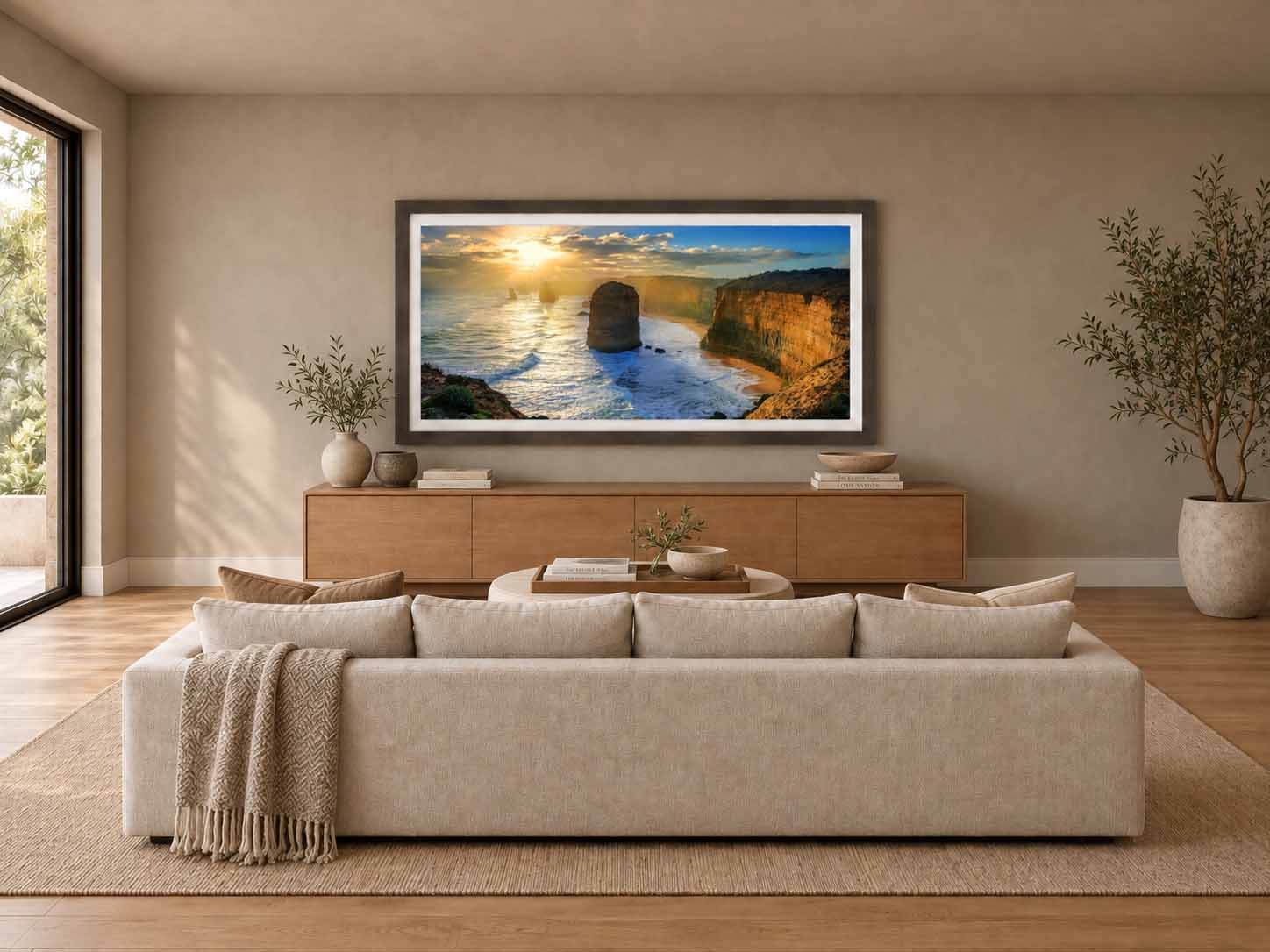
This picture changes its balance depending on the wall behind it. Its perimeter varies more than twice as much as anything else in the collection, from an average of a hundred and fifty across the top down to fifty-seven along the right edge. That means one wall cannot merge with all four sides. Against a pale wall the dark right edge becomes the visible boundary and the composition appears anchored to the right. Against a charcoal wall the bright top and left dissolve outward instead, and the picture appears to open upward and to the left. The photograph does not move. Which of its edges the eye reads as the edge is decided by what is behind it.
It also wants the opposite conditions from most of this work. Near-white covers two and a half percent of the frame, twenty-five times the next brightest photograph here, and eighty-three percent of the picture sits in the upper half of the tonal range. In a well-lit room that carries easily and holds a long sightline, which none of the darker work can do. In a dim room it becomes a problem. A large bright area surrounded by darkness reads as glare rather than as light, and the eye adapts to the brightest thing in view, so a dim room around this print makes everything else in the room recede and the picture itself go flat and hard. Give it daylight or give it a lit room.
Its warmth is banded rather than general. Measured in horizontal strips, the top of the frame runs thirty-four points cool, the middle third runs sixty to sixty-seven points warm, and the bottom settles at two points, essentially neutral. So the golden character everyone sees is confined to a band across the middle. That has a placement consequence worth knowing. A warm timber console beneath this print meets the neutral part of it and does nothing, while a warm surface at the picture's own height, a mantel shelf, a run of joinery, a lamp base level with the middle of the frame, meets the warm band directly and amplifies it. On this photograph the height of a material matters more than its proximity.
Not sure which size the room calls for, or want dimensions not listed here? Sizes beyond 80 × 40 are available on request and ship crated by freight. That conversation is welcome before an order is placed. Start that conversation and I will answer within one business day.
How small is too small for a photograph this wide?
At the Intimate size the picture is forty inches across and twenty tall, and the structure holds. The sun holds, the main stack holds as a mass, the cliff line holds, and the surf holds as a bright band. What goes is the count, which on this page is the point. The distant stacks to the left of the sun are small, low in contrast, and sitting inside the brightest part of the frame, and at this size they merge into the glare and stop being separate objects. The strata banding on the main stack goes with them, so the rock reads as a shape rather than as layered stone. The Collected at sixty by thirty brings the distant stacks back as countable forms. If you are weighing a size against a specific wall, choosing the right print size covers the measurements and the viewing distances in more detail.
What changes at the largest size?
At eighty by forty, working across the frame: the cloud breaks into separate scattered forms with lit edges instead of reading as one mass, and the rays coming off the sun hold as discrete spikes rather than a general flare. The distant stacks to the left separate from one another and from the haze, so they can be counted. The main stack shows its horizontal strata as distinct layers with shadow lines between them, and the vegetation across its top resolves into individual clumps. The cliff face on the right picks up its vertical erosion channels and the banding running through the stone. Along the shore the surf separates into individual wave lines with foam patterns between them, and on the beach the boundary between wet and dry sand becomes a visible edge. Why scale matters covers what happens perceptually when a photograph reaches the size where the eye has to cross it.
What kind of room does this photograph suit?
Rooms with daylight in them, and rooms in use during the day. A living room, a kitchen, a dining room, an office, a reception area. Hang it at standard height with the center at about fifty-seven inches. This is the one photograph here that welcomes warm materials rather than tolerating them: oak, limestone, brass, and warm plaster all sit with it comfortably. Three things to avoid. Do not put it in a dim or windowless room, since the bright passages need ambient light around them to read as light rather than as glare. Do not hang it in the same sightline as a window, because the picture contains its own sun and two light sources in one view will compete. And keep it away from cool blue-dominant work, since at twenty-seven points warm it will make a neighboring cool piece look cold and be made to look orange in return. When your mind needs to rest takes the question further.
Every work ships insured and arrives with a signed certificate of authenticity.
If a piece is damaged in transit, the choice of replacement is always yours, and your edition number stays with you.
Production time runs 2 to 3 weeks for metal, 3 to 4 weeks for acrylic and paper, and 5 to 6 weeks for framed work.
Each print is made to order and takes its place in a numbered edition, so sales are final. Before you choose, I am glad to help: send a photo of your wall and I will show you this work in your room at true scale, at no charge. Start a conversation
Collector's Choice · TruLife ® Acrylic in Italian Frame
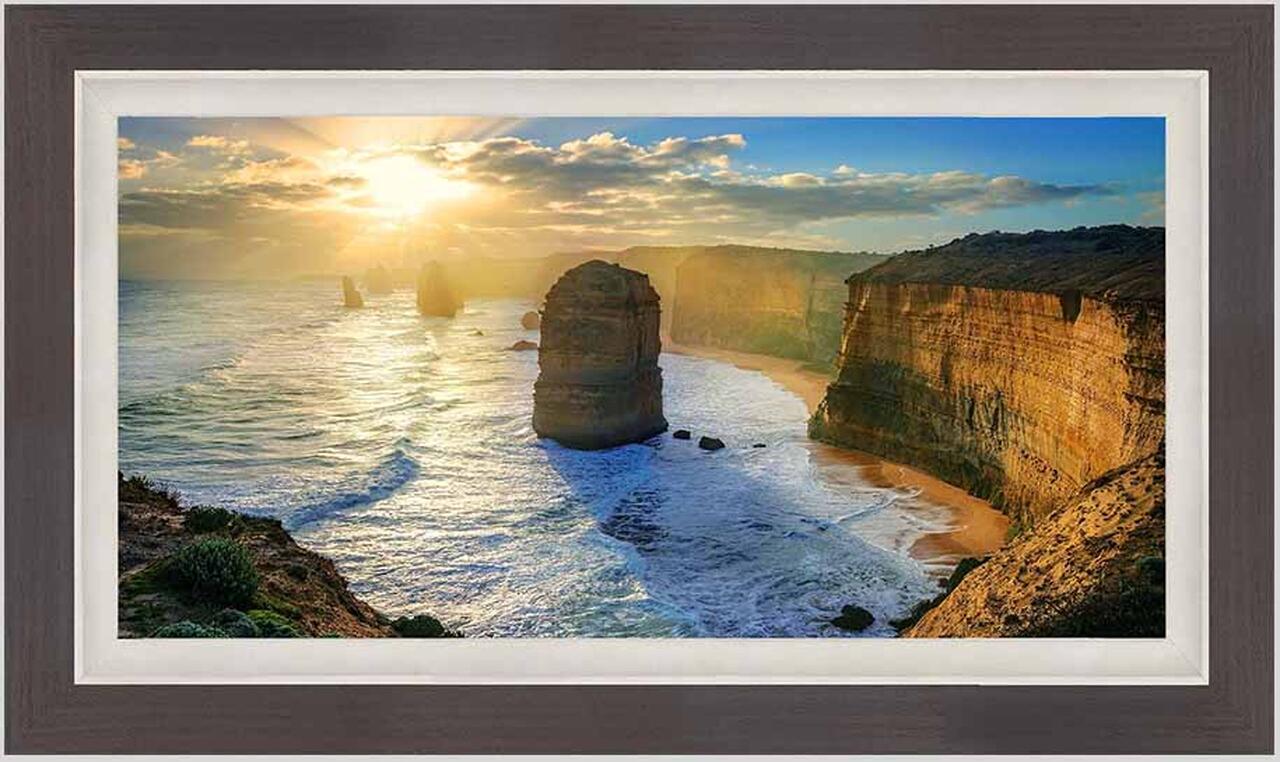
Collector Edition of 25· Lumachrome TruLife Acrylic · Handcrafted Italian Frame
TruLife acrylic in a handcrafted Italian frame with a linen liner chosen for the image. Frame series, finish, and liner are settled with you after the order, and production begins from there. The frame and liner add about fourteen inches to the finished dimensions, worth allowing for when planning placement.
Signature Acrylic Edition of 50· Lumachrome TruLife · Gallery Float Mount
Face-mounted to TruLife acrylic and floated approximately one inch from the wall, with no frame to mediate between the image and the room. UV-resistant, anti-reflective, and scratch-resistant, with a lifetime guarantee against fading.
Signature Metal Edition of 50· ChromaLuxe Print · Gallery Float Mount
Color infused into the aluminum panel itself, floated from the wall on a concealed system. Where acrylic produces luminosity, metal produces clarity. Exceptional fade resistance with no glazing or coating required.
Fine Art Edition of 100· Hahnemühle Baryta Fine Art Paper
Printed without acrylic, so light meets the paper surface directly. Highlights stay luminous, shadows keep their nuance, and the surface has a tactile quality the other presentations approach differently. The understated choice, and the traditional one.
Complimentary shipping within the continental United States. International collector shipping available upon request.
Still deciding
Designing for Stillness
A guide to choosing art for restorative spaces
How to tell whether an image will still hold you in a year, how scale changes what a photograph does in a room, and how to match a piece to the work a room actually performs. It cites the research it draws on, and it is equally clear about where that research stops. About ten minutes to read.