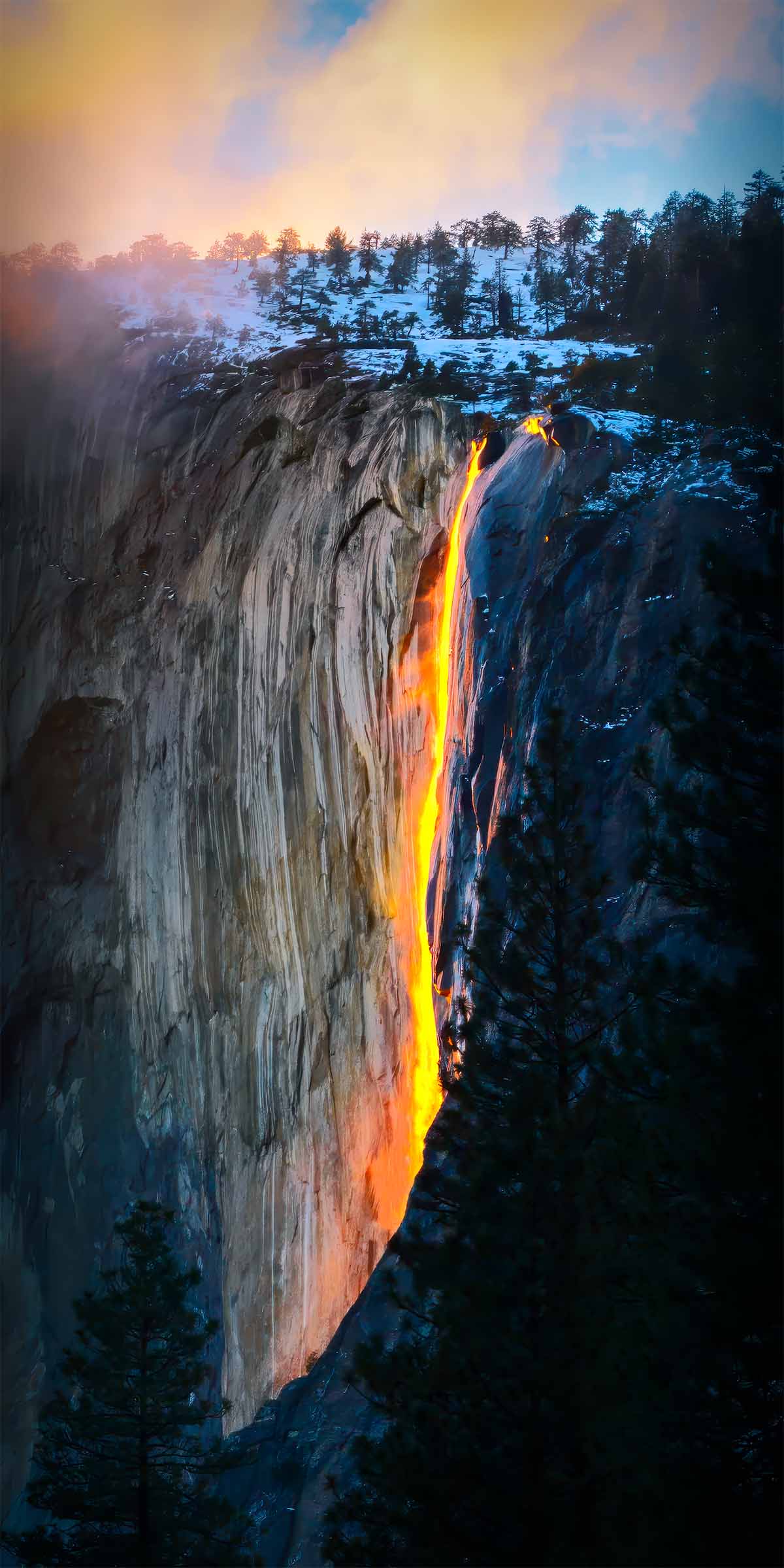
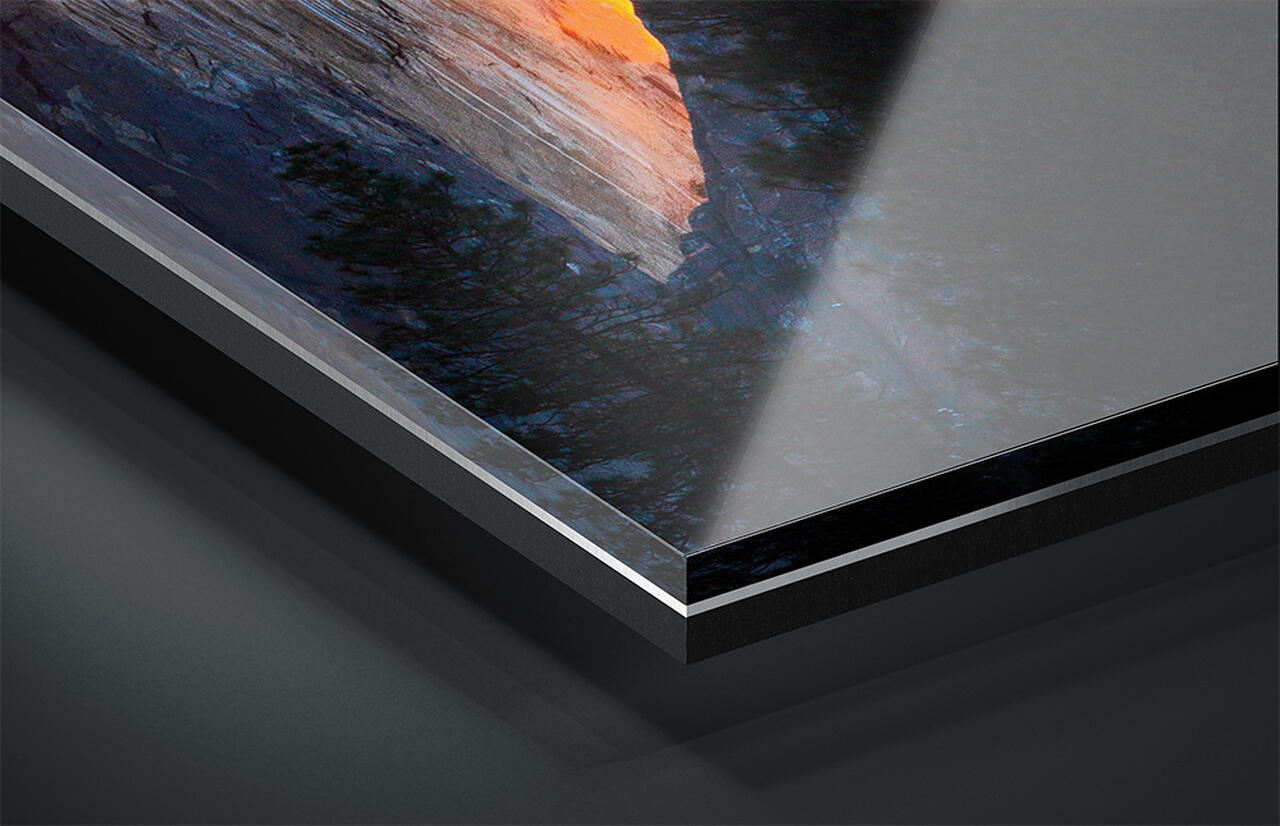
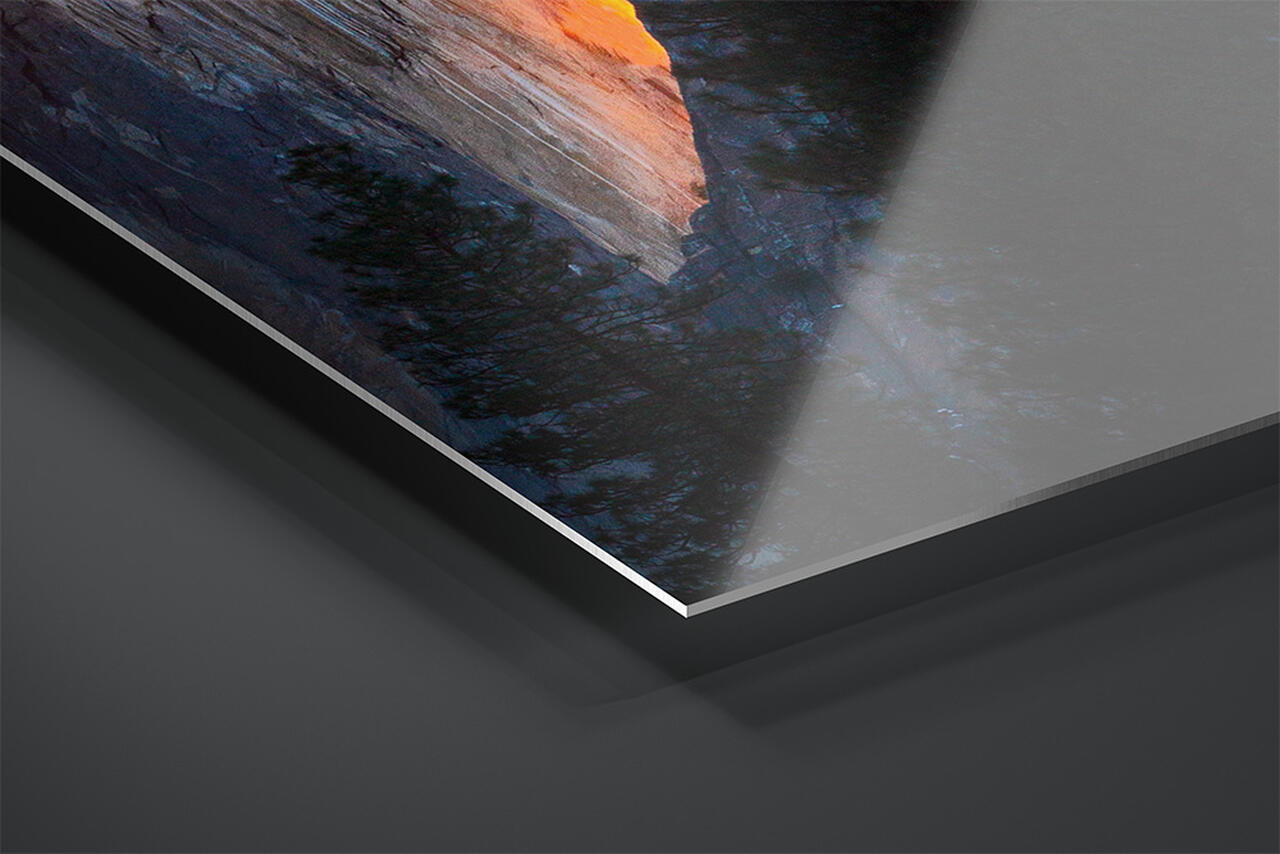
A 1:2 vertical photograph of Horsetail Fall glowing at sunset on El Capitan, Yosemite National Park, California, United States, available as a limited edition print in three sizes.
Artist's Story
I waited for days in Yosemite Valley in February, along with a good many other people, all of us pointed at the same piece of granite and waiting to find out whether the light would arrive.
Four things have to land on the same evening. There has to be enough snowpack above El Capitan to feed the fall, because Horsetail runs on meltwater and is dry most of the year. The days have to be warm enough to melt it, since a cold week leaves the snow frozen where it lies and nothing comes over the edge. The western sky has to be clear at sunset, and clear means clear, because haze alone will flatten the effect out of existence. And the sun has to set at the angle that puts light on that particular wall, which happens for about two weeks from the middle of February and at no other point in the year.
Three of those four are weather. The fourth is arithmetic. The sun's position is the only part of this that can be known ahead, and it can be known to the minute, years out, because it is nothing but geometry. The snow, the temperature and the sky are the parts nobody can promise. So the rarest element in a famously rare event is the weather. The alignment is the reliable part.
What the light does when it comes is split the frame into two temperatures. The fall takes direct sun that has traveled a long slant path through the atmosphere and lost its blue getting here. Everything around it is in shadow, lit only by skylight, which is blue. Measured across this photograph, the water runs a hundred and fifty-three points red on the difference between the red and blue channels and covers under four percent of the frame. The rest averages cool. The picture as a whole comes out at one and a half points from neutral, which is the average of two things that have nothing in common.
Ephemeral Blaze is about ten minutes of one evening in February. Then the sun drops below the ridge and it is a small waterfall on a large rock again.
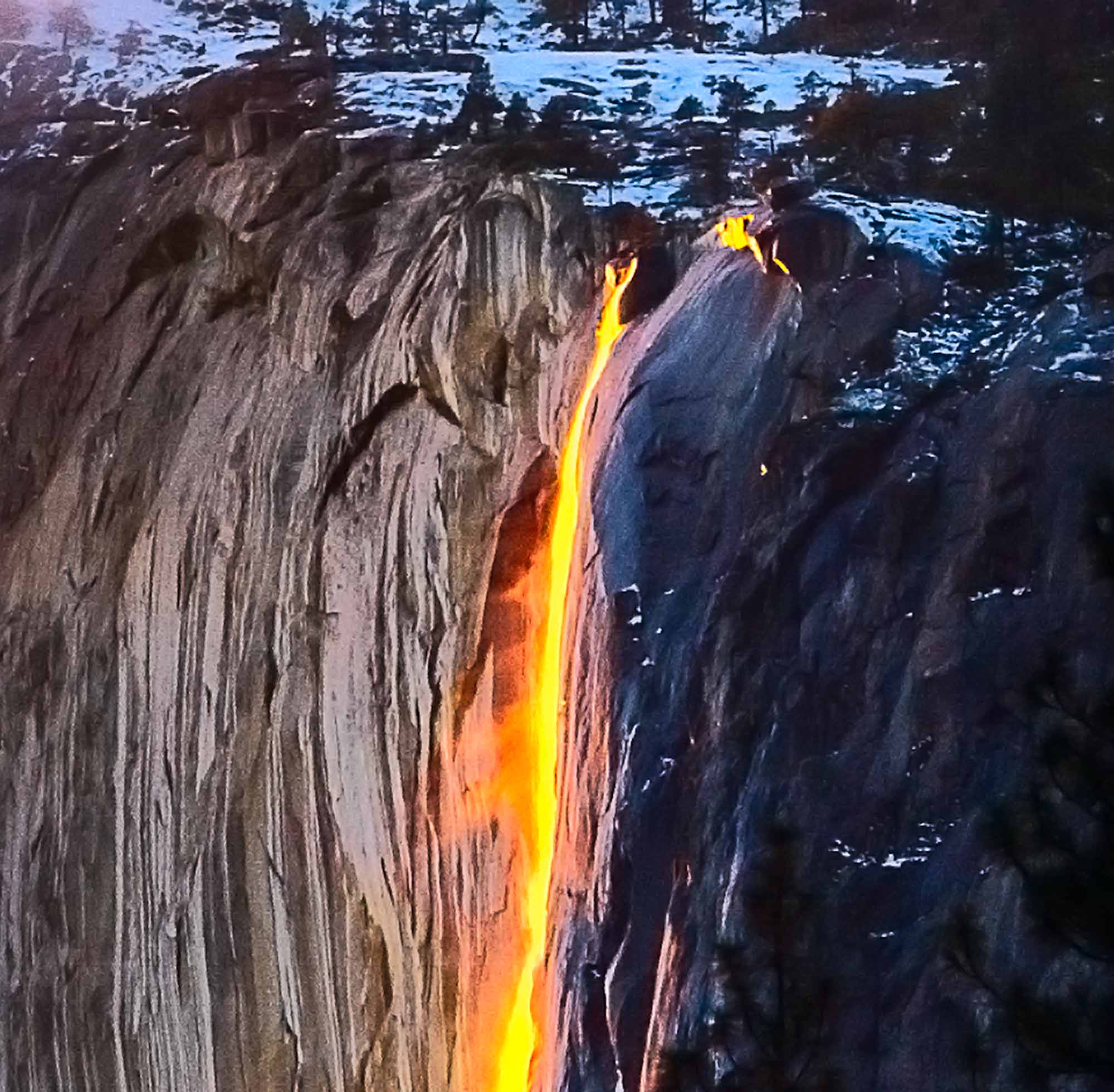
This crop is 40 percent of the frame width, about 16 inches across on the 40 inch print. At the lip the fall runs as two separate streams before they meet, which is a thing this waterfall does and which disappears at every smaller size. The granite on the left shows its vertical striations and the dark staining where water has run for a long time, and along the rim the snow separates from the rock beneath it. Click to view at full size.
About This Photograph
Horsetail Fall, on the eastern edge of El Capitan in Yosemite National Park, California, at sunset in February. Single frame. The fall drops roughly 1,570 feet onto the slabs below and runs only in winter and early spring, drying up entirely by summer.
The name was literal before it was a description. From the 1880s until the 1960s the park ran a nightly spectacle at Glacier Point, pushing a bonfire of embers over the cliff edge so that a stream of actual fire fell in view of the valley floor. It was eventually stopped as a hazard. The natural effect here was photographed by Galen Rowell in 1973 and took the name of the thing it resembles.
Measured across the frame, the tonal spread is the widest of any photograph in this collection, running from a top edge averaging a hundred and fifty-five to a bottom edge averaging under nine.
Ephemeral Blaze
Steve Austinhttps://www.steveaustinphotography.com/
Location
Horsetail Fall, Yosemite National Park, California, United States
Subject
Horsetail Fall · El Capitan · February firefall
Capture
Single frame, sunset
Format
Photograph · vertical, 1:2
Sizes
20 × 40 in · 30 × 60 in · 40 × 80 in
Print Media
TruLife Acrylic · ChromaLuxe Metal · Baryta paper
Edition
Limited, 25 / 50 / 100 by presentation
What it Does in a Room
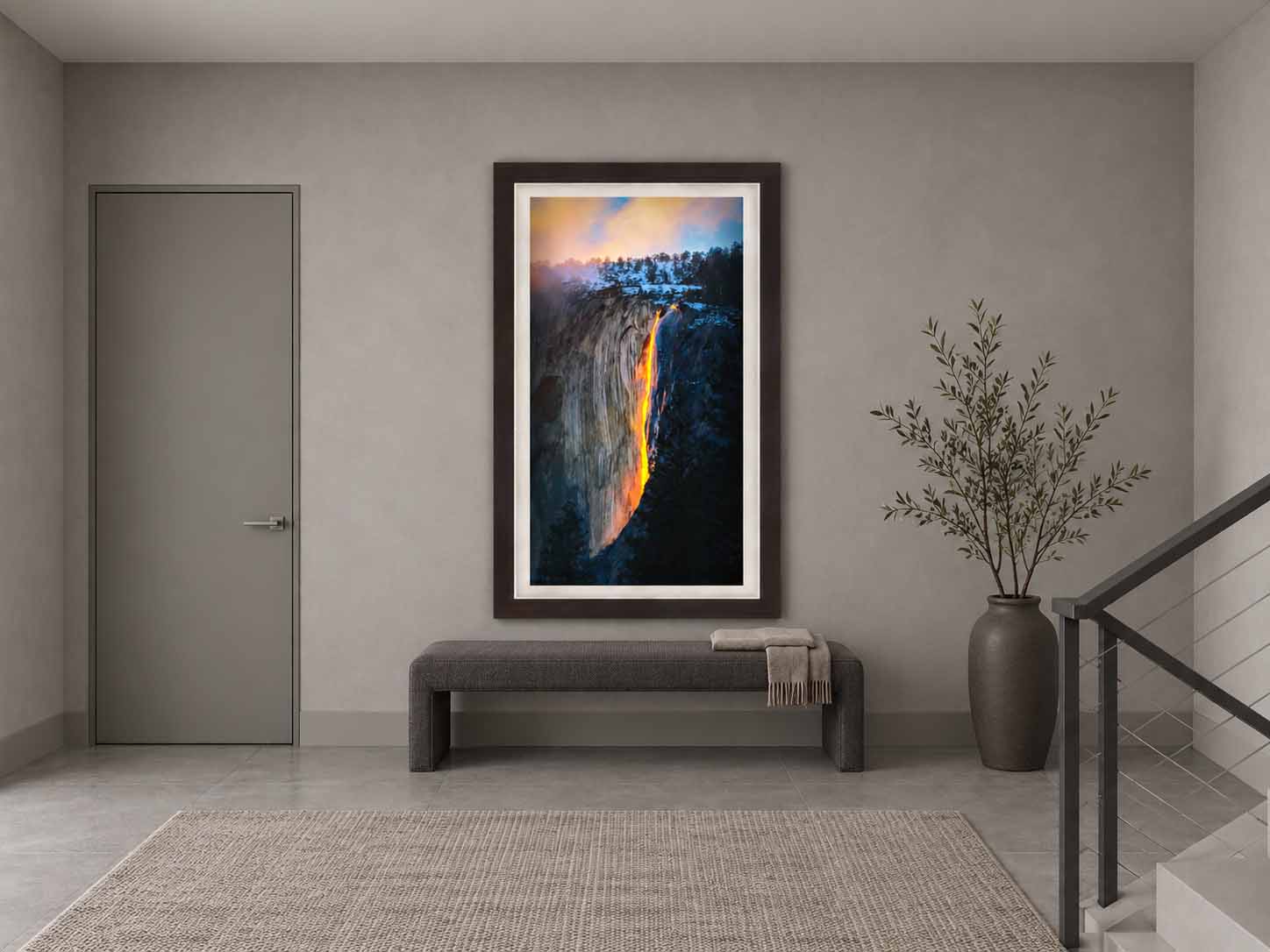
This photograph contains its own plumb line, and that changes what a bad hang costs. The fall runs from the top of the frame nearly to the bottom, it is brighter than everything around it, and it is close to true vertical. That gives the eye a reference it does not usually get from a picture. On most work a frame hung half a degree out of true goes unnoticed, because nothing inside the image contradicts it. Here the wall, the frame edge and the fall are all supposed to agree, and when they do not the disagreement is visible from across the room. Hang this one with a level rather than by eye, and check it again after the wire settles.
Its neutrality figure is misleading and it will lead you the wrong way. Measured whole, the picture sits a point and a half from neutral, which on any other photograph would mean it is indifferent to the color of the light in the room. That number is an average of a fall running a hundred and fifty-three points red across under four percent of the frame and a shadowed cliff running cool across most of the rest. Warm lamps push the cool majority toward the warm minority and the gap between them closes, which is the gap the whole picture depends on. Neutral or slightly cool light does the opposite and holds them apart. This is the one file here where the measurement says immune and the behavior says the opposite.
It also cannot be interrupted. The subject is a single continuous line running the height of the frame, so anything crossing the lower part of the print removes a section of the fall rather than a corner of a scene. A sofa back, a headboard, a console with tall objects on it, a stair rail: each of them cuts the line and the eye follows the fall down into an obstruction and stops. Work that spreads its interest across the frame tolerates being partly blocked. This one does not. Give it its full vertical run clear from the frame edge down, and place furniture beside it rather than under it.
Not sure which size the room calls for, or want dimensions not listed here? Sizes beyond 40 × 80 are available on request and ship crated by freight. That conversation is welcome before an order is placed. Start that conversation and I will answer within one business day.
How small is too small for a photograph like this?
At the Intimate size the picture is twenty inches across and forty tall, and the thing everyone comes for holds. The fall is the highest-contrast element in the frame and reduction is the last thing that takes it. The cliff holds as a mass and the treeline along the rim holds as a silhouette. What goes is the granite. The vertical striations and water staining running down the left wall merge into a flat gray, which matters because that face is more than a third of the picture and at this size it stops being rock and becomes background. The two separate streams at the lip merge into one. The Collected at thirty by sixty returns the striations, and the Expansive brings the streams apart again. If you are weighing a size against a specific wall, choosing the right print size covers the measurements and the viewing distances in more detail.
What changes at the largest size?
At forty by eighty, working down the frame: the cloud across the top separates into distinct layers with lit undersides rather than reading as a wash. The conifers along the rim resolve into individual trees with their branch structure visible against the sky, and the snow between them separates from the granite it is lying on. At the lip the fall splits into two streams before they merge, which is a thing this waterfall does and which disappears at every smaller size. Down the left wall the granite shows its vertical striations and the dark staining where water has run for a long time. The fall itself stops being a ribbon and becomes strands, with the shape of the flow visible inside the glow. In the lower right the foreground conifers separate from the shadowed rock behind them. Why scale matters covers what happens perceptually when a photograph reaches the size where the eye has to cross it.
What kind of room does this photograph suit?
A tall wall with nothing on it. A stair wall, an entry, a double-height space, the end of a hall, a narrow pier between openings. Hang it centered on that wall with the center at about sixty inches, higher than standard, because at eighty inches tall the Statement needs its base clear of the furniture line. On materials it sits well against cool grays, granite, concrete, and blackened steel, all matte. Three things to avoid. Do not hang it immediately beside a door jamb, a window reveal, or a wall corner, since the picture has a strong vertical of its own and a nearby architectural line invites a comparison it can only lose. Do not put it in a room built on terracotta, ochre, or warm brick, because the fall is the only warm thing in the frame and a room in the same hue takes that distinction away. And do not hang it low, since the bottom fifth of the print is nearly black and at furniture height it will read as though the picture has been cut off. When your mind needs to rest takes the question further.
Every work ships insured and arrives with a signed certificate of authenticity.
If a piece is damaged in transit, the choice of replacement is always yours, and your edition number stays with you.
Production time runs 2 to 3 weeks for metal, 3 to 4 weeks for acrylic and paper, and 5 to 6 weeks for framed work.
Each print is made to order and takes its place in a numbered edition, so sales are final. Before you choose, I am glad to help: send a photo of your wall and I will show you this work in your room at true scale, at no charge. Start a conversation
Collector's Choice · TruLife ® Acrylic in Italian Frame
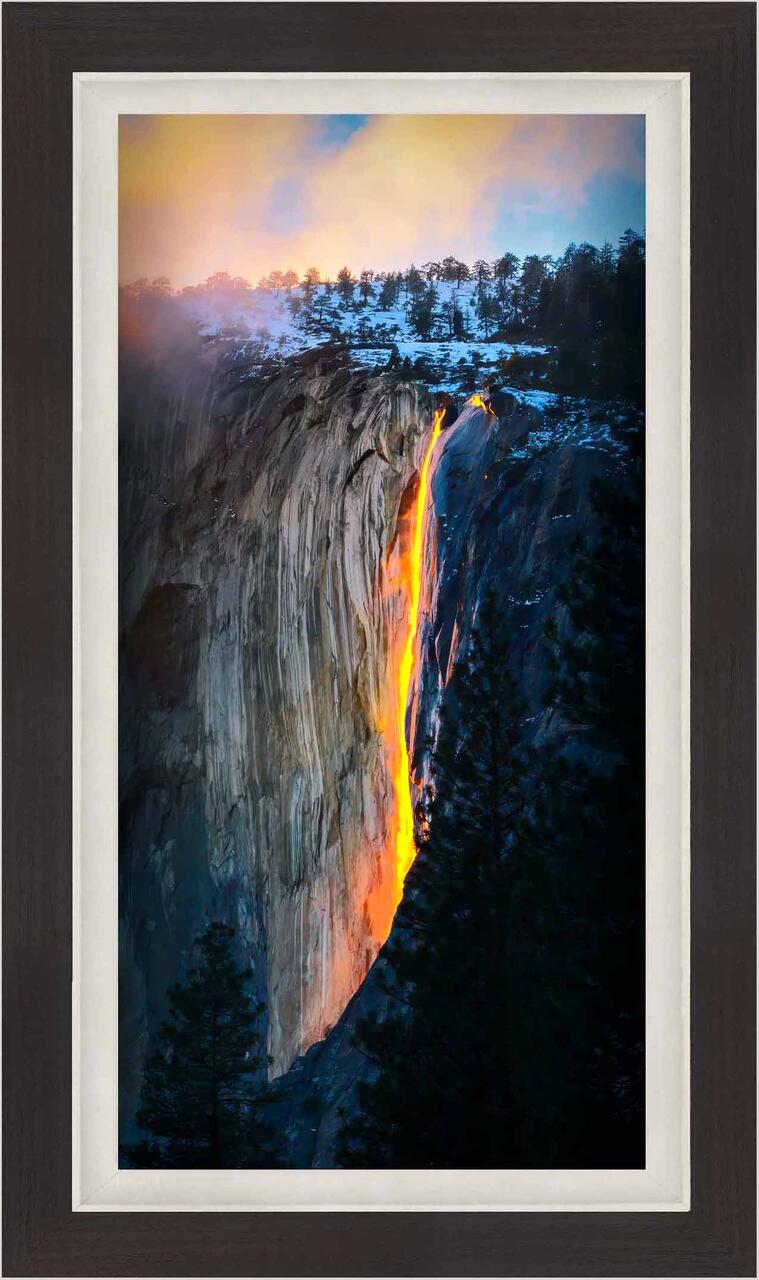
Collector Edition of 25· Lumachrome TruLife Acrylic · Handcrafted Italian Frame
TruLife acrylic in a handcrafted Italian frame with a linen liner chosen for the image. Frame series, finish, and liner are settled with you after the order, and production begins from there. The frame and liner add about fourteen inches to the finished dimensions, worth allowing for when planning placement.
Signature Acrylic Edition of 50· Lumachrome TruLife · Gallery Float Mount
Face-mounted to TruLife acrylic and floated approximately one inch from the wall, with no frame to mediate between the image and the room. UV-resistant, anti-reflective, and scratch-resistant, with a lifetime guarantee against fading.
Signature Metal Edition of 50· ChromaLuxe Print · Gallery Float Mount
Color infused into the aluminum panel itself, floated from the wall on a concealed system. Where acrylic produces luminosity, metal produces clarity. Exceptional fade resistance with no glazing or coating required.
Fine Art Edition of 100· Hahnemühle Baryta Fine Art Paper
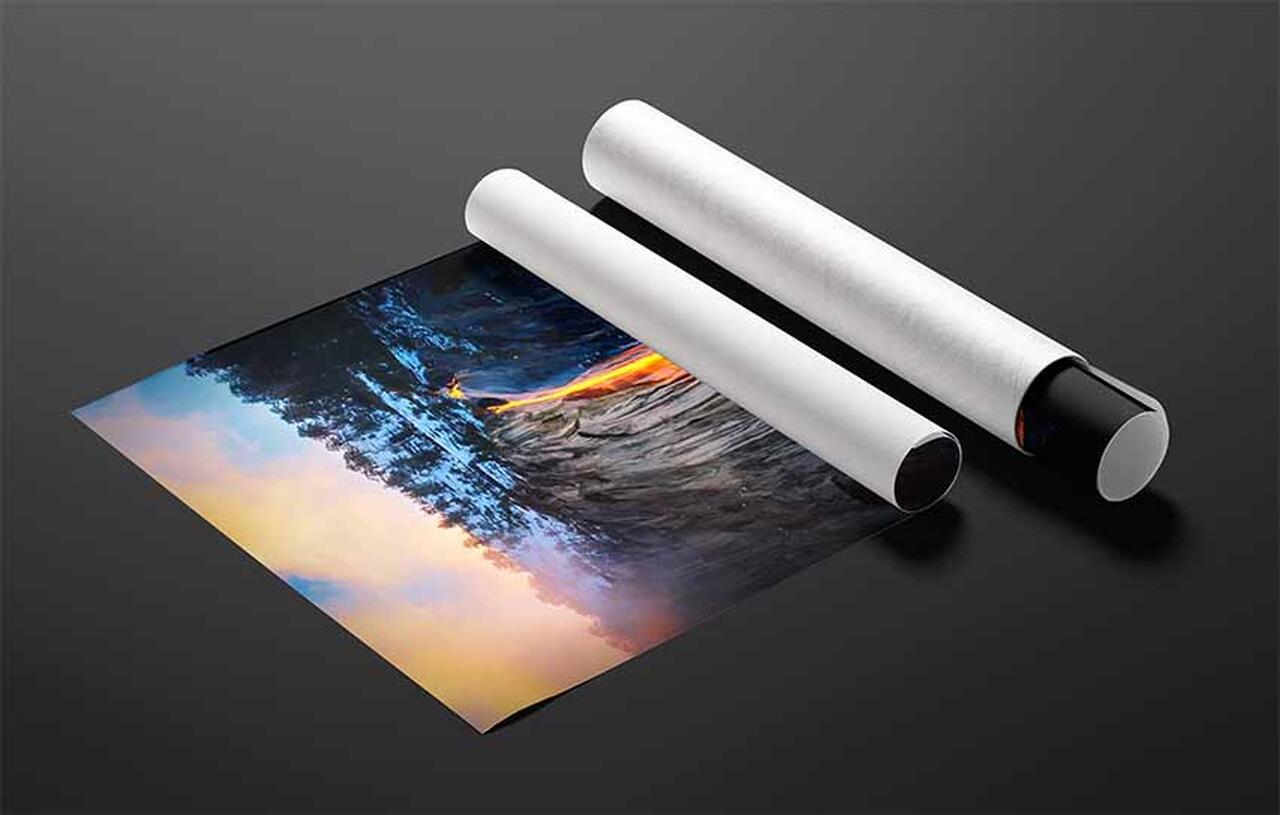
Printed without acrylic, so light meets the paper surface directly. Highlights stay luminous, shadows keep their nuance, and the surface has a tactile quality the other presentations approach differently. The understated choice, and the traditional one.
Complimentary shipping within the continental United States. International collector shipping available upon request.
Still deciding
Designing for Stillness
A guide to choosing art for restorative spaces
How to tell whether an image will still hold you in a year, how scale changes what a photograph does in a room, and how to match a piece to the work a room actually performs. It cites the research it draws on, and it is equally clear about where that research stops. About ten minutes to read.