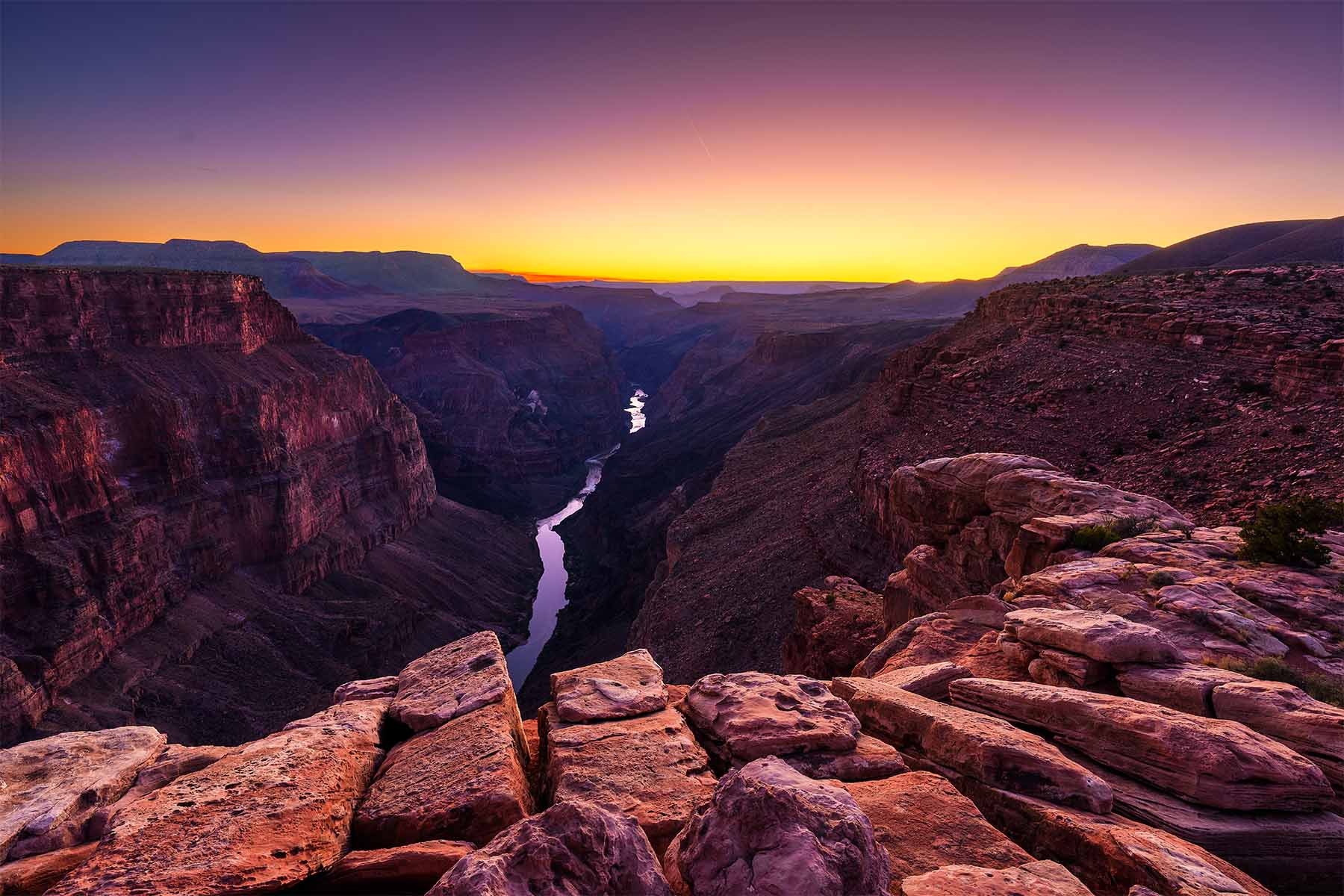
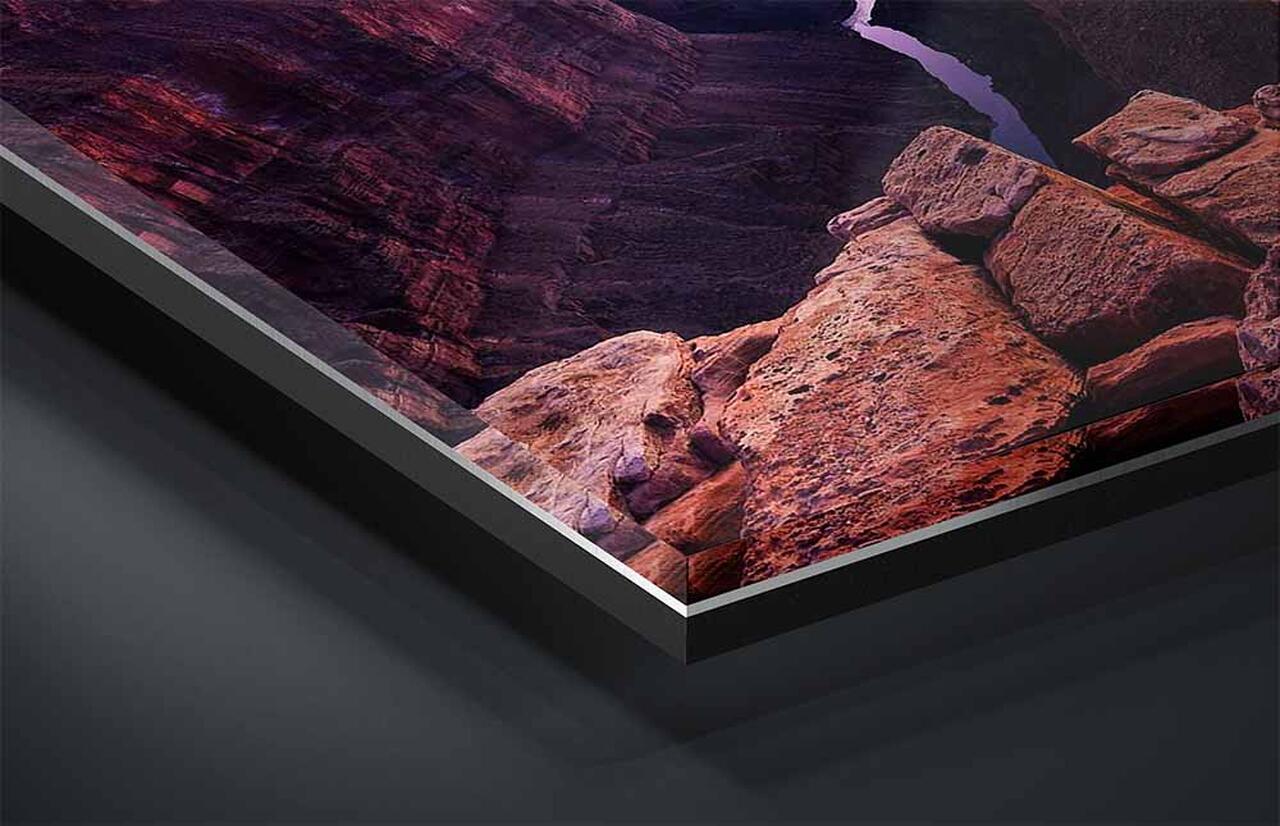
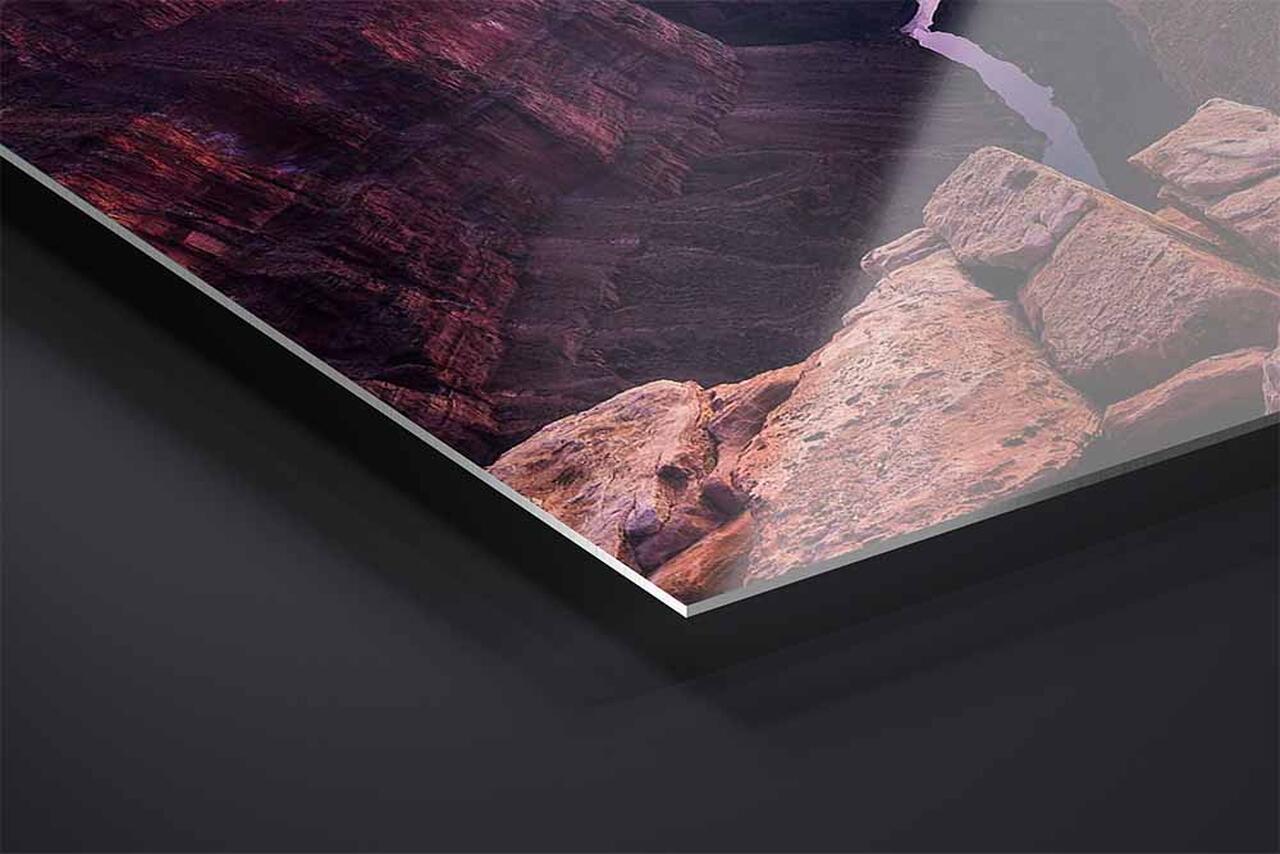
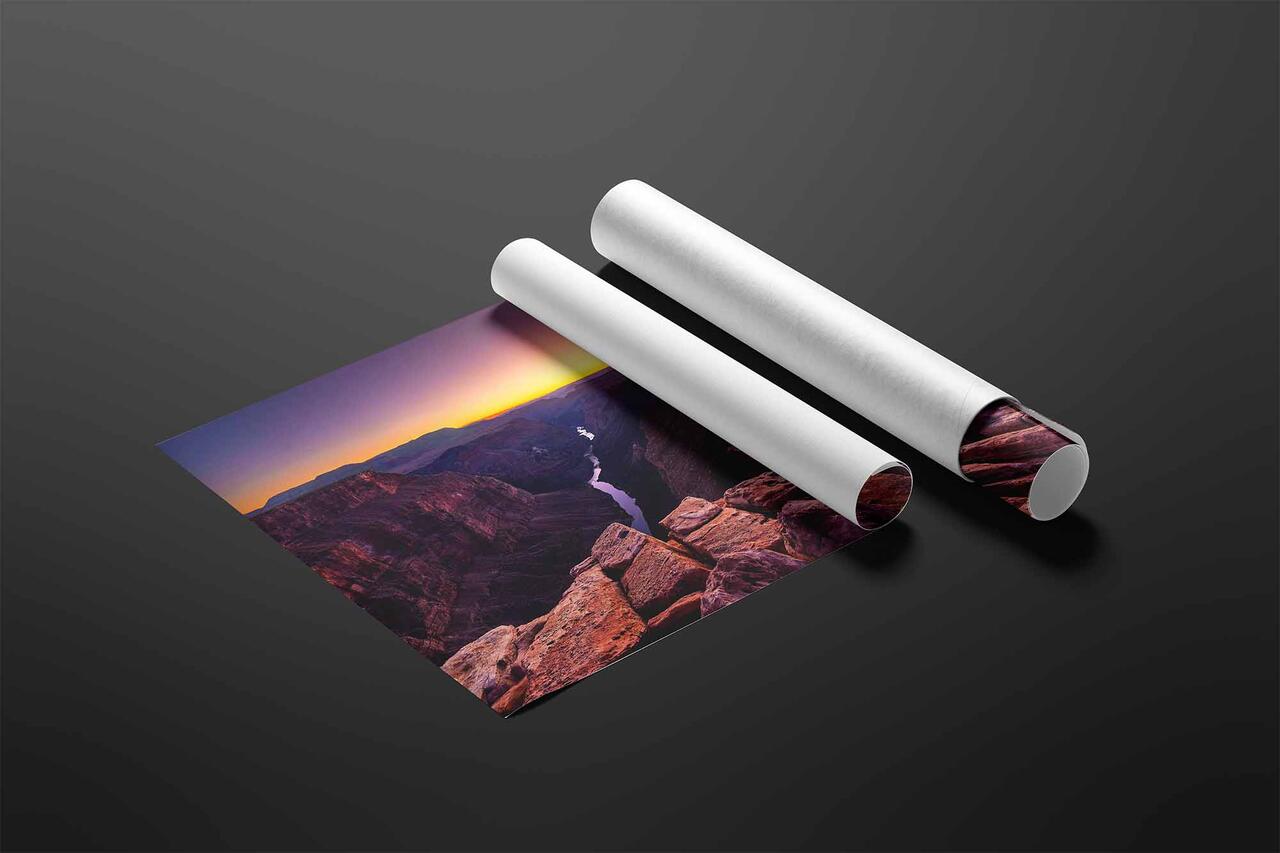
A 3:2 horizontal photograph of the Colorado River from Toroweap Overlook at the Grand Canyon, Arizona, available as a limited edition print in four sizes.
Artist's Story
Toroweap is the only place in Grand Canyon National Park where you can stand on the rim and see the Colorado River directly beneath you. Not across a widening series of terraces, the way the canyon usually gives itself up, but straight down, three thousand feet, with nothing in between. There is no railing. The name is a Paiute word for a dry or desolate valley, and reaching it means about sixty miles of unpaved road with no water, no fuel, and no signal at the far end of it.
I stayed on past sunset, after the last light had gone off the far wall and the few others who had driven out that day started back toward their vehicles.
Standing at an edge like this does something to the body before it does anything to the mind. Depth registers as sensation first, a low physical alertness that arrives whether or not you decided to feel it. Then the light drains, and the far wall stops being a measurable distance and becomes simply dark. The scale that was pressing on you a moment ago is still there, but it can no longer be read. What replaces the alertness is closer to stillness with the volume left up.
Threshold is that narrow hour at the edge, between the last of the light and the whole of the dark, when the canyon stops being a view and becomes only depth.
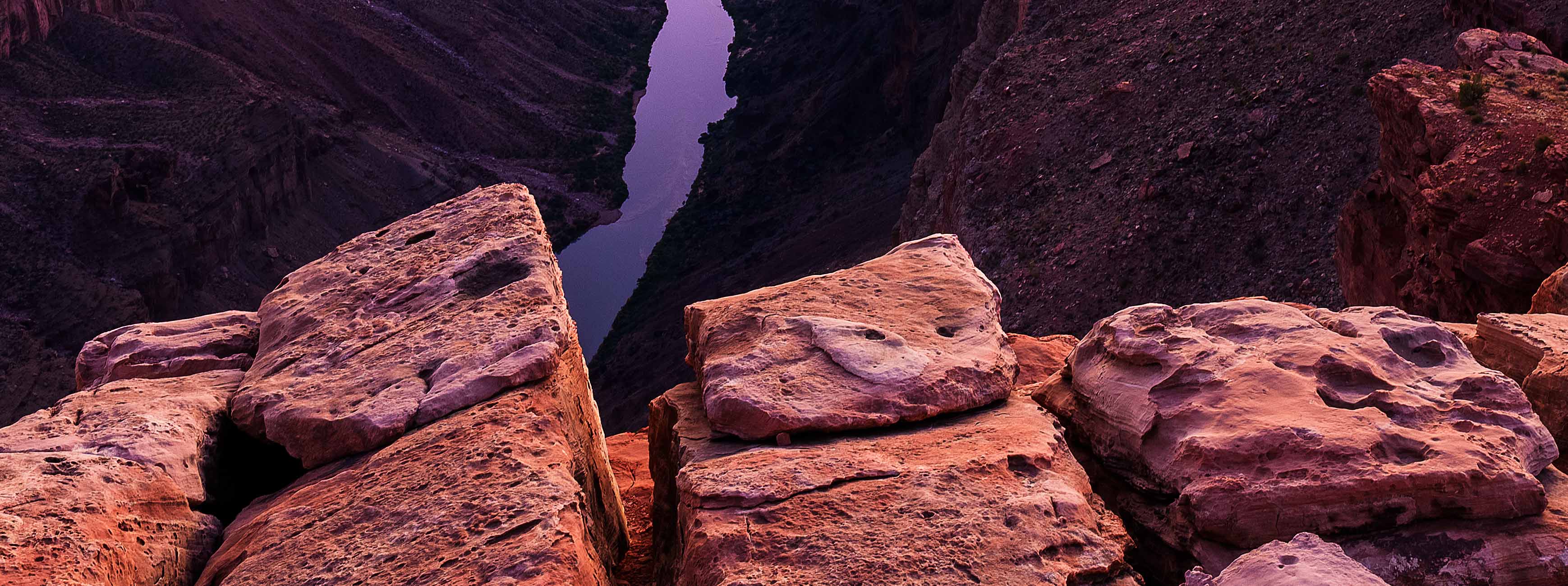
The rim and the drop at about two fifths of the frame width. On a sixty inch print this section runs roughly twenty-five inches across. The sandstone breaks into separate blocks with the joints open between them, solution pits weathered into their upper faces, and the gap at the center running straight down to the river. Click to view at full size.
About This Photograph
Photographed at Toroweap Overlook, also called Tuweep, on the remote western North Rim of Grand Canyon National Park in northern Arizona, at last light after sunset. This is a single frame image. The frame looks downriver along one of the narrowest and deepest sections of the inner gorge, with layered walls on both sides, the river below, and a shelf of sandstone at the rim in the foreground.
The horizon sits at just over a quarter of the frame height, so nearly three quarters of the picture lies below the skyline. The sky measures more than twice as bright as everything under it.
The overlook lies 55 miles west of the North Rim headquarters in a straight line and 148 miles by road. The usual approach is 61 unpaved miles from Fredonia, with no water, fuel, food, or phone service on the way.
Threshold
Steve Austinhttps://www.steveaustinphotography.com/
Location
Toroweap Overlook, Grand Canyon, Arizona
Subject
Colorado River · inner gorge · last light
Capture
Single frame after sunset
Format
Photograph · horizontal, 3:2
Sizes
24 × 16 in · 36 × 24 in · 48 × 32 in · 60 × 40 in
Print Media
TruLife Acrylic · ChromaLuxe Metal · Baryta paper
Edition
Limited, 25 / 50 / 100 by presentation
What it Does in a Room
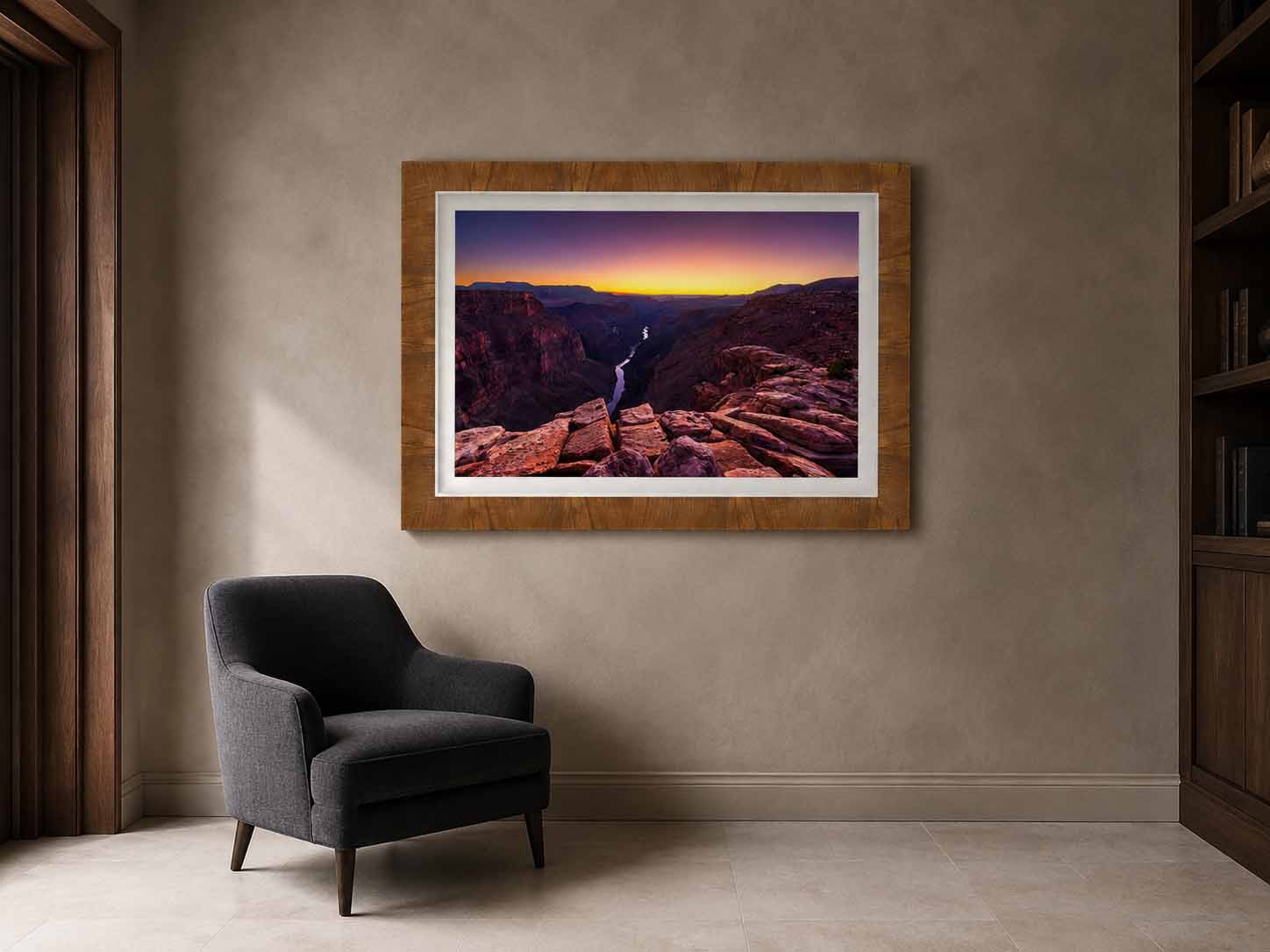
This is a three to two, which is the proportion of a photograph rather than of a panorama, and that changes where it can go more than anything else about it. A panorama needs a run of wall and has to be the only thing on it. This one hangs the way most framed work hangs, so it fits a standard stretch of wall, sits comfortably in a group with other pieces, and works above a chair or a desk rather than only above a long piece of furniture. If the rest of a room is already hung, this is the shape that joins it.
It is also a dark picture with real distance in it. Nearly three quarters of the frame sits below the skyline and most of that is deep rock, so the panel absorbs light rather than returning it, and the depth cues in the canyon walls make the surface read as an opening instead of a plane. On a wall that pushes the wall back. In a small or low-ceilinged room that is worth having, because it buys apparent space where a bright picture would only fill it.
The color runs a full vertical sweep rather than a single note. Deep violet at the top, a band of orange along the horizon, then red and umber rock all the way down. That means it does not need a room to supply a complement, and it gives you three separate places to pick a color from: the violet for textiles, the orange for metal or leather, the umber for wood. Most photographs offer one. This one offers a palette.
Not sure which size the room calls for, or want dimensions not listed here? Sizes beyond 60 × 40 are available on request and ship crated by freight. That conversation is welcome before an order is placed. Start that conversation and I will answer within one business day.
How small is too small for a photograph this wide?
At three to two, the Intimate size is twenty-four inches across and sixteen tall. That is the smallest print in the collection, and this is one of the few photographs that can carry it, because the composition is built from large simple masses: a band of sky, a dark canyon, a pale ribbon running through it. All three read from across a room. What goes at that size is the river. At twenty-four by sixteen it narrows to a thread a few millimeters wide and the rapids in it disappear entirely, so the picture becomes a canyon at dusk rather than a canyon with a river at the bottom of it. That still works, and the small size suits a stair wall, a hallway, or a spot in a group of framed work. The Collected at thirty-six by twenty-four is where the river reads as water again. If you are weighing a size against a specific wall, choosing the right print size covers the measurements and the viewing distances in more detail.
What changes at the largest size?
The canyon stops being a shape and becomes rock. At the Statement size, sixty by forty, the sandstone slabs across the foreground resolve into separate blocks with the joints and fracture lines between them, and you can see where the rim has broken away and where it has not. The far wall opens into its horizontal bedding, band after band, and the talus below it separates from the cliff that shed it. The river surface stops being a flat ribbon and shows current. What changes beyond detail is the distance. At five feet across, the near sandstone is close to life size while the far rim is twenty miles away in the same frame, and holding both at once is a different experience from looking at a picture of it. Why scale matters covers what happens perceptually when a landscape reaches the size where the eye has to cross it.
What kind of room does this photograph suit?
Rooms people sit in, and rooms that can take a dark picture. This is a study, a library, an office, a bedroom, anywhere the work is looked at from a chair rather than passed at walking pace, because the depth in it opens up the longer you stay with it. It runs warm through most of its range, so it belongs with walnut, leather, brass, terracotta, and warm plaster, and the violet at the top gives it a way to sit against cooler grays as well without going cold. Because the proportion is conventional it also hangs in company, which none of the panoramas do, so it is the piece to reach for if the wall already has work on it. How a photograph sharpens the mind takes the question further.
Every work ships insured and arrives with a signed certificate of authenticity.
If a piece is damaged in transit, the choice of replacement is always yours, and your edition number stays with you.
Production time runs 2 to 3 weeks for metal, 3 to 4 weeks for acrylic and paper, and 5 to 6 weeks for framed work.
Each print is made to order and takes its place in a numbered edition, so sales are final. Before you choose, I am glad to help: send a photo of your wall and I will show you this work in your room at true scale, at no charge. Start a conversation
Collector's Choice · TruLife ® Acrylic in Italian Frame
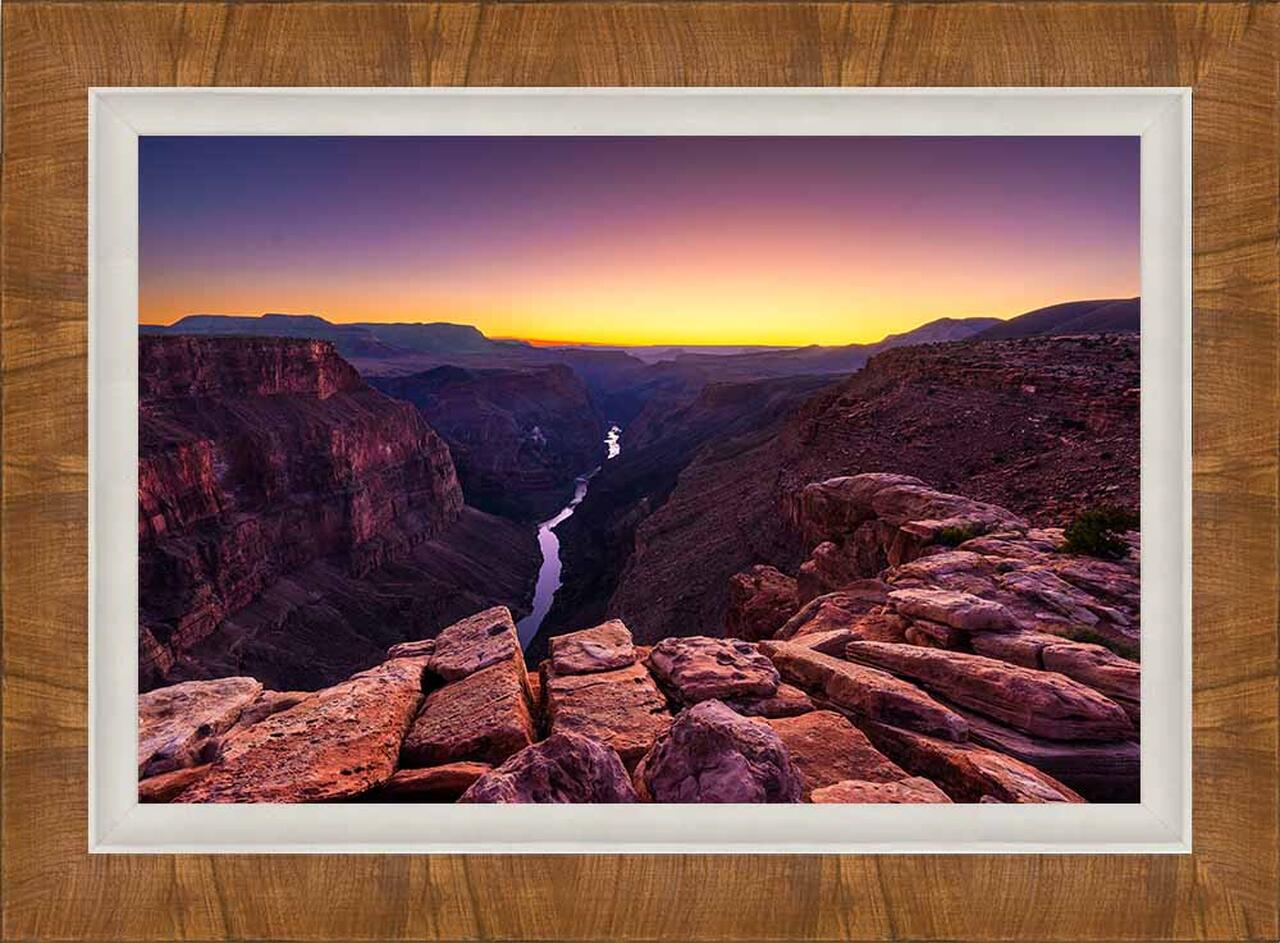
Collector Edition of 25· Lumachrome TruLife Acrylic · Handcrafted Italian Frame
TruLife acrylic in a handcrafted Italian frame with a linen liner chosen for the image. Frame series, finish, and liner are settled with you after the order, and production begins from there. The frame and liner add about fourteen inches to the finished dimensions, worth allowing for when planning placement.
Signature Acrylic Edition of 50· Lumachrome TruLife · Gallery Float Mount
Face-mounted to TruLife acrylic and floated approximately one inch from the wall, with no frame to mediate between the image and the room. UV-resistant, anti-reflective, and scratch-resistant, with a lifetime guarantee against fading.
Signature Metal Edition of 50· ChromaLuxe Print · Gallery Float Mount
Color infused into the aluminum panel itself, floated from the wall on a concealed system. Where acrylic produces luminosity, metal produces clarity. Exceptional fade resistance with no glazing or coating required.
Fine Art Edition of 100· Hahnemühle Baryta Fine Art Paper
Printed without acrylic, so light meets the paper surface directly. Highlights stay luminous, shadows keep their nuance, and the surface has a tactile quality the other presentations approach differently. The understated choice, and the traditional one.
Complimentary shipping within the continental United States. International collector shipping available upon request.
Still deciding
Designing for Stillness
A guide to choosing art for restorative spaces
How to tell whether an image will still hold you in a year, how scale changes what a photograph does in a room, and how to match a piece to the work a room actually performs. It cites the research it draws on, and it is equally clear about where that research stops. About ten minutes to read.